


Antique Wooden Horse Sculpture
An antique wooden horse sculpture brings tactile history into a room, shaped by hands across centuries and cultures.
Antique Wooden Horse Sculpture
An antique wooden horse sculpture encompasses diverse expressions ranging from carousel figures to naive folk art carvings. Buyers encounter items spanning the eighteenth, nineteenth, and early twentieth centuries, created across Britain, France, Germany, Spain, Russia, India, and Japan.
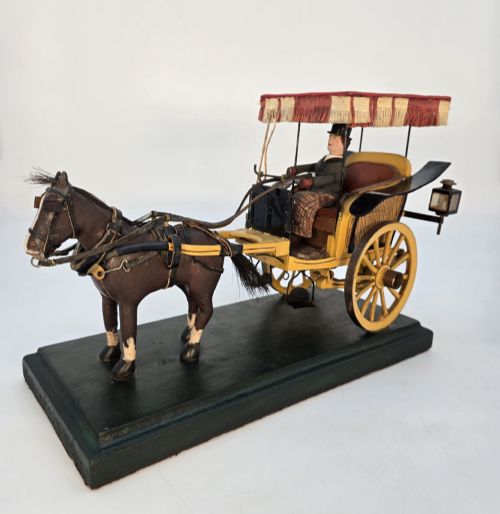
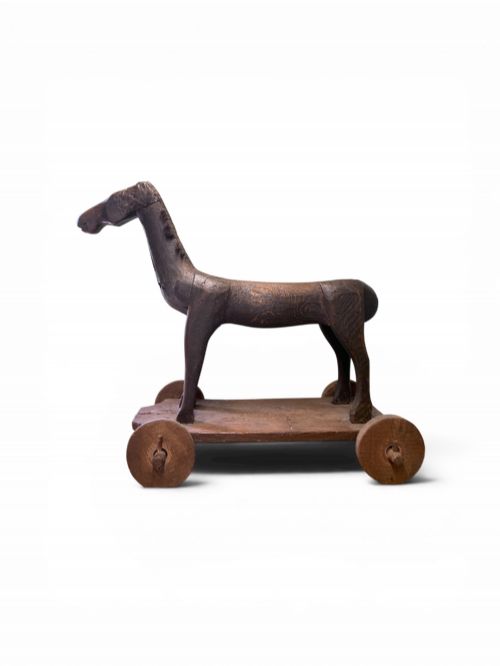
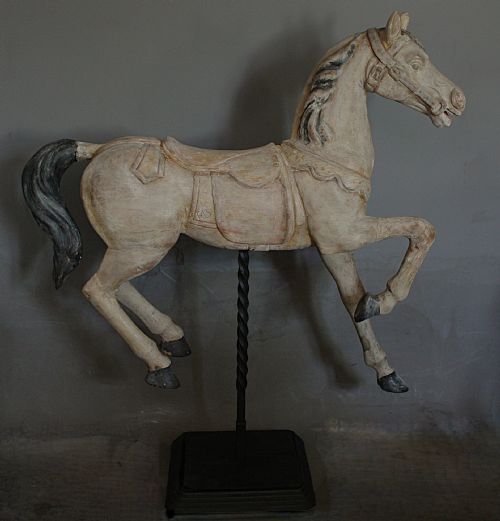
The selections here feature utilitarian playthings alongside ambitious decorative models and fairground animals. Rocking horses, pull-along toys, and processional figures sit alongside miniature boxwood netsuke and life-size leather models built over wooden frames.
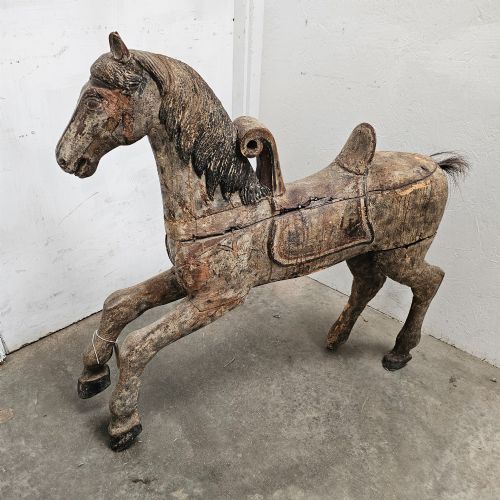
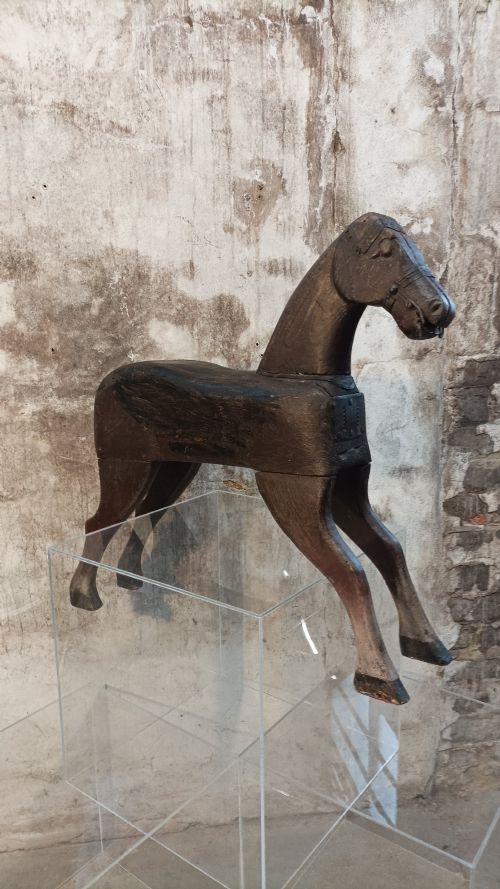
Folk art traditions dominate the grouping, showing the unpretentious work of village carvers and toy makers. Pieces reflect distinct regional identities, from French carousel carvers to Indian folk artisans and makers of Bogorodskoe carvings.
Materials and construction methods
Makers fashioned these sculptures from carved wood, boxwood, and hardwood, frequently employing horsehair for tails and manes. Iron, metal, and leather appear in structural components, harnesses, and tack, while fabric occasionally dresses carriages and saddles.
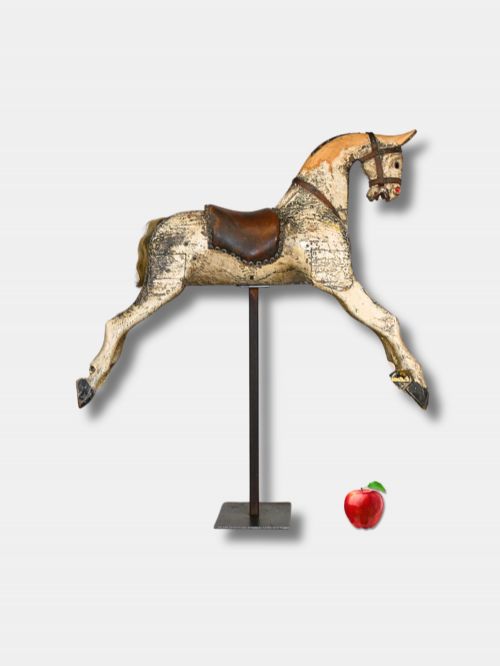
Surfaces often retain layers of original paint, showing the weathering of time and the bold palettes of fairground and folk traditions. Construction varies from scratch-built articulated models to solid blocks carved with naive simplicity.
Materials across these listings include carved wood, iron, leather, horsehair, and fabric, styled in Victorian folk art, Art Deco, and animalier traditions.
Evaluating the carving and surface
Quality rests in the expressive vigor of the carving and the integrity of the original surface. Master carvers capture the muscular tension of a draught horse or the spirited stance of a carousel animal with anatomical conviction.
The survival of original paint enhances the stature of a piece, distinguishing honest folk art from later intervention. Hand-tooled details and signed or dated provenance elevate individual works above standard workshop production.
G J Lines·Bayol·Masayuki
The Antique Wooden Horse Sculpture Glossary
- Folk Art
- Artistic work created within a traditional culture by self-taught makers, often displaying a naive or primitive aesthetic. These pieces prioritise character and utility over academic precision.
- Carousel Horse
- A carved wooden figure designed for fairground merry-go-rounds, typically exhibiting dynamic movement and decorative harness work. They often retain layers of brightly coloured paint.
- Netsuke
- A small Japanese carved toggle used to secure a pouch or small container to a traditional kimono sash. Boxwood examples frequently depict mythological figures or animals.
- Rocking Horse
- A toy horse mounted on bow rockers or safety swing stands, built for children to ride. Larger examples incorporate sturdy wooden frames designed to withstand vigorous play.
Antique Wooden Horse Sculpture: Frequently Asked Questions
How do I date an antique wooden horse?
Dating relies on tool marks, construction methods, and the composition of underlying wood and paint layers. Stylistic clues from saddles, tack, and carving conventions also point towards specific decades.
Examinations of wear patterns reveal how handling has altered the surfaces over generations.
What is the difference between folk art and fairground horses?
Folk art horses stem from domestic or regional craft traditions, created by naive carvers for toys or local display. Fairground horses originated on commercial carousel rides, built for public amusement with robust construction and vivid paint.
Both categories share hand-carved origins but served very different social functions.
How should I care for a painted wooden horse?
Keep wooden sculptures away from direct sunlight and fluctuating humidity to prevent paint flaking and wood splitting. Dust gently with a dry, soft cloth rather than using liquid cleaners.
Preserving the original surface requires minimal intervention and stable indoor environments.
Were these horses originally toys or decorative objects?
The selection includes both functional children's toys, such as pull-along horses and rocking horses, and purely decorative sculptures. Many pieces began life as playthings before transitioning into decorative items for collectors.
Toy versions often show heavier wear from use by children.