
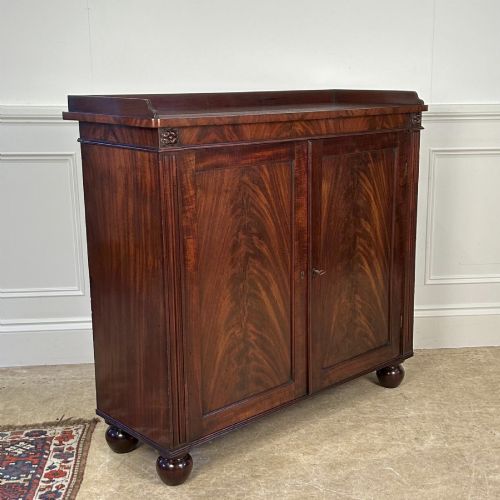
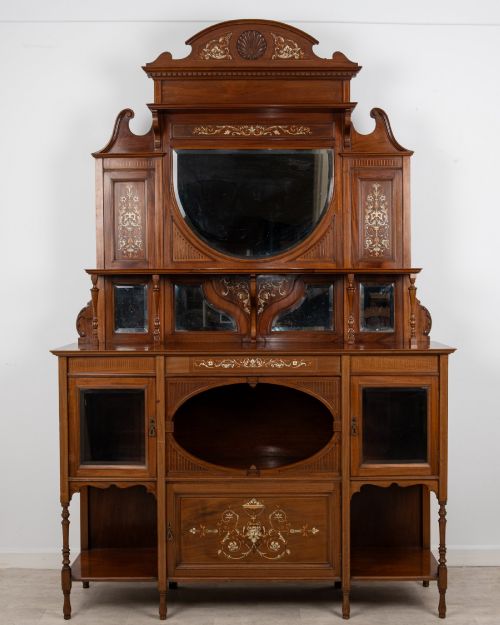


Carved Wooden Chiffonier
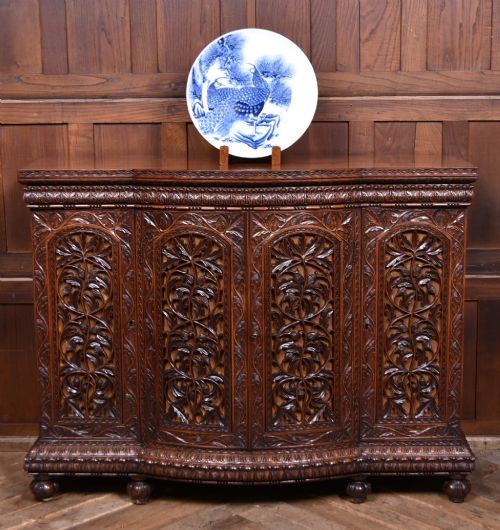
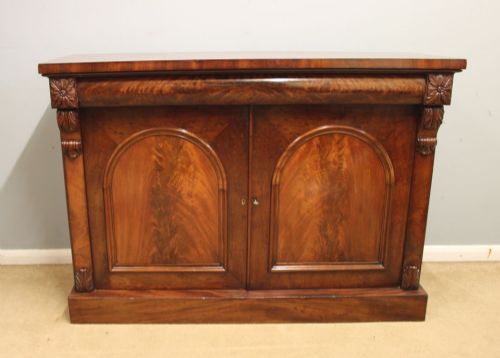
A carved wooden chiffonier brings low storage and display surface together, offering a practical nineteenth-century answer to dining room organisation.
Carved Wooden Chiffonier
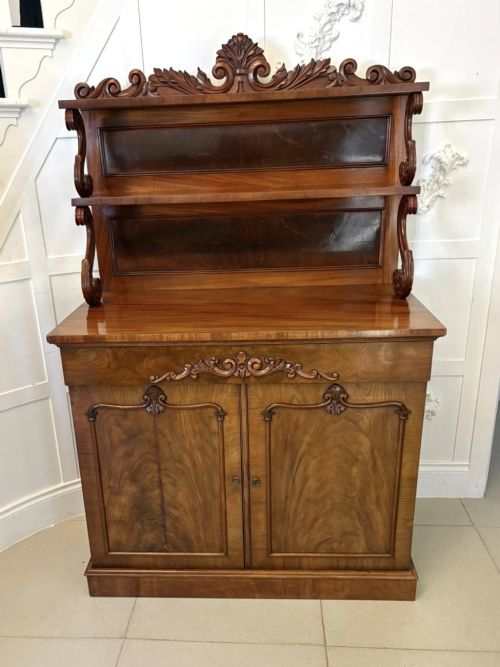
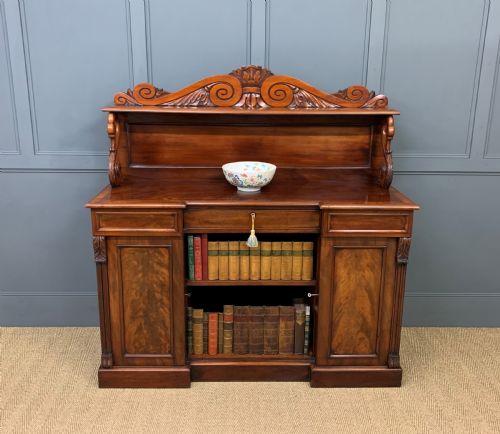
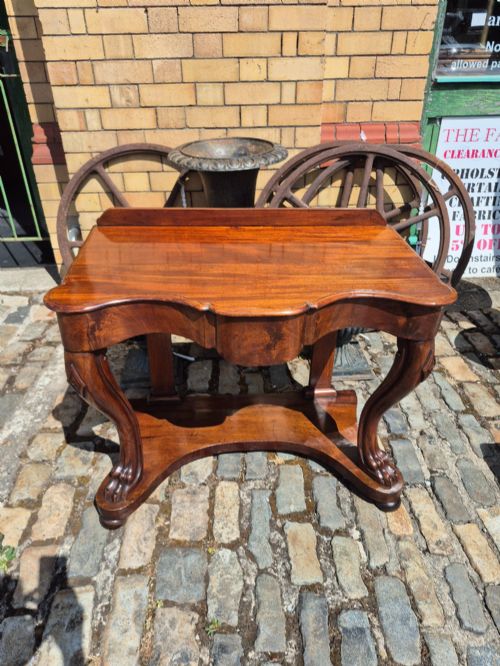
A carved wooden chiffonier stands as a low side cabinet developed primarily during the nineteenth century, combining enclosed lower cupboards with upper shelves or mirror backs. Buyers exploring this page will encounter numerous Victorian and Regency examples designed to fit dining rooms and reception spaces.
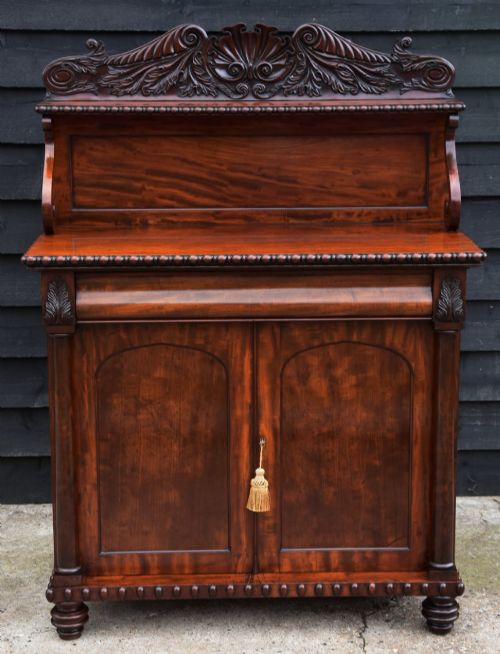
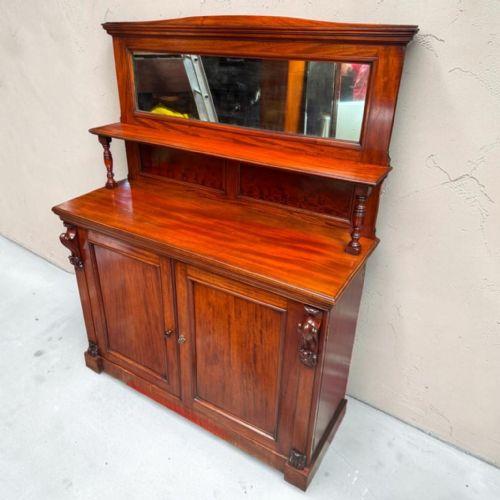
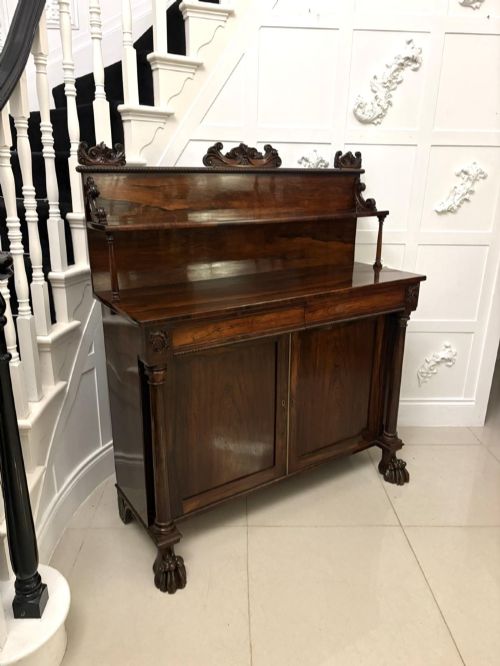
The form bridges the gap between a sideboard and a low cabinet, frequently incorporating two panelled doors beneath a shallow drawer or tier. Mahogany forms the backbone of these selections, though variations in pollard oak, walnut, and padouk appear regularly across the listings.
Makers and cabinet makers of the nineteenth century produced these pieces in varying scales, from petite two-door cupboards to grand mirror-backed variants. The pieces documented here span from the early Regency period through to Edwardian interpretations.
How they were made
Cabinet makers relied heavily on dense tropical hardwoods like mahogany, padouk, and satinwood, often applying flame veneer or burr oak to principal surfaces to create rich grain patterns. Structural framing utilised secondary timbers such as oak, while brass fittings and mirror glass formed integral components of the finished furniture.
Carving technique defined the decorative vocabulary, with scrolling corbels, turned columns, and applied mouldings shaping the architectural presence of the piece. Joinery relied on traditional hand-cut joints, traditional adhesives, and precise panel construction to ensure stability across expansive timber surfaces.
What varies in quality
Construction integrity separates standard workshop production from master cabinet work, evident in the crispness of the mouldings and the precision of the door alignment. The integration of original brass hardware and undamaged mirror glass further distinguishes the finest examples from altered pieces.
Gillows
The Carved Wooden Chiffonier Glossary
- Chiffonier
- A low nineteenth-century side cabinet equipped with lower doors and frequently an upper shelf or mirror back. It served primarily in dining rooms for holding linen and plate.
- Flame Mahogany
- A veneer cut from the branch junction of a mahogany tree, yielding a distinctive flickering flame pattern. Cabinet makers prized this figure for principal door panels.
- Pollard Oak
- Timber taken from a tree that has been pollarded, producing a densely knotted and swirled grain. It appears on select Regency and Victorian cabinets.
- Padouk
- A heavy, dense exotic hardwood with a reddish-brown tone used in high-status nineteenth-century case furniture. It resists warping and takes a fine carved edge.
- Mirror Back
- An upper superstructure incorporating a glass mirror plate supported by carved scrolls or small pilasters. This feature gained widespread popularity during the Victorian era.
Carved Wooden Chiffonier: Frequently Asked Questions
What is the difference between a sideboard and a chiffonier?
A sideboard traditionally stands longer and taller, designed to hold heavy serving platters and large dining room provisions. A chiffonier is lower and more compact, often featuring a raised shelf or mirror on top.
While both served the nineteenth-century dining room, the chiffonier was tailored for tighter wall spaces and dual display-and-storage duties.
How do I date a mahogany chiffonier?
Dating relies on observing the architectural style, secondary woods, and hardware integration. Regency pieces often exhibit bolder brass galleries and classical column supports.
Victorian examples frequently display heavier carved corbels, mirror backs, and richer veneer selections as the century progressed.
Where were chiffoniers placed in Victorian homes?
They found their natural home against the dining room wall, positioned close to the dining table to hold glassware, cutlery, and spirits. Smaller variants also appeared in parlours and drawing rooms for displaying ornaments.
The enclosed lower cupboards kept dining paraphernalia out of sight while the top surface held daily accessories.
Did Regency chiffoniers have mirrors?
Early Regency forms typically relied on plain timber tiers or brass galleries rather than large glass mirror backs. The mirror back became a dominant characteristic later in the nineteenth century.
Pieces with mirror backs on this page predominantly align with Victorian manufacturing dates.