
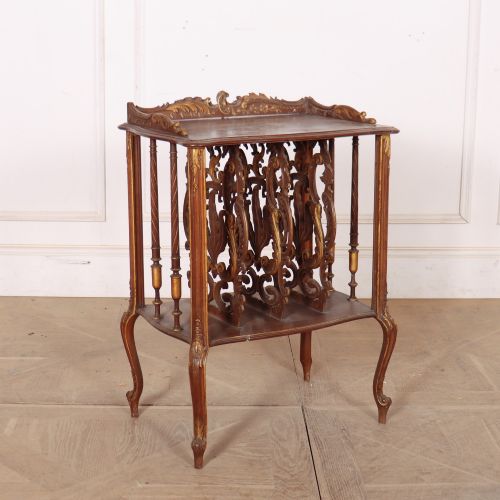


Carved Wooden Canterbury
These carved wooden canterbury pieces offer structured charm for holding folios and papers, bringing authentic period character to any room.
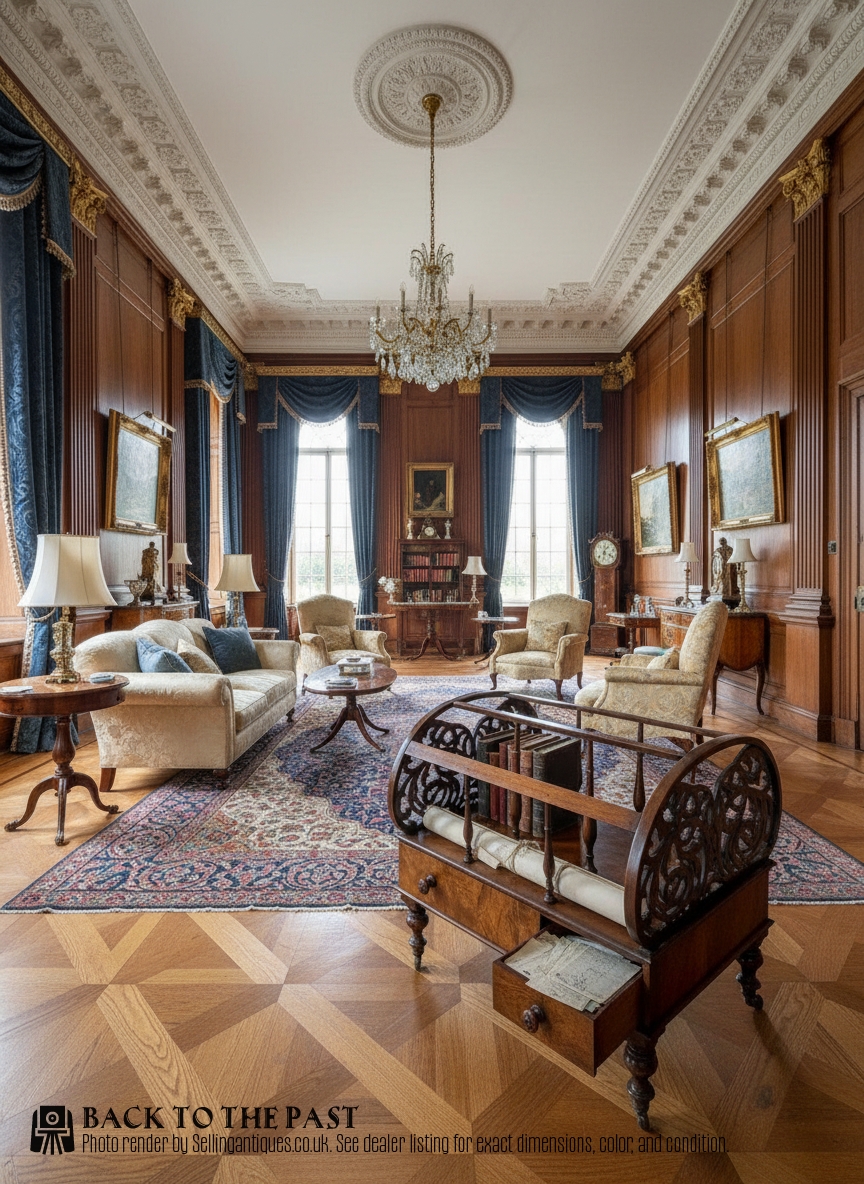
What they are
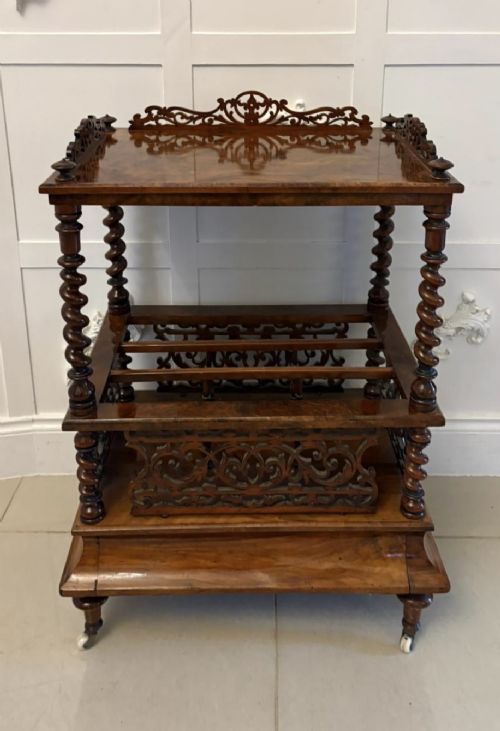
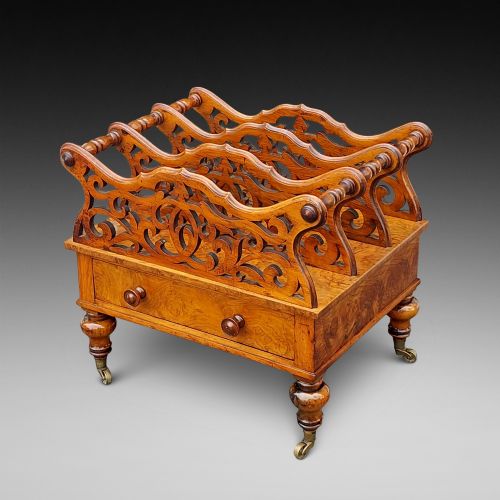
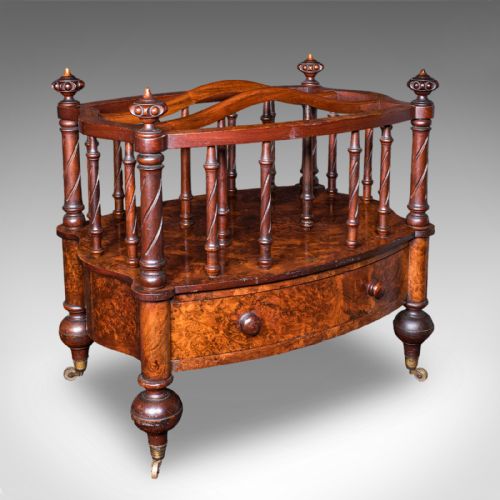
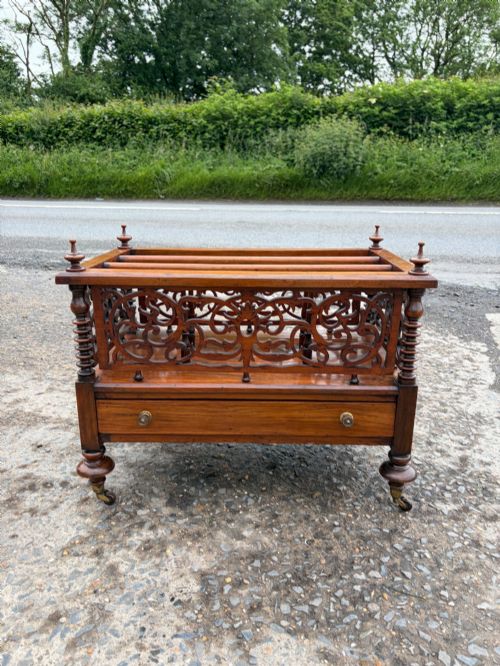
A carved wooden canterbury stands as a distinct piece of nineteenth-century furniture designed originally to hold sheet music, folios and periodicals. Examples on this page encompass various traditional forms including freestanding magazine racks and music stands equipped with drawers.
The pieces appearing here span several notable periods from the Georgian era through the William IV, Regency, and George IV styles up to the Victorian age. Buyers encounter varied timber selections and partitioned frameworks intended for domestic organisation.
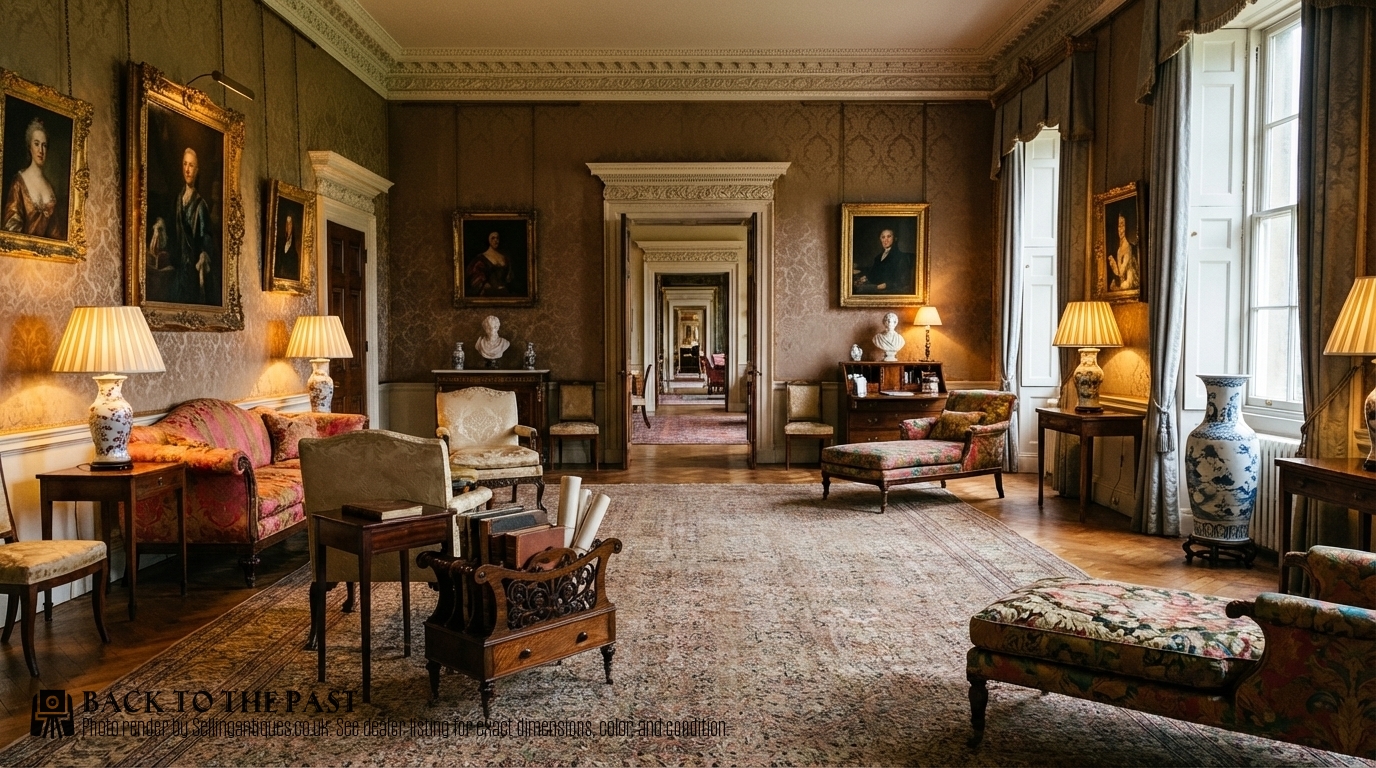
How they were made
Cabinet makers constructed these items using dense hardwoods such as mahogany, rosewood, burr walnut and standard walnut. Selected timbers provided the structural stability required for partitioned rack dividers and low framework bases.
Metal elements including brass appear in the hardware and castors that support these freestanding items. Artisans applied carved ornamentation directly to the timber frames, defining the stylistic traits of the Regency and Victorian periods.
Retail Price Guide 2026
Typical UK retail prices for carved wooden canterbury, calculated from the Sellingantiques database of over a million retail prices indexed since 2003. This retail price guide relies exclusively on Sellingantiques data; no external sources or auction records are used, so the figures do not describe the wider market.
Listings feature items from the Georgian, Regency and Victorian periods, constructed in mahogany, rosewood, walnut and burr walnut with brass details.
What varies in quality
The refinement of the carved wooden details and the choice of timber figure heavily distinguish finer examples from simpler workshops. Richly grained rosewood and burr walnut display a depth of finish that elevates the visual presence of the piece.
Integrated drawers and substantial freestanding proportions reflect higher ambition in original design. The precision of the joinery within the slatted partitions determines the enduring structural integrity of each rack.
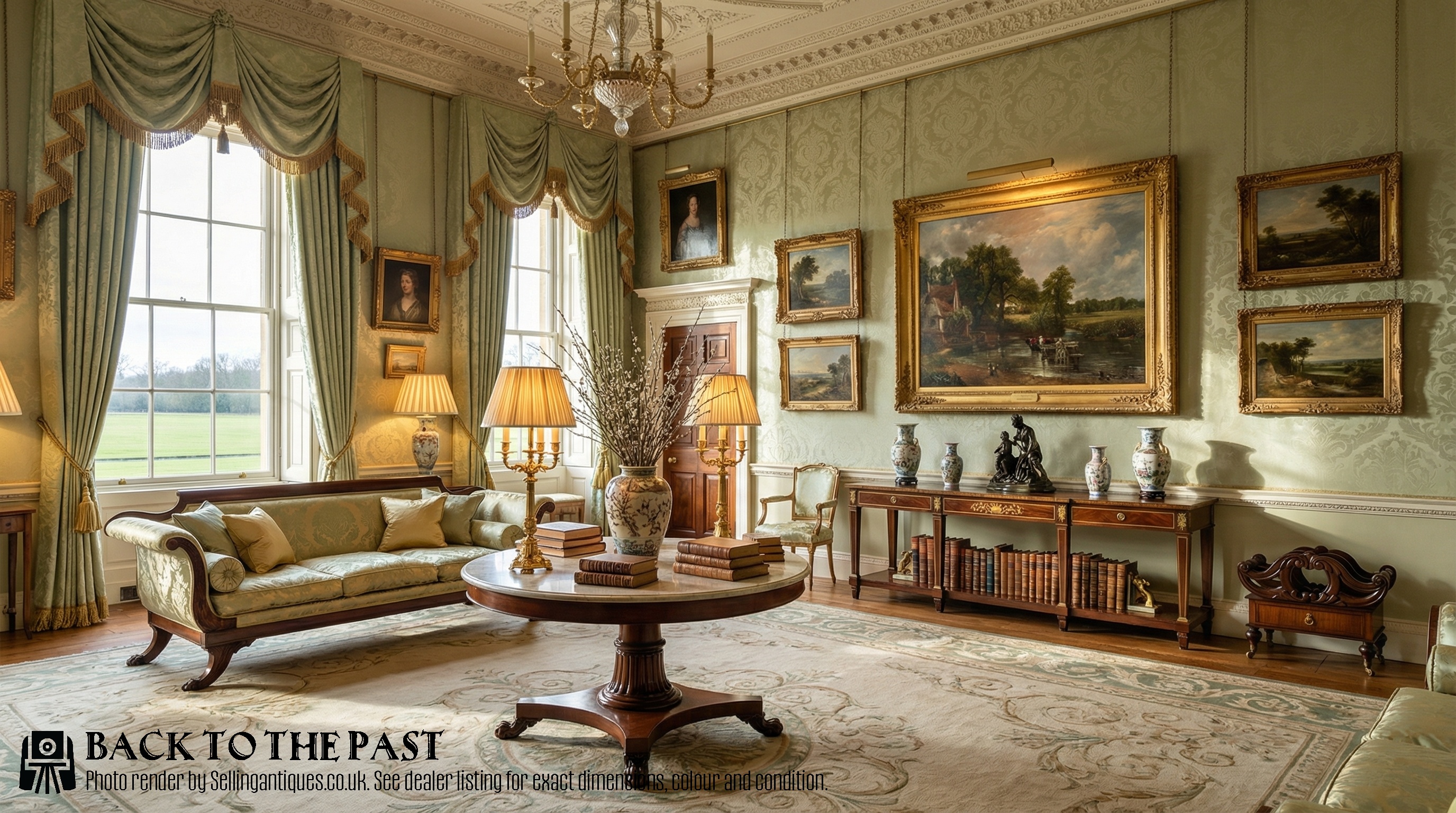
The Carved Wooden Canterbury Glossary
- Canterbury
- A low freestanding rack with partitioned sections designed for holding music sheets and papers. Originating in the late eighteenth century, it remains a distinctive domestic furnishing.
- Rosewood
- A dense, heavily figured timber prized for its dark reddish-brown hue and dramatic dark grain patterns. Cabinet makers utilised this material extensively during the Regency and Victorian periods.
- Burr Walnut
- A specialised wood veneer taken from the excrescences of walnut trees, displaying intricate swirling grain patterns. It adds rich texture to nineteenth-century cabinet work.
- Freestanding
- A descriptor for furniture designed to stand without attachment to walls or other structures. This allows the piece to be positioned anywhere within a room.
Frequently Asked Questions
What were canterburys used for originally?
These pieces served primarily to store sheet music and unbound folios near pianos or seating areas in domestic drawing rooms.
Over time, owners adapted them to hold newspapers, magazines and general household periodicals.
How do I date a wooden canterbury?
Dating relies on identifying stylistic markers associated with periods like the Regency, William IV or Victorian eras.
Timber choices such as rosewood or mahogany alongside specific carving motifs help narrow the manufacturing window.
Where should I place a canterbury?
Freestanding designs work effectively beside sofas, armchairs or desks where reading materials accumulate.
Their finished backs and detailed timber surfaces allow them to sit comfortably in open room spaces.
What is the difference between a music rack and a magazine rack?
Music racks were built to accommodate wide, flat folios of musical scores often alongside supportive under drawers.
Magazine racks share the same partitioned format but typically address lighter periodical formats from later decades.