
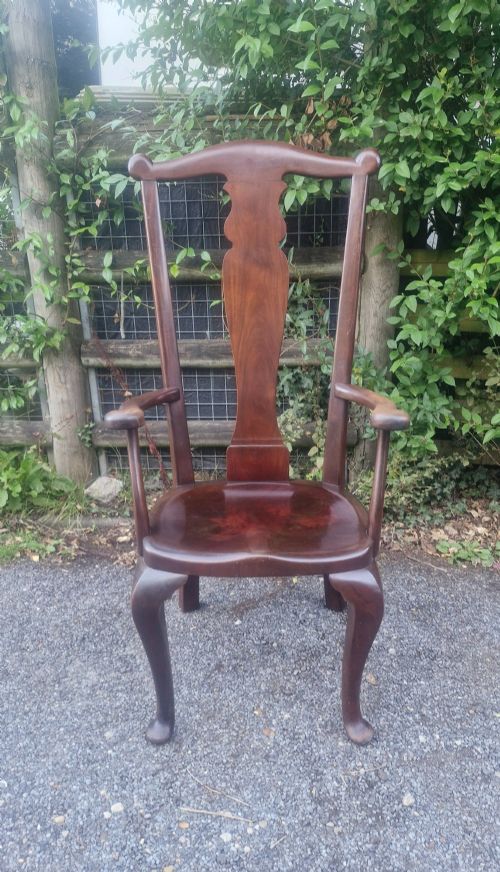


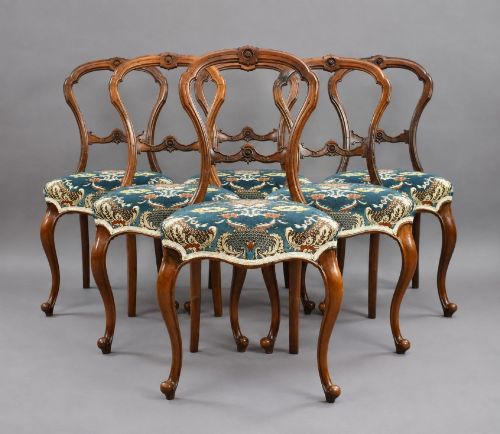
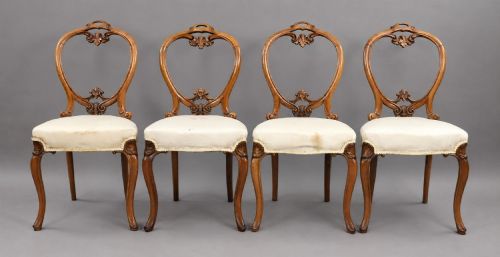
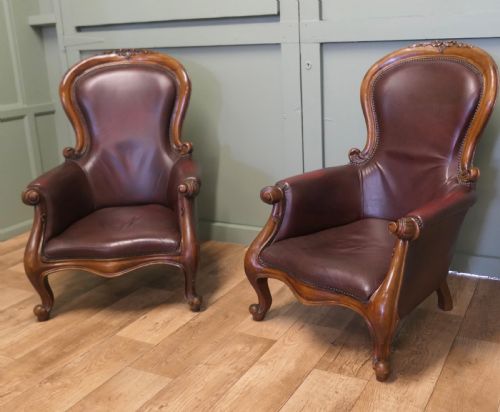
Carved Wooden Cabriole Chair
A carved wooden cabriole chair brings sculptural line and distinct period character to a room, spanning forms from dining seats to library armchairs.
Carved Wooden Cabriole Chair
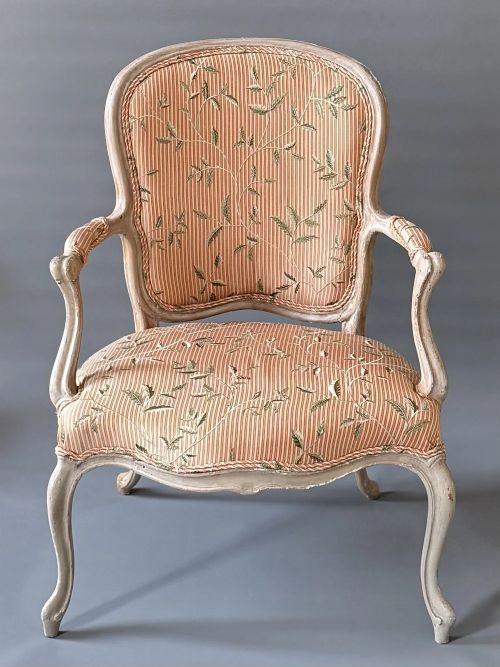
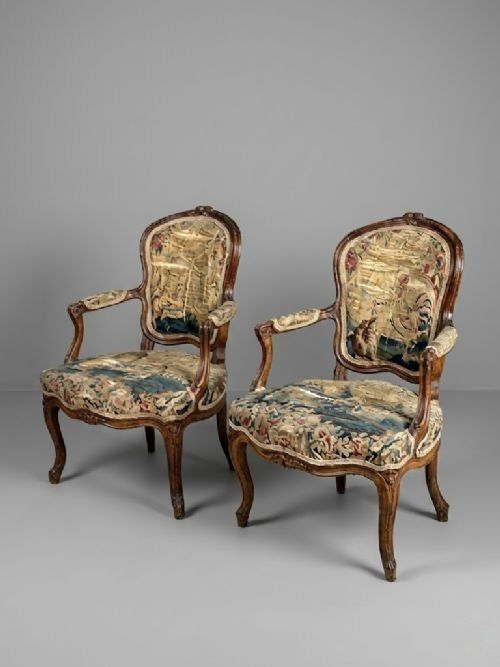
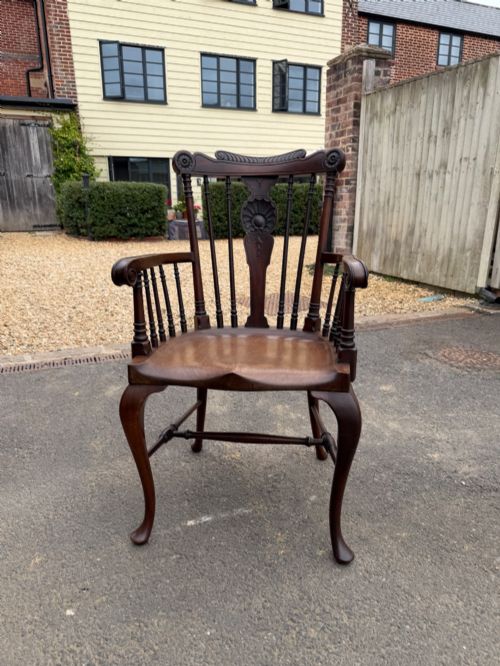
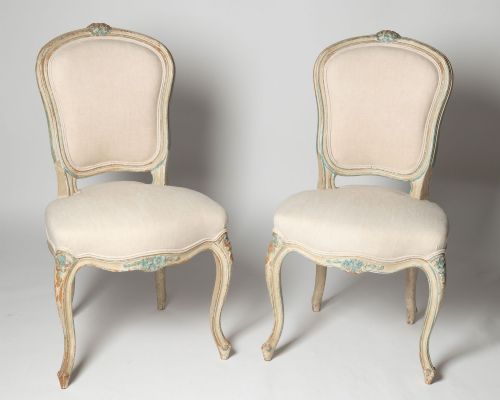
A carved wooden cabriole chair encompasses a varied selection of seating forms, ranging from single side chairs and hall chairs to sets of dining chairs and individual armchairs. Buyers exploring this selection encounter pieces originating across the eighteenth, nineteenth, and early twentieth centuries, covering periods from Georgian and Victorian eras through to Edwardian revivals.
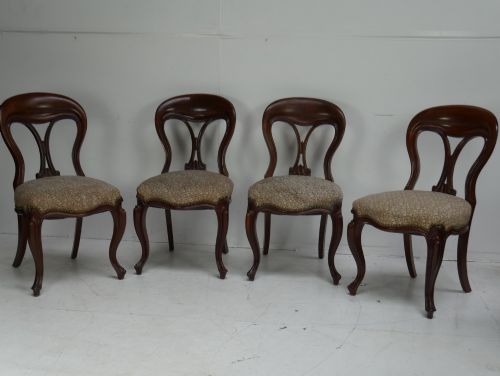
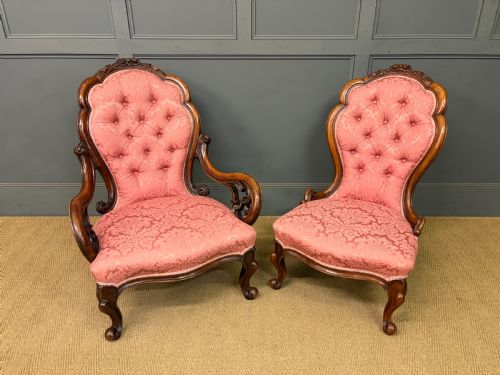
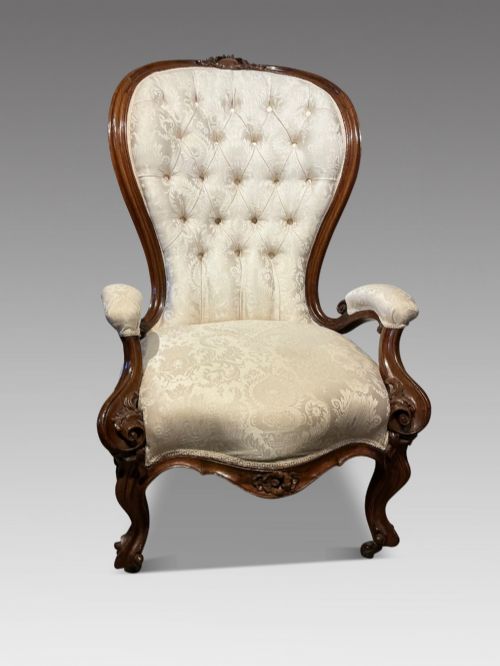
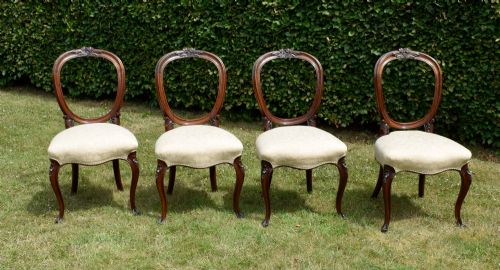
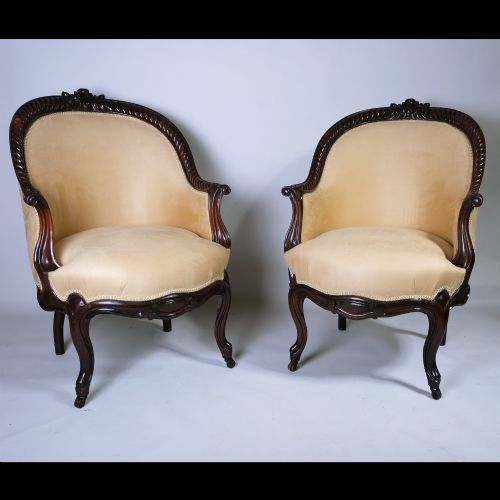
The most common examples appearing on this page are walnut and mahogany dining chairs and side chairs dating from the Victorian period, alongside French-influenced armchairs and occasional seating. These survivors demonstrate the enduring appeal of carved wooden frames shaped with curved legs and traditional joinery.
Seating types extend beyond simple dining chairs to include desk chairs, nursing chairs, salon chairs, and low lounge chairs upholstered in diverse textiles. Each variation reflects the domestic requirements of its original era while retaining the characteristic profile defined by the search phrase.
Materials and construction
Makers constructed these frames predominantly using dense hardwoods such as mahogany and walnut, alongside occasional examples in oak, goncalo alves, and painted finishes. Artisans shaped the signature curved legs and decorative backs using hand tools, frequently incorporating piercing, relief carving, and turned elements into the wooden structure.
Upholstery methods varied widely according to the intended use of the chair, employing materials like leather, fabric, velvet, textile, and tapestry. Many seating forms relied on sprung foundations or traditional stuffing secured over webbing, while other variants utilised cane panels inserted directly into carved wooden frames.
Spider web backs offered Victorian sitters an intricate geometric screen to lean against while studying ledgers at a tall desk.
Proportion and carving
Quality in these pieces rests upon the crispness of the hand-carved detail and the integrity of the timber selection. Superior examples display fluent lines along the shaped legs and backs, where carved motifs remain sharp and well-defined rather than rounded or softened by excessive wear.
The structural harmony of the frame and the retention of original surfaces also dictate distinction. Chairs that maintain their initial proportions, tight joinery, and patinated timber without intrusive alterations represent the upper tier of surviving examples.
The Carved Wooden Cabriole Chair Glossary
- Cabriole leg
- A furniture leg featuring a double curve, bulging outward at the top and tapering inward toward the foot, often ending in a pad or claw shape. This distinctive form derives from ancient animal leg designs and gained widespread popularity in eighteenth-century furniture.
- Balloon back
- A rounded, oval-shaped chair back resembling the profile of a balloon, commonly seen on nineteenth-century dining chairs. This design provided comfortable support while offering makers a broad surface for subtle carved decoration.
- Bergère
- An enclosed upholstered armchair featuring wooden sides and a padded seat, typically originating from French design traditions. These seats often incorporated cane work or exposed polished frames alongside loose squab cushions.
- Splat
- The vertical central strip of wood in a chair back connecting the seat to the top rail. Makers pierced, carved, or shaped this element to define the decorative style of the seating.
- Goncalo alves
- A dense exotic hardwood prized for its rich figuring and deep colour, occasionally utilised for nineteenth-century seating frames. Its heavy weight and distinct grain provided exceptional durability and visual presence.
Carved Wooden Cabriole Chair: Frequently Asked Questions
How do I identify a Victorian chair?
Victorian chairs often feature darker hardwoods like walnut and mahogany, with specific forms such as balloon backs and spoon backs dominating the era. Look for robust construction methods and upholstery styles typical of the nineteenth century.
Examination of the underside and joinery can also reveal manufacturing clues, though many pieces blend revival styles from earlier periods with Victorian production techniques.
Can these chairs be used daily?
Most of these wooden chairs were built for functional domestic use and remain sturdy enough for regular seating. Ensuring the frame joints and any internal webbing remain secure is the best way to prepare them for daily life.
Placing them away from direct heat sources and sharp sunlight helps preserve the polished timber surfaces and original or period-appropriate upholstery over years of use.
What is a Chippendale style chair?
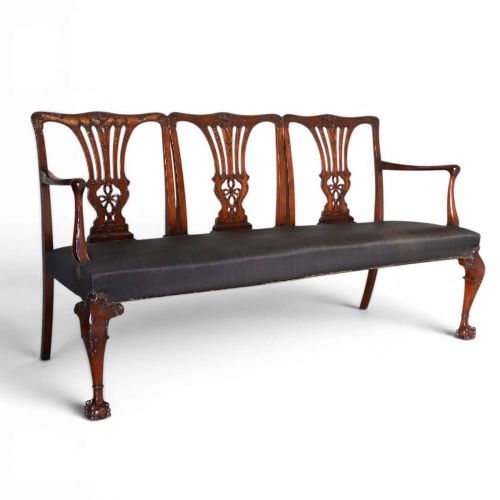
Chippendale style seating draws inspiration from eighteenth-century designs, featuring characteristics like intricate carved top rails and pierced splats. Edwardian and Victorian makers frequently revived these aesthetic elements.
Such pieces combine traditional proportions with the darker timber tones favoured during later revival periods, bridging eighteenth-century elegance with later craftsmanship.
How do I clean antique wood?
Dusting regularly with a soft, dry cloth prevents the accumulation of grit that can damage polished wooden surfaces over time. Avoid modern silicone sprays or harsh chemical cleaners that can penetrate and degrade historic finishes.
Applying a traditional beeswax formulation occasionally helps nourish the timber and maintain the natural lustre built up over decades or centuries of handling.