




Carved Wooden Buddhist Statues
Carved wooden buddhist statues bring quiet presence into a room, formed through generations of traditional handwork across China, Burma and Tibet.
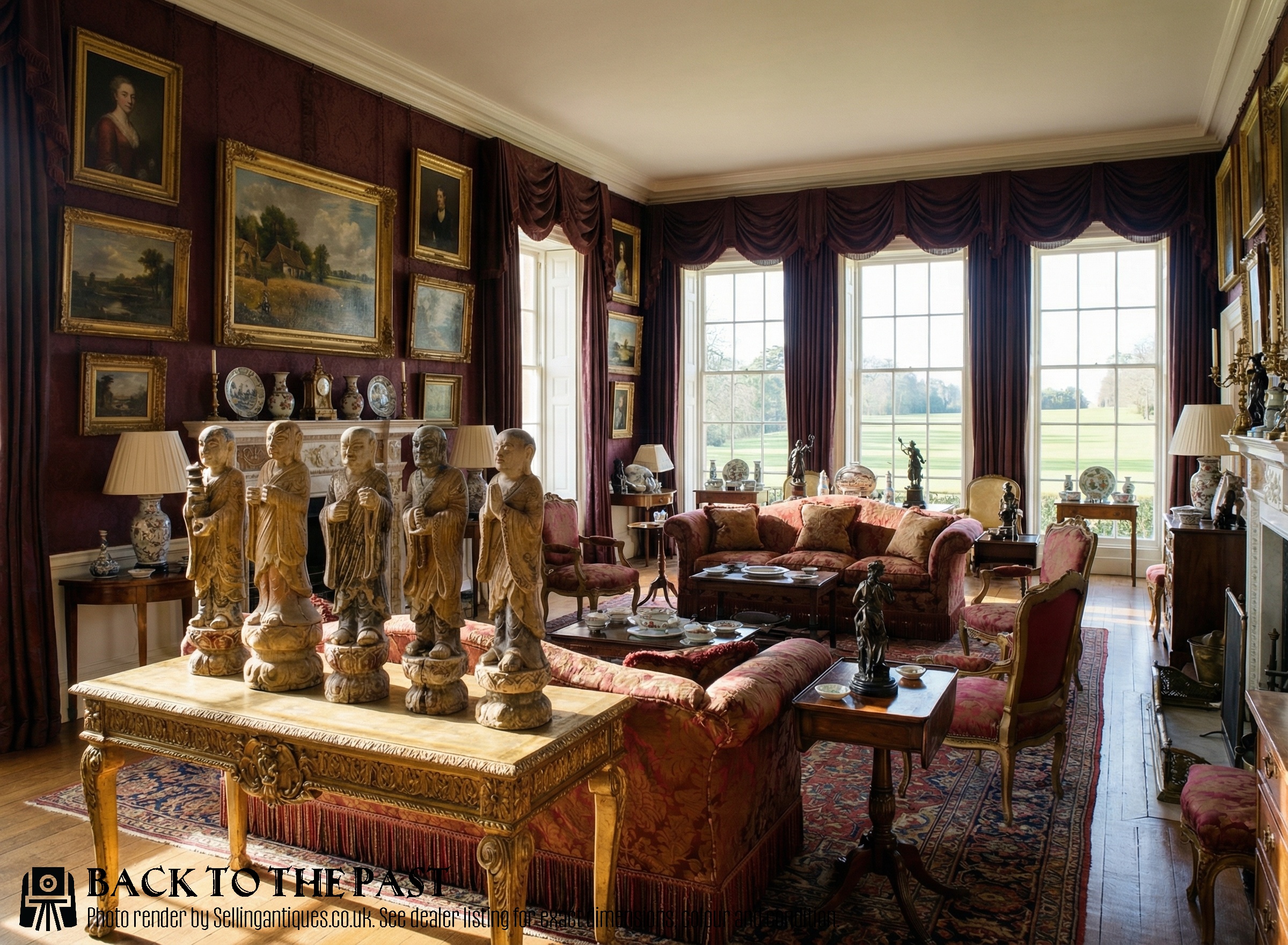
Carved Wooden Buddhist Statues
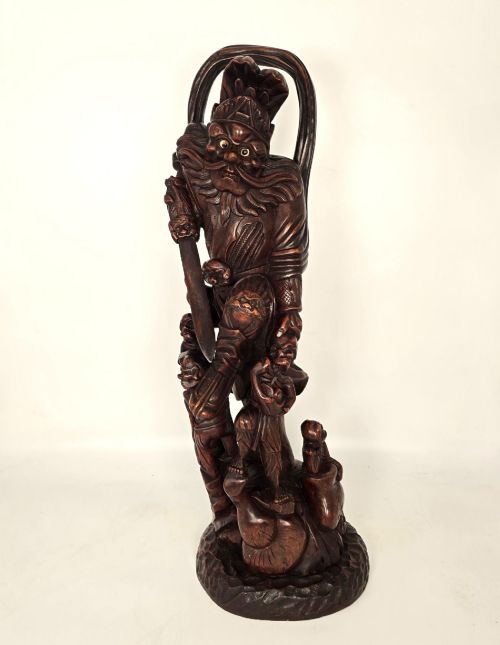
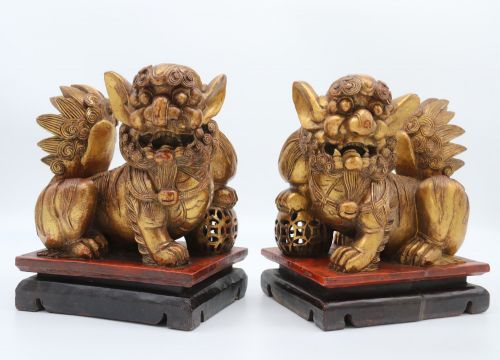
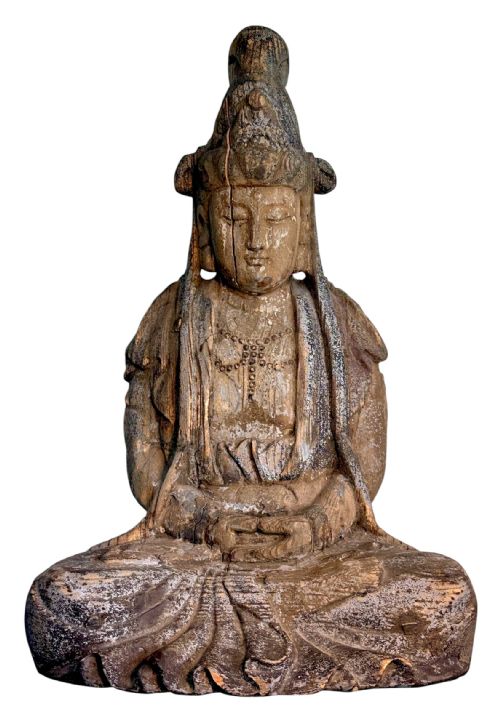
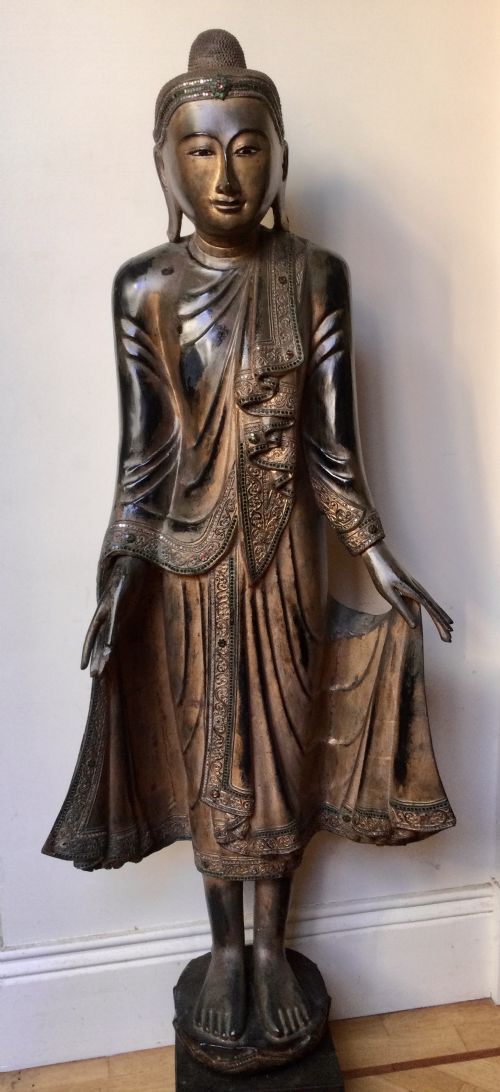
Carved wooden buddhist statues encompass figures of Buddhas, bodhisattvas such as Guanyin or Quan Yin, guardian kings and temple lions created across Asia. The examples seen here range from the eighteenth century through the Edwardian era and the early twentieth century, spanning Chinese, Tibetan and Burmese traditions.
The most common forms on this page are substantial standing or seated figures, alongside monumental guardian carvings, temple lions and Buddha heads. These pieces originate from distinct regional workshops, reflecting the artistic conventions of the Qing dynasty and Southeast Asian monastic art.
A buyer examining these sculptures encounters a diverse selection of devotional imagery, created primarily for ritual placement in shrines or domestic spaces. Each piece carries the distinct stylistic markers of its period, from robust nineteenth-century polychrome figures to gilded works from around nineteen hundred.
How they were made
Makers shaped these sculptures from various woods and hardwoods, employing hand-carving techniques to define flowing garments, facial expressions and ornate physical attributes. Artisans often applied layers of gesso to the wooden base to prepare the surface for subsequent decoration.
Finishes relied heavily on gold leaf, gilt wood and traditional lacquer, sometimes enhanced with polychrome paint or glass inlay for decorative effect. These applied surfaces were built up in stages, preserving the underlying timber while creating a luminous appearance suited to sacred subjects.
Several fierce guardian figures and temple lions stand ready to ward off bad luck, proving that ancient security systems occasionally involved very shiny dogs.
What varies in quality
The preservation of original gilding, lacquer and polychrome paint significantly influences the character of a piece, as does the natural ageing of the wood over time. Surfaces that show harmonious integration of the original finish convey greater visual cohesion than later overpainting.
The Carved Wooden Buddhist Statues Glossary
- Gilt wood
- Wood covered with a thin layer of gold leaf or gold paint. It provides a luminous surface that catches candlelight in temple settings.
- Gesso
- A plaster mixture applied to wood to create a smooth surface for gilding or painting. It helps seal the timber before decoration.
- Lacquer
- A protective and decorative coating derived from tree sap, applied in multiple layers. It cures to a hard, durable finish resistant to moisture.
Carved Wooden Buddhist Statues: Frequently Asked Questions
How do I care for a wooden statue?
Keep wooden sculptures away from direct sunlight and sudden changes in temperature or humidity to prevent the timber from splitting.
Dust the surface gently with a soft, dry cloth and avoid using liquid cleaners or polishes that might damage old lacquer or gilding.
Where were these statues originally displayed?
Many of these pieces stood within Buddhist temples, domestic shrines or monastic halls across China, Tibet and Burma.
They served as focal points for meditation, devotion and protection within sacred spaces before entering private collections.
How can I tell the age of the wood?
Dating relies on stylistic conventions, tool marks left by the carver and the natural oxidation of the timber over centuries.
Examine the wear patterns on the base and the condition of underlying layers like gesso to understand the historical context.
What is the difference between Chinese and Burmese styles?
Chinese sculptures from periods like the Qing dynasty often feature distinct drapery folds and robust facial structures associated with local traditions.
Burmese work from Mandalay typically displays specific crown designs and luminous gilt surfaces characteristic of Southeast Asian Buddhist art.