




Asian Folk Art Statues
Asian folk art statues bring character and history into a room, spanning carved wood figures and religious deities.
Asian Folk Art Statues
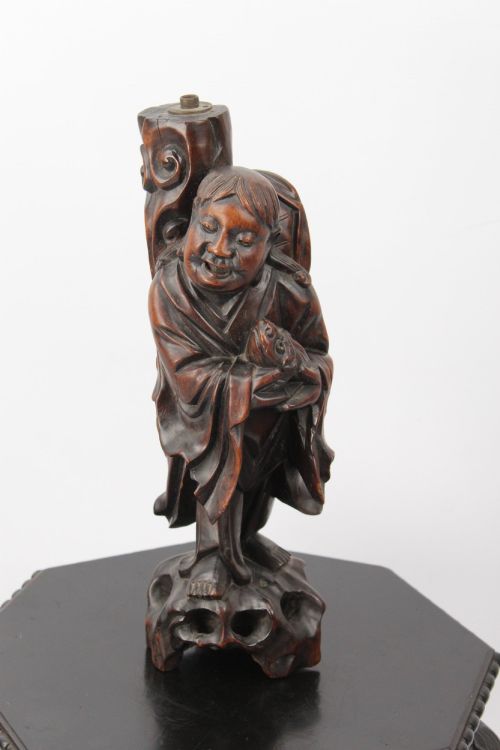
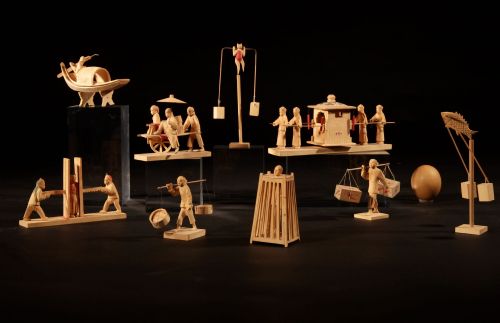
Asian folk art statues encompass hand-carved wooden sculptures, religious figures, and character pieces originating from various eastern traditions. When searching for Asian folk art statues, collectors encounter figures ranging from Buddhist immortals and Daoist deities to fishermen and scholars.
The pieces available on this page lean heavily towards Chinese wood carvings, Tibetan statues, and Balinese or Indian traditional figures. Dating primarily from the eighteenth and nineteenth centuries, these works showcase regional craftsmanship through organic forms and local timber.
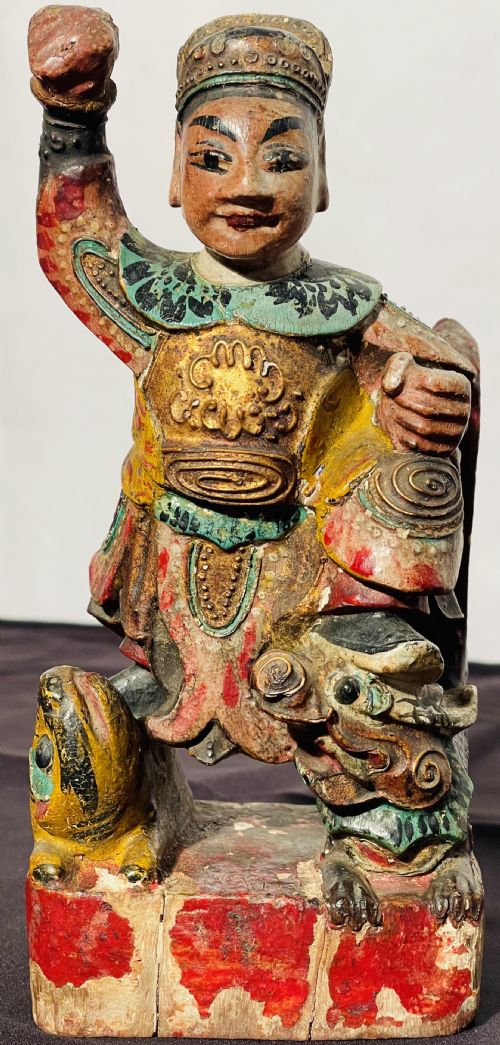
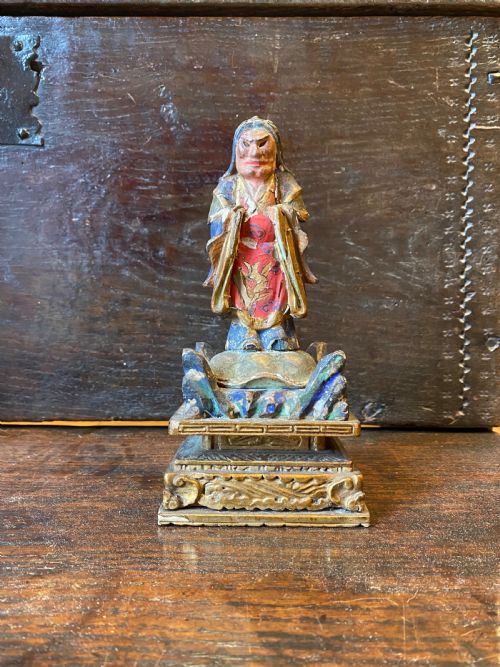
Makers often utilised gesso and polychrome paint or pigment to finish the surface of the timber, creating vibrant depictions of mythological beings and daily life. Forms vary from small individual figures to intricate root wood sculptures and temple deities.
Materials and Techniques
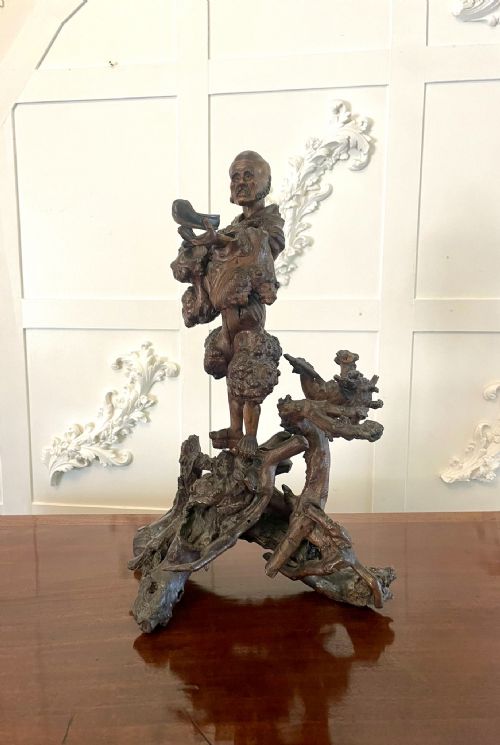
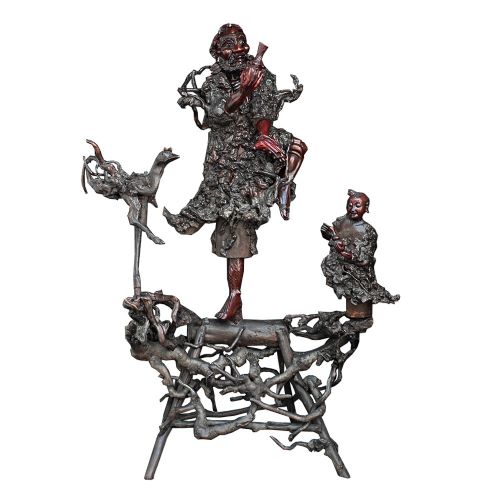
Wood serves as the primary medium across these pieces, utilising various timbers including hardwood, burr wood, and root wood. Artisans shaped these organic materials by hand, often following the natural contours of the timber to guide the final sculpture.
One remarkably sturdy traveller is preserved as a carved model of a Mongolian pack horse.
Assessing Quality
Quality in these carvings rests upon the expressiveness of the form and the skill of the hand in utilising the natural grain of the timber. Root wood and burr wood pieces derive their appeal from how cleverly the carver incorporated natural knots and roots into the subject.
The preservation of original gesso and polychrome pigment significantly impacts the character of a piece. Finer examples retain clear tool marks and balanced proportions, whereas simpler items rely purely on the rustic charm of the raw material.
The Asian Folk Art Statues Glossary
- Root wood
- Timber sourced from the root system of a tree, prized for its gnarled and twisted natural shapes. Carvers often incorporated these intricate forms directly into figures and scholarly objects.
- Gesso
- A plaster-like mixture applied to wood surfaces to prepare them for painting. It provides a smooth base that holds polychrome pigment firmly.
- Burr wood
- A growth on a tree where the grain has grown in a deformed manner, resulting in complex patterns. It creates highly decorative surfaces when polished or carved.
Asian Folk Art Statues: Frequently Asked Questions
What are Asian folk art statues made from?
These sculptures are predominantly carved from various types of wood, including dense hardwoods and highly figured burr or root wood. Many examples feature surface decoration composed of gesso and polychrome paint.
Artisans selected specific timbers for their natural grain and resilience, shaping them by hand to create figures of deities, animals, and everyday people.
How old are these wooden sculptures?
The pieces seen here date primarily from the eighteenth and nineteenth centuries, spanning periods such as the Qing dynasty. Earlier works often reflect traditional religious iconography and temple use.
Dating is typically determined by the style of the carving, the wear of the timber, and the remnants of original pigments.
How do I care for antique wood carvings?
Antique wooden figures require stable indoor humidity and protection from direct sunlight to prevent the timber from drying out or splitting. Keeping them away from heat sources preserves both the wood and any surviving polychrome paint.
Dusting should be done gently with a dry, soft brush rather than using liquid polishes or harsh cleaning agents.
What subjects do these statues represent?
The subjects range widely from religious figures such as Buddhist immortals, Quan Yin, and Daoist deities to secular figures like fishermen, scholars, and pack animals. These depictions often mirror traditional stories, folklore, and observations of daily life.
Religious pieces were frequently created for domestic shrines or temples, while others served decorative purposes.