




Weathered Timber Sculpture
These weathered timber sculpture pieces are carved figures, panels and functional objects bearing centuries of grain, showing that age transforms raw wood into art.
Weathered Timber Sculpture
Weathered timber sculpture encompasses carved figures, panels and objects shaped from wood across centuries of global tradition. When you search for weathered timber sculpture, you encounter religious figures, folk art carvings and repurposed structural elements that carry deep marks of age.
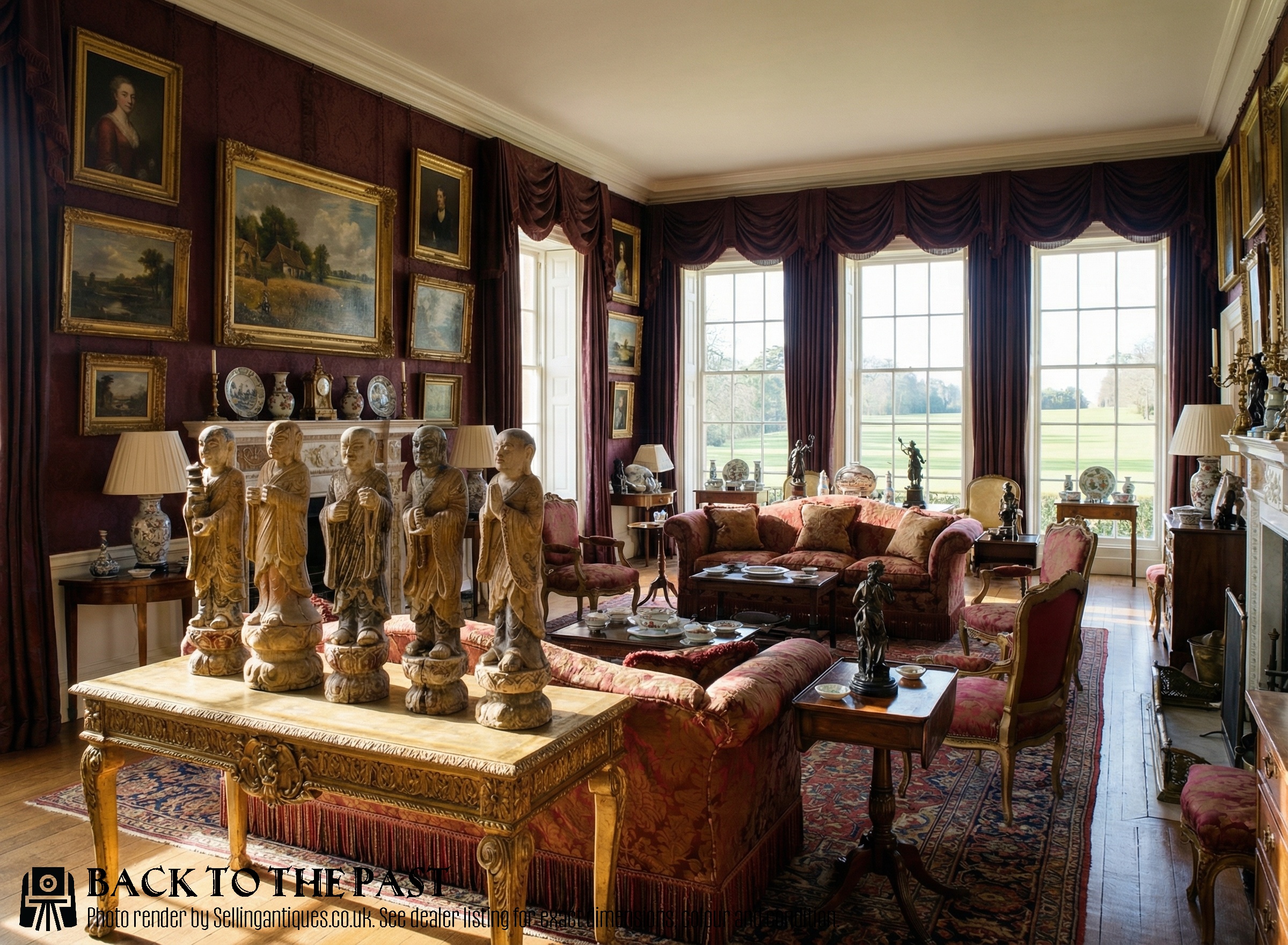
The pieces on this page span from pre-sixteenth century church fragments to twentieth century folk art carvings and decoy ducks. European religious figures sit alongside Chinese temple guards and Oceanic canoe prow carvings, united by the patination of exposed wood.
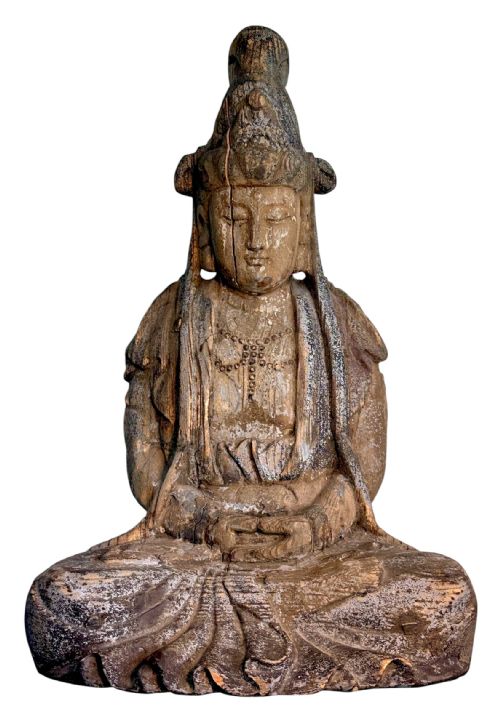
Forms range from wall panels and architectural fragments to freestanding statues of saints, Buddhas and animals. Elm, oak and general timber form the base of these works, frequently enriched with traces of old gesso or polychrome paint.
Materials and construction
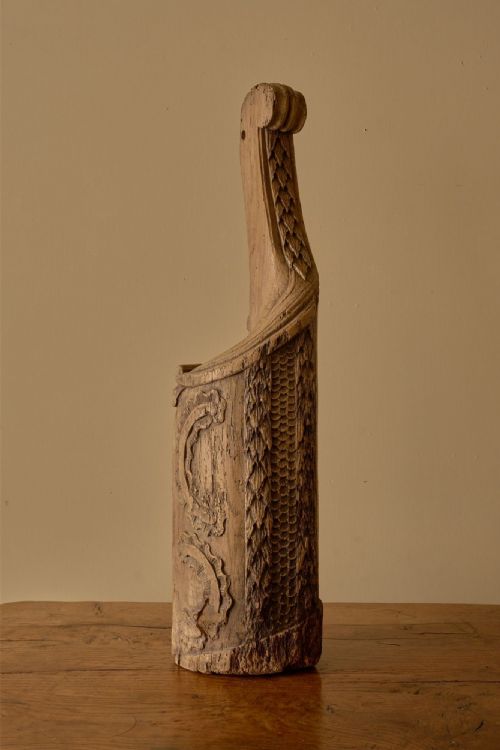
Carvers shaped these works from dense hardwoods such as oak and elm using traditional hand chisels and gouges. The natural grain of the timber dictates the texture of each surface, whether smoothed by handling or eroded by time and elements.
Many European and Asian figures received layers of gesso and polychrome paint over the carved wood, though centuries have worn most pigments down to bare grain. Structural elements often incorporate iron fixings or brackets that reflect their original architectural or functional purpose.
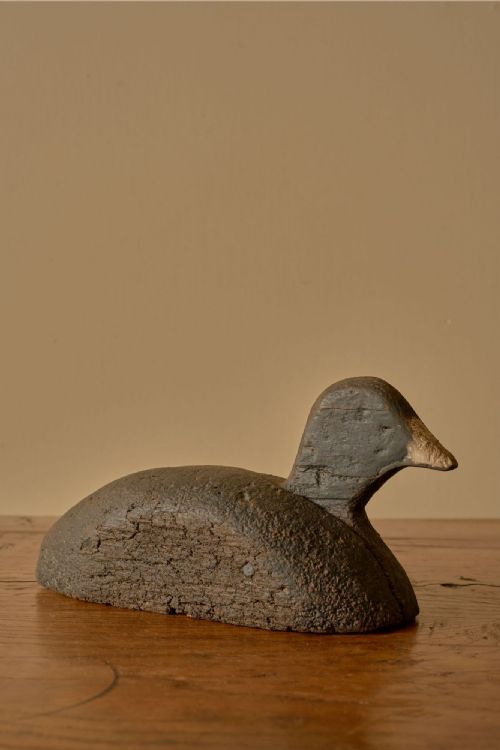
A working duck decoy retains the distinct personality of a bird carved to fool real waterfowl in the mist.
Judging quality and character
Quality rests in the confidence of the carving and the depth of the timber's surface patination. A strong piece displays purposeful tool marks and anatomical understanding, even when executed in a primitive or folk idiom.
The integrity of the surviving material matters greatly, distinguishing untouched historic surfaces from later restorations. Natural weathering and dry, unvarnished timber skins command attention by revealing the true age of the object.
The Weathered Timber Sculpture Glossary
- Polychrome
- Decoration consisting of several colours applied to wood or stone. Traces of this paint often survive in protected crevices of early carvings.
- Gesso
- A plaster mix applied to wood as a smooth base for gilding or paint. It provides key evidence of an object's original decorative scheme.
- Folk art
- Utilitarian or decorative objects made by self-taught makers within a traditional community. These pieces prioritize direct expression over academic convention.
- Decoy duck
- A floating wooden carving used to lure waterfowl during the hunt. Examples often show layers of working paint and substantial surface wear from outdoor use.
- Threshing board
- An agricultural implement studded with flints or carved from timber to process grain. Worn boards now serve as rustic wall panels.
Weathered Timber Sculpture: Frequently Asked Questions
How do I date weathered timber carvings?
Dating relies on tool marks, timber species, stylistic conventions and the natural oxidation of the wood surface over centuries. Comparative analysis of known period fragments helps anchor the timeline.
Examinations of joinery and remaining ground layers like gesso also provide clues to the workshop practices of specific eras.
Where were these sculptures displayed originally?
Many European carvings originated inside churches as altarpieces, architectural reliefs or figures of saints. Others served domestic, utilitarian or ritual roles across diverse global traditions.
Folk art pieces and decoy ducks belonged to everyday rural life, while temple guards and immortals occupied sacred eastern spaces.
How should I care for old wood?
Keep wooden sculptures away from direct heat sources, rapid temperature shifts and strong sunlight to prevent the timber from splitting. Dust gently with a dry, soft cloth.
Avoid applying modern waxes or oils unless advised by a conservator, as historic dry surfaces benefit from breathing naturally.
Are weathered surfaces original?
Surface weathering develops through decades or centuries of exposure to light, air and handling, resulting in a stable, dry patination. Genuine age shows gradual softening of edges and deep integration of dirt into the grain.
Artificial ageing lacks the subtle variation and depth found on pieces that have aged naturally in domestic or architectural settings.