
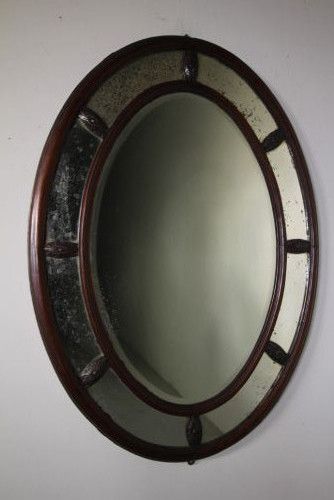
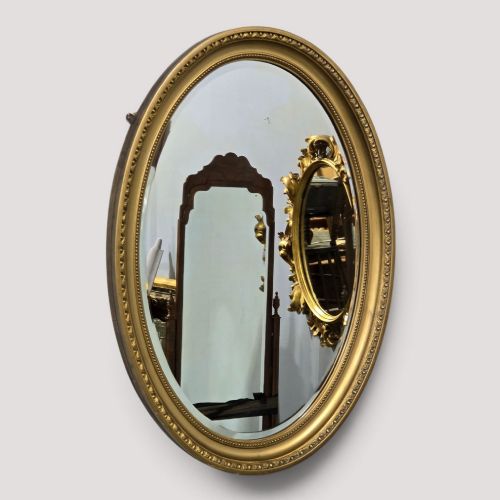

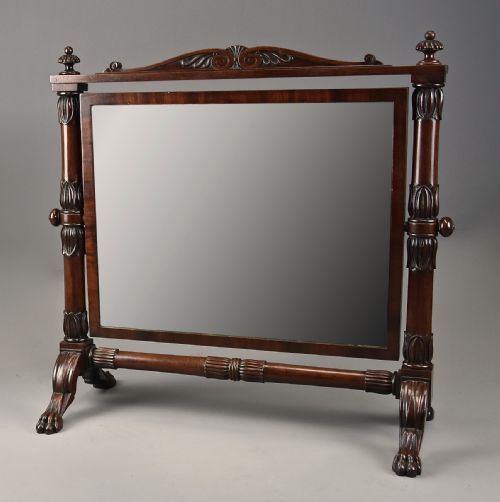
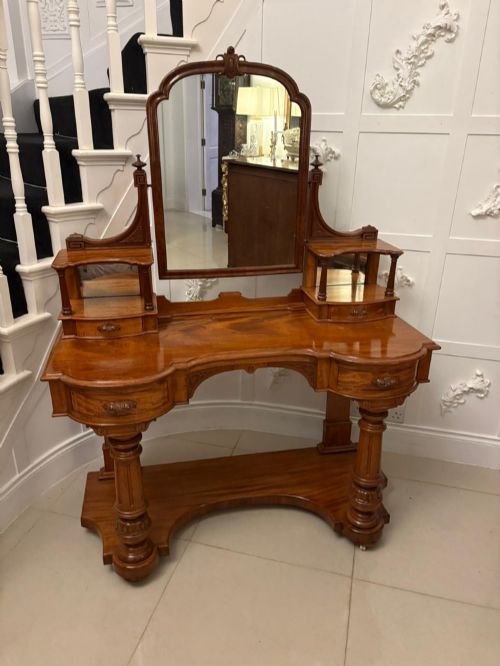
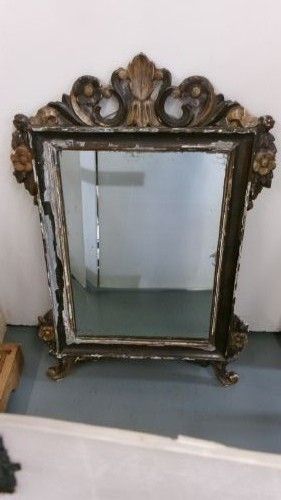


Carved Wood Vanity Mirror
A carved wood vanity mirror brings warmth and functional elegance to a dressing space through traditional craftsmanship.
Carved Wood Vanity Mirror
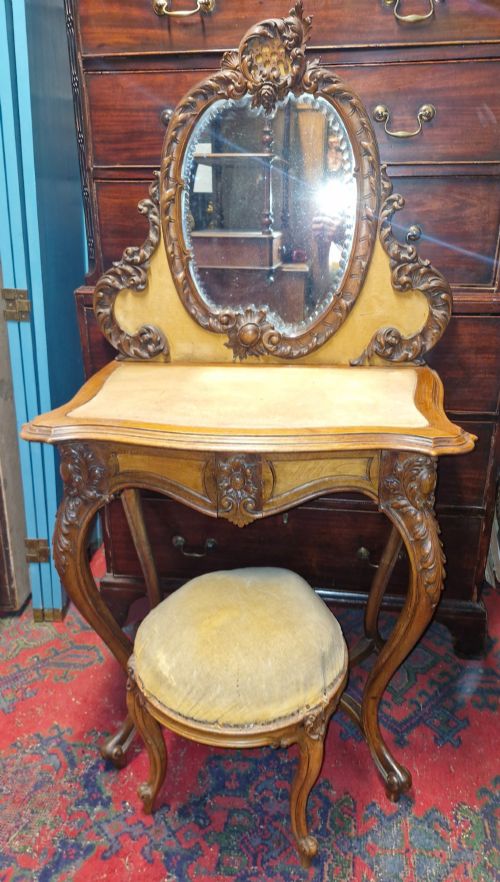
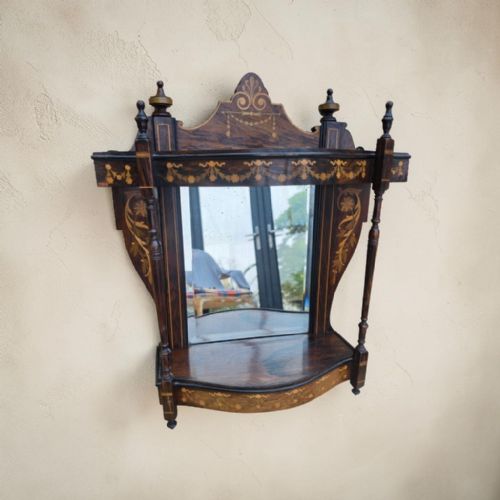
A carved wood vanity mirror sits on a dressing table, chest or table to provide a clear reflection for grooming and personal care. These pieces function as both practical accessories and decorative furnishings within a bedroom or dressing room.
The selections span several distinct periods, including Georgian, Victorian, Regency and Edwardian eras. Mahogany, walnut, oak and lime wood frequently form the structural framework of these items.
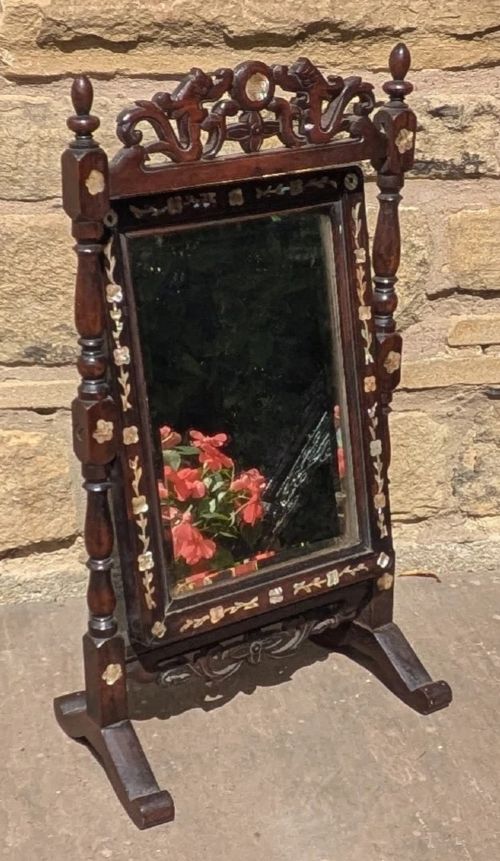
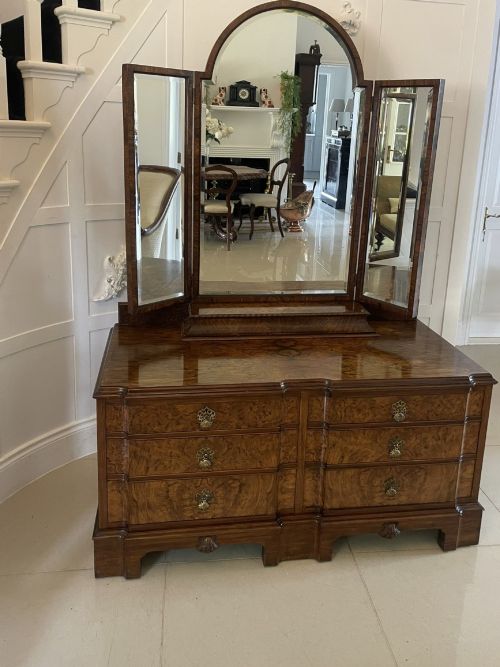
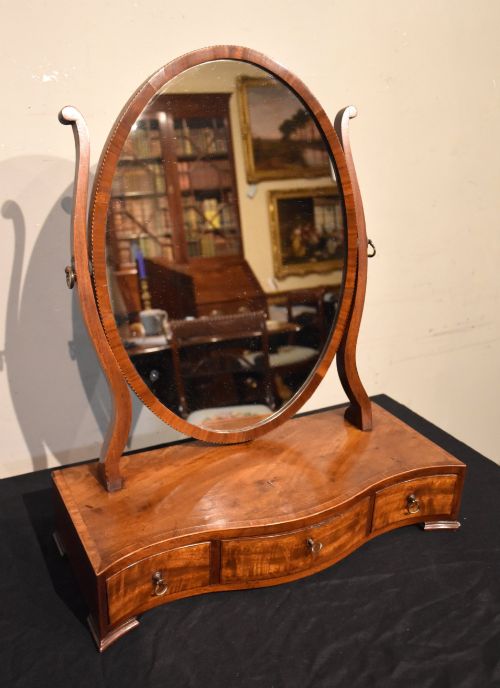
Buyers often encounter swing mirrors mounted on small upright supports and table mirrors designed for stability. Many examples incorporate small drawers or compartments beneath the glass plate for storage.
Materials and construction methods
Cabinet makers utilised dense timbers such as mahogany, walnut and oak to construct durable frames capable of holding glass plates securely. Selected pieces feature applied gesso and giltwood details that provide ornate surface enrichment.
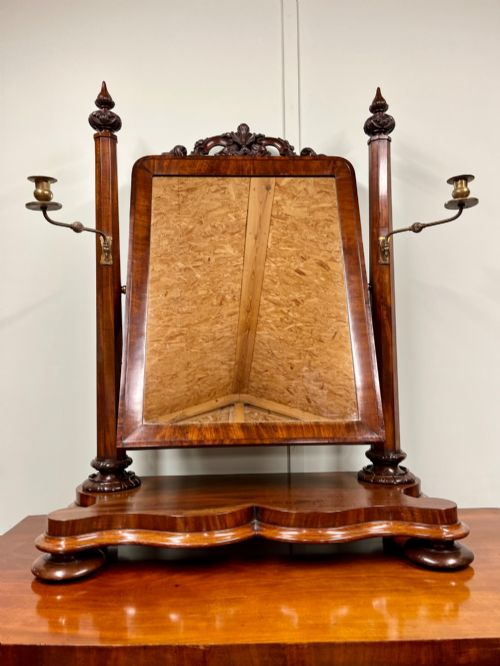
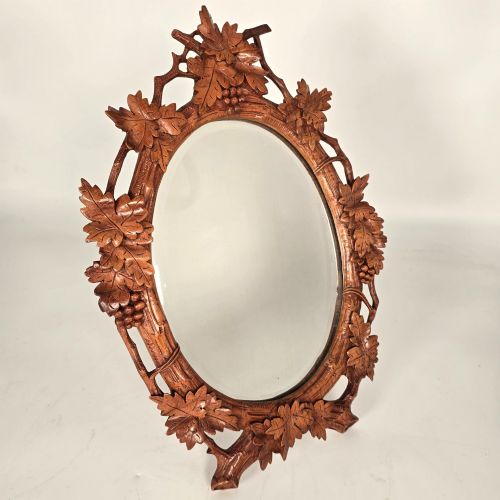
Woodcarving techniques varied from simple moulded edges to intricate foliate and scroll motifs executed by hand. Swing mechanisms rely on brass pivots or wooden screw nuts to allow adjustable angles for the glass.
Secret compartments hidden inside small dressing mirror base drawers provided a safe haven for Victorian rings and love tokens.
Distinguishing quality in construction
Superior examples display crisp, deeply carved wooden details rather than shallow or mechanical mouldings. The choice of timber grain, such as figured mahogany or burr walnut, elevates the visual presence of the frame.
Original mirror plates often show subtle age-related foxing, whilst the structural joinery beneath the dressing glass remains tight and true. High-grade brass hardware and well-fitted drawer boxes indicate careful historical production.
P & MA Nicholson
The Carved Wood Vanity Mirror Glossary
- Swing mirror
- A glass plate hung within a movable frame that tilts between two upright arms. This design allows the user to adjust the viewing angle easily.
- Toilet mirror
- A smaller table-standing mirror historically used during personal ablutions and dressing routines. These often incorporate small base drawers for trinkets.
- Gesso
- A plaster-based material applied to wood surfaces and carved or moulded before gilding. It provides a smooth base for gold leaf application.
- Cheval mirror
- A full-length floor-standing mirror mounted in a freestanding frame. The name derives from the French word for horse, referencing the four-legged support structure.
- Fret mirror
- A wall-hanging mirror featuring intricate pierced woodwork created with a fretsaw. These are commonly associated with Georgian interior styles.
Carved Wood Vanity Mirror: Frequently Asked Questions
How do I date a carved wood vanity mirror?
Dating relies upon examining the timber species, construction joints and mirror glass characteristics. Earlier Georgian pieces often use native hardwoods and hand-bevelled plates with thinner sections.
Later Victorian and Edwardian examples show machine-sawn backing boards and standardised hardware fittings. Stylistic cues like carved scrolls or inlaid details also point to specific design periods.
Can these mirrors be placed on any dressing chest?
Most table mirrors sit securely on top of flat surfaces using their own wooden base frames. Ensure the depth and weight of the mirror match the proportions of your chosen chest.
Freestanding table versions require sufficient surface area to prevent tipping when the glass is tilted. Wall-mounted variants need appropriate fixings to support the combined weight of wood and glass.
What is the difference between a toilet mirror and a shaving stand?
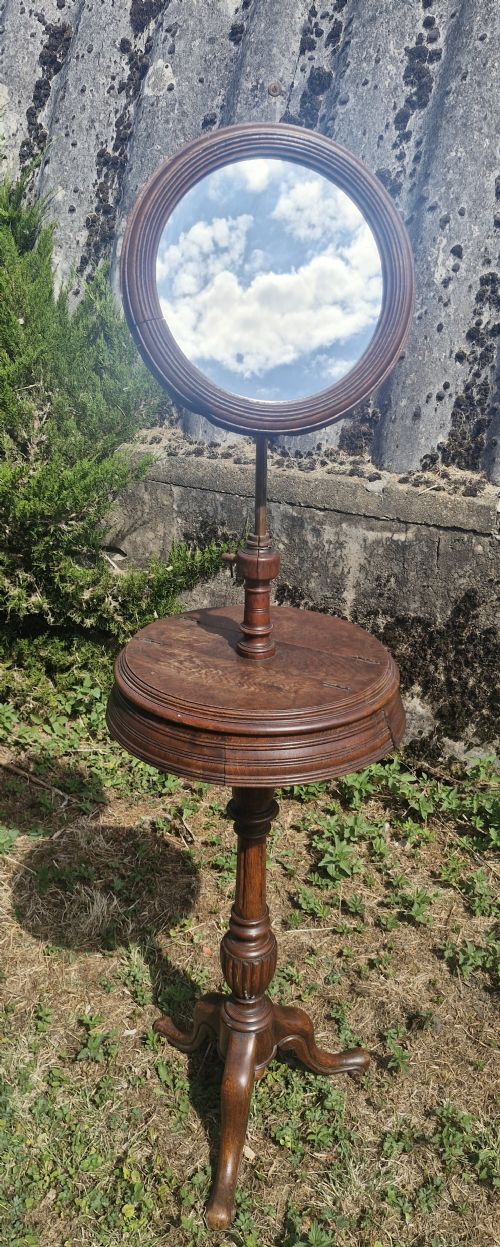
Toilet mirrors are designed for dressing tables and feature desktop bases with or without small drawers. Shaving stands are typically taller, specialised pieces incorporating adjustable mirrors on tripod bases or dedicated columns.
Shaving stands often date from the Victorian era and catered specifically to gentleman's grooming requirements. Both items utilise pivoting frames to adjust the angle of reflection.
How should I clean the wooden frame?
Dust the carved wooden surfaces regularly with a soft, dry lint-free cloth to prevent dirt accumulation. Avoid using harsh chemical sprays or excess water on antique timber and gilt surfaces.
Period finishes respond best to occasional applications of appropriate furniture wax applied sparingly. Buff gently with a clean cloth to maintain the natural sheen of the wood.