
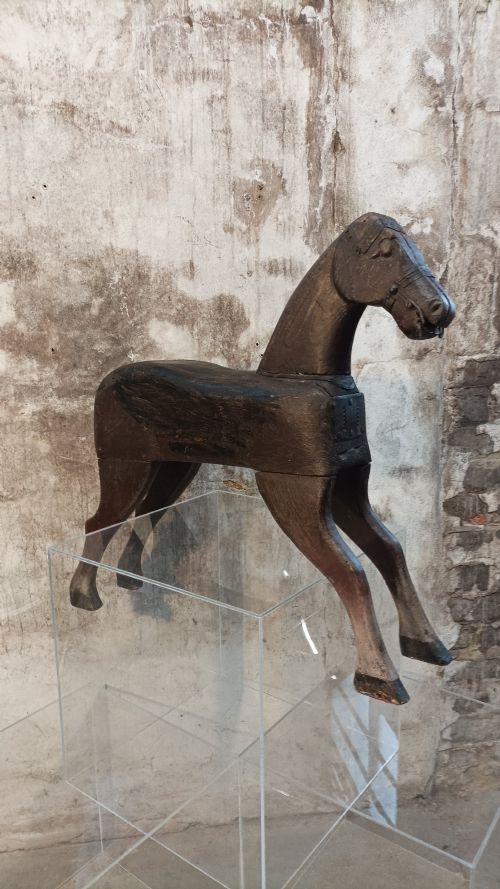
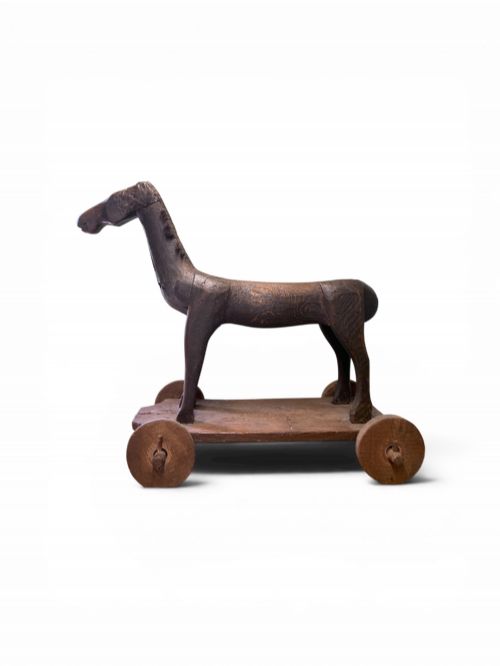
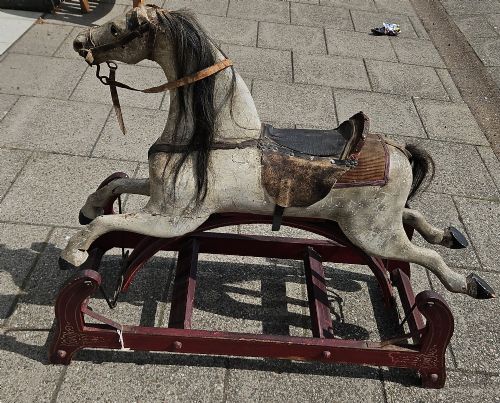


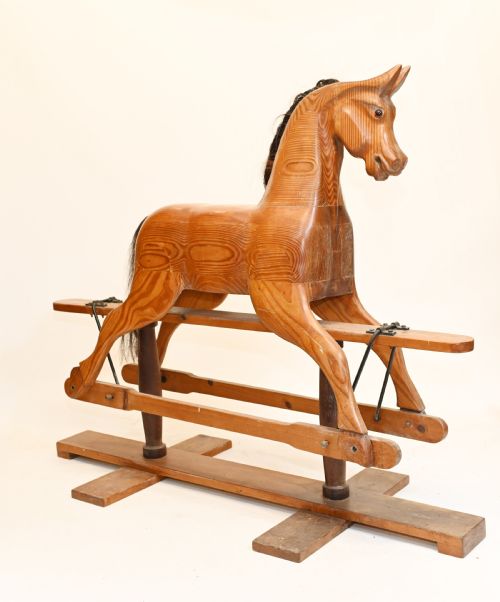
Carved Wood Toy Horse
These carved wood toy horse pieces bring tactile early play and folk traditions straight into a room.
Carved Wood Toy Horse
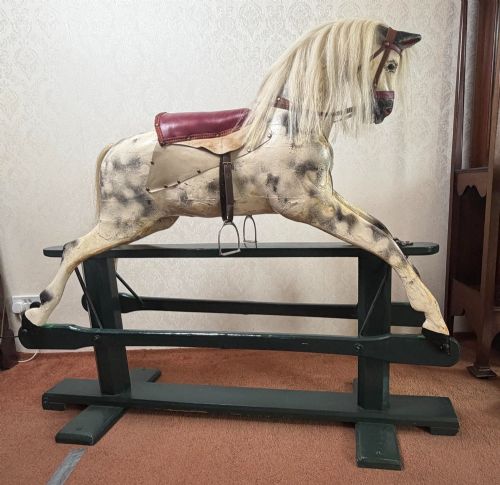
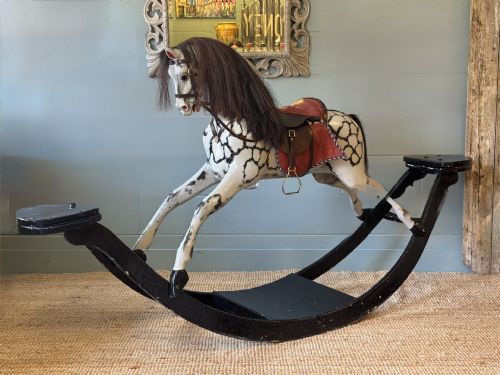
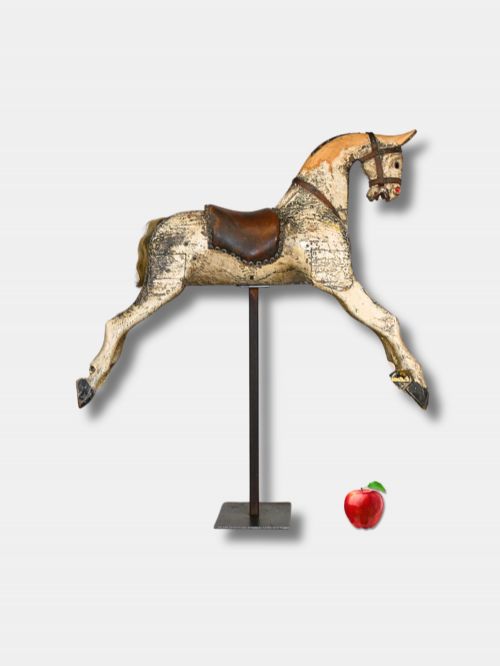
A carved wood toy horse encompasses traditional rocking horses, folk art sculptures, and ride-on toys originating from the eighteenth, nineteenth, and early twentieth centuries. These objects range from naive early figures and folk art models to substantial Victorian and Edwardian rocking horses on original stands.
The version most commonly met on this page is the nineteenth-century wooden rocking horse, often finished in original paint and mounted on its original rocker. Collectors also encounter carved pine examples, French chain-driven tricycles, and decorative painted sculptures created within various folk traditions.
Materials and construction
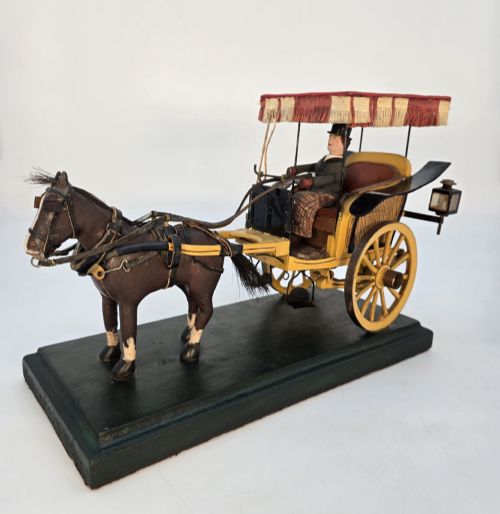
Makers shaped these horses primarily from wood and pine, employing hand-carving techniques to build bodies, stands, and carriages. Artisans incorporated leather, horsehair, and iron or metal components for tack, manes, tails, and mechanical linkages.
Surfaces frequently display layers of paint, ranging from early naive brushwork to original decorative schemes that survive from the Victorian and Edwardian eras. Scratch-built models and larger ride-on toys combine these structural woods and metals to achieve durability and movement.
Listings feature pieces spanning from the eighteenth century through the 1930s, utilising wood, leather, horsehair, and iron.
Distinctions in quality
Quality rests in the survival of original surface finishes, such as early paintwork and authentic leather or horsehair elements, which define the visual character of each piece. The integrity of the underlying carved wood structure and whether the object retains its original rocker or stand heavily influence the standing of an example.
The level of sculptural expression sets naive primitive works apart from more finished commercial workshop productions. Attribution to documented makers adds distinction to pieces that retain their original physical context.
G & J Lines of London
The Carved Wood Toy Horse Glossary
- Folk Art
- Objects created by self-taught or traditional artisans outside formal academic traditions. These pieces often display naive proportions and direct carving methods.
- Rocking Horse
- A toy horse mounted on curved wooden rockers or a safety stand designed for children to ride. They appear across the eighteenth, nineteenth, and twentieth centuries.
- Ride-On Toy
- Children's playthings designed to support a rider, including pedal-driven or chain-driven mechanical horses and wheeled platforms.
- Original Paint
- The initial surface coating applied to an object, valued by collectors for its historical patina and untouched appearance.
Carved Wood Toy Horse: Frequently Asked Questions
How are nineteenth-century rocking horses constructed?
Makers carved the bodies from wood and pine, often mounting the figures onto sturdy wooden rockers or stands using iron and metal hardware.
Craftsmen completed the forms with leather elements and horsehair for manes and tails before applying decorative paint finishes.
What defines folk art wooden horses?
Folk art wooden horses display naive or primitive carving styles created by independent makers rather than large commercial factories. These sculptures frequently feature simplified forms and direct application of paint.
Such pieces reflect regional traditions and individual maker interpretations rather than standardised workshop patterns.
How do I care for antique carved wood toys?
Keep wooden toys away from direct sunlight and fluctuating heat sources to protect the historic wood and original paint layers. Avoid harsh chemical cleaners and moisture, relying instead on dry dusting.
Stable indoor environments prevent the wood from splitting and preserve fragile horsehair or leather components.
How can I tell the period of a toy horse?
Dating relies on examining the tool marks left by carving, the type of wood such as pine, and the composition of the paint layers. Fasteners, metal brackets, and structural designs provide further clues to nineteenth-century or earlier origins.
Comparing construction methods with documented examples from periods like the Victorian era helps confirm the age.