
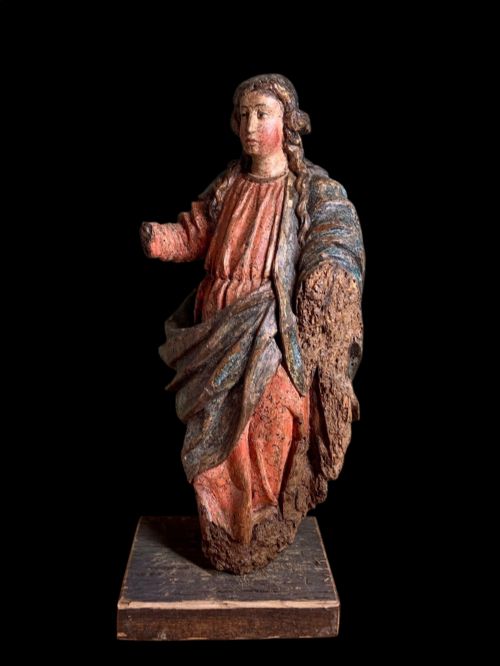
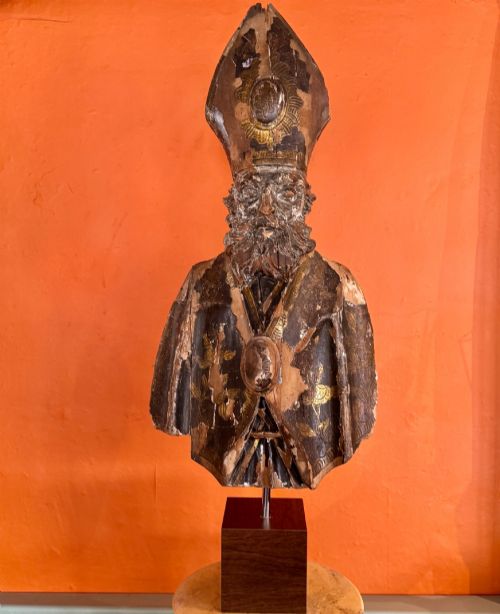


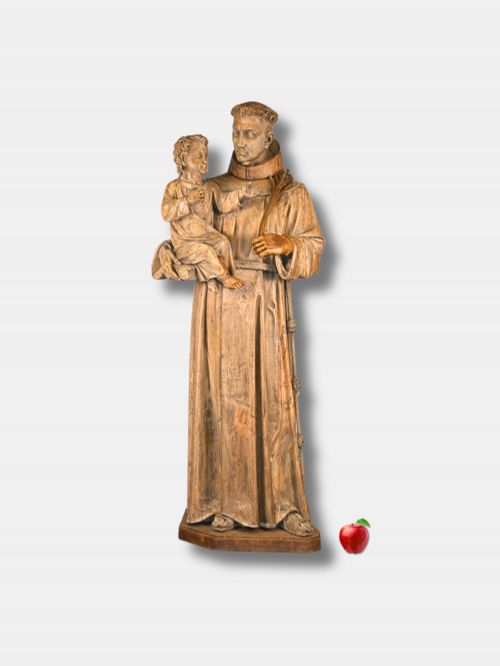
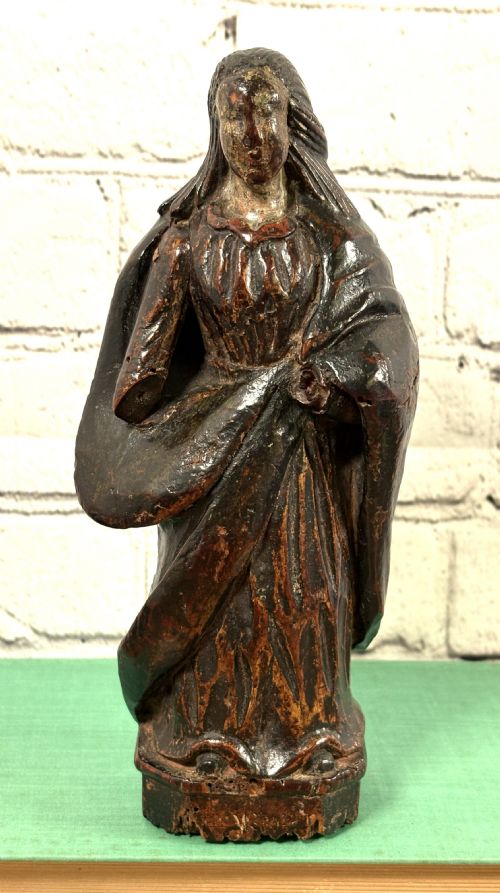


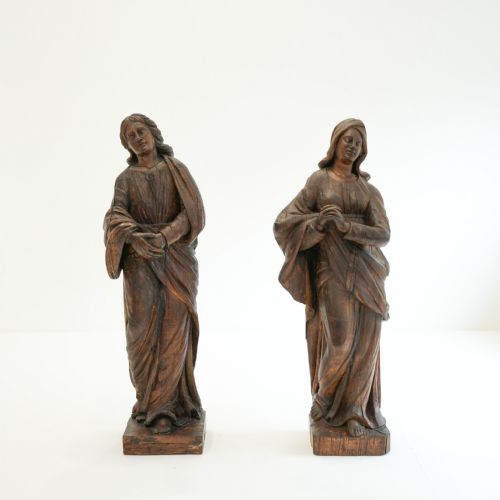


Carved Wood Saint Sculpture
A carved wood saint sculpture brings centuries of devotional craft into a room, shaped in oak, limewood and applewood.
Carved Wood Saint Sculpture
The selections span a wide chronological range, taking in pre-16th century medieval works, Renaissance and Baroque creations, and later nineteenth-century revival pieces. Oak and limewood dominate the earlier centuries, while later examples incorporate applied gesso, gold leaf, and polychrome paint finishes.
How they were made
Surfaces frequently received a preparation of gesso before painters applied polychrome pigments and gold leaf. This layered treatment protected the wood while giving garments and flesh tones a lifelike appearance appropriate for dimly lit church interiors.
Listings span from pre-16th century medieval fragments up to mid-20th century animal carvings, mapped across oak, limewood, applewood, and gesso.
What varies in quality
The mastery of the carver dictates the fluidity of the drapery and the psychological depth captured in the facial expression. Superior hands render hands, hair, and textiles with anatomical conviction, whereas provincial work can appear stiff or formulaic.
The survival of original surface treatments marks a distinction between pieces. Retained traces of early polychrome paint or gilding, rather than later overpainting, preserve the historical integrity of the surface.
Franz Keller
The Carved Wood Saint Sculpture Glossary
- Polychrome
- Painted in several colours. This finish was commonly applied over a gesso ground on wooden church sculptures.
- Gesso
- A plaster mixture used as a smooth base for paint and gold leaf on wooden figures. It provides an even surface for detailed decoration.
- Limewood
- A fine-grained timber favoured by European carvers for detailed sculptural work. It cuts cleanly across the grain without splintering.
- Santos
- A carved figure representing a saint or holy person, particularly used in processional and domestic Spanish or Italian traditions.
- Giltwood
- Wood that has been decorated with thin sheets of gold leaf. This technique illuminated dark architectural spaces.
Carved Wood Saint Sculpture: Frequently Asked Questions
How were these statues displayed originally?
These figures stood in churches, private chapels, and monastic settings, often positioned within altarpieces or carried during processions. They served as focal points for prayer and commemoration.
Over time, many were transferred from religious buildings into private collections, shifting from active devotional objects to historical art pieces.
How do I identify the period of a carved saint?
Dating relies on stylistic clues such as the cut of the drapery, the posture, and the tool marks left in the timber. Gothic figures display angular folds, while Baroque examples show theatrical movement.
Material choice also assists, as dense oaks predominate in early northern European pieces, while later centuries introduced varied regional styles and softer woods.
How should I care for a wooden sculpture?
Keep the piece away from direct sunlight, heating vents, and rapid humidity fluctuations to prevent the timber from splitting. Stable indoor conditions protect both the wood and any surviving paint layers.
Dust gently with a soft, dry brush. Avoid liquid cleaners and polishes, which can damage historic gesso and polychrome surfaces.
Why do many pieces show losses or fragments?
Centuries of relocation, building alterations, and changing liturgical fashions mean many sculptures lost their original architectural housing, hands, or attributes over time. Surviving fragments often entered collections independently.
Such losses are common in medieval and Renaissance ecclesiastical art and form part of the physical history of the object.