
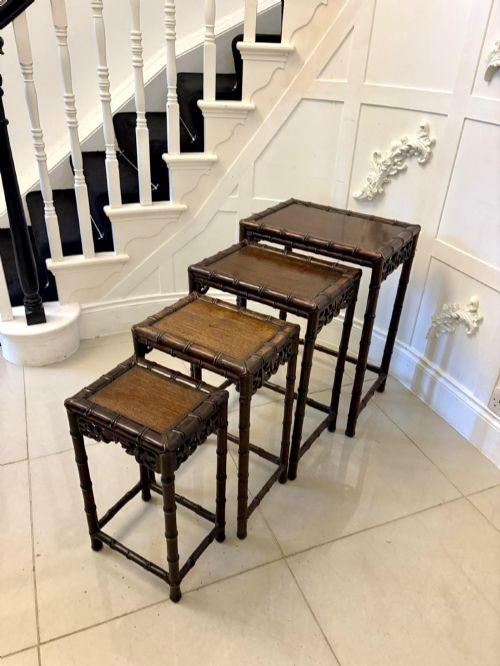
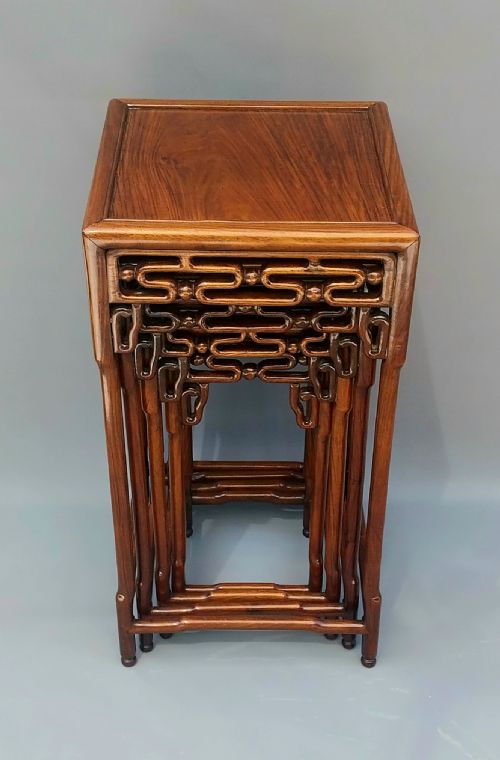


Carved Wood Nest Tables
These carved wood nest tables offer a practical surface solution that tucks away neatly when floor space matters.
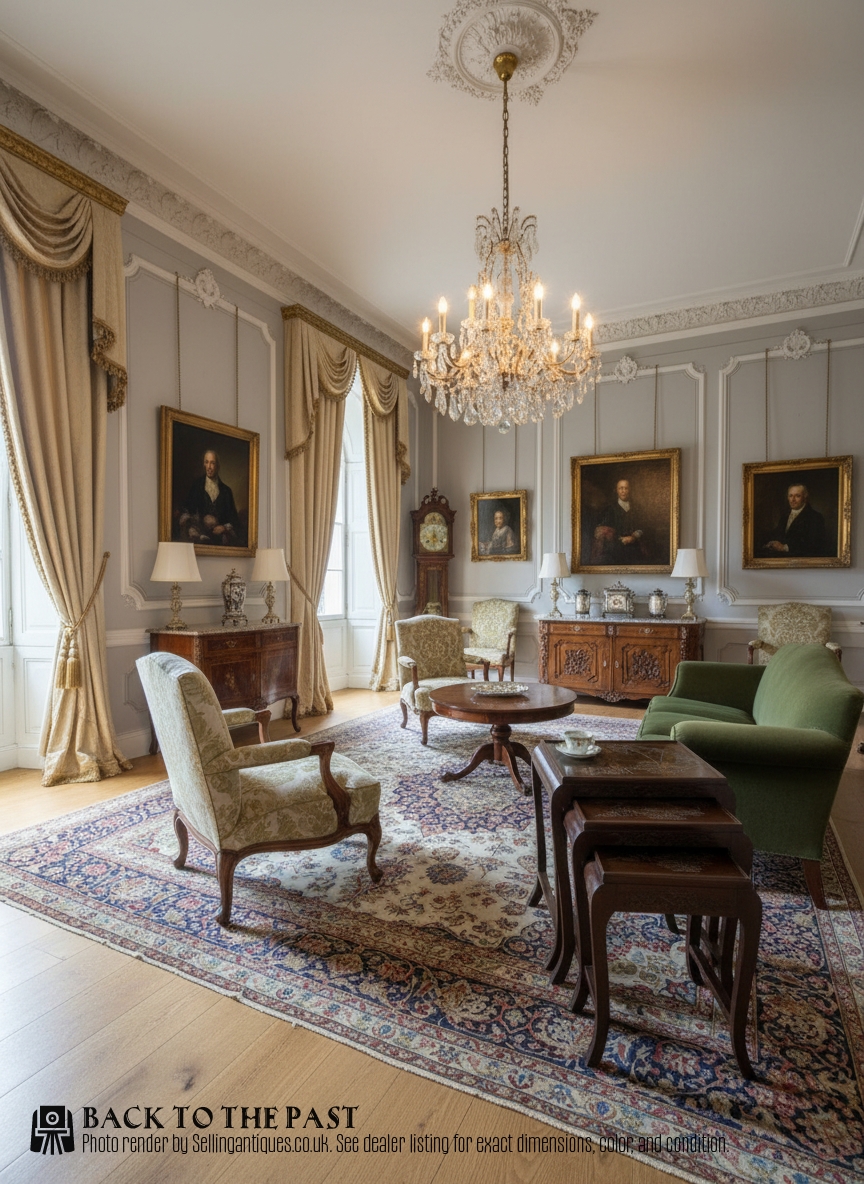
Carved Wood Nest Tables
Carved wood nest tables provide multiple surfaces that slide neatly beneath one another to save space in a room. When searching for carved wood nest tables, buyers encounter sets featuring three or four graduated surfaces designed to pull out when needed.
The pieces on this page stem predominantly from the nineteenth and early twentieth centuries, spanning Edwardian, Victorian, and Qing Dynasty eras. Regional traditions such as Chinese Export, Chinoiserie, and Anglo-Indian designs dominate the forms.
Makers configured these sets as nests of tables or occasional tables using hardwoods like rosewood, teak, and hongmu. Individual tables graduate in size so the smaller ones descend sequentially into the largest frame.
Materials and Construction
Joinery relies heavily on dense tropical hardwoods including hongmu, rosewood, teak, and padoukwood. Artisans selected these heavy timbers for their structural stability and capacity to hold intricate, sharp relief carving.
Carving techniques involve detailed surface work on table tops and friezes, sometimes incorporating motifs like dragons in high relief. Workshops also utilised burrwood panels and bamboo-turned elements within the structural frames.
Design styles recorded across the archive include Chinese Export, Chinoiserie, Anglo-Indian, and English Country House traditions.
Judging Quality and Craftsmanship
The standard of craftsmanship shows in the crispness of the carved detail on the top and frieze. Superior examples maintain deep, clean relief work without softening or wear on the edges.
Graduation and fit determine functional quality in these sets. Better made tables slide smoothly into their designated positions while maintaining a stable stance when pulled out independently.
The Carved Wood Nest Tables Glossary
- Quartetto
- A set of four matching tables designed to nest together. This term appears frequently on nineteenth-century pieces.
- Hongmu
- A category of dense, fragrant Asian hardwoods often used for fine antique furniture. It translates literally as red wood.
- Frieze
- The decorative horizontal band situated just below the table top. Carved dragons or floral motifs often adorn this area.
- Graduated
- Describing tables made in diminishing sizes so smaller units slide beneath larger ones. This configuration defines the nest format.
Carved Wood Nest Tables: Frequently Asked Questions
How were nest tables used originally?
These sets served as versatile furniture for entertaining guests in drawing rooms and parlours. Servants pulled out the smaller tables individually to serve tea, hold books, or display ornaments.
Once the gathering concluded, users stacked the smaller surfaces back inside the largest table to reclaim floor space. This made them particularly popular in Victorian and Edwardian homes where multi-purpose furniture was valued.
How do I tell Chinese export pieces apart?
Chinese export pieces intended for Western markets often combine traditional Qing Dynasty carving techniques with familiar European furniture forms. Look for dense tropical hardwoods like hongmu or rosewood alongside specific motifs such as relief-carved dragons.
These items frequently date from the late nineteenth century and carry distinct regional craftsmanship that differs from domestic English country house styles.
Can I use them as coffee tables?
These sets function well in modern spaces when configured as modular coffee tables or side tables. You can separate the pieces around a room for multiple drinks surfaces or keep them nested together as a focal point.
The graduated heights allow for dynamic arrangement depending on daily practical needs.
What wood types should I expect?
Listings feature a variety of dense timbers including rosewood, teak, hongmu, and padoukwood. These heavy hardwoods provided the structural strength required for intricate edge carving.
Some examples also incorporate contrasting burrwood panels or faux bamboo turnings to achieve distinct aesthetic styles.