


Carved Wood Hall Table
A carved wood hall table anchors an entrance with proportion, surface and depth, offering a practical place for letters and keys.
Carved Wood Hall Table
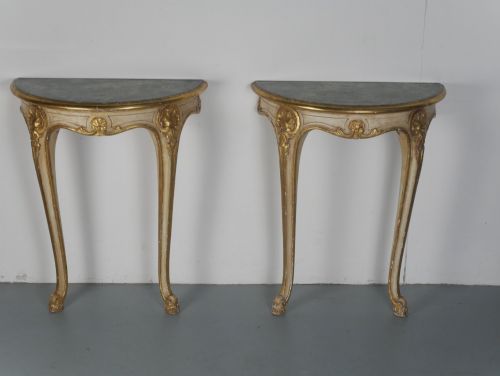
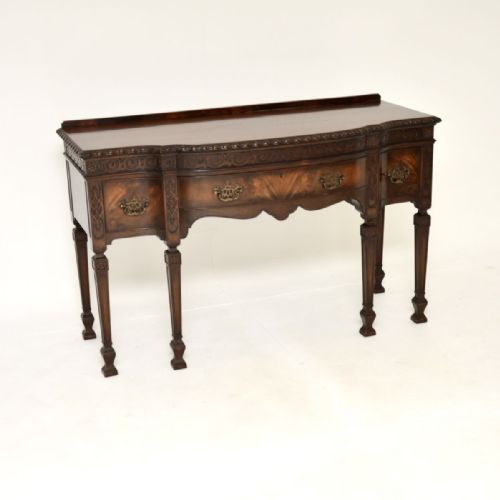
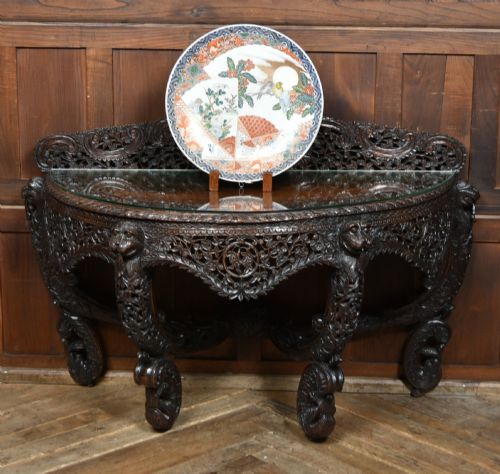
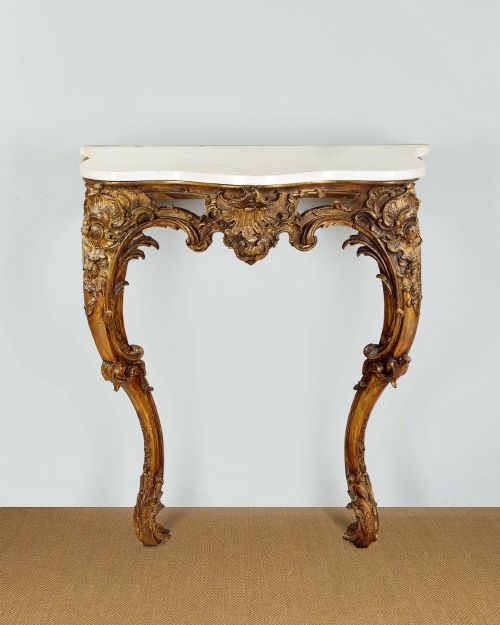
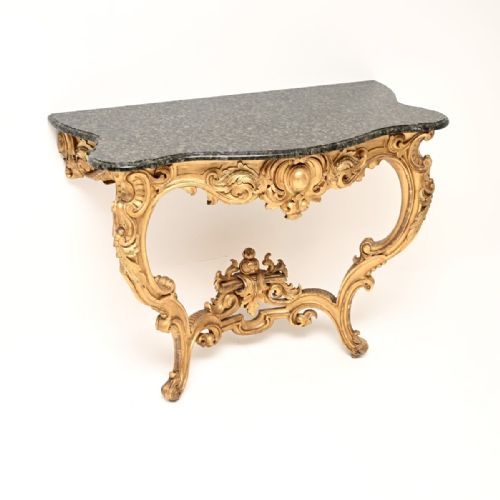
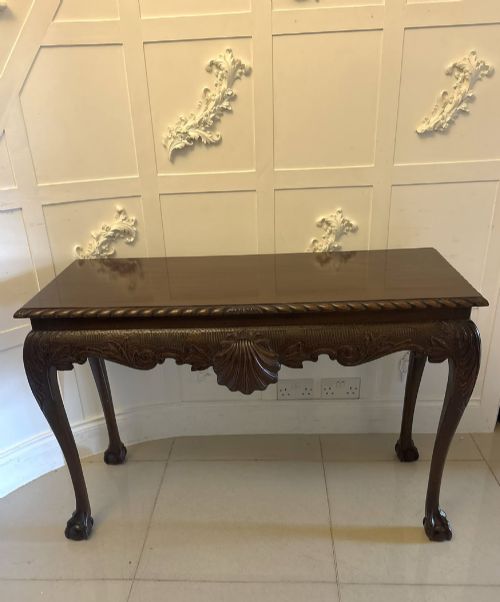
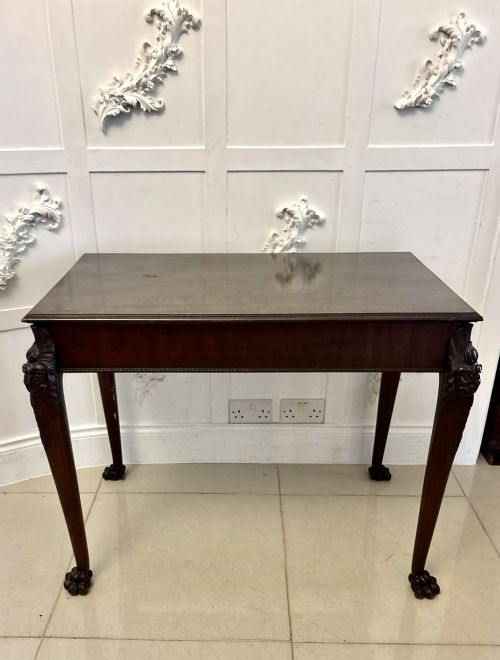
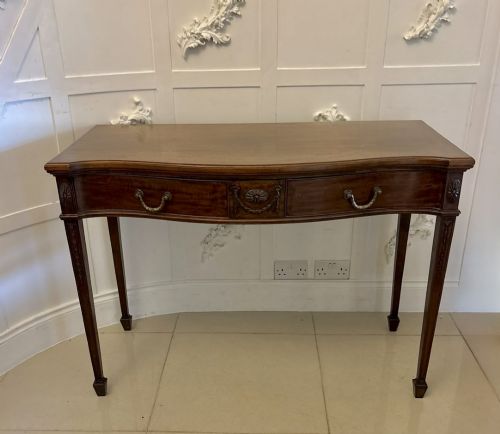
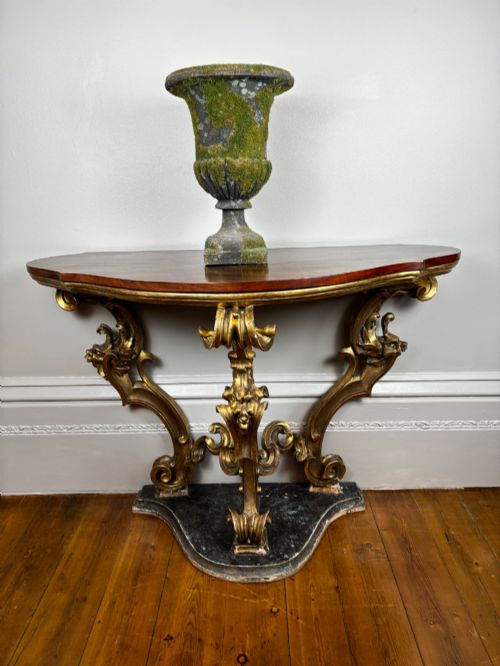
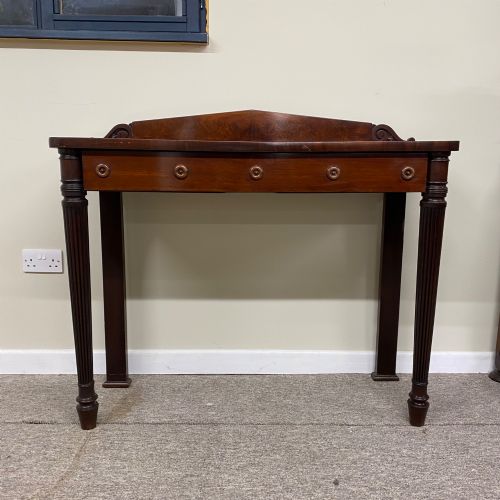
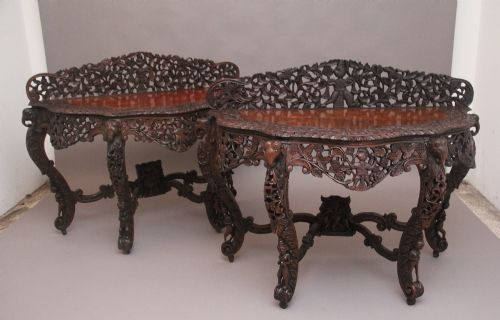
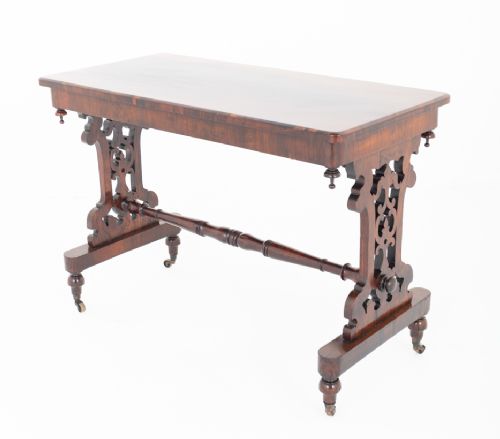
A carved wood hall table is a narrow foundational piece designed for passageways and reception rooms, meeting the need for surface space without blocking transit. When searching this phrase, a buyer encounters forms ranging from serpentine console tables and oak side tables to demi-lune shapes and marble-topped variants.
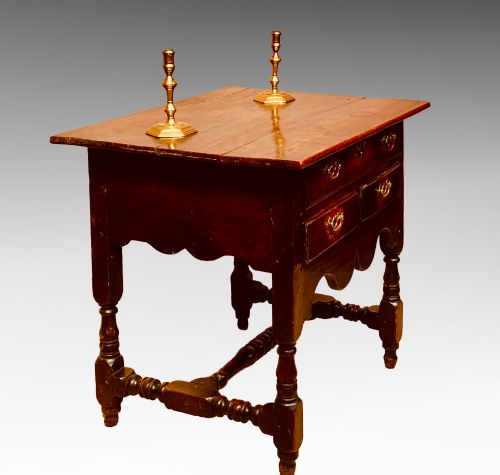
The pieces appearing here span centuries from the late seventeenth century through the Victorian era and into the early twentieth century. Common materials include mahogany, oak, walnut, and giltwood, often paired with marble or onyx tops and detailed with Neoclassical or Jacobean Revival carving.
How they were made
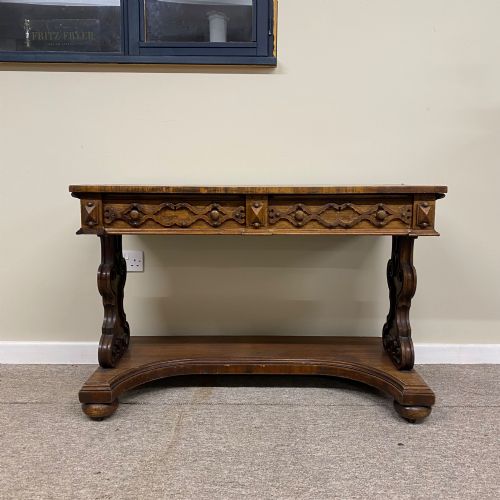
Cabinetmakers utilised solid timbers such as mahogany, oak, and walnut alongside burl veneers, shaping them with hand tools into serpentine fronts, demi-lune curves, and rectangular forms. Carving was executed directly into the wood or onto applied gesso, creating relief work ranging from floral motifs to bold scrollwork.
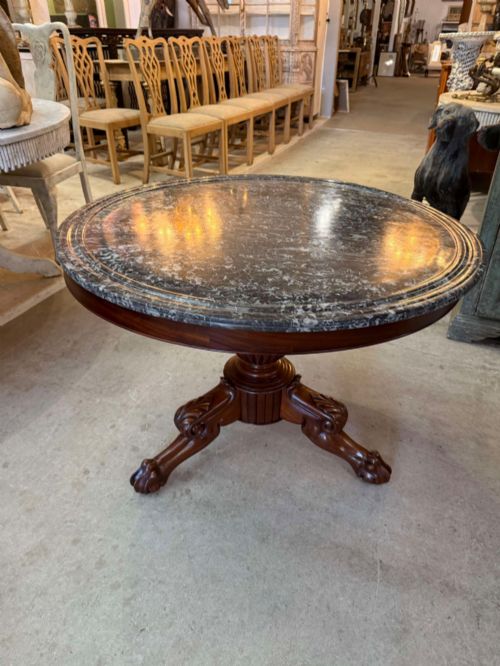
Many high-status examples incorporate inset marble or onyx slabs fitted precisely into wooden frames, while others utilise gilding over gesso or wood to achieve a reflective surface. Joinery techniques varied from pegged mortise and tenon joints in earlier oak pieces to fine dovetailing in later mahogany drawer constructions.
Carved Wood Hall Table Retail Price Guide 2026
Typical asking prices for carved wood hall table among the pieces listed under this phrase on Sellingantiques today, from the lower quarter to the upper quarter. They describe what is for sale here now, not the wider market.
Listings feature oak, mahogany, and walnut woods alongside marble and onyx tops across the Victorian, Edwardian, and eighteenth-century periods.
What varies in quality
The depth and crispness of the carving distinguish standard production from exceptional examples, where hand-chiselled details retain sharp relief and fluid lines. The choice of timber also dictates tier, with highly figured burr walnut, dense mahogany, and quartersawn oak representing superior material selection.
Structural integrity and material pairing influence worth, particularly in pieces combining heavy stone tops like marble or onyx with supportive wooden frames. The handling of secondary woods, the symmetry of veneers, and the integration of giltwood or polychrome finishes reveal the maker's competence.
Felix-Alfred Ternisien·Amleto Bertoni
The Carved Wood Hall Table Glossary
- Console table
- A table designed to stand against a wall, frequently secured to it with brackets if the legs are purely decorative. These forms often feature elaborate carving along the frieze.
- Demi-lune
- Half-moon shape, describing tables with a flat back edge designed to sit flush against a wall and a curved front. This silhouette was favoured in neoclassical designs.
- Giltwood
- Wood that has been coated with a thin layer of gold leaf or powder over a prepared ground such as gesso. It provides a luminous surface finish.
- Gueridon
- A small French round table, often supported by a central pillar or figures, used historically for holding lights or decorative objects.
- Serpentine
- A curved line that swells outward and curves inward in a continuous wave, commonly seen along the front edge of tabletops and cabinet drawers.
Carved Wood Hall Table: Frequently Asked Questions
Where do you put a hall table?
A hall table belongs in an entryway, corridor, or reception room where floor space is restricted yet a surface is required. Its shallow depth allows it to sit flat against a wall without obstructing movement through the doorway.
In practice, it serves as a drop zone for daily items or a display point for lighting, ceramics, and mirrors mounted directly above it.
How do I style a narrow table?
Styling a narrow table relies on balance and scale, keeping items close to the wall surface to maintain clear walking space. A central lamp or a tall mirror paired with smaller decorative objects creates a composed arrangement.
Leaving portions of the timber or marble top exposed highlights the grain, carving, and material quality of the piece itself.
How do I date an antique table?
Dating relies on observing the timber species, construction methods, tool marks on secondary woods, and the stylistic vocabulary of the carving. Oak is more prevalent in seventeenth and eighteenth-century pieces, while mahogany and walnut dominate the Georgian, Victorian, and Edwardian eras.
Revival styles from the nineteenth century often borrow motifs from earlier periods, requiring careful examination of assembly techniques to distinguish them from originals.
Are marble top tables heavy?
Marble and onyx top tables carry significant weight due to the density of the stone slab fitted into the wooden frame. While the base provides solid structural support, lifting or moving these pieces typically requires two people to prevent strain on the joinery.
The stone is usually removable from the wooden base to ease transport and positioning in the home.