

Carved Wood Hall Bench
A carved wood hall bench offers an immediate architectural anchor to an entryway, combining heavy timber construction with utilitarian seating.
Carved Wood Hall Bench
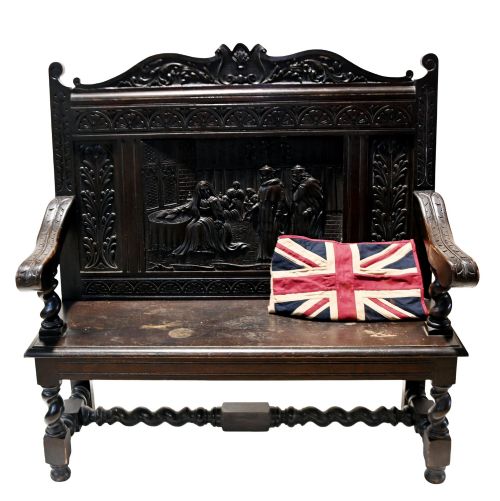
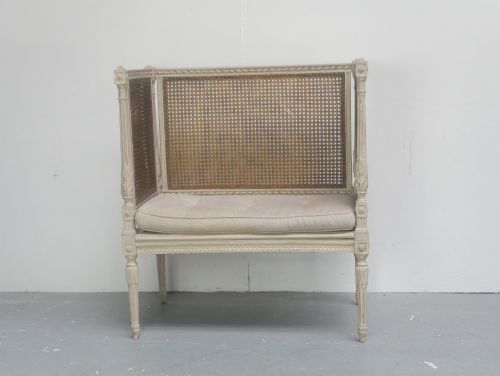
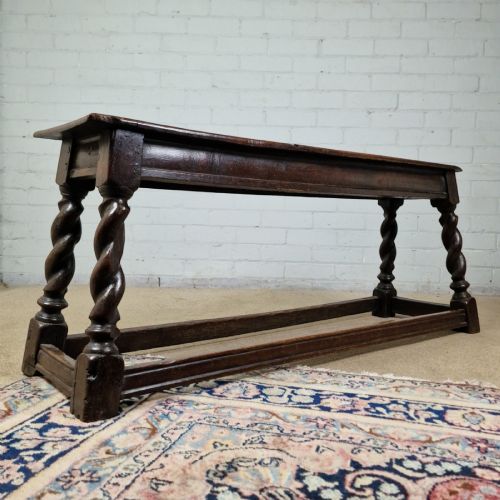
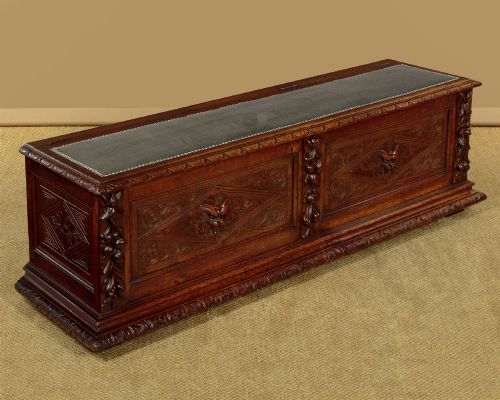
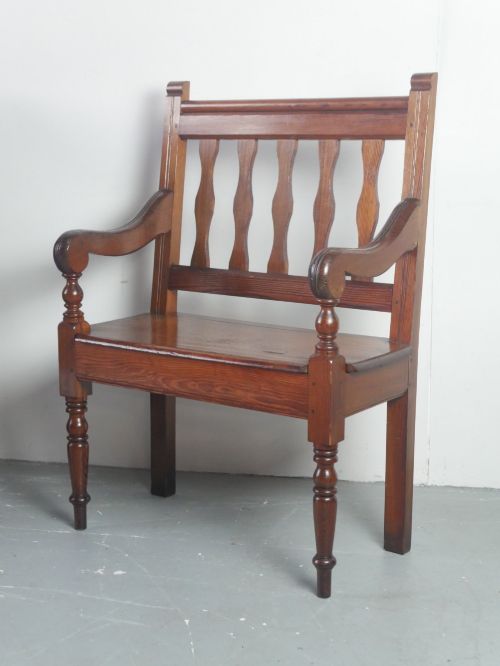
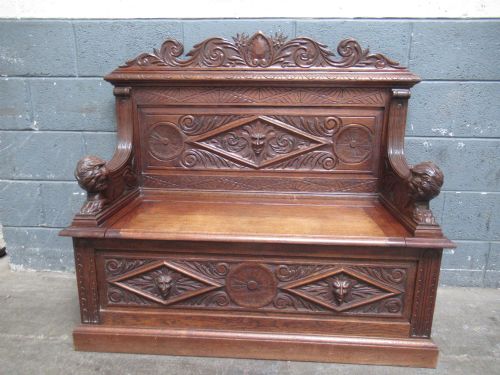
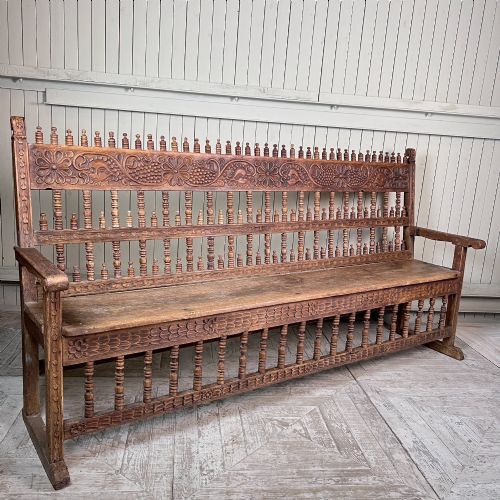
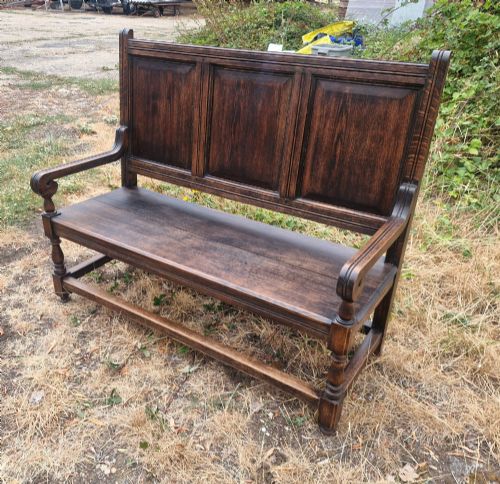
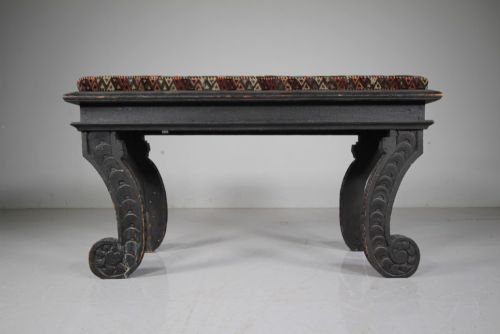
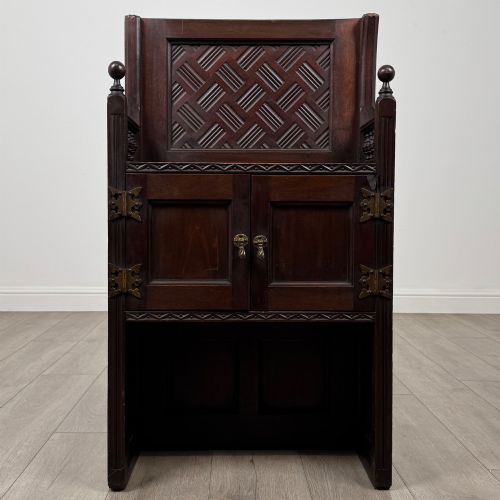
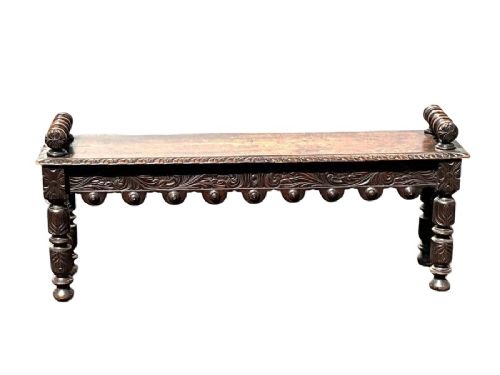
A carved wood hall bench serves as a functional threshold piece, appearing frequently in sturdy oak and mahogany across nineteenth and twentieth century British and European domestic interiors. Buyers encounter substantial box settles, high-backed monastic forms, and slender window seats designed specifically for corridors and narrow hallways.
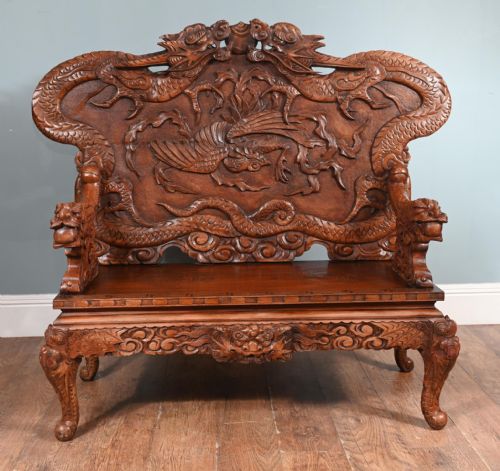
Makers utilised various regional interpretations, yielding pieces influenced by Jacobean revival, Victorian Gothic, and Chinese export traditions. The fundamental form prioritises upright posture and passage space, often incorporating hinged storage compartments beneath the seat.
Surviving examples range from eighteenth-century folk art canopied settles to Edwardian panelled oak seats. These versatile items bridge the gap between freestanding chairs and fixed architecture, offering both seating and enclosed storage.
Materials and construction methods
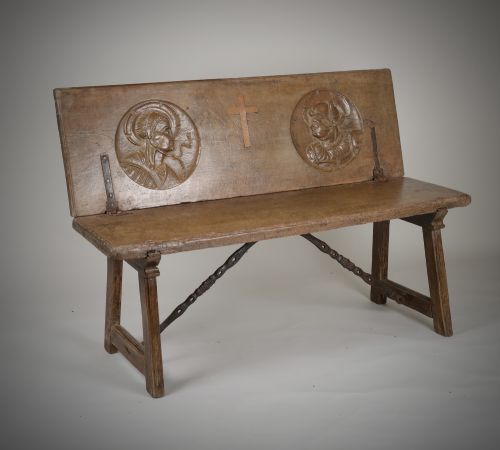
Carpenters relied primarily on dense hardwoods such as oak, mahogany, walnut, and regional pine, shaping structural elements with mortise and tenon joinery. Surface decoration relied heavily on deep relief carving, panelling, and occasional inlay work utilising contrasting timbers or brass.
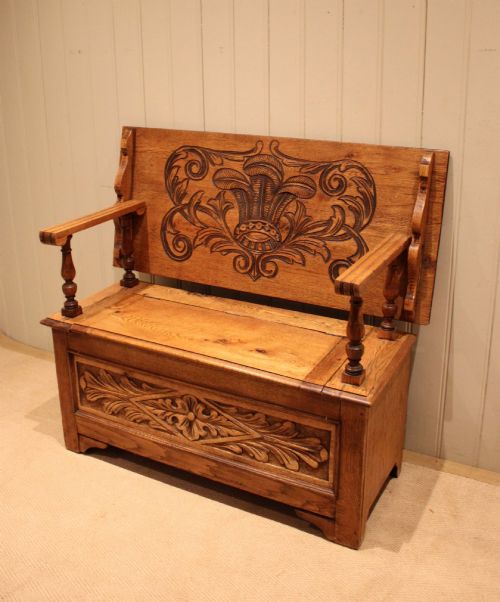
Designers incorporated functional mechanisms including lift-up box lids, pivoting monk's bench tabletops, and hinged cabinet doors. Finishing techniques included wax polishing, dark staining, liming, and painted surfaces that preserved the grain while adding decorative depth.
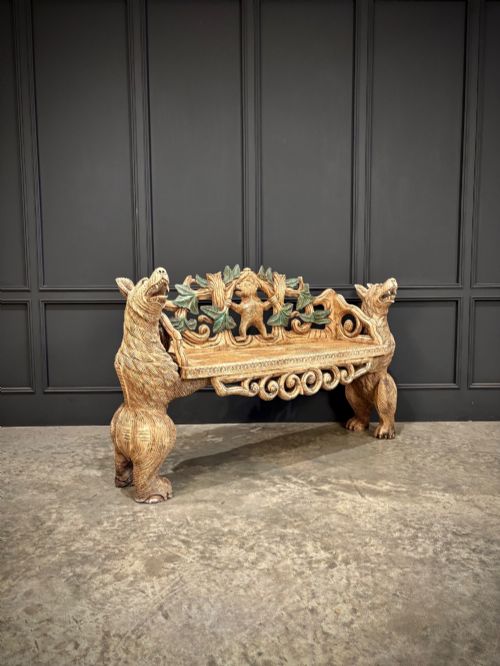
Several entries feature carved elephants and snarling bears standing guard beside your coats.
Evaluating craftsmanship and proportion
Quality rests in the integrity of the timber selection and the crispness of the hand-carved details, distinguishing workshop output from mass-produced factory work. Heavy oak pieces display tight grain alignment and robust structural joints that withstand daily hallway use without shifting.
Proportion and surface patination dictate visual success, with superior examples maintaining balanced sightlines and undisturbed historic finishes. Finer versions exhibit thoughtful integration of storage compartments and refined hardware like brass hinges and pearl inlay.
The Carved Wood Hall Bench Glossary
- Settle
- A wooden wooden bench with a high back, solid arms, and enclosed base designed to block cold drafts in traditional hallways. It serves as a precursor to modern hallway seating.
- Monks bench
- A convertible piece of furniture featuring a pivoting backrest that transforms the seat into a table top. This dual-purpose design maximised space in historical interiors.
- Window seat
- A long, narrow bench constructed specifically to sit beneath window recesses. These feature lower backs and lighter frames compared to standard hallway settles.
- Green man
- A sculptural architectural motif depicting a human face disgorged from foliage. It appears frequently in nineteenth-century revival wood carvings.
- Cinnabar
- A bright red mineral form used to create thick carved lacquer coatings. It surfaces on imported nineteenth-century Chinese export furniture.
- Box settle
- A bench incorporating a lidded compartment beneath the seat boards for storing outdoor garments. The interior cavity provides heavy ballast to stabilise the high back.
Carved Wood Hall Bench: Frequently Asked Questions
How do I use a hall bench?
Place the bench in an entryway or hallway to provide a stable seat when removing footwear. Many designs include built-in box storage beneath the lid for scarves, gloves, and daily clutter.
Position the piece against a flat wall where the high wooden back can protect plaster from scuffs. Ensure adequate clearance for hinged seats or doors to open fully.
What wood was used?
Oak is the predominant timber found in these entries, valued for its strength and rich grain pattern. Mahogany and walnut appear frequently in nineteenth-century formal pieces.
Alternative materials include painted pine, exotic hardwoods, and Asian rosewood. Secondary timbers like deal or softwoods often form the internal framing of storage boxes.
Are these seats comfortable?
Historical hall benches were built for upright posture rather than lounging, featuring straight wooden backs and solid seats. They were intended for brief use while changing shoes.
Many owners soften the seat using loose squab cushions or upholstered pads. This adds comfort while preserving the exposed wood structure of the back and arms.
How do I date an oak settle?
Examine the construction marks, joint types, and fastener styles visible on the underside and interior. Hand-cut peg joints and irregular hand-planed boards indicate earlier centuries.
Stylistic revival periods often imitate older centuries through machine-cut details and uniform dark staining. Compare the carving depth and hardware against known period production standards.