
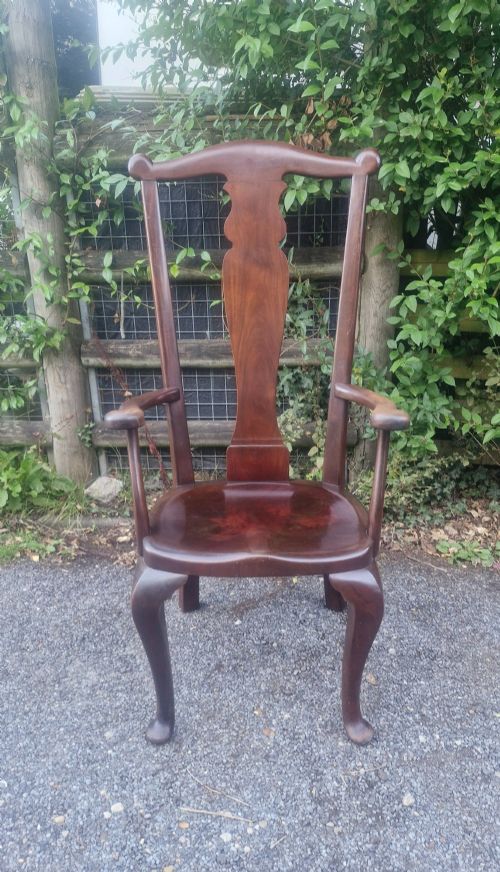
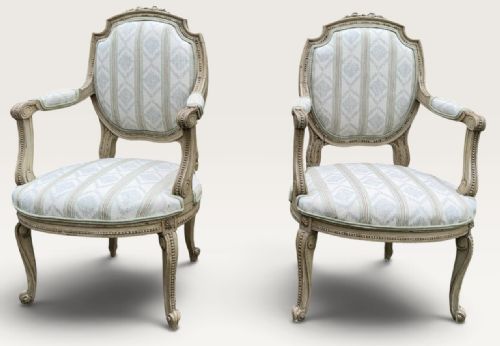
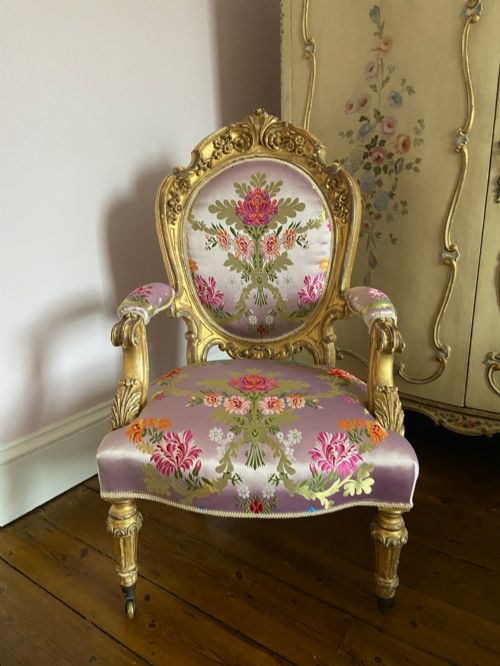
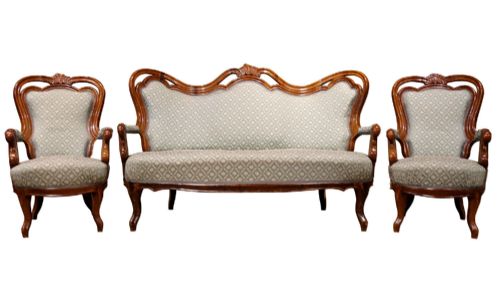


Carved Wood Frame Armchairs
Carved wood frame armchairs bring distinct period presence and seating comfort into a room through exposed timber structure and upholstered support.
Carved Wood Frame Armchairs
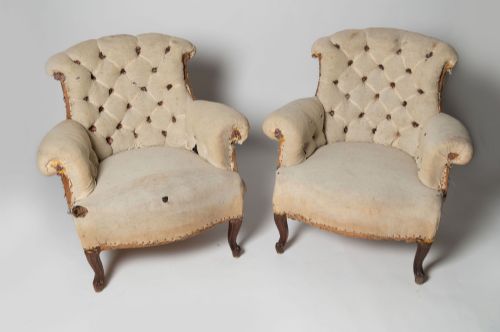
Carved wood frame armchairs span diverse forms from the seventeenth century through to the early twentieth century, taking shape as library chairs, salon seating, and open armchairs. Buyers encountering this selection will frequently find nineteenth-century French and English pieces alongside specific revival styles.
The inventory includes walnut, mahogany, and beech frames shaped into Rococo, Gothic, and Louis styles, often accompanied by fabric or leather upholstery. Regional variations such as Anglo-Indian or Syrian pieces sit alongside standard European library and fireside models.
How they were made
Craftsmen utilised solid hardwoods like walnut, mahogany, oak, and beech to construct the structural skeletons, applying hand-carving directly to the exposed timber frame. Joinery relied on traditional methods to ensure stability under load.
Frames were then paired with supportive padding, finished in leather, velvet, or woven cane work such as berguere panels, and occasionally highlighted with gilt or original paint.
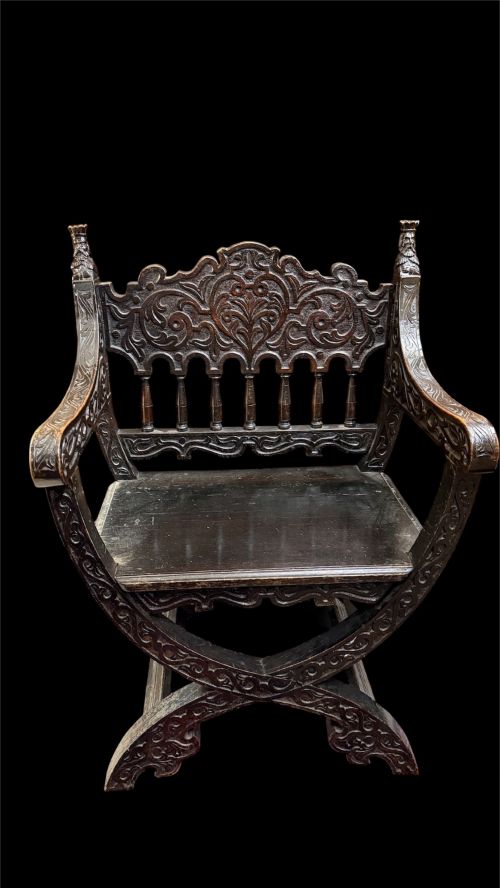
Sit down carefully; a Black Forest folding chair might have a bear watching your back.
What varies in quality
Quality rests upon the crispness of the timber carving and the architectural balance of the exposed frame. Superior examples display deeply chiselled detail and robust joinery that maintains its structural integrity.
The choice of primary timber, whether figured walnut, dense mahogany, or ebonised beech, dictates the underlying calibre of the piece before considering the secondary upholstery materials.
Gillows
The Carved Wood Frame Armchairs Glossary
- Fauteuil
- An open-arm armchair with an exposed wooden frame originating in France. The arms usually feature padded elbow rests.
- Giltwood
- Timber coated with a thin layer of gold leaf or gesso preparation. It appears frequently on formal revival salon chairs.
- Goncalo Alves
- A dense tropical hardwood displaying distinctive figuring. Makers utilised this material for high-status nineteenth-century frames.
Carved Wood Frame Armchairs: Frequently Asked Questions
What is a bergere armchair?
A bergere is an enclosed upholstered armchair featuring an exposed wooden frame and woven cane panels along the sides or back. These French-inspired seats offer a comfortable sit with a cushioned base.
They emerged in various period revivals and suit drawing rooms or studies where visible woodwork and lighter framing are desired.
How do I identify French revival styles?
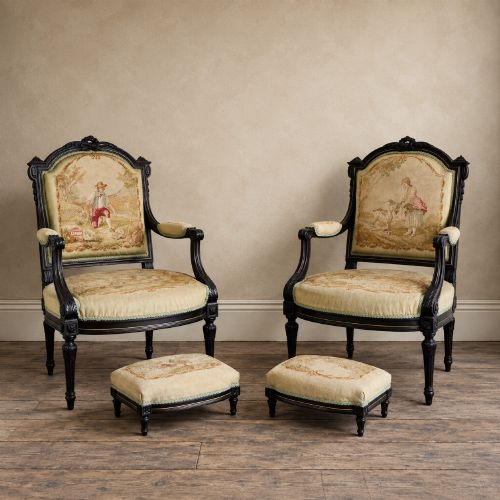
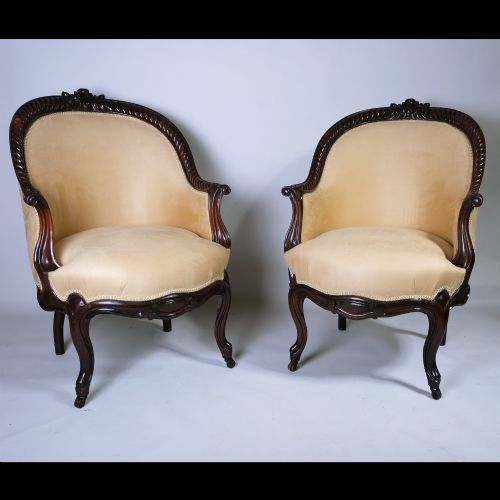
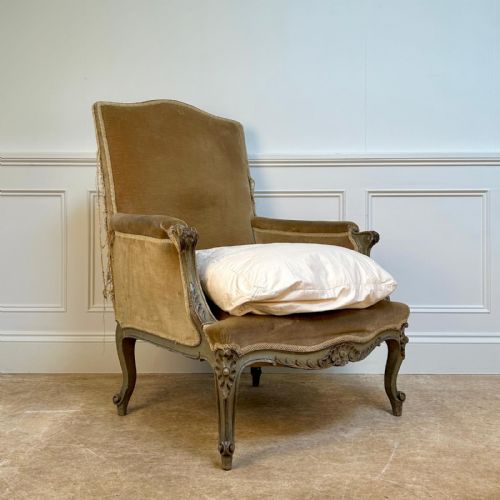
French revival pieces incorporate curved cabriole legs, carved floral motifs, and exposed show frames reflecting Louis XV or Louis XVI aesthetics. Walnut and beech are common timber choices for these frames.
Ebonised finishes or giltwood applications also signal these continental influences within nineteenth-century British and French workshops.
Where should I place an open armchair?
Open armchairs with carved wooden frames function well as accent seating in reception rooms, bedrooms, or reading corners. Their exposed framing allows them to sit comfortably away from walls.
Pairing them with low tables or placing them beside a fireplace highlights the craftsmanship of the arms and legs.
What timber was used for these chairs?
Cabinet makers selected hardwoods such as mahogany, walnut, oak, and beech depending on the regional origin and period style. Walnut and mahogany were favoured for fine carving and rich grain.
Beech frequently served as a strong, dense base timber for frames intended to be painted or ebonised.