

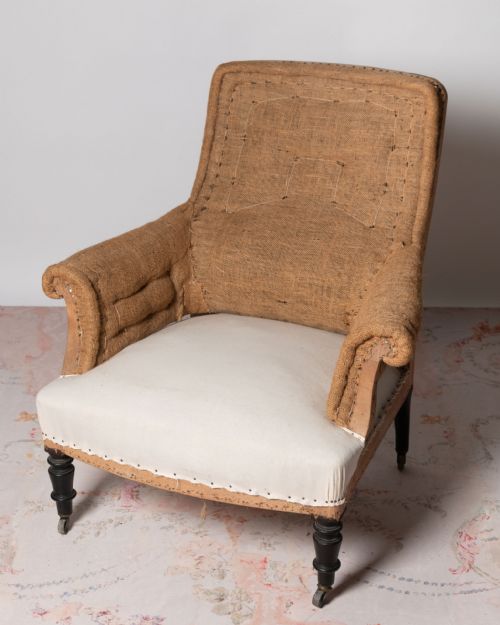


Deconstructed Upholstery Armchair
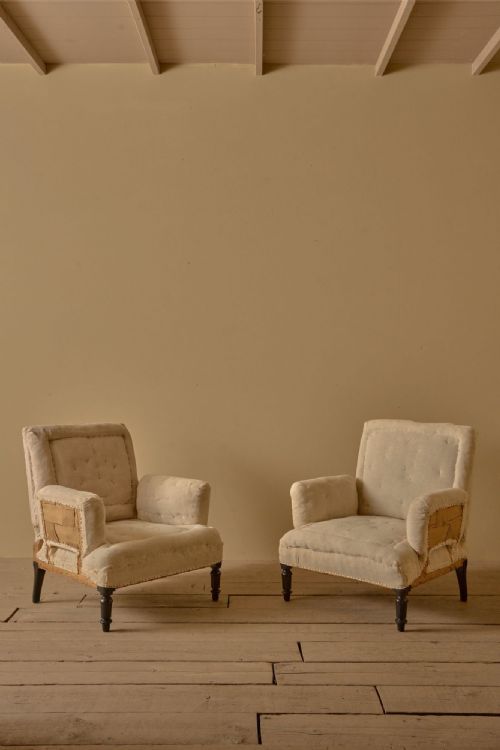
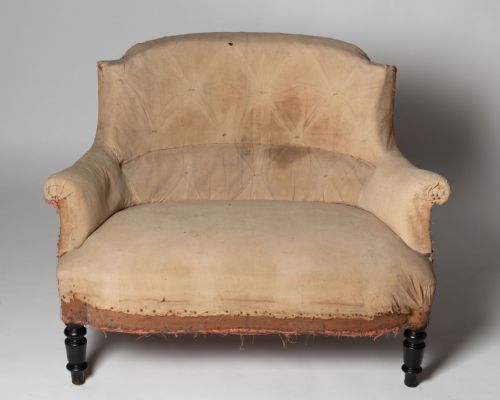
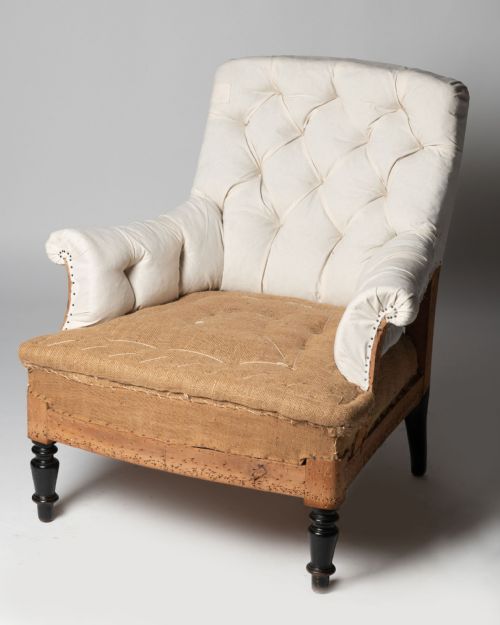
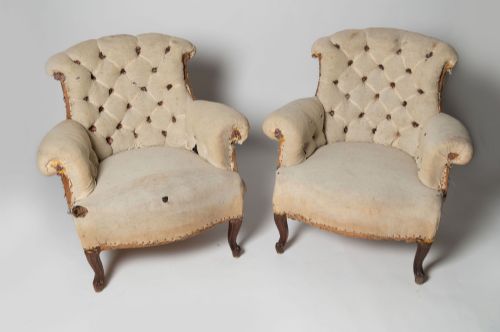
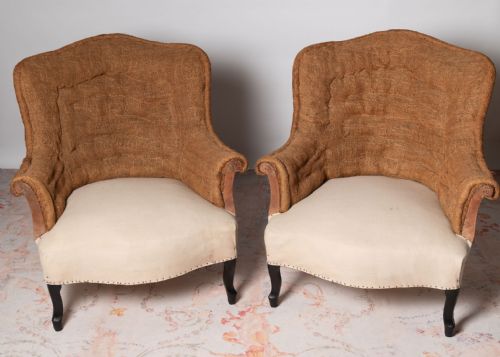
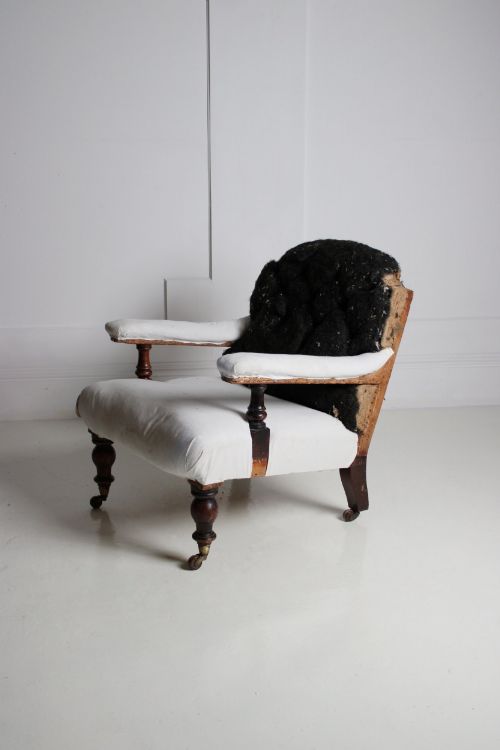
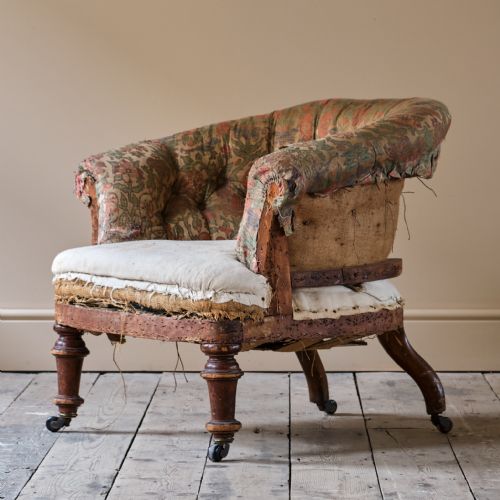
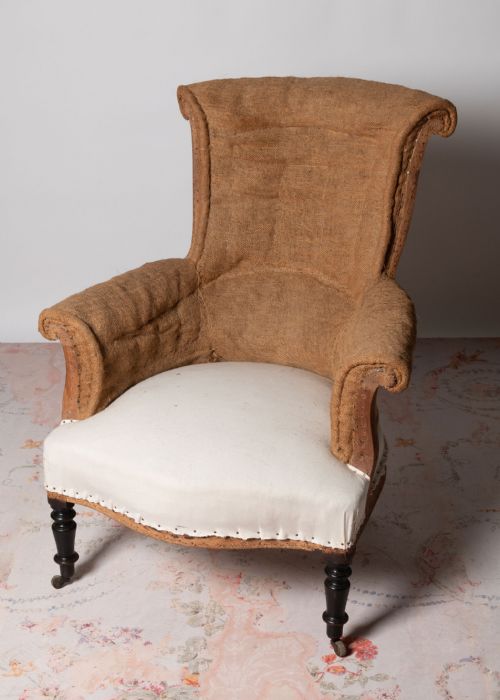
These deconstructed upholstery armchair examples strip away outer fabrics to reveal the raw craftsmanship underneath.
Deconstructed Upholstery Armchair
A deconstructed upholstery armchair exposes the inner workings, frame construction, and traditional stuffing materials typically hidden beneath decorative textiles. These pieces range from substantial 18th century wingchairs and large country house armchairs to 19th century tub backs, nursing chairs, and French Napoleon III designs.
Buyers encounter various regional interpretations on this page, including English aesthetic movement nursing chairs and French country or provincial seating. Forms include wingbacks, button back armchairs, and pairs of antique French chairs dating across the 18th, 19th, and early 20th centuries.
How They Were Made
Frames rely on sturdy timbers such as mahogany, beech, and general wood construction to provide a stable architectural skeleton. These structural elements are frequently paired with turned, reeded, or plain wooden legs.
Traditional internal upholstery techniques utilise natural materials like horsehair for stuffing, secured beneath layers of hessian, calico, and linen. Brass tacks and nails often fasten these foundational textile layers directly to the wooden frame.
Deconstructed Upholstery Armchair Retail Price Guide 2026
Typical asking prices for deconstructed upholstery armchair among the pieces listed under this phrase on Sellingantiques today, from the lower quarter to the upper quarter. They describe what is for sale here now, not the wider market.
Some chairs wear their horsehair stuffing so proudly that visitors cannot resist gently prodding the padding to test its ancient resilience.
What Varies in Quality
The integrity of the underlying wooden frame dictates the baseline excellence of each piece, with dense timbers like mahogany providing superior longevity. Finer examples display meticulous joinery and well-proportioned silhouettes beneath the exposed layers.
The honesty and retention of the original internal stuffing materials, such as hand-stitched horsehair and robust hessian webbing, separate straightforward utilitarian seating from more refined decorative specimens.
Maple and Co
The Deconstructed Upholstery Armchair Glossary
- Hessian
- A coarse woven fabric typically made from jute fibres, utilised as a strong foundation layer to hold stuffing in place. It forms the visible skin on many deconstructed pieces.
- Horsehair
- Traditional stuffing material prized for its springy resilience and durability. It provides the dense padding beneath the calico and outer covers.
- Reeded legs
- Timber furniture legs carved with parallel vertical convex mouldings. This decorative turning technique appears on nineteenth-century frames.
- Tub back
- An armchair featuring a rounded, enclosed backrest that curves continuously into the armrests. This enclosing form offers a distinctive enclosed seating posture.
Deconstructed Upholstery Armchair: Frequently Asked Questions
What is a deconstructed upholstery armchair?
A deconstructed upholstery armchair is a traditional chair that has been stripped of its decorative outer fabric to expose the inner webbing, stuffing, and wooden frame. This reveals the raw construction and materials normally concealed from view.
These pieces celebrate the structural skeleton and historical layers of furniture making. They suit interiors that favour rustic textures and industrial aesthetics.
How were these chairs originally used?
These armchairs served as functional seating in country houses, parlours, and drawing rooms across England and France. Their diverse forms, from wingbacks to nursing chairs, accommodated different domestic tasks and social settings.
Heavier wingchairs provided protection from drafts near firesides, while smaller nursing chairs offered low seating for domestic chores or nursery use.
How do I live with one?
Living with a deconstructed armchair involves placing it where the exposed hessian, webbing, and natural stuffing can act as a textural focal point. They contrast effectively against minimal modern decor or complement traditional rustic spaces.
Care requires gentle vacuuming of the exposed fabric layers and protecting the internal horsehair stuffing from moisture and heavy friction.
How can I tell the periods apart?
Differentiating periods relies on observing the frame silhouette, leg turning, and overall proportions. Earlier pieces from the eighteenth century typically exhibit heavy wingback forms, whilst nineteenth-century examples include tub backs, button backs, and reeded mahogany legs.
French pieces often display distinct regional styling, such as Napoleon III or provincial curves, compared to their English counterparts.