
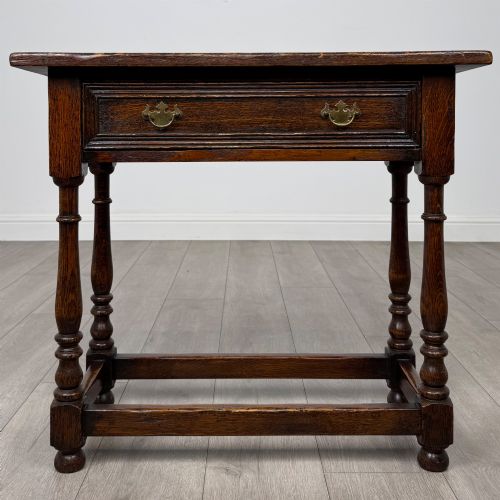
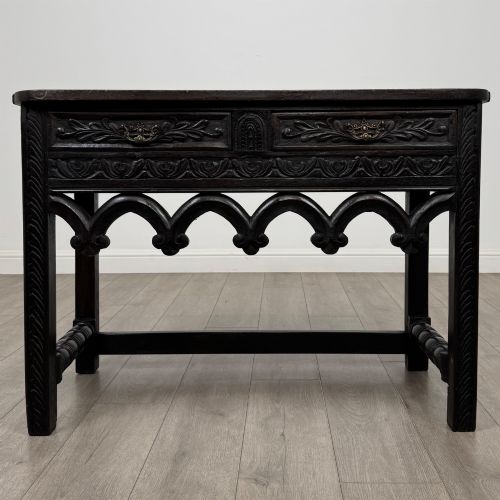
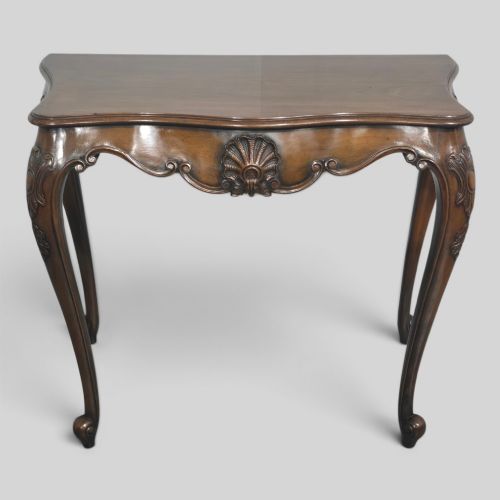
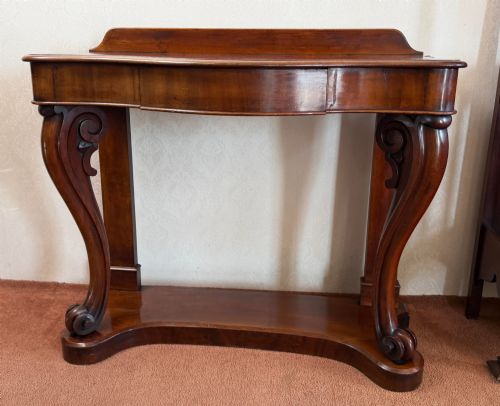
Carved Wood Entry Console
A carved wood entry console brings architectural presence and a useful surface to a hallway, drawing the eye with rich timber and carved detail.
Carved Wood Entry Console
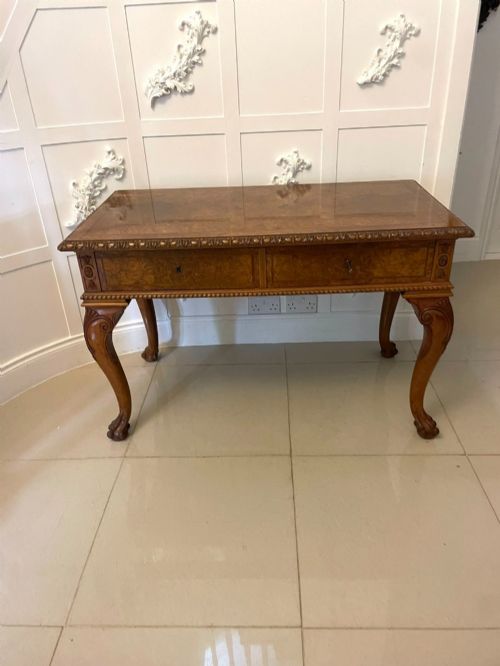
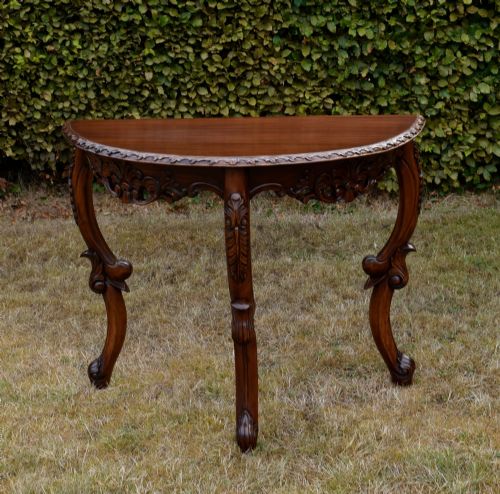
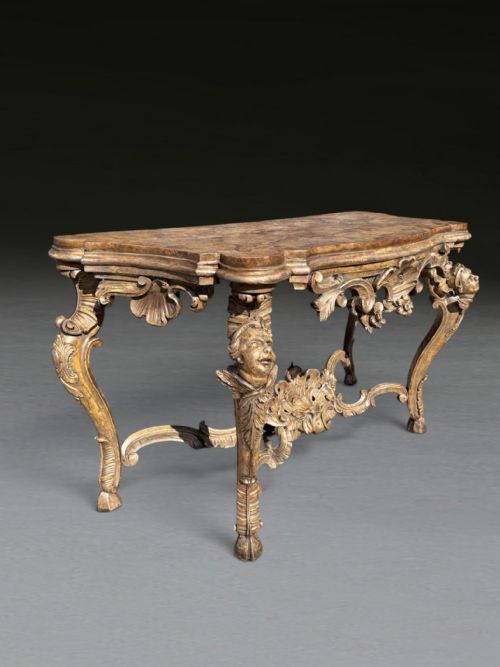
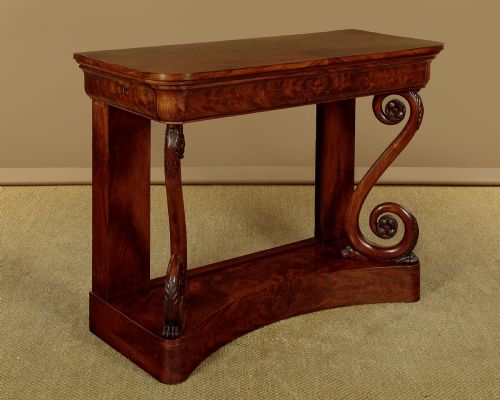
A carved wood entry console generally appears as a console table, side table, or hall table designed to sit flush against a wall in a passage or reception space. The pieces recorded here span from the 18th century through the Edwardian era and the 1920s and 1930s, reflecting both British and continental European cabinet-making traditions.
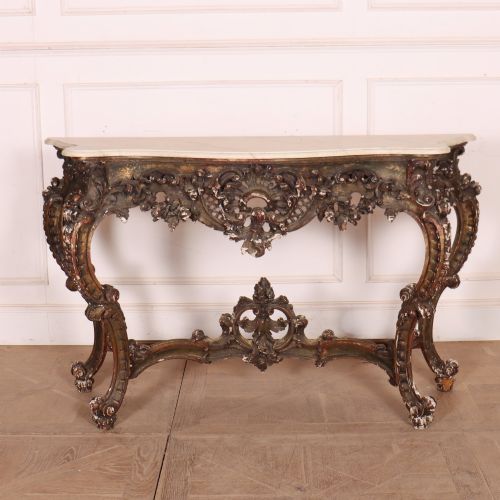
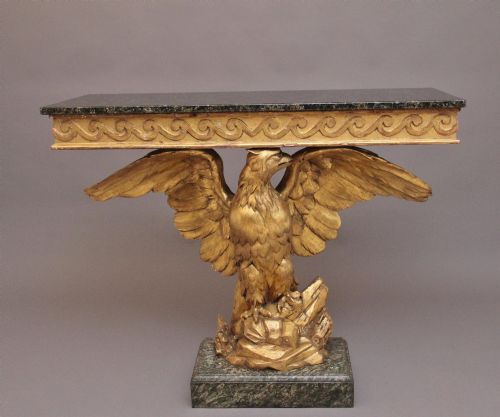
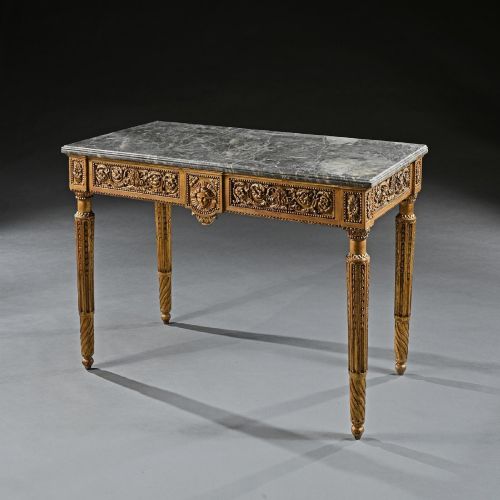
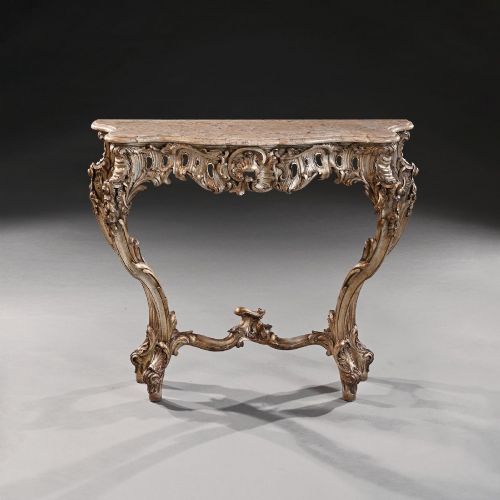
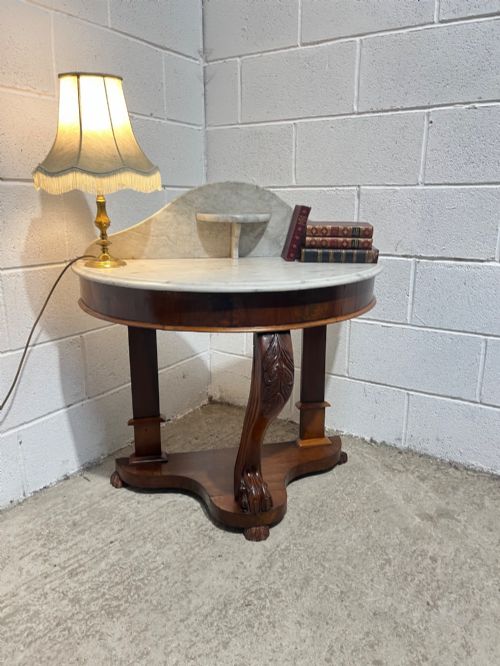
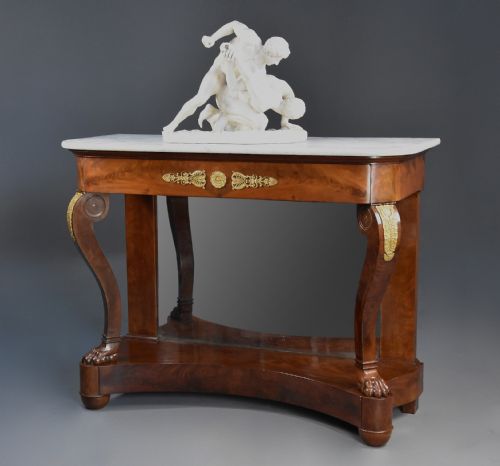
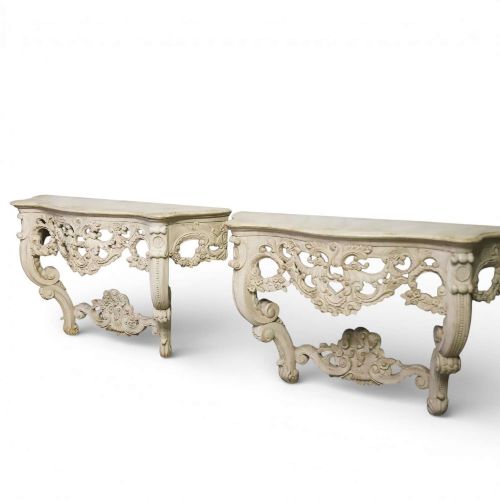
Buyers will encounter serpentine shapes, demi-lune profiles, and narrow formats intended for compact hallways, alongside grander Italian and French giltwood iterations topped with marble. Common woods across the selection include mahogany, walnut, oak, and rosewood, frequently paired with decorative surface finishes.
The selection also accommodates pieces reflecting revival styles such as Queen Anne, Sheraton, and Neo-classical, as well as Anglo-Indian and Oriental carving traditions. Many examples incorporate fitted marble or onyx tops, while others feature mirror backs or painted surfaces.
Materials and Technique
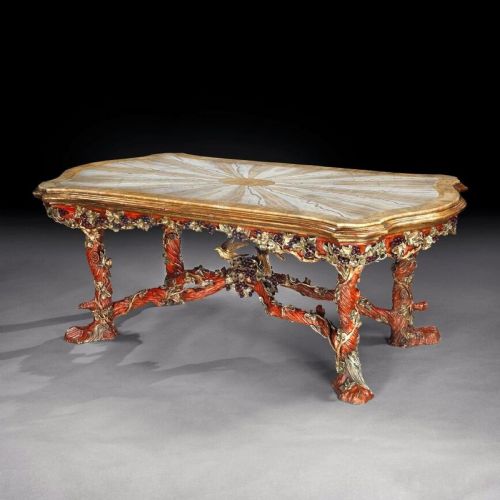
Cabinet-makers constructed these tables using dense hardwoods like mahogany, walnut, and oak, alongside exotic timbers such as padauk and rosewood. Giltwood and gesso surfaces frequently appeared on continental European examples, providing a base for intricate hand-carved ornamentation and gilding.
Marble and onyx inserts served as heavy, durable tabletops on Italian and French consoles, contrasting with the warm grain of polished timber frames. Carving was executed by hand, creating relief work, mouldings, and serpentine profiles that required precise joinery to maintain structural integrity over time.
The listings combine 19th-century and Edwardian pieces with earlier 18th-century Italian designs and 1930s wall console tables.
Judging Quality
The distinction between ordinary and superior tables rests on the crispness of the hand-carving and the choice of timber figures, such as burr walnut or well-figured mahogany. Finer examples display meticulous joinery in their serpentine frames and tightly fitted marble or stone tops.
Makers of note, documented on specific pieces, elevate a table through signed provenance or distinctive regional craftsmanship, whereas unsigned pieces rely entirely on the depth of the carving and the preservation of original gilding or paint finishes.
Amleto Bertoni·James Mein of Kelso·Epstein and Co
The Carved Wood Entry Console Glossary
- Demi-lune
- A half-moon shape used for table tops and frames. This format allows the furniture to sit flat against a wall while projecting a curved front into the room.
- Serpentine
- A wavy line of furniture moulding that curves outward at the centre and inward at the sides. It requires skilled woodworking to shape timber into these fluid contours.
- Giltwood
- Timber that has been coated with gold leaf or a gold-coloured finish. It is characteristic of decorative Italian and French console tables from the 18th and 19th centuries.
- Padauk
- A dense tropical hardwood prized for its deep reddish-brown colour and durability. It appears on carved tables originating from Burma.
- Gesso
- A plaster-like mixture applied to wood surfaces as a base for gilding and paint. It is carved and smoothed before the application of gold leaf.
Carved Wood Entry Console: Frequently Asked Questions
What is a console table?
A console table is a narrow table designed to stand flat against a wall, frequently supported by wall brackets or front legs. In an entrance hall, it provides a surface for correspondence or decorative objects without blocking the walkway.
Historical examples often paired timber frames with heavy marble tops and sometimes incorporated mirror backs to reflect light in narrow hallways.
How do I style a hall console?
Place the table against a clear wall in an entrance or reception room where its depth will not obstruct movement. A mirror hung directly above a console table balances the proportions and reflects natural light.
Keep the surface uncluttered to showcase the wood grain, carved mouldings, or stone top.
Are marble top consoles fragile?
The marble or onyx slabs fitted to these tables are heavy and structurally stable, but they require careful handling during transport. The underlying wooden frame is built to bear the considerable weight of the stone.
Routine maintenance involves dusting the timber and wiping the stone surface with a soft, damp cloth.
How to identify 19th century consoles?
Nineteenth-century tables often display revival aesthetics, such as French Rococo, Gothic, or Neoclassical motifs executed in mahogany, walnut, or giltwood. Examination of the underside and joints reveals period construction methods and tool marks.
Documentation or signatures from makers can further confirm the date and origin of the piece.