



Carved Wood Eagle
These carved wood eagle pieces bring powerful avian presence into a room, typically appearing atop convex mirrors or standing alone as striking sculptures.
Carved Wood Eagle
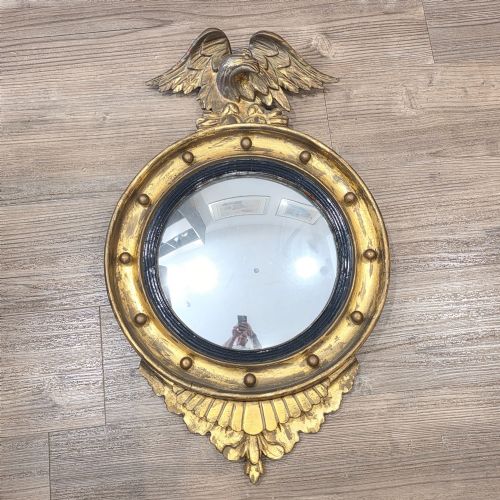
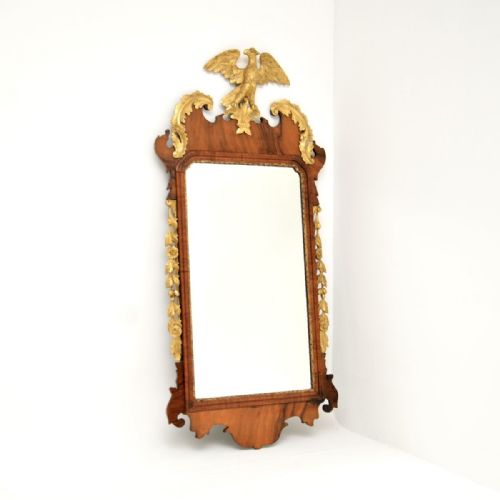
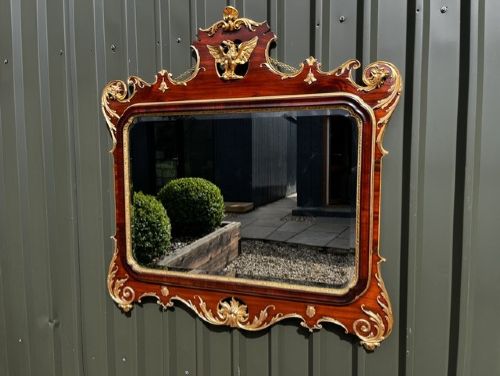
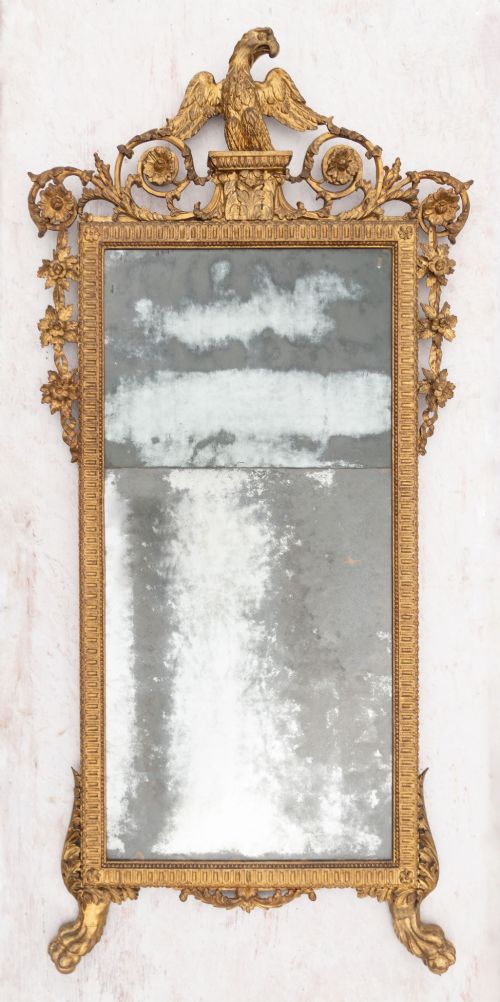
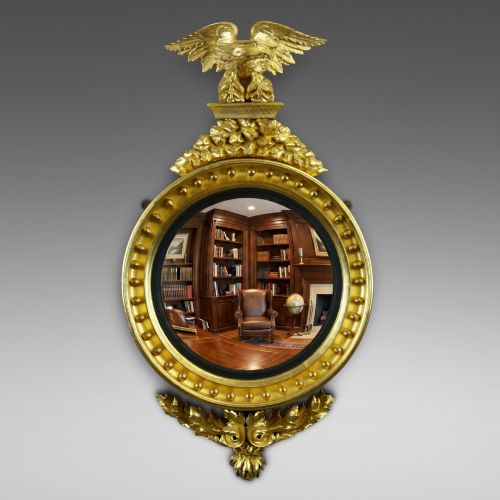
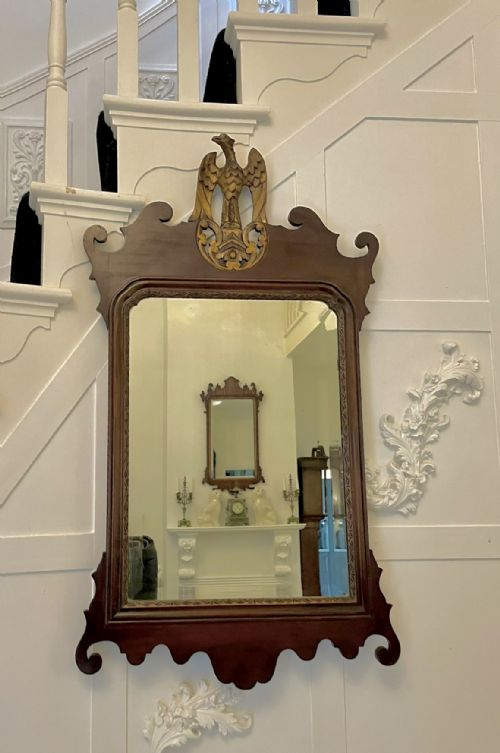
A carved wood eagle most frequently surmounts a circular convex mirror, where the bird perches with outstretched wings above the gilded frame. These pieces emerge predominantly from the Georgian, Regency and Victorian periods, carrying the weight of traditional craftsmanship into domestic interiors.
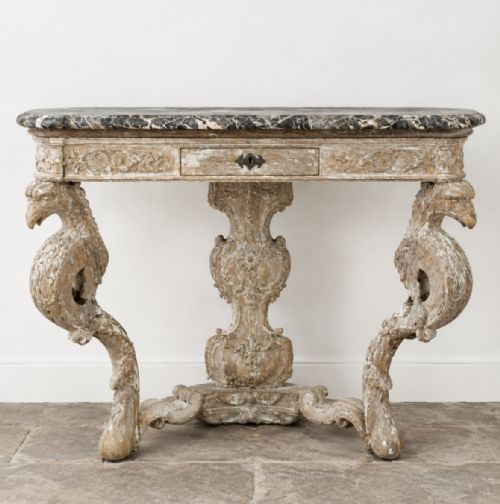
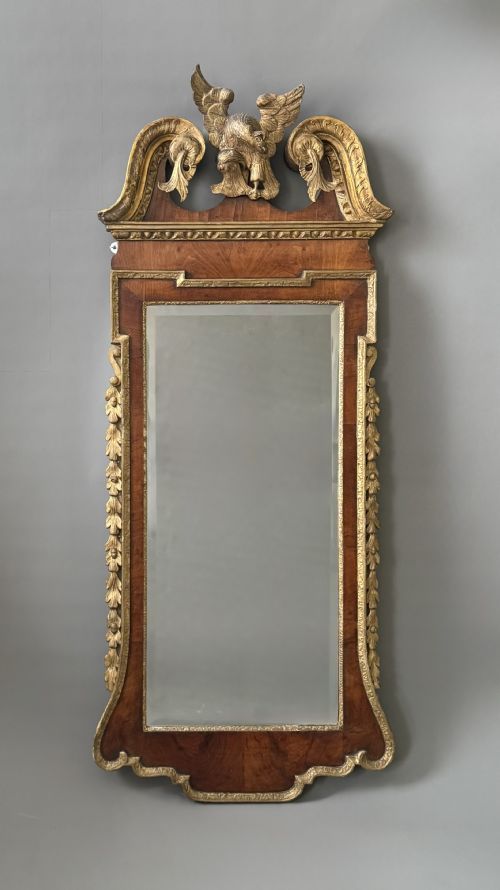
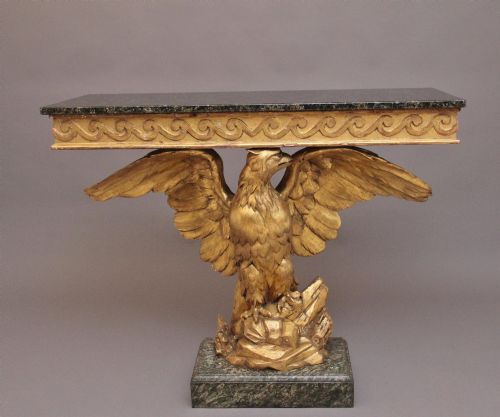
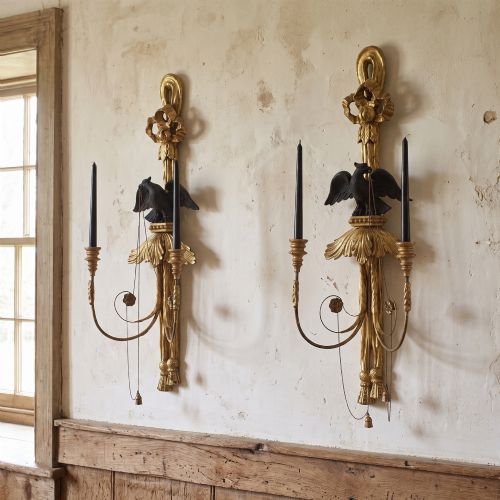
Beyond wall mirrors, the search phrase leads to standalone sculptures, wall brackets, console tables and ecclesiastical lecterns. Black Forest workshop pieces sit alongside English giltwood productions, showing how different European centres interpreted the raptor form in timber.
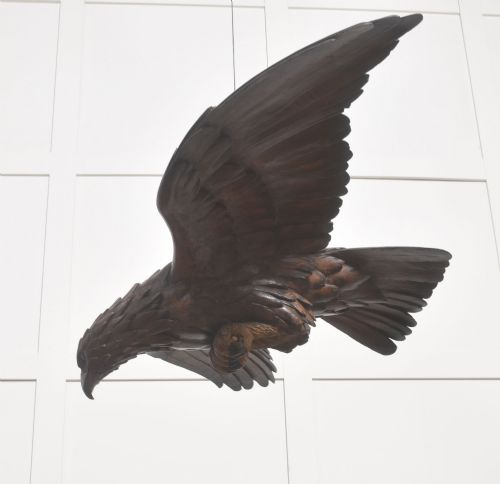
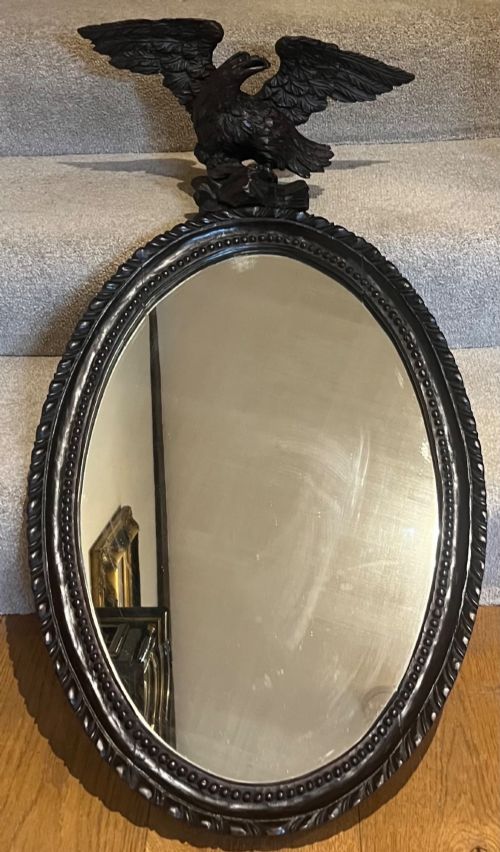
The most common format on this page is the convex mirror with an eagle crest, often finished in gold leaf over gesso and mahogany or walnut. Alongside these, substantial Black Forest carvings depict the bird with realistic detail, sometimes paired with prey or mounted on root wood bases.
Materials and construction methods
Carvers used native timbers such as mahogany, walnut, oak, linden and general softwood, shaping the bird and its plumage with hand chisels and gouges. For mirror frames and decorative brackets, carvers applied gesso over the timber base before laying on gold leaf or applying paint finishes.
Giltwood elements relied on traditional water gilding techniques where gold leaf adheres to a prepared chalk and glue ground. In Black Forest items, artists left the natural dark timber visible, often waxing the surface to highlight the intricate feather texturing.
Some nineteenth-century birds gaze perpetually downward, keeping watch over entrance halls from lofty wall brackets.
Assessing quality in carving and gilding
Quality rests in the anatomical depth of the carving, where individual feathers show distinct layering and the bird possesses a convincing intensity of gaze. Stiff, shallow incisions in the timber separate standard decorative work from pieces handled by skilled hands.
The integrity of the gilded surface and the preservation of the original wood ground dictate the standing of a mirror or bracket. Where gesso remains crisp beneath the gold leaf without heavy restoration filling the finer details, the piece retains its original visual authority.
The Carved Wood Eagle Glossary
- Convex mirror
- A circular wall mirror featuring a curved glass surface that reflects a wide-angle view of the room. These frequently incorporate eagle crests and girandole candle arms.
- Giltwood
- Timber that has been coated with gold leaf over a prepared gesso layer. This finish defines many Regency and Georgian mirror frames.
- Black Forest
- A style of intricate wood carving originating from central Europe during the nineteenth century. These items typically depict animals, birds and foliage in naturalistic dark timber.
- Gesso
- A plaster mixture applied to wood surfaces as a smooth base for gilding or painting. Its preservation underpins the sharpness of decorative mouldings.
- Parcel gilt
- A decorative treatment where parts of an object are gilded with gold leaf while other areas reveal the natural wood grain beneath.
Carved Wood Eagle: Frequently Asked Questions
Where did people hang eagle convex mirrors?
These mirrors typically hung in principal reception rooms such as dining rooms and hallways where they could reflect light and impress visitors.
Their convex glass offered a wide view of the surrounding interior while the eagle surmount added a formal decorative focal point above the mantelpiece or console table.
How do I care for antique giltwood?
Giltwood requires dry dusting with a very soft brush to protect the delicate gold leaf and underlying gesso layer from damage.
Keep these pieces away from direct sunlight and moisture fluctuations to prevent the timber from warping and the gesso from cracking.
What is the difference between Georgian and Regency styles?
Georgian pieces often display heavier proportions and classic architectural detailing associated with eighteenth-century furniture design.
Regency items lean towards classical revival motifs influenced by ancient Rome, featuring sharper lines and bold giltwood convex frames.
Are Black Forest carvings made of solid wood?
These sculptures and decorative objects were carved from solid blocks of regional timbers such as linden, walnut and softwood.
Carvers worked directly into the timber block to achieve deep undercut foliage and realistic feather details without relying on assembled veneers.