


Carved Wood Document Box
These carved wood document box pieces keep private papers safe in sturdy timber.
Carved Wood Document Box
A carved wood document box serves as a secure home for letters, deeds and personal papers, taking forms such as bible boxes, writing slopes, desk boxes and stationery boxes. Buyers searching for a carved wood document box encounter diverse origins and regional styles, from early English oak to colonial workshops.
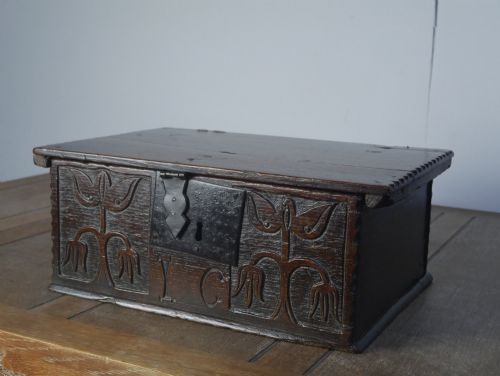
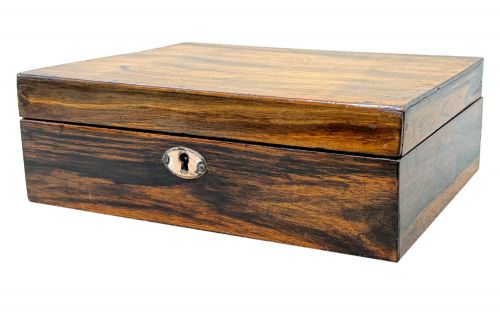
The selection ranges from robust seventeenth century oak examples featuring chip carving to nineteenth century pieces in exotic timbers like coromandel, ebony and olive wood. Form follows function closely, with hinged lids protecting the interior contents while surface ornamentation defines the aesthetic character of each individual container.
How they were made
Cabinetmakers constructed these receptacles using solid native and exotic hardwoods including oak, walnut, chestnut, ebony and olive wood, frequently joining panels with traditional joints. Surfaces received detailed hand carving, chip carving, or floral marquetry to embellish the exterior panels.
Many examples incorporate contrasting materials like bone, brass, iron hinges, and porcupine quill or sadeli mosaic work to accent the woodwork. Interior fittings often include writing surfaces, compartments for stationery, and small drawers tailored for inkwells and pens.
Listings feature woods spanning native English oak and chestnut alongside exotic coromandel, ebony, olive wood and walnut.
What varies in quality
The distinction between standard examples and superior pieces rests upon the crispness of the hand carving and the selection of timber figures. Rich grain patterns in woods like coromandel or olive wood elevate the visual presence of the container.
Structural integrity and the survival of original hardware, such as brass hinges and iron locks, determine the merit of an antique box. Finer items demonstrate careful proportional balance and meticulous execution of decorative motifs across every visible surface.
The Carved Wood Document Box Glossary
- Bible box
- A small sloped-lid container originally made to hold a family bible or important household papers. These early pieces often rest on flat surfaces or stands.
- Writing slope
- A portable desk featuring a slanted writing surface that opens to reveal compartments for stationery, pens and ink. They were essential travelling accessories for correspondence.
- Chip carving
- A form of surface ornamentation where small chips are carved out of a solid block of wood in geometric patterns. It appears frequently on seventeenth century vernacular boxes.
- Sadeli work
- A decorative mosaic technique utilising intricate geometric patterns formed from cross-sections of various materials including horn, bone and coloured woods. It is characteristic of nineteenth century Anglo-Indian production.
Carved Wood Document Box: Frequently Asked Questions
What is a carved wood document box used for?
These receptacles served historically to protect valuable papers, correspondence, legal deeds and household documents from damp and damage. Today they function equally well for modern stationery, letters or keepsakes on a desk or table.
Their sturdy timber construction and compartmentalised interiors make them practical for organising small personal items while adding historic character to a room.
How do I date an antique wooden box?
Dating relies on examining the timber species, construction methods, tool marks and the style of decoration. Seventeenth century pieces typically utilise heavy English oak with chip carving or panel construction.
Later nineteenth century examples often employ exotic woods like ebony or coromandel, featuring more complex interior fittings and refined surface embellishments characteristic of the Victorian period.
What is the difference between a desk box and a writing slope?
A desk box generally refers to a lidded container for storing writing materials and documents without an adjustable sloping lid for writing. A writing slope opens up to provide an angled surface specifically designed for writing letters.
Both forms include internal compartments, but the slope prioritises the writing angle while the desk box focuses primarily on secure storage capacity.
How do I care for antique wooden boxes?
Protect the timber by keeping the box away from direct sunlight, heat sources and sudden humidity changes that can cause wood to warp or split. Occasional application of appropriate wax helps maintain the lustre of the polished surface.
Avoid using harsh chemical cleaners or excess moisture on carved areas and delicate inlays such as bone or quill.