

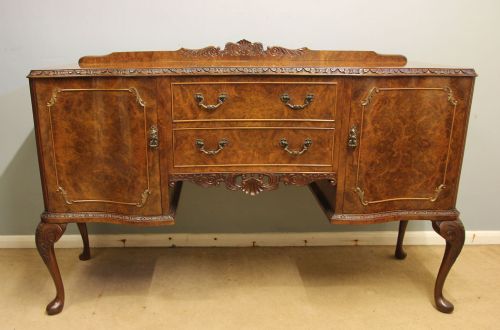
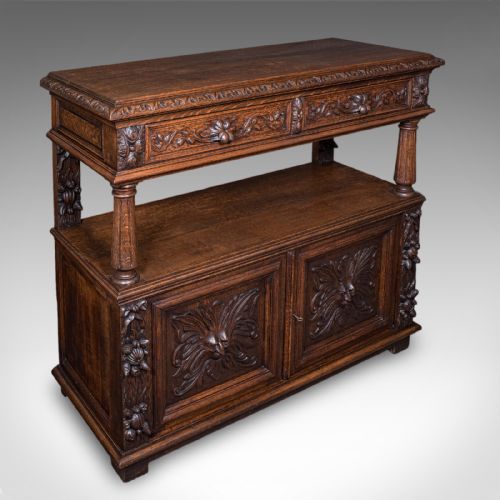
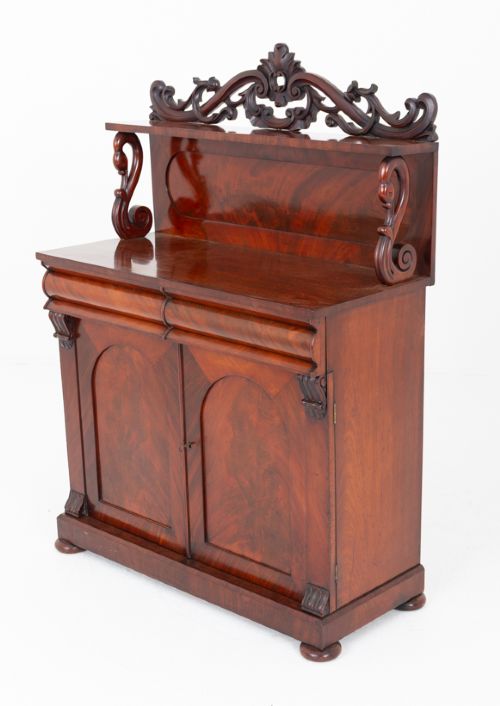
Carved Wood Buffet Cabinet
These carved wood buffet cabinet pieces offer substantial storage and rich period timber character for any room.
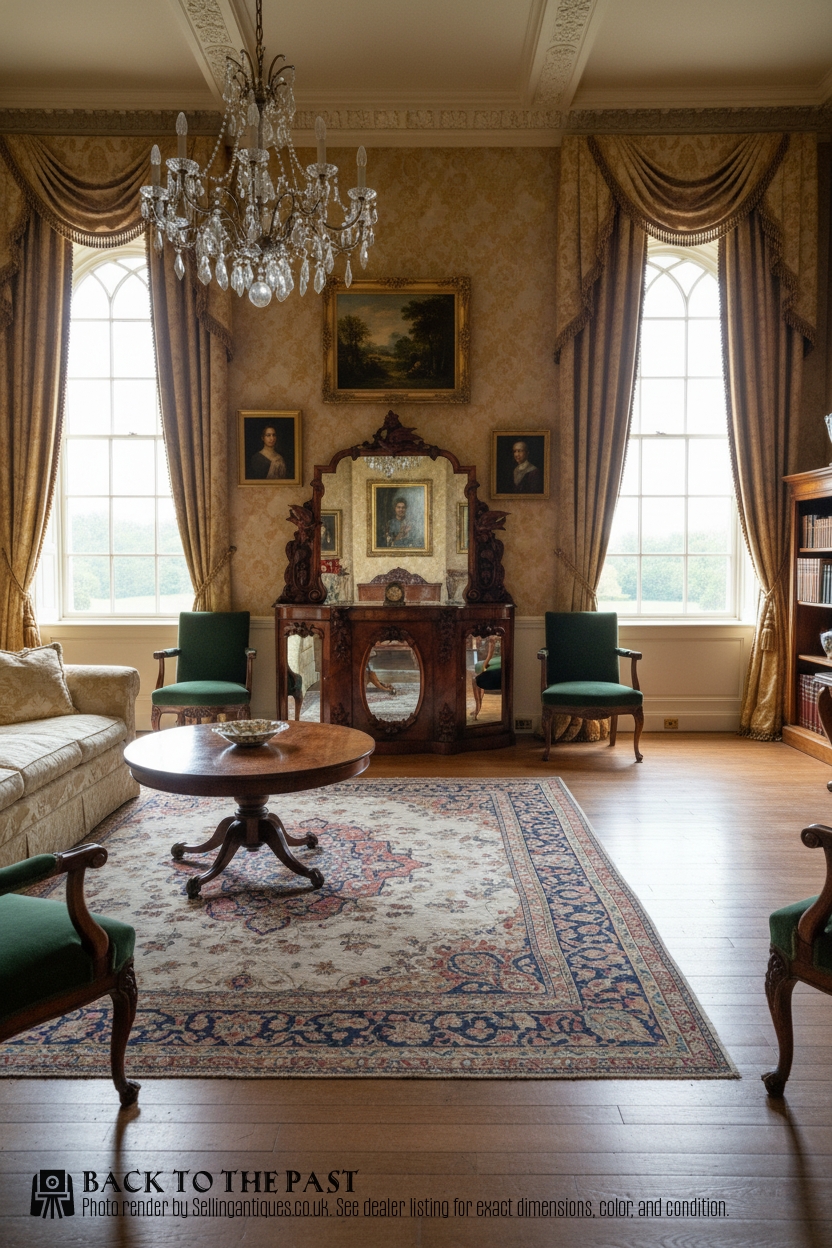
Carved Wood Buffet Cabinet
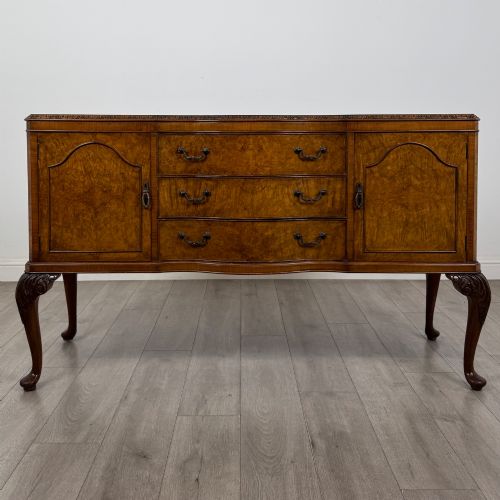
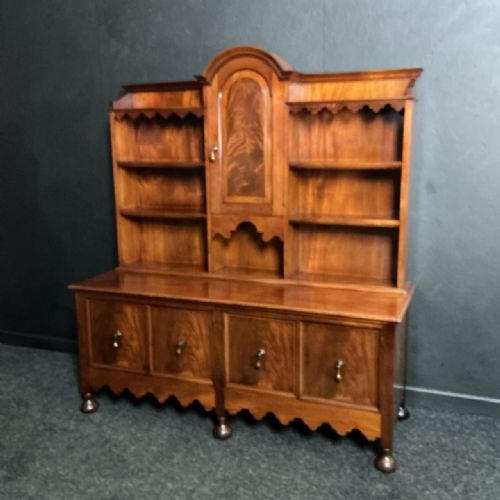
A carved wood buffet cabinet functions primarily as a substantial storage piece and serving surface, drawing on a long tradition of domestic furniture forms. When you search for this phrase, you meet sideboards, chiffoniers, credenzas, dressers and large cupboards built from solid timber.
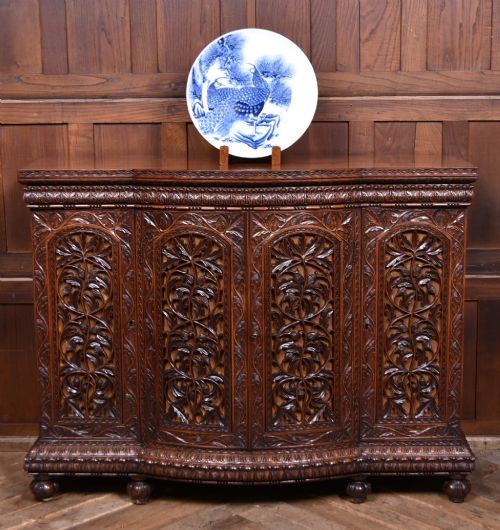
The pieces appearing on this page span several distinct eras, notably the Victorian period, the Edwardian era, and the mid-nineteenth century. Alongside British sideboard forms, you encounter French hunting cabinets, Anglo-Indian works, Italian side cabinets and Chinese sideboards.
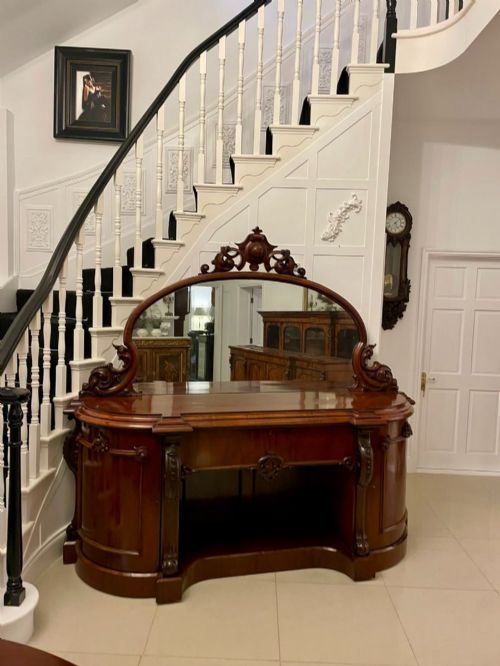
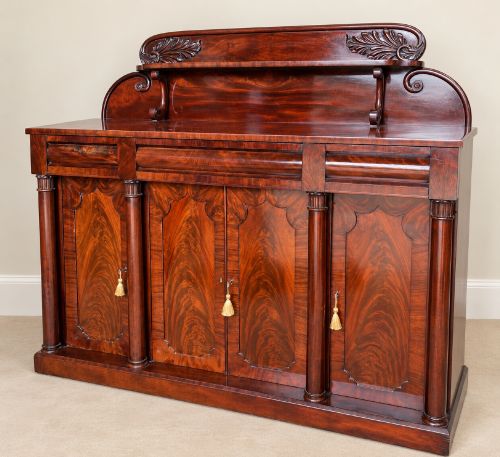
Makers utilised various formats, ranging from four-door servers and mirror-back sideboards to serpentine front credenzas and compact display cabinets. Each type serves a specific function for dining room storage and display.
Materials and Construction
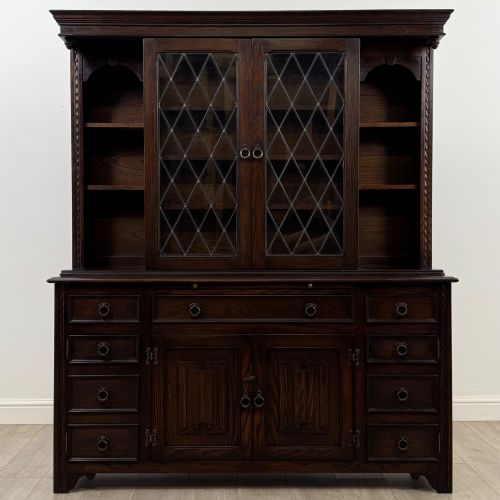
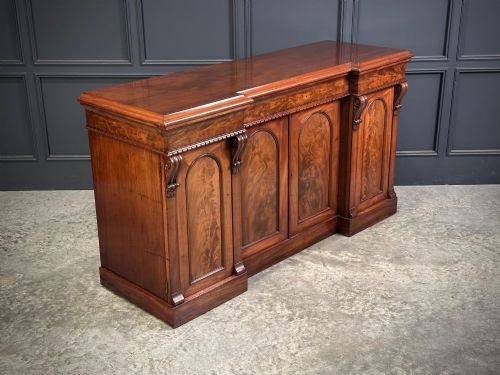
The cabinet makers behind these pieces relied heavily on oak and mahogany, frequently selecting figured timber such as flame mahogany and burr walnut for primary visual impact. Secondary timbers like fruitwood appear alongside structural additions in brass, iron, glass and metal.
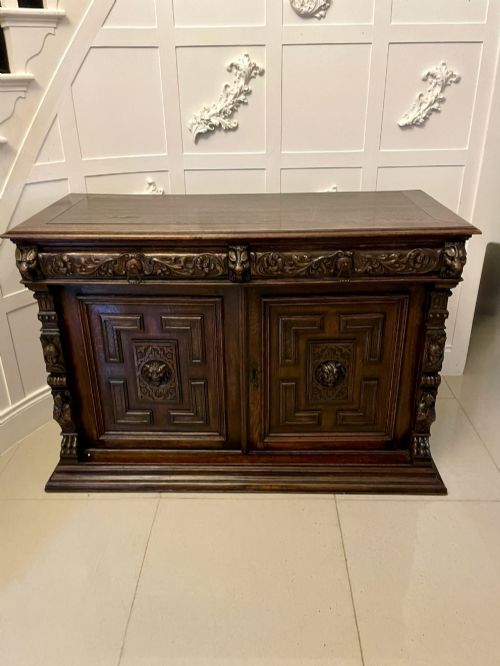
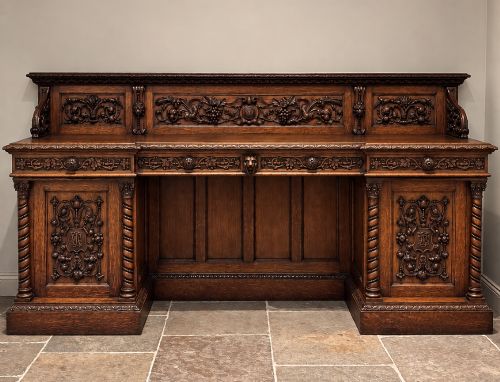
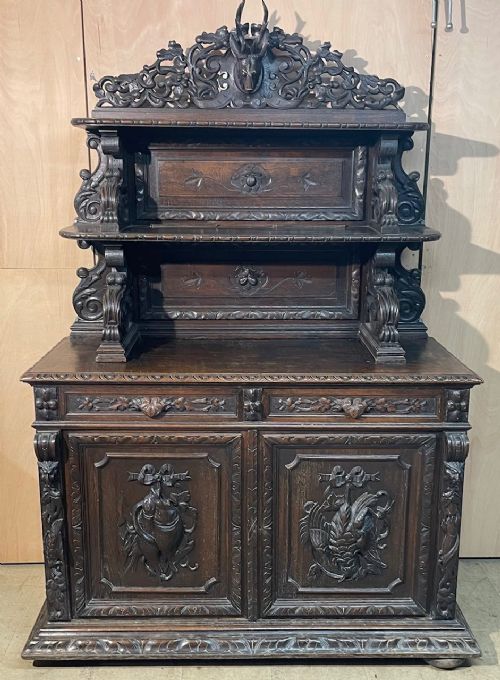
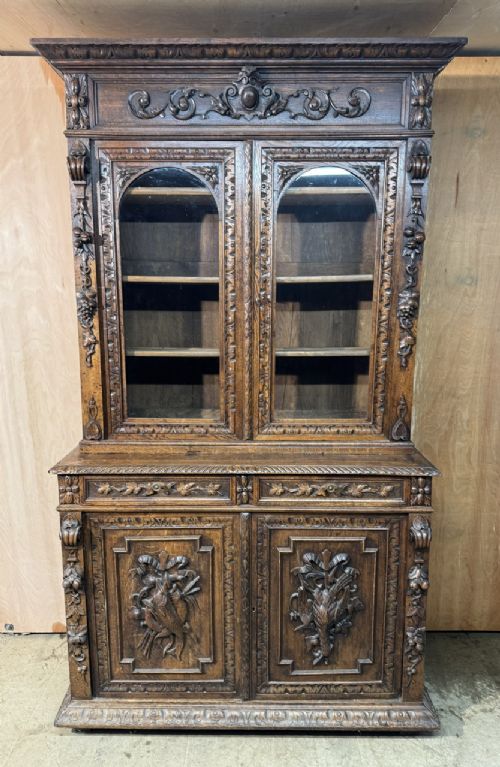
Carving serves as the principal decorative technique, ranging from deep relief foliage to barley twist supports and geometric tramp art. Joinery methods matched the heavy weight of the timber, employing sturdy panel construction for doors and drawers.
One enthusiastic Victorian cabinet maker clearly let their enthusiasm run wild with a heavily carved oak surface dated precisely to 1866.
Evaluating Quality and Execution
Quality in a carved wood buffet cabinet rests upon the depth and crispness of the hand carving, the choice of timber figure, and the integrity of the original hardware. Pieces with matched veneer grains and substantial brass fittings demonstrate superior craftsmanship.
The architectural ambition of the design, such as an integrated mirror-back, serpentine fronts or multi-door configurations, distinguishes standard utility furniture from exhibition-grade examples.
The Carved Wood Buffet Cabinet Glossary
- Chiffonier
- A compact sideboard or low cupboard, typically featuring a shelf or small drawers above enclosed cabinet doors. Victorian examples often incorporated a mirror at the back.
- Credenza
- A sideboard or buffet used for serving food and displaying silver or porcelain. The form often incorporates serpentine fronts and marquetry inlay.
- Serpentine front
- A furniture front characterised by a curved outline that is convex in the centre and concave at the ends. This shaping requires expert timber selection and joinery.
- Barley twist
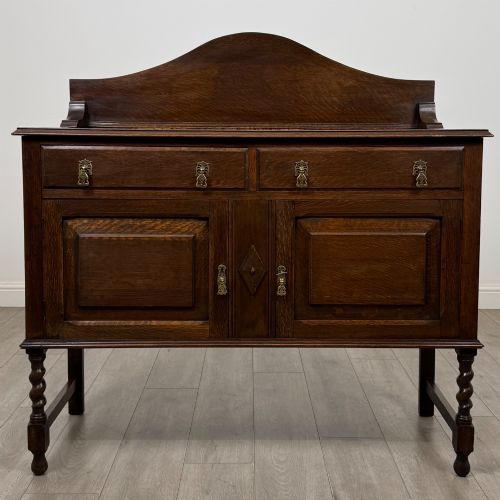
- A decorative turning technique resembling a spiral rope. It appears frequently on the vertical supports of Edwardian and Victorian sideboards.
- Tramp art
- A style of folk art created by carving relief patterns into scrap wood using simple pocket knives. Pieces in this style offer a textured, tactile surface.
Carved Wood Buffet Cabinet: Frequently Asked Questions
What is a carved wood buffet cabinet used for?
These pieces function as dining room storage for crockery, linen and serving dishes while providing a flat top surface for food presentation.
Historically, they also served to display prized tableware and silver objects during formal meals.
How do I date a wooden sideboard?
Dating relies on identifying stylistic markers, timber types, and construction methods associated with specific decades. Victorian and Edwardian examples often feature distinct hardware and carving motifs.
Examining internal drawer construction and timber shrinkage patterns helps confirm the manufacturing era.
Are these cabinets suitable for modern living rooms?
Many people utilise these cabinets in living rooms, hallways or kitchens as media stands or general storage units. Their deep cupboards accommodate modern household items easily.
Placing them against a neutral wall allows the rich grain of oak or mahogany to function as a focal point.
What is the difference between a sideboard and a chiffonier?
A sideboard is typically a long, low piece designed primarily for dining room service and large-scale storage. A chiffonier is generally smaller and often includes raised shelving or a mirror top.
Both forms belong to the broader family of dining room storage furniture.