

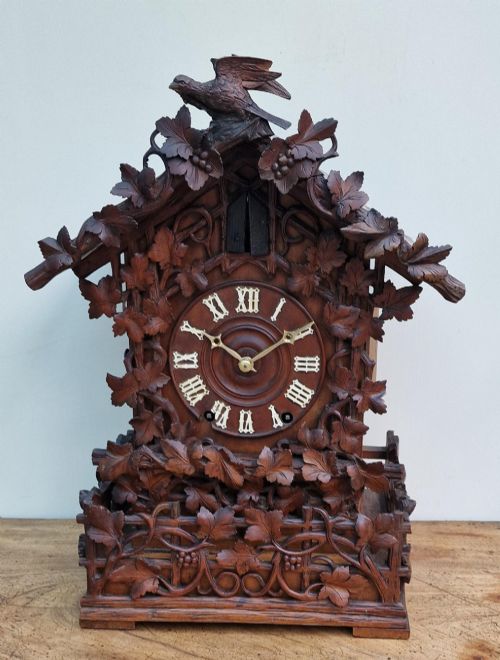
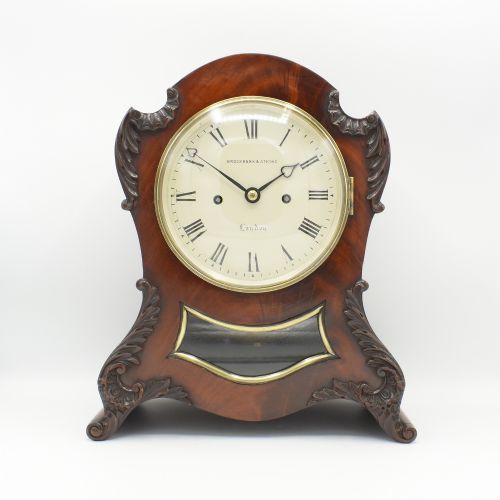
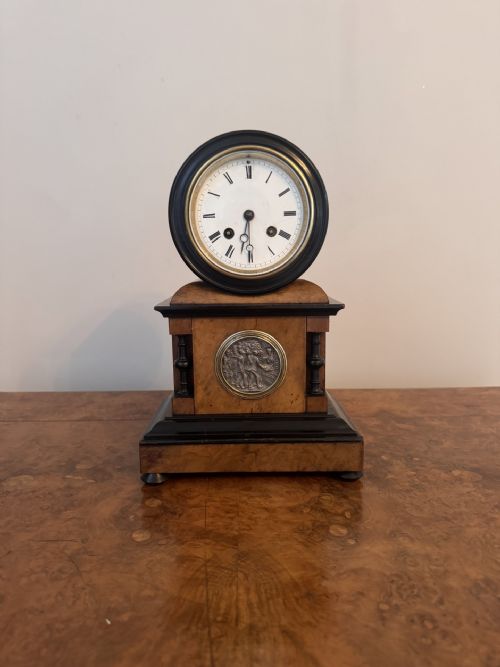
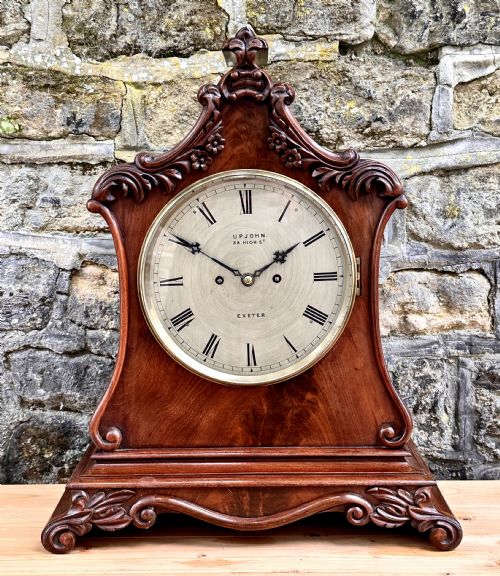


Carved Wood Bracket Clock
When you handle a carved wood bracket clock, you hold a piece of history that brings mechanical precision and fine cabinetmaking into a room.
Carved Wood Bracket Clock
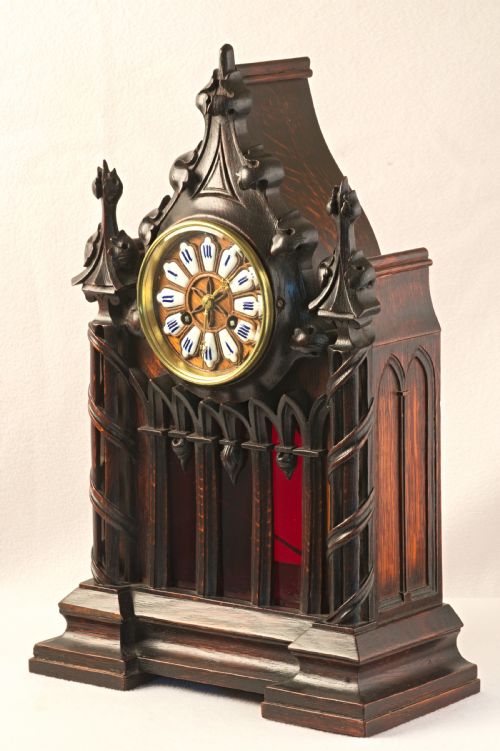
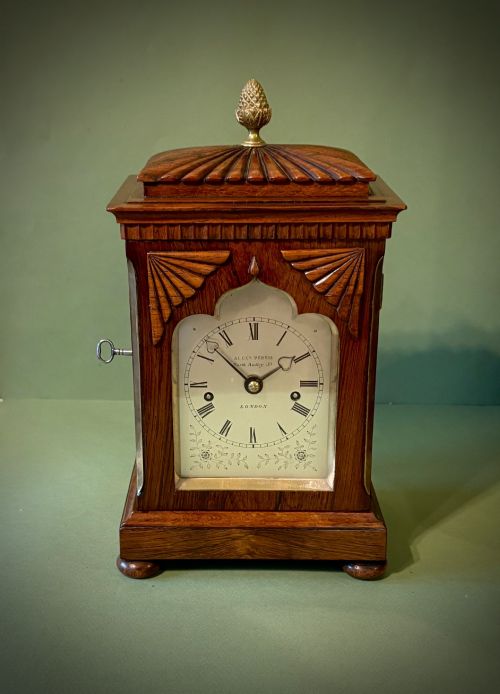
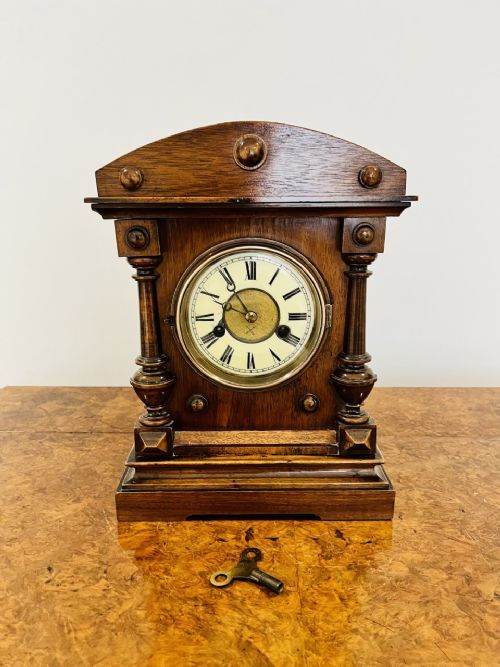
A carved wood bracket clock sits on a table, shelf or bracket, bringing timekeeping and decorative presence together. These timepieces appear across the Victorian, Regency and Edwardian periods, reflecting the shifting tastes in domestic interiors from the nineteenth century into the twentieth.
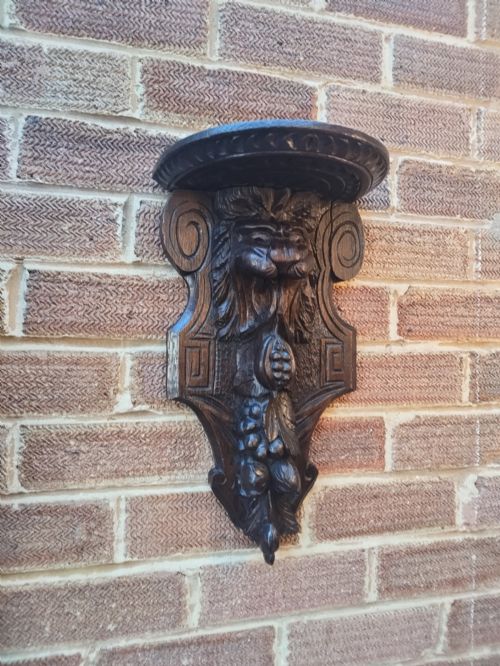
The objects recorded here include mantel clocks, library clocks and wall bracket clocks alongside standalone wall shelves. Mahogany, oak, burr walnut, rosewood and satinwood provide the structural timber for these forms, often paired with brass and enamel details.
Makers such as George Wadham, Brockbanks and Atkins, Mappin and Webb, Sir John Bennett, Piggin Norwich, Barrett London, Edwards of London and WMC appear among the listings. Styles range from Gothic Revival and Regency to Belle Epoque and Georgian Revival.
How they were made
Cabinetmakers constructed the housing using dense timbers like mahogany, rosewood, oak and burr walnut, shaping pad tops, pagoda tops and architectural cases. Ebonised wood and satinwood additions provided contrast, while glass protected the dial and brass components added structural and decorative accents.
Clockmakers fitted fusee movements, triple fusee bells and twin fusee mechanisms to regulate the power from the mainspring evenly. Enamel dials, convex glass and carved wooden brackets completed the pieces, joining precise horology with cabinet work.
Carved Wood Bracket Clock Retail Price Guide 2026
Typical asking prices for carved wood bracket clock among the pieces listed under this phrase on Sellingantiques today, from the lower quarter to the upper quarter. They describe what is for sale here now, not the wider market.
Some clocks recorded unique municipal duties, such as timing events at Holborn Town Hall and Library.
What varies in quality
The refinement of the cabinetwork separates standard items from the finest examples, seen in the crispness of the wood carving and the choice of timbers like burr walnut and satinwood. Pad tops, pagoda tops and gothic architectural details demand precise joinery and proportion.
Horological complexity dictates the standing of the movement, with triple and twin fusee mechanisms representing superior craftsmanship compared to simpler setups. Signed dials by known makers such as Sir John Bennett or Brockbanks and Atkins add significant distinction.
George Wadham·Brockbanks and Atkins·Mappin and Webb·Sir John Bennett·Edwards of London·Barrett London·Piggin Norwich
The Carved Wood Bracket Clock Glossary
- Fusee
- A conical pulley used in mechanical clocks to maintain an even pull on the movement as the mainspring unwinds. This mechanism ensures consistent timekeeping accuracy.
- Pad top
- A raised, gently domed shape on the upper section of a wooden clock case. This form is frequently seen on Regency and Victorian designs.
- Pagoda top
- An upward-curving, tiered roof structure reminiscent of oriental architecture. Cabinetmakers applied this silhouette to select nineteenth-century mantel and bracket clocks.
- Double fusee
- A movement incorporating two separate fusee cones, typically driving both the timekeeping train and the striking train independently. It marks a higher standard of clockmaking.
- Ebonised wood
- Timber treated with a dark finish to imitate expensive ebony. Makers utilised this technique for dramatic contrast on nineteenth-century cases.
Carved Wood Bracket Clock: Frequently Asked Questions
Where should I place a bracket clock?
These clocks suit sturdy tables, mantelpieces or dedicated wall brackets where the timber case and dial face remain visible. Ensure the surface is level to keep the pendulum swinging evenly.
Keep them away from direct sunlight and damp walls to protect the timber and the internal brass mechanics over time.
What is the difference between a bracket clock and a mantel clock?
Historically, bracket clocks were portable timepieces designed to sit on a wall bracket to project sound further across a room. Mantel clocks evolved to sit directly on furniture surfaces.
Over time, the terms became largely interchangeable in trade descriptions, though both maintain distinct period cabinet styles.
How can I tell a Regency clock from a Victorian one?
Regency pieces often feature restrained classical proportions, pad tops and clean mahogany surfaces reflecting early nineteenth-century neoclassical design. Victorian examples frequently embrace heavier carving, Gothic Revival elements and diverse timbers like burr walnut.
Examining the dial signature, case silhouette and wood selection generally reveals the period of manufacture.