

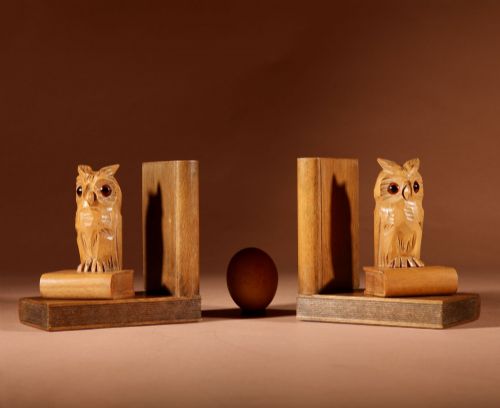


Carved Wood Bookends
Carved wood bookends keep volumes orderly while bringing animal figures and architectural motifs to a desktop.
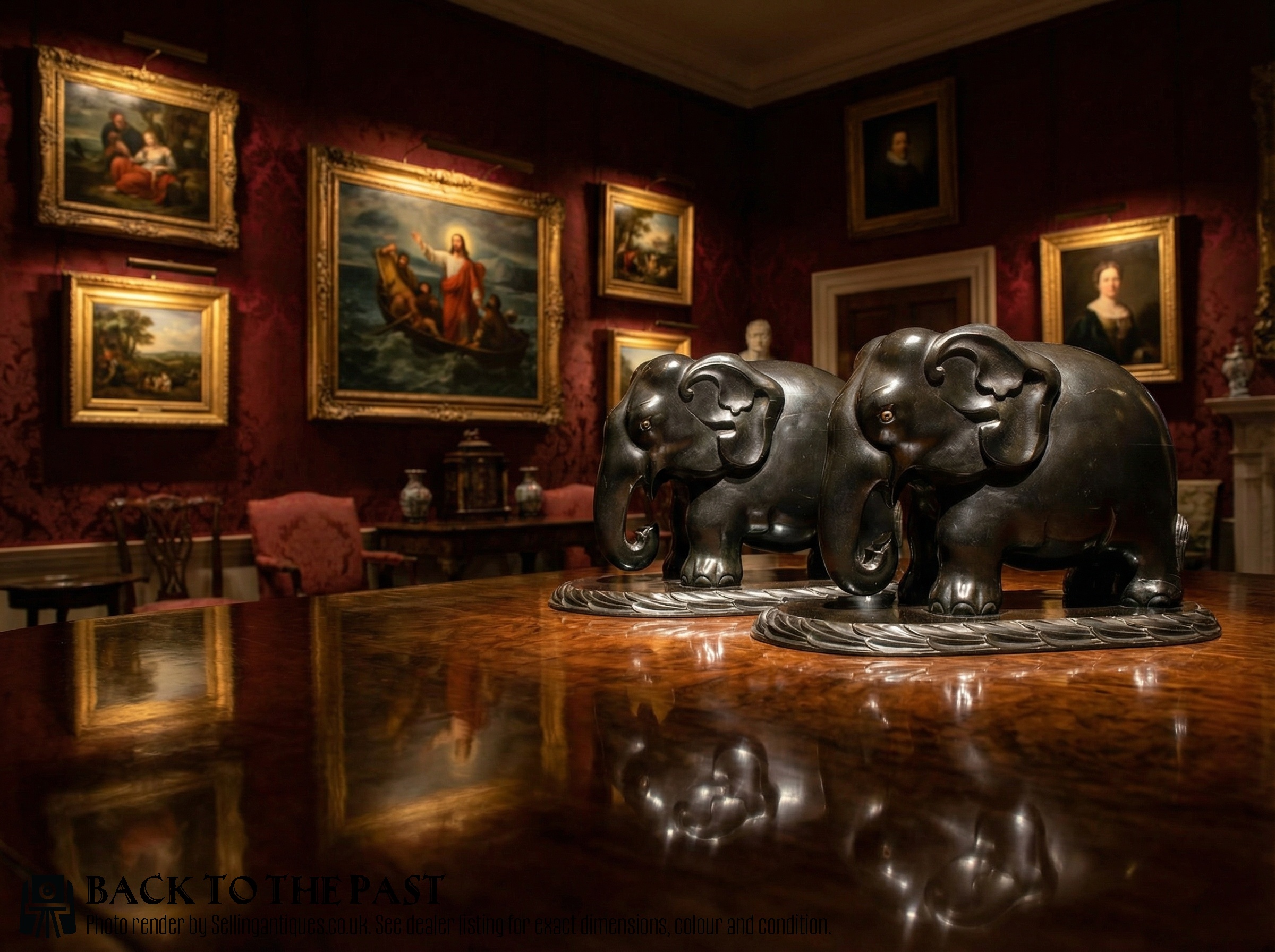
Carved Wood Bookends
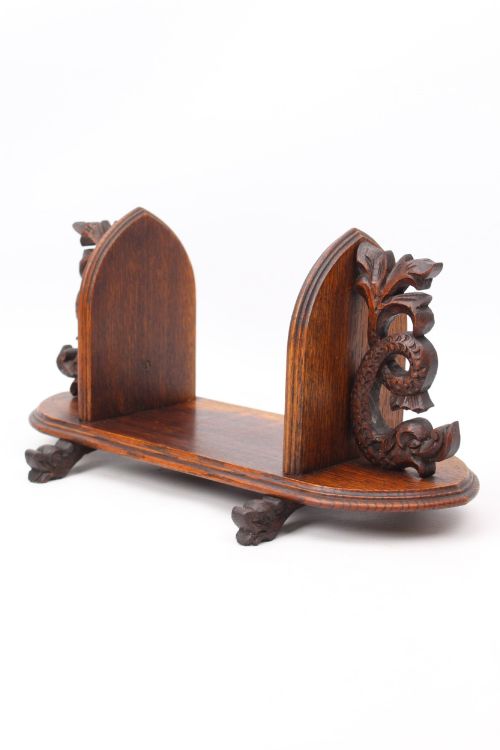
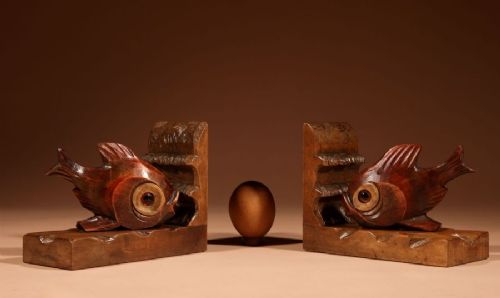
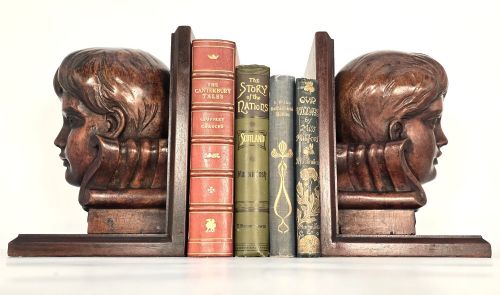
Carved wood bookends appear in forms ranging from Gothic architectural stands and extending slides to sculptural animal pairs. These domestic accessories hold volumes upright using substantial timber bases and weighted platforms.
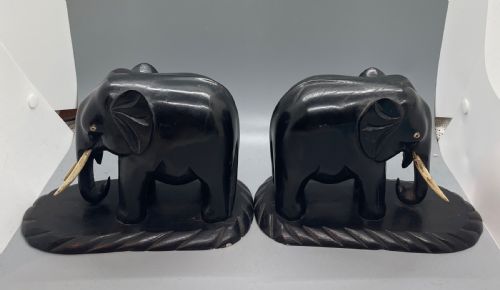
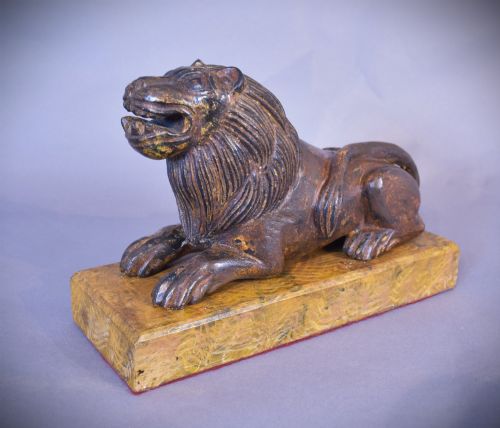
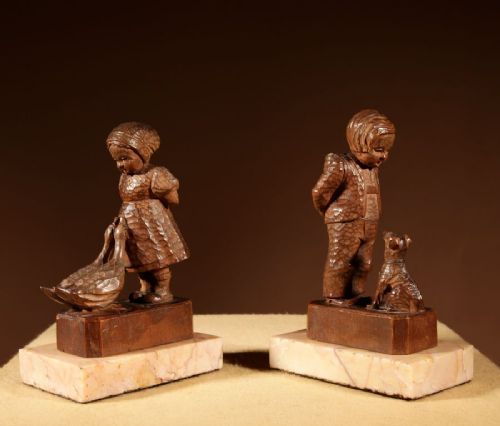
The selections available here lean heavily towards early twentieth century Black Forest animal carvings alongside Victorian oak and mahogany library pieces. Figures of elephants, owls, lions and dogs dominate the available range.
Originating from English workshops, continental European carving centres and colonial hubs, these objects reflect the diverse decorative tastes of the nineteenth and twentieth centuries.
Materials and construction
Makers utilised native and exotic timbers including oak, mahogany, walnut, ebony, olive wood and linden wood to carve these desk accessories. Softer woods allowed for deep relief work, while dense tropical hardwoods supported intricate detail without splintering.
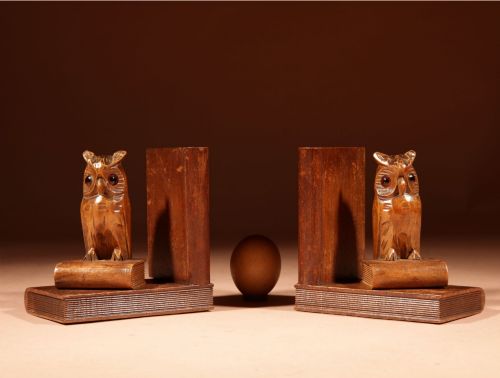
Carvers employed hand chisels and gouges to shape the timber, frequently adding glass eyes to animal subjects or penwork surface decoration in specific regional styles. Extending book slides incorporated brass or wooden mechanisms to alter the shelf length smoothly.
Carved Wood Bookends Retail Price Guide 2026
Typical asking prices for carved wood bookends among the pieces listed under this phrase on Sellingantiques today, from the lower quarter to the upper quarter. They describe what is for sale here now, not the wider market.
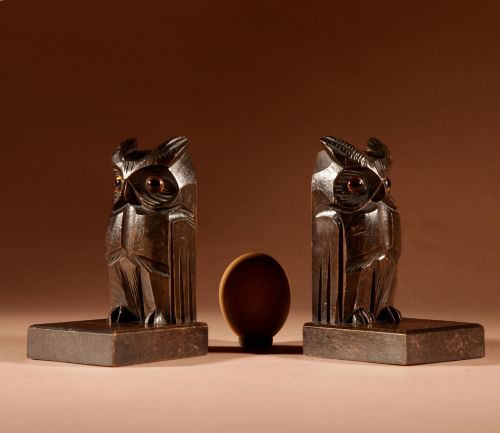
Several pairs depict wise owls wearing attentive expressions, ready to supervise late-night reading sessions from the mantelpiece.
Judging the work
Quality rests upon the depth of the carving and the vitality of the subject, distinguishing master carvers from commercial producers. Crisp detailing around feathers, fur and architectural moulding indicates superior workshop output.
The integrity of the timber and the balance of the weighted base dictate structural success. Pieces that retain their original surface finish without excessive modern intervention command greater respect.
V Ramirez Bolivia
The Carved Wood Bookends Glossary
- Black Forest
- A style of wood carving originating from central Europe, known for realistic animal subjects such as bears, owls and dogs. These pieces often utilise linden wood and display deep undercut foliage.
- Book slide
- An extending desk stand with two upright ends that adjusts to accommodate a varying number of volumes. They frequently feature folding actions or decorative side panels.
- Foo dog
- A traditional guardian lion depicted in Chinese art, often carved as pairs in hardwood or stone. In bookend form, they sit upon plinths guarding the library shelf.
- Gothic Revival
- An architectural and decorative style drawing on medieval forms, featuring pointed arches and ecclesiastical tracery. This aesthetic appears frequently on Victorian and Edwardian library stands.
- Anglo-Indian
- A term describing furniture and decorative objects made in India using British forms combined with traditional local carving techniques. Common materials include ebony and teak.
Carved Wood Bookends: Frequently Asked Questions
How do I date carved wood bookends?
Dating relies on timber choice, styling cues and construction methods visible on the base or interior mechanisms. Victorian pieces often use heavy oak or ebonised pine, whereas Art Deco examples introduce stylised animal forms from the nineteen-thirties.
Examine the tool marks and screw types underneath the plinth for further clues regarding age. Machine-cut screws generally point to a twentieth-century origin, while hand-cut components suggest earlier Victorian manufacture.
Are these bookends heavy enough for large books?
Many pairs utilise dense hardwoods such as ebony or incorporate weighted metal bases beneath the wood to support substantial volumes. Solid timber blocks inherently resist the pressure of heavy library folios.
Extending book slides offer stability by distributing weight across a wider wooden track. Smaller decorative pairs suit lighter novels rather than massive encyclopaedias.
How should I clean antique wooden bookends?
Dust the carved crevices gently using a soft, dry bristle brush to prevent particle buildup. Avoid wet cloths or household chemical sprays that can strip historic wax finishes.
Applying a quality beeswax periodically nourishes the timber and preserves the natural patina. Buff the surface softly after application to maintain a gentle sheen.
What is a Black Forest bookend?
Black Forest bookends originate from nineteenth and early twentieth-century European carving traditions, specifically depicting regional wildlife. Owls, bears and chamois feature prominently in this lively style.
These pieces showcase exceptional realism in fur and feather rendering, often incorporating glass eyes for lifelike effect. They remain among the most collectible variants found on the desk.