




Edwardian Wooden Bookends
Edwardian wooden bookends keep your shelves tidy while bringing character and charm to a room through skilful carving and sturdy timber.
Edwardian Wooden Bookends
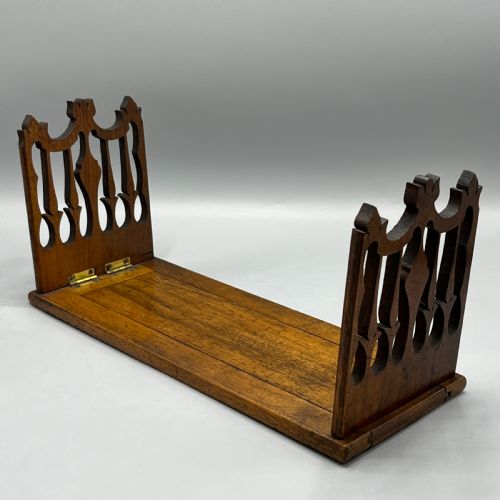
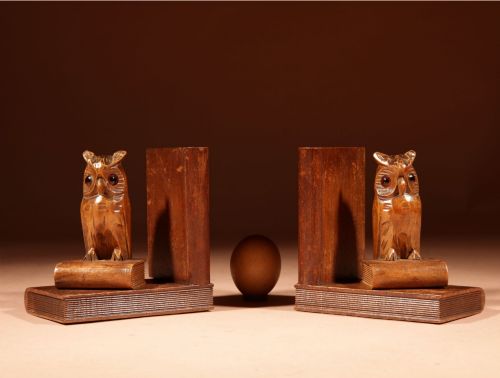
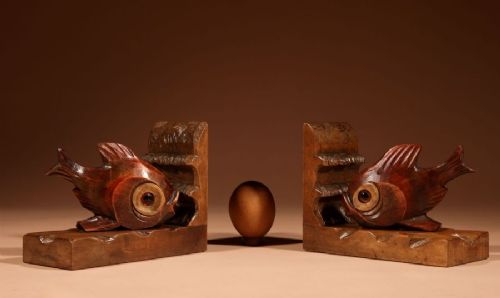
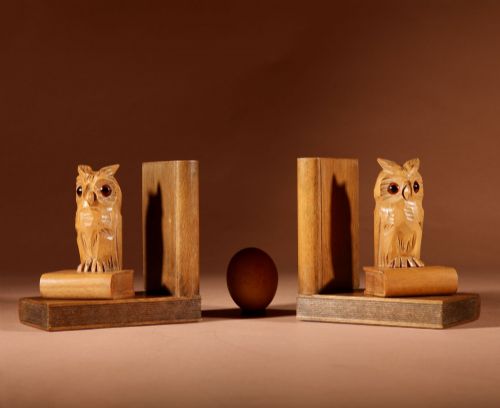
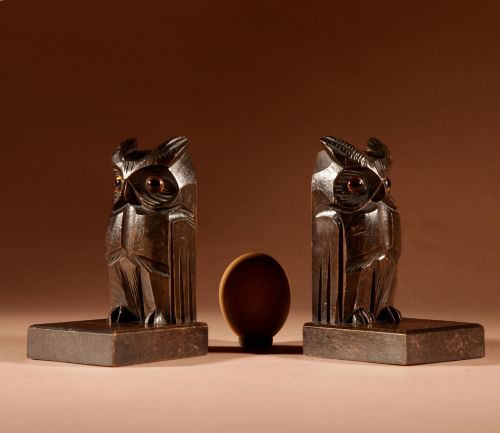
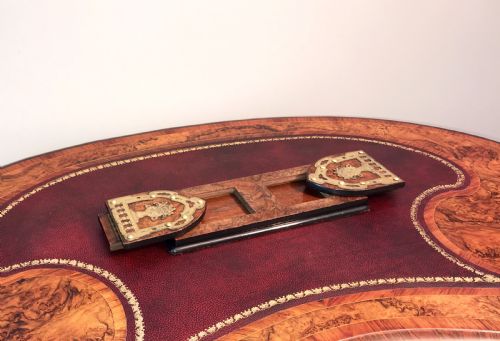
The selection ranges from dedicated bookends to extending book slides and desk accessories designed to manage your reading collection. You find animal subjects such as owls, goldfish, elephants, lions, and bats alongside traditional book rests.
Many examples span the early twentieth century, reflecting the tastes of the Edwardian era alongside pieces from surrounding periods. These items turn everyday shelf organisation into a display of craftsmanship.
How they were made
Makers shaped these pieces from woods such as oak, linden wood, walnut, pine, and beech, often employing hand carving to achieve detailed animal subjects. Skilled artisans also utilised ebonised wood and applied brass mounts to strengthen structural points and add decorative contrast.
Extending book slides incorporate mechanical actions allowing the wooden frame to expand or contract according to the volume count. Wood surfaces received finishes that highlighted the natural grain and protected the timber from daily wear.
Edwardian Wooden Bookends Retail Price Guide 2026
Typical asking prices for edwardian wooden bookends among the pieces listed under this phrase on Sellingantiques today, from the lower quarter to the upper quarter. They describe what is for sale here now, not the wider market.
Listings feature various timbers including oak, walnut, pine, beech, and linden wood alongside brass mounts and ebonised finishes.
What varies in quality
The choice of timber and the precision of the brass mountings also indicate the level of care invested in the piece. Selection of dense woods and robust joints ensures the bookends hold heavy volumes without slipping.
The Edwardian Wooden Bookends Glossary
- Black Forest
- A style of carving originating in central Europe known for detailed depictions of animals, particularly owls, bears, and dogs. These pieces utilise linden wood and other pale timbers.
- Ebonised wood
- Timber treated to imitate the dark appearance of ebony through staining or painting. This technique creates a formal, high-contrast finish on Victorian and Edwardian accessories.
- Anglo-Indian
- A descriptive term for decorative items produced in India during the British colonial period, often employing exotic hardwoods and intricate regional carving traditions.
Edwardian Wooden Bookends: Frequently Asked Questions
How do I use wooden bookends safely?
Place them on a stable shelf with enough weight between them to secure your volumes without straining the timber supports.
Ensure the bases sit flat against the surface so the bookends remain steady when removing or adding books.
What woods were commonly used?
Makers utilised oak, walnut, pine, beech, and linden wood depending on the regional tradition and the level of detail required for carving.
Some pieces also incorporated ebonised finishes or brass mounts for additional decoration and structural support.
How do I care for antique wooden bookends?
Keep them out of direct sunlight and away from rapid temperature changes to prevent the timber from drying out or splitting.
Dust them gently with a soft dry cloth and avoid harsh chemical polishes that might damage the original finish.
Are extending book slides different from bookends?
Extending book slides feature an adjustable wooden base that expands to accommodate more volumes between fixed or folding ends.
Standard bookends consist of two separate pieces designed to support books from either end without an adjustable connecting base.