
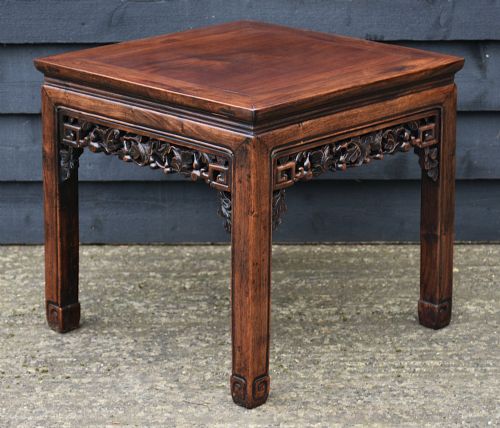
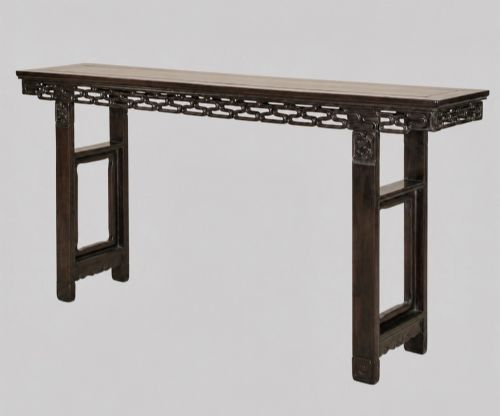
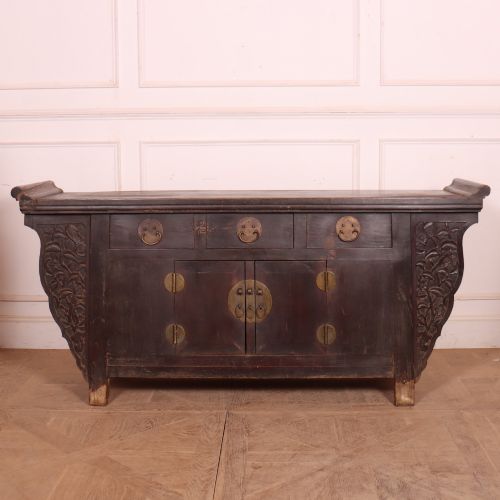
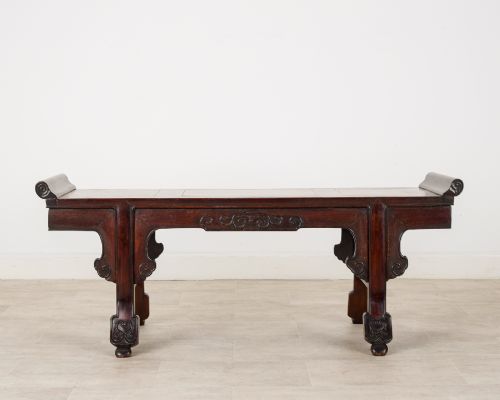


Carved Wood Altar Table
A carved wood altar table brings sculptural presence and centuries of craftsmanship to a room.
Carved Wood Altar Table
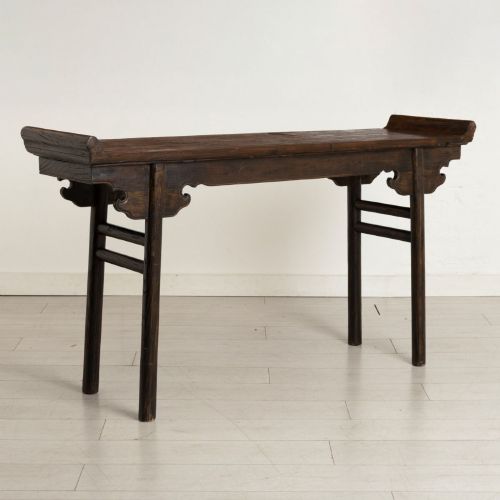
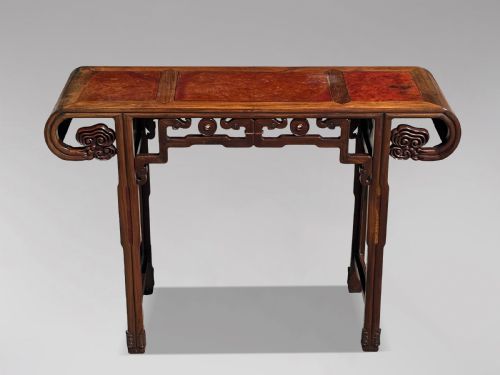
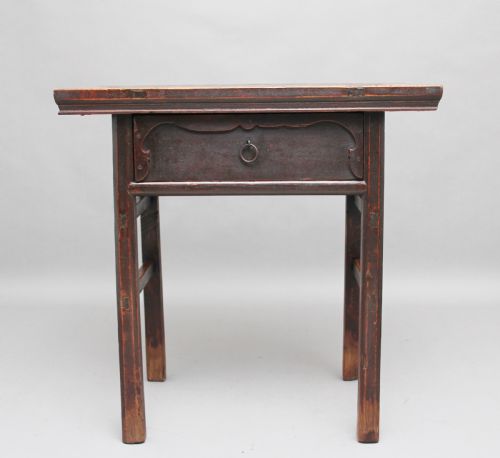
A carved wood altar table serves as a striking focal point, originally designed for ritual spaces and domestic display in historical interiors. These pieces typically present long, rectangular surfaces supported by substantial timber frames, often incorporating upturned flanges or scroll ends.
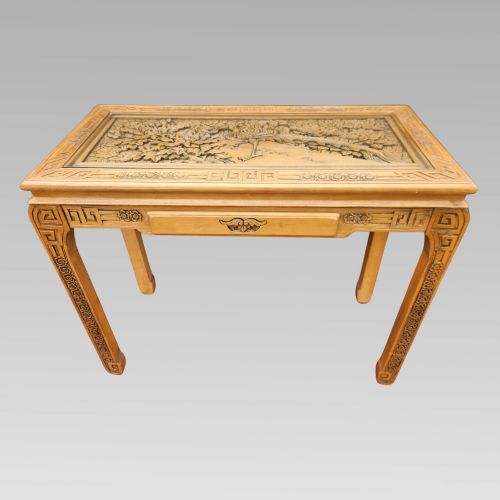
Buyers on this page most frequently encounter nineteenth-century examples originating from China, executed in dense timbers like elm or hongmu. Such pieces reflect traditional Qing Dynasty aesthetics, balancing utilitarian proportions with intricate relief carving along the apron and legs.
Assessing quality
Quality rests upon the depth, crispness, and control of the hand carving across the apron and spandrels. Superior examples display sharply defined motifs without blurring or sanding away the crisp edges of the woodcutter's work.
Proportion and timber selection further distinguish finer pieces, where the grain of the elm or hardwood is harmoniously matched and the structural frame remains entirely rigid without modern reinforcement.
Several tables were originally designed with upturned ends to prevent ritual offerings from rolling off into the temple dust.
The Carved Wood Altar Table Glossary
- Altar table
- A long, narrow ceremonial table featuring upturned flanges at the short ends, traditionally placed against a wall.
- Hongmu
- A category of dense, dark tropical hardwoods utilised in Chinese furniture construction.
- Elm
- A resilient domestic timber favoured for furniture frames due to its interlocking grain and resistance to splitting.
- Flange
- The upturned raised ends characteristic of traditional Chinese altar tables.
- Qing Dynasty
- The final imperial dynasty of China, spanning from the seventeenth to the early twentieth century, noted for elaborate decorative arts.
Carved Wood Altar Table: Frequently Asked Questions
What is an altar table used for today?
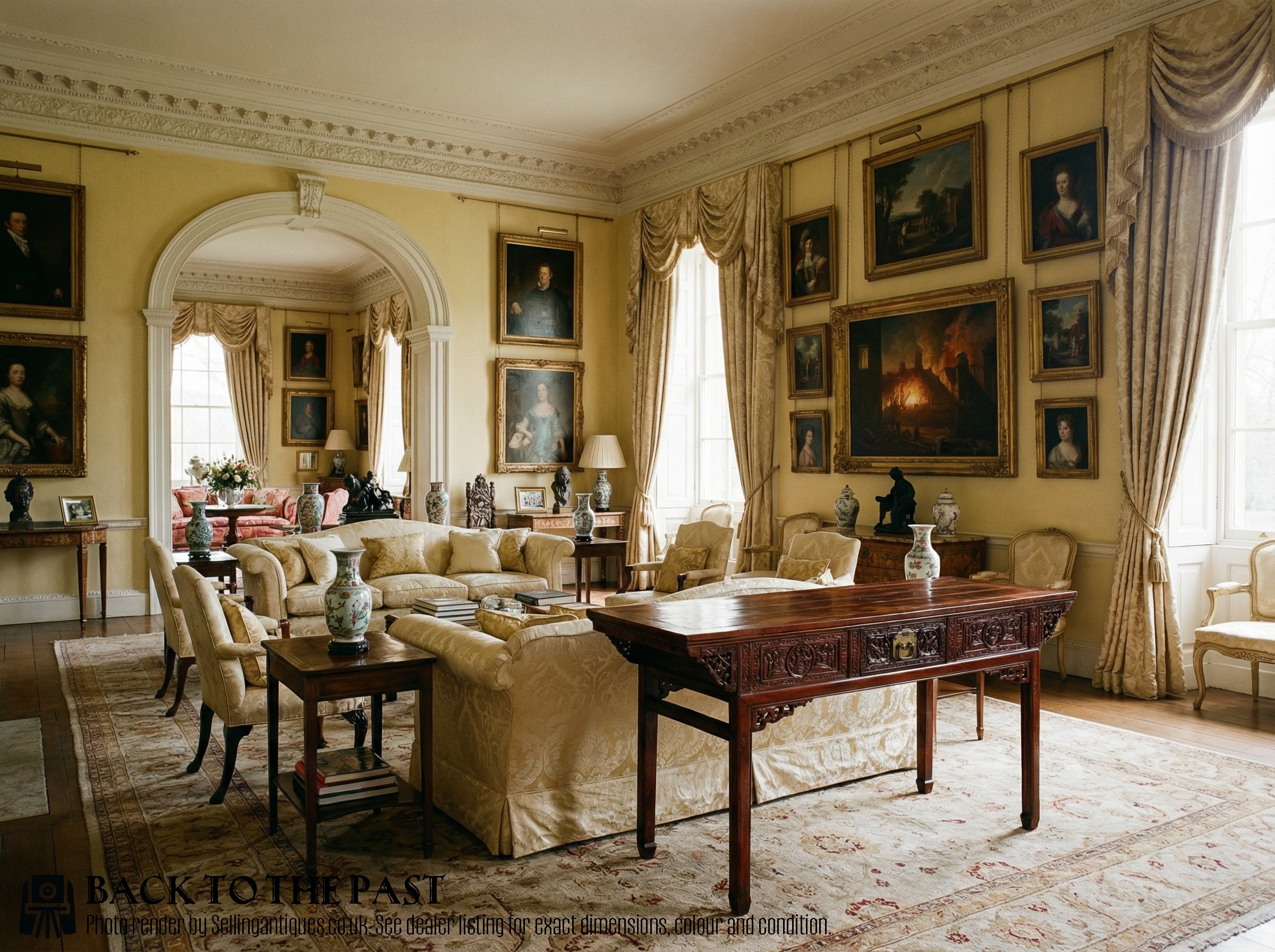
In modern interiors, these tables function effectively as console tables in hallways, narrow sideboards in living areas, or display surfaces for ceramics and lamps. Their slender proportions allow them to occupy tight spaces without overwhelming a room.
Because of their flat tops and decorative aprons, they provide both practical surface area and architectural interest against plain walls.
How do I identify a nineteenth-century Chinese table?
Nineteenth-century pieces generally show traditional joinery, heavy native hardwoods like elm or hongmu, and hand-carved motifs reflecting Qing Dynasty conventions. Signs of age include dry timber surfaces, minor shrinkage cracks, and wear consistent with domestic use.
Many examples feature rectangular frames with carved spandrels beneath the tabletop, distinguishing them from later reproductions or Western adaptations.
Are these tables suitable for small rooms?
Their narrow depth makes them exceptionally well-suited for hallways, landings, or behind sofas where standard furniture would project too far into the floor space. They draw the eye upward through their carved details while maintaining a minimal footprint.
Selecting a lower or shorter version helps balance the scale in more compact interior settings.
What is the difference between elm and hongmu tables?
Elm offers a prominent, fibrous grain pattern with a lighter natural tone, often finished with simple wax to display the wood character. Hongmu is a much denser, heavier tropical hardwood that yields a darker finish and supports exceptionally fine, sharp detail in relief carving.
Both materials were used across similar forms, but hongmu typically indicates a more formal or higher-status commission.