

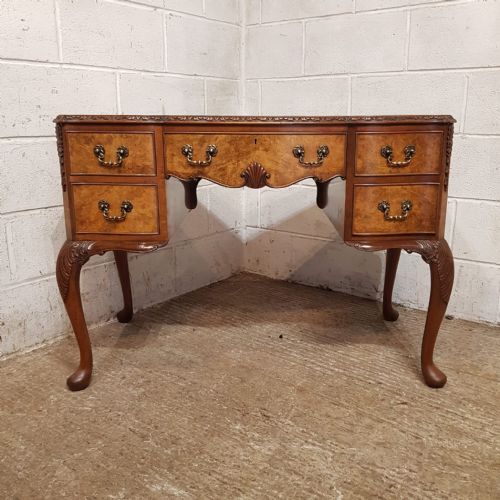


Carved Walnut Writing Bureau
A carved walnut writing bureau brings warmth and history to a room, offering a private writing surface that conceals compartments for letters and papers.
Carved Walnut Writing Bureau
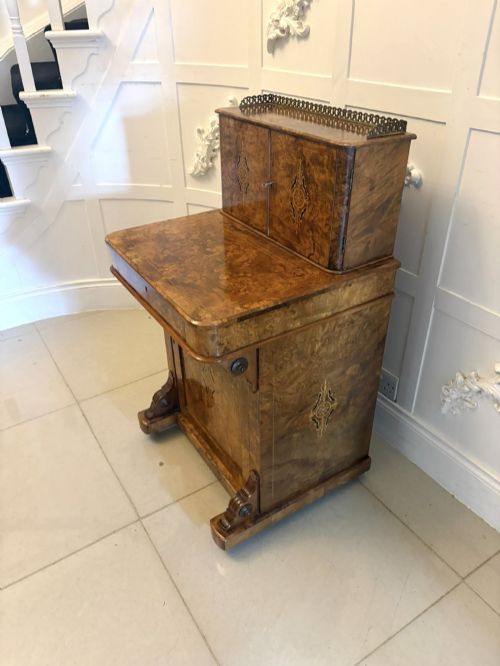
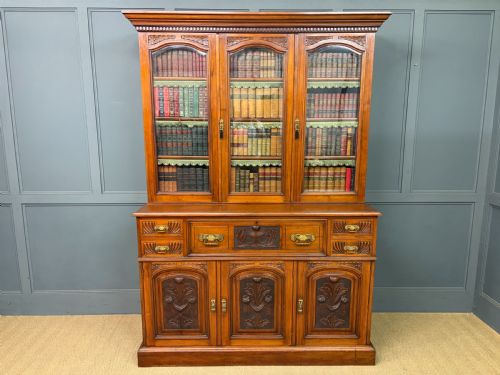
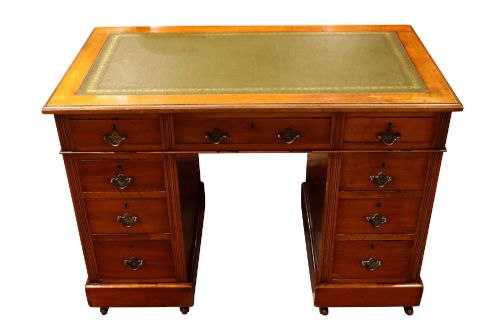
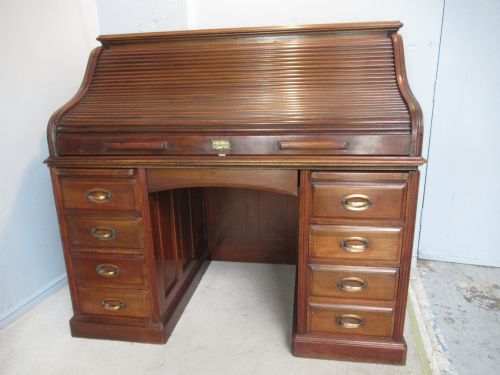
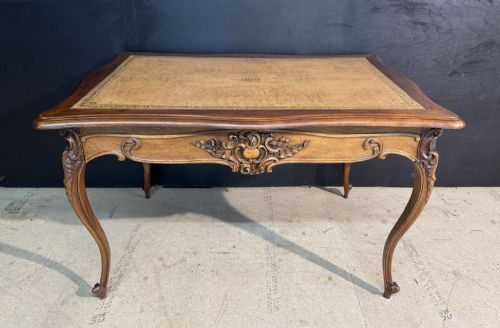
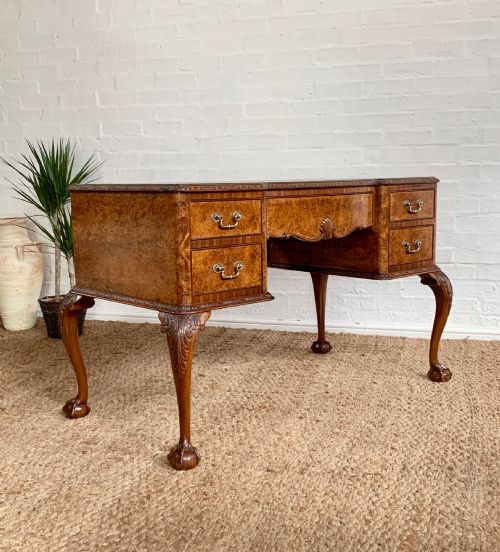
A carved walnut writing bureau is a fitted desk designed for correspondence and storage, frequently emerging from the eighteenth and nineteenth centuries in various regional interpretations. These pieces combine a sloping fall front or a level writing surface with internal pigeonholes and drawers, resting upon sturdy legs or pedestal drawer stacks. Buyers encounter numerous Victorian examples alongside earlier eighteenth-century forms and later revival pieces displaying intricate decorative motifs.
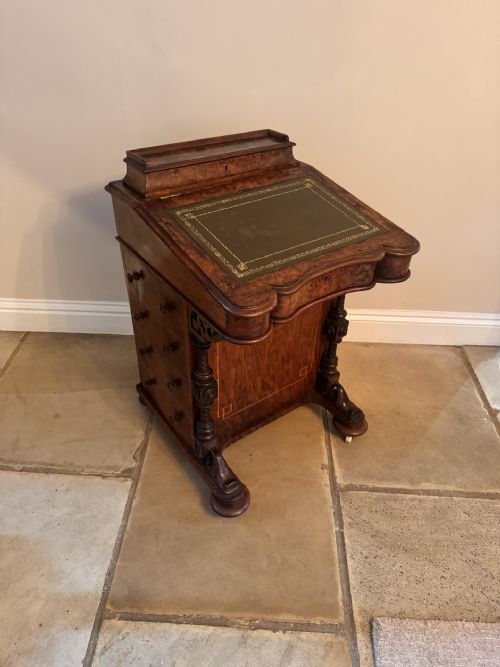
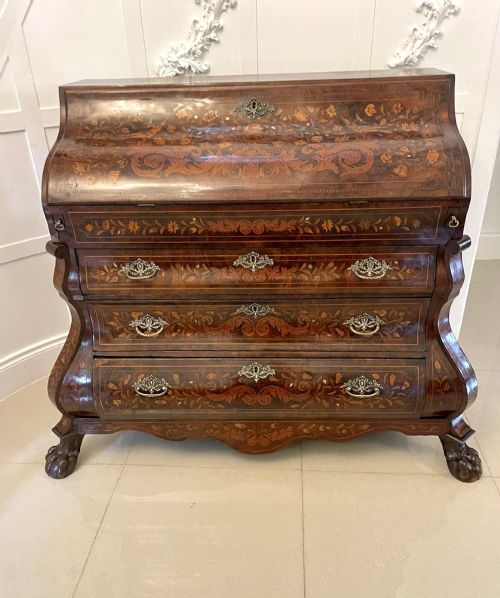
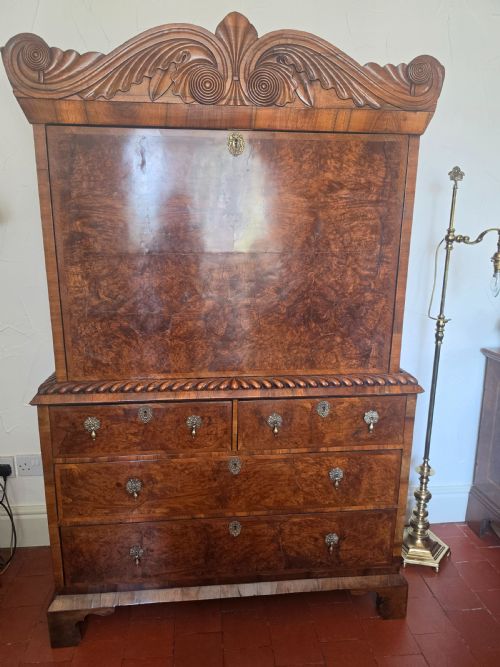
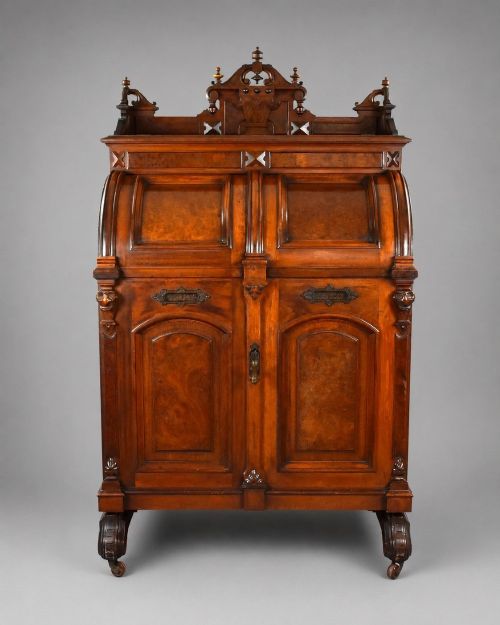
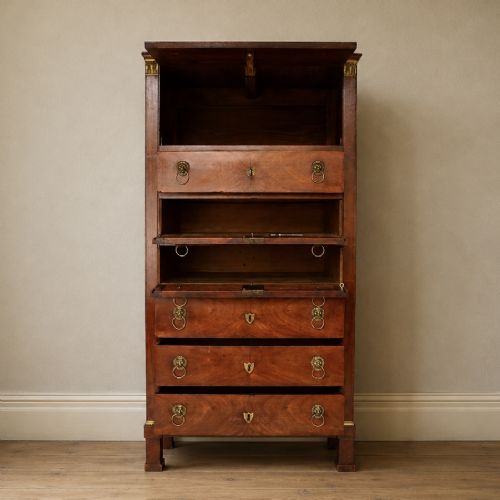
The selection ranges from compact Davenport desks and kneehole desks to grand escritoires and bombe-shaped cabinets with elaborate marquetry. Walnut veneer and solid timber provide the primary structural canvas, often enhanced by burr figuring or floral inlay work. Each variation reflects the prevailing tastes of its period, shifting from Baroque and Queen Anne influences toward later Victorian and Edwardian interpretations.
Materials and construction methods
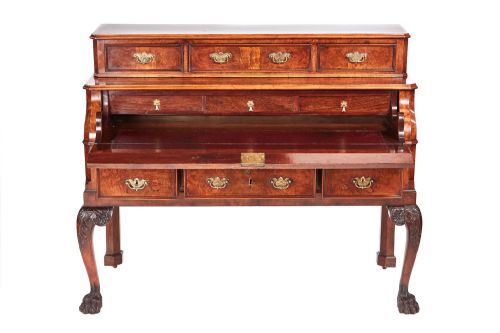
Cabinet makers utilised solid walnut and decorative burr walnut veneers applied to secondary timbers, creating rich grain patterns across the primary facades. Marquetry inlay utilising fruitwood and other contrasting timbers added floral and geometric ornamentation to the writing surfaces and fall fronts. Brass handles, escutcheons and ormolu mounts secured drawers and doors while providing functional contrast to the dark timber.
Internal compartments often incorporated secondary woods such as satinwood alongside leather writing inserts tooled in gold. Dovetail joinery secured the drawer construction, while carved paw feet, cabriole legs or panelled pedestals provided structural support. French polishing or traditional wax finishes protected the timber surfaces while accentuating the natural figure of the grain.
Listings feature walnut writing furniture spanning the seventeenth century through to the Art Deco period, including Dutch Baroque and French Rococo examples.
Determining quality and craftsmanship
The choice of timber grain significantly separates standard examples from exceptional pieces, particularly when makers selected highly figured burr walnut or matched veneer panels symmetrically across the fall front. The crispness of the hand carving on structural elements and drawer surrounds indicates the skill of the original artisan. Superior cabinet making shows in the precise fit of internal small drawers and the neatness of dovetail joints hidden from casual view.
The integrity of secondary materials, such as original brass hardware, tooled leather writing surfaces and internal satinwood fittings, influences the overall standing of an individual bureau. Pieces that retain their original structural timber without extensive board replacement command greater appreciation among collectors. Harmony in proportion and the subtlety of marquetry inlay separate master workshops from provincial production.
Étienne Kohlmann·Wells Fargo
The Carved Walnut Writing Bureau Glossary
- Burr walnut
- A veneer sliced from the knotty growth of a walnut tree, yielding swirling grain patterns prized for decorative desk fronts.
- Escritoire
- A tall writing cabinet featuring a fall-front writing flap that conceals numerous small drawers and pigeonholes.
- Bombe
- A swelling or bulging contour characteristic of continental furniture styles, notably seen on Dutch and French bureaux.
- Davenport desk
- A compact Victorian writing desk featuring a sloping top and drawers opening to the side.
- Marquetry
- The art of applying decorative pieces of veneer to a structure to form intricate floral or geometric designs.
Carved Walnut Writing Bureau: Frequently Asked Questions
What is a bureau desk?
A bureau desk is a traditional form of writing furniture characterised by a sloping flap that lowers to provide a writing surface. Behind this flap lie internal compartments and small drawers for stationery and correspondence.
Beneath the writing area, these pieces typically incorporate full-width storage drawers. They served as personal administrative hubs in private homes before the widespread adoption of modern office furniture.
How do I identify a Victorian walnut bureau?
Victorian walnut bureaux often display rich burr walnut veneers, dark patination and robust construction using solid timbers for internal framing. Stylistic markers include carved details, scroll supports or pedestal configurations popular during the nineteenth century.
Examination of the secondary woods inside the drawers and the style of the brass hardware helps confirm the Victorian period of manufacture. These pieces frequently combine practical workspace with decorative elegance suitable for a residential study.
Where should I place a writing bureau?
A writing bureau suits a quiet corner of a study, living room or bedroom where adequate natural light reaches the lowered writing flap. Placing the piece away from direct sunlight and heat sources protects the walnut veneer and prevents timber warping.
Because many examples feature finished backs or refined pedestal designs, certain models function effectively as freestanding centrepieces in a room. Ensure sufficient clearance for a chair or stool to pull out comfortably in front of the lowered writing surface.
How do I care for antique walnut furniture?
Maintain antique walnut by dusting regularly with a soft, dry cloth and applying traditional beeswax sparingly to nourish the timber. Avoid modern silicone sprays and harsh chemical cleaners that can degrade the historic polish and finish.
Keep the room at a stable relative humidity to prevent the walnut veneer from lifting or cracking over time. Occasional gentle buffing preserves the natural lustre of the polished wood and protects the decorative marquetry.