

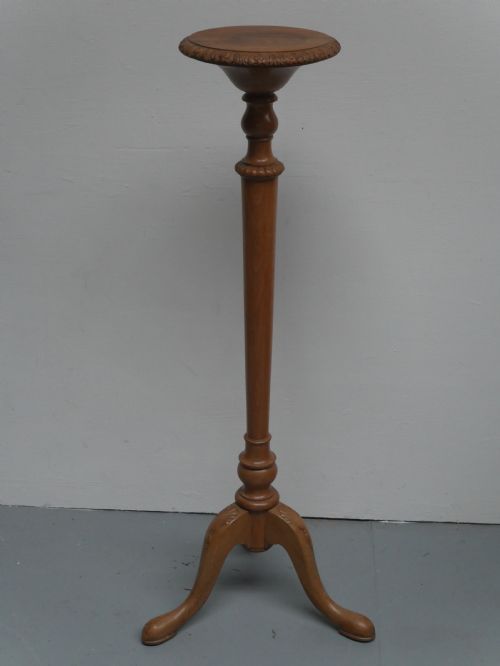

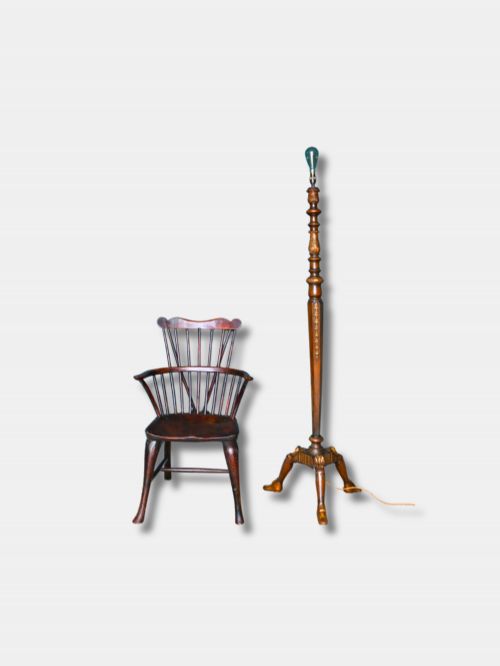
Carved Walnut Tripod Stand
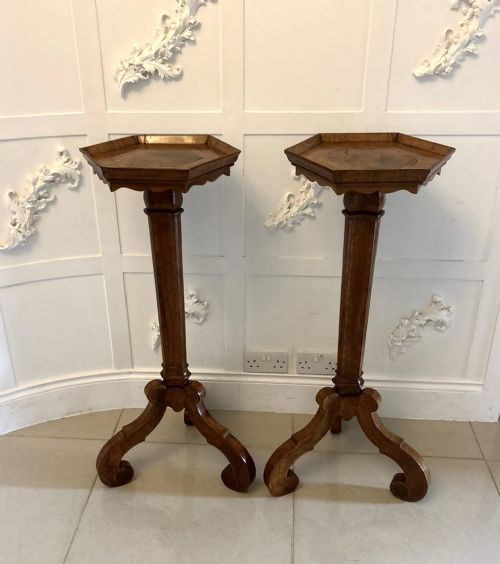
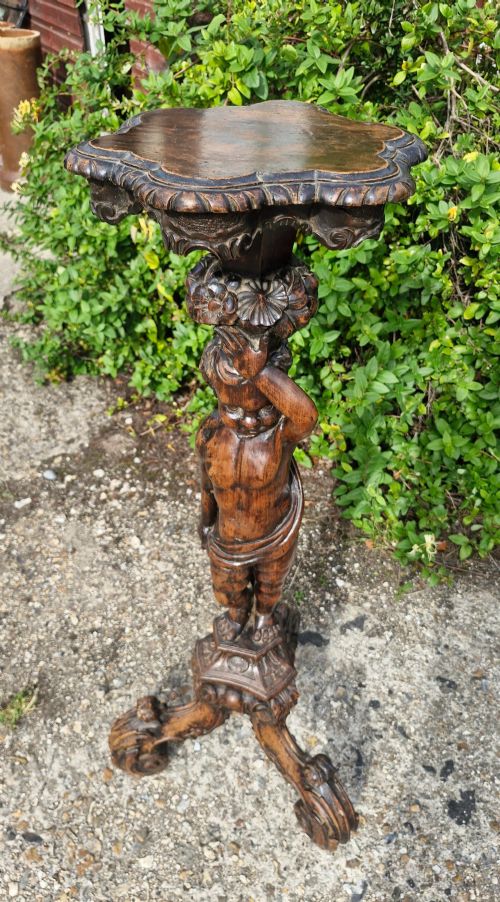
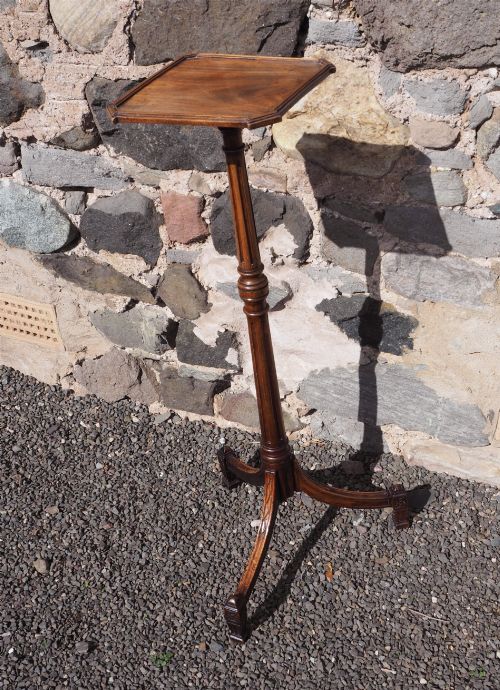
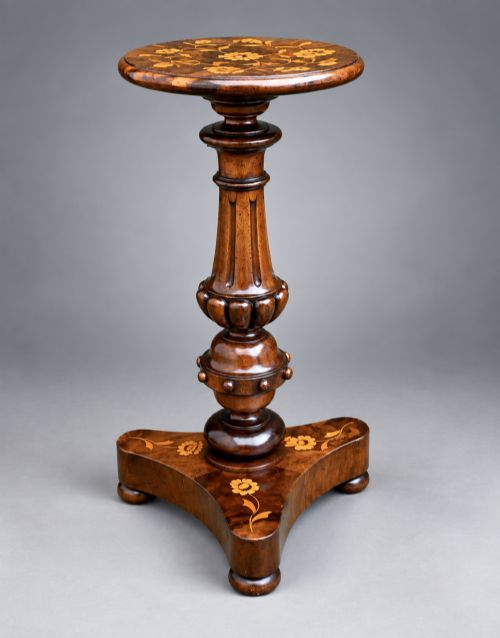
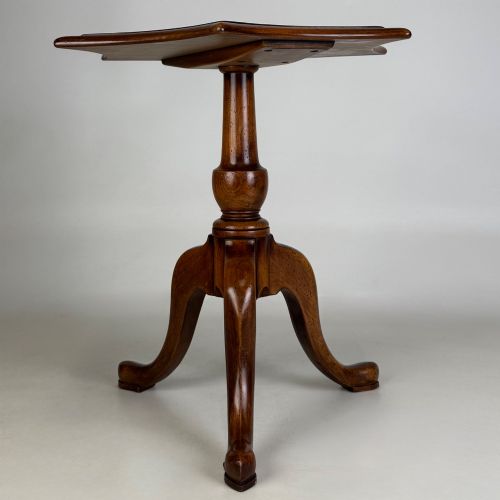
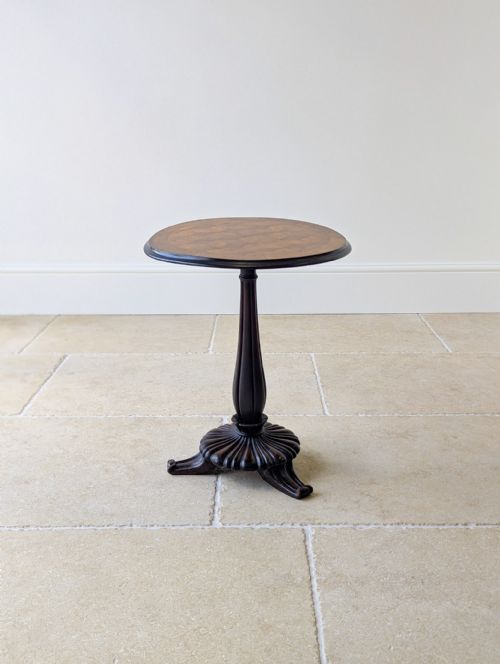
A carved walnut tripod stand brings a sculptural three-legged support into a room, serving variously as a wine table, torchere, or plant pedestal.
Carved Walnut Tripod Stand
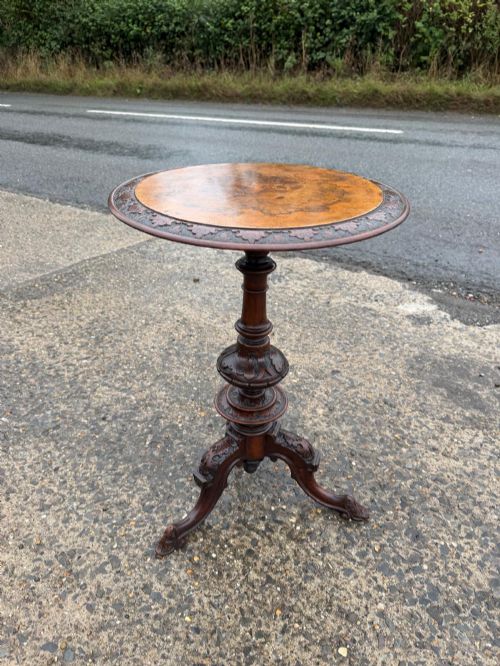
A carved walnut tripod stand typically manifests as a compact occasional table, wine table, or tall plant pedestal supported by three legs. These pieces emerge predominantly from nineteenth-century Victorian workshops, alongside eighteenth-century examples and later twentieth-century revivals.
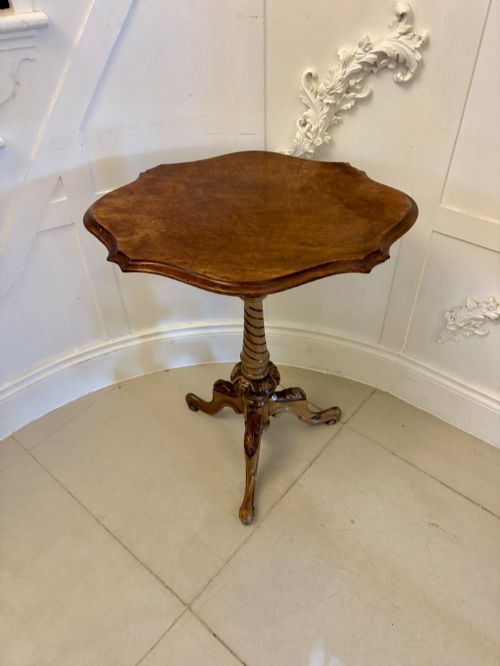
Forms vary from low wine tables with pie crust tops to elevated torcheres and music stands. Walnut and burr walnut dominate the construction, often enhanced by marquetry or fruitwood inlay.
Buyers encounter numerous variants designed for specific domestic duties, including lamp tables, decanter tables, and jardiniere stands. The underlying tripod architecture provides steady elevation on three points rather than four.
Materials and construction methods
Cabinetmakers utilised solid walnut and figured burr walnut veneers over secondary timbers such as mahogany or fruitwood. Tops frequently feature matched grain patterns or elaborate floral marquetry.
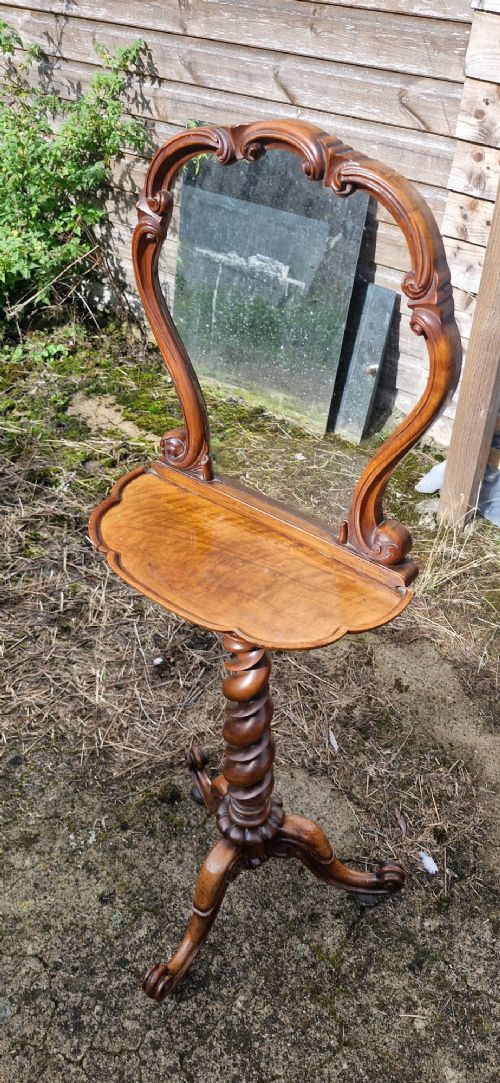
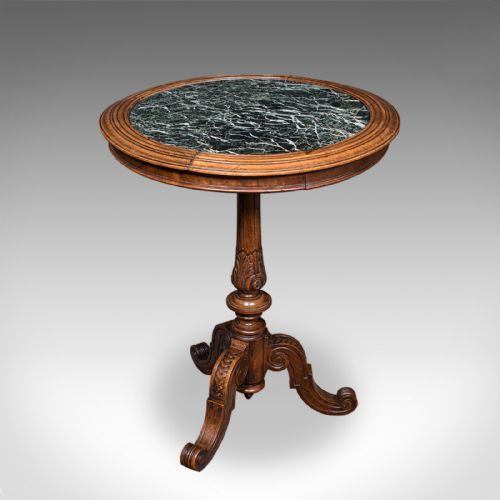
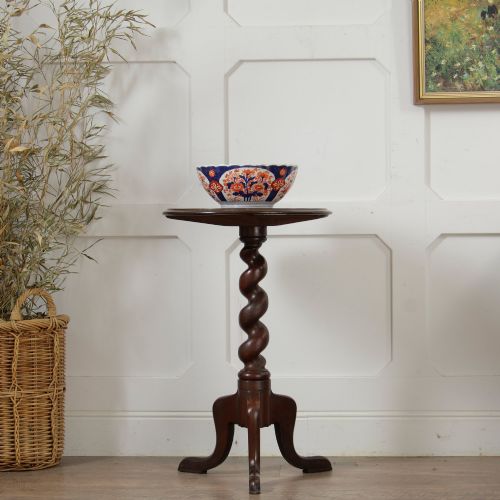
Support columns often incorporate turned elements like barley twists or carved pillars rising from three spreading legs. Brass fittings, marble inserts, and glass components appear on specialised decanter and lamp tables.
Distinctions in quality
Superior examples display crisp hand-carving on the tripod base and precise matching of burr walnut veneer across the top. Lesser pieces rely on plain timber and mechanical turning without hand-finishing.
The integrity of the central pillar joint and the stability of the three legs dictate structural longevity. Finer specimens integrate inlaid details smoothly into the timber surface rather than relying on surface decoration alone.
Holland and Son
The Carved Walnut Tripod Stand Glossary
- Tripod base
- A furniture support consisting of three legs radiating from a central pillar. This configuration ensures stability on uneven floors.
- Burr walnut
- Timber taken from the warted growth on a walnut tree, yielding swirling grain patterns prized for table tops. Cabinetmakers slice this wood into thin veneers.
- Torchere
- A tall decorative stand designed to hold a light or a plant. These slender pieces elevate objects above floor level.
- Marquetry
- The art of applying pieces of veneer to a structure to form decorative patterns. Dutch examples frequently employ this technique with floral motifs.
- Pie crust top
- A raised, carved rim around the edge of a small circular table, shaped to resemble pastry edges. This feature appears on eighteenth and nineteenth-century wine tables.
Carved Walnut Tripod Stand: Frequently Asked Questions
What is a wine table used for?
A wine table provides a small surface intended for holding a glass or decanter beside a chair. Its compact diameter suits spots where larger furniture fails to fit.
Historically, these stands moved easily around a drawing room as needed. Today they function equally well holding drinks or small lamps.
How do I identify a Victorian stand?
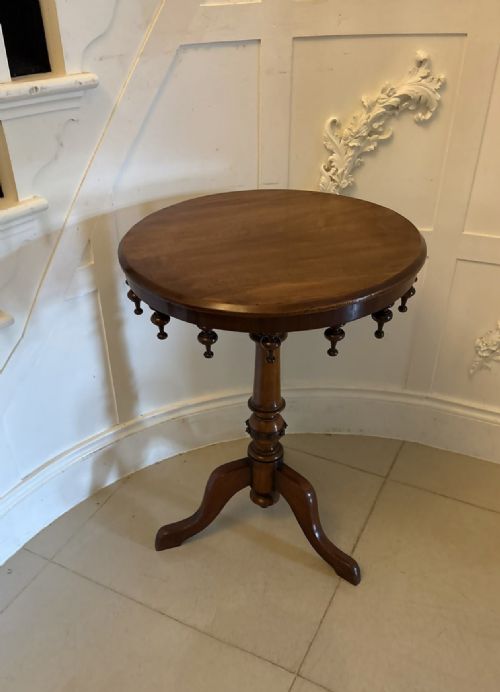
Victorian stands typically display dense walnut timber, dark patination, and robust turning on the central column. Details such as bobbin galleries or barley twist stems point directly to the nineteenth century.
Construction methods inside the pillar joint also assist with dating. Earlier Georgian versions tend to show lighter framing beneath the top.
Where should I place a plant stand?
A plant stand belongs where natural light supports greenery, such as beside a window or in an empty corner. Tall torcheres draw the eye upward and break up empty wall space.
Ensure the three-legged base rests level on the floor. Placing heavier pots on lower pedestals maintains overall stability.