
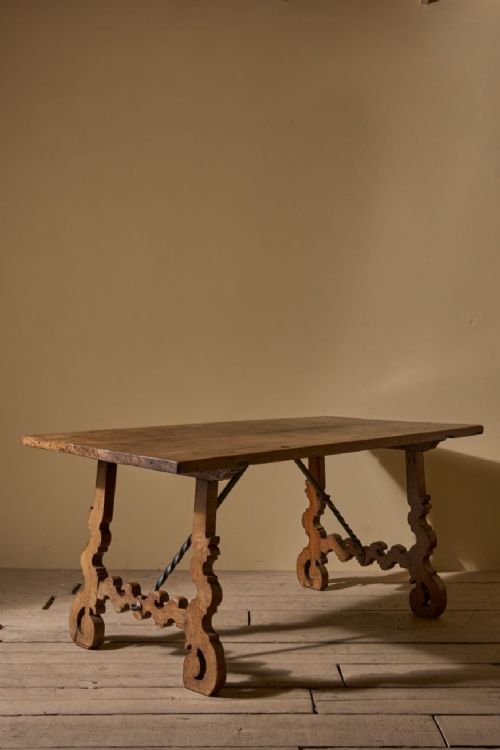
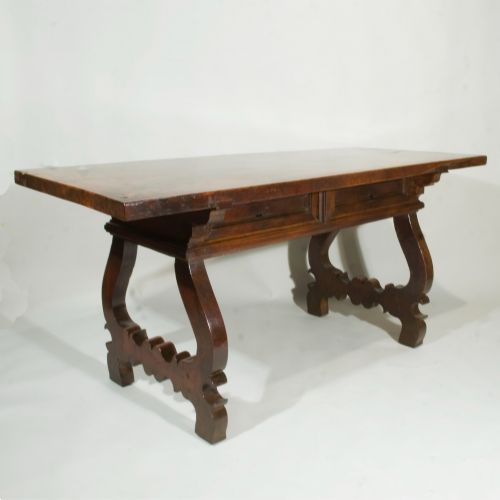
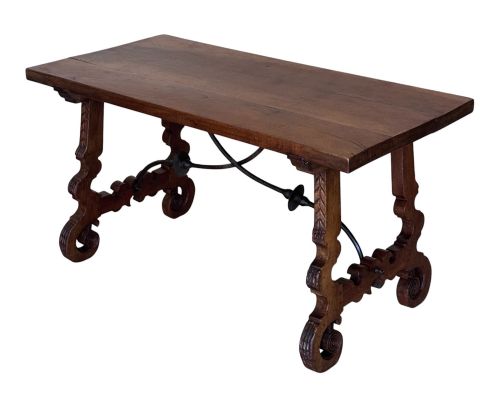
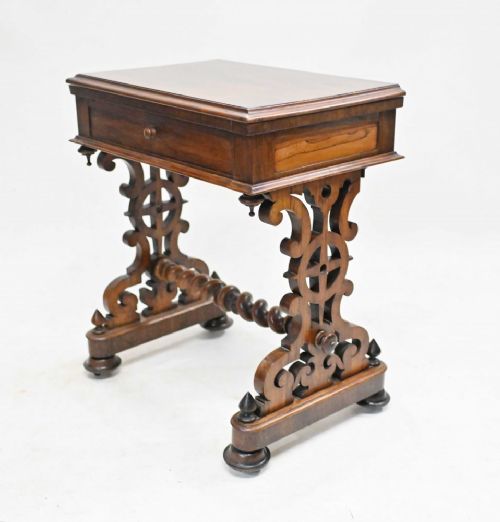




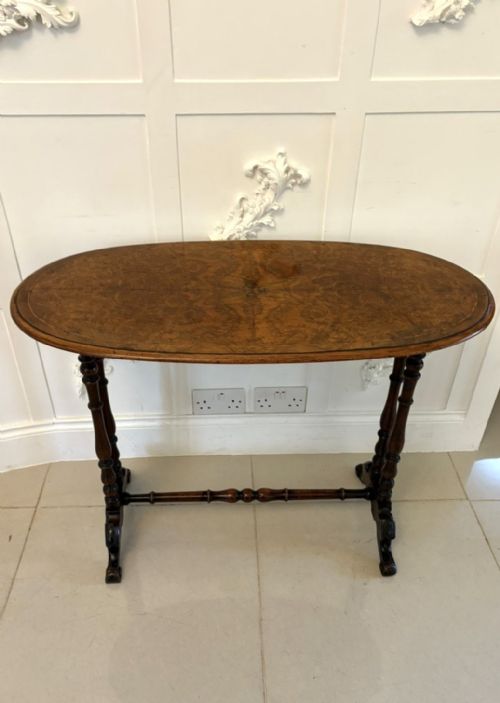
Carved Walnut Trestle Table
A carved walnut trestle table brings robust timber and historic proportion into a room, offering a sturdy surface shaped by centuries of woodworking tradition.
Carved Walnut Trestle Table
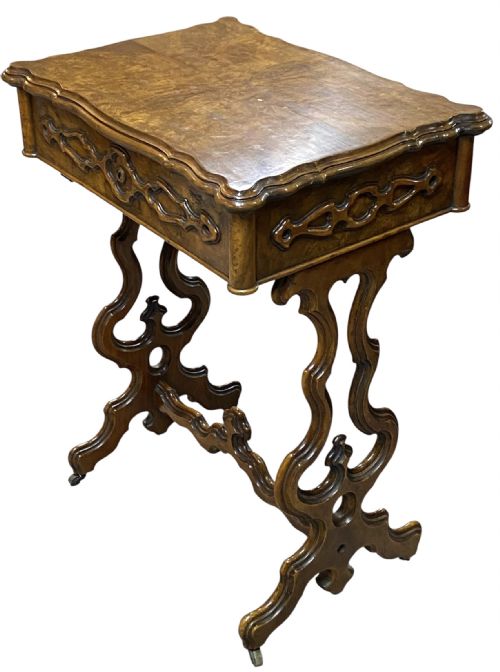
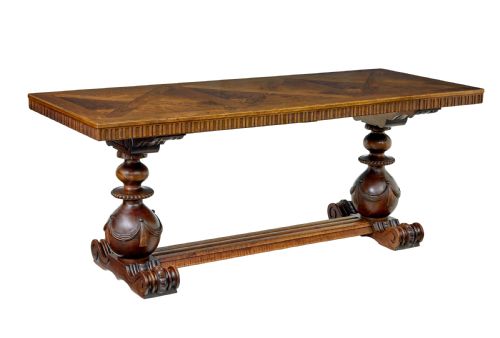
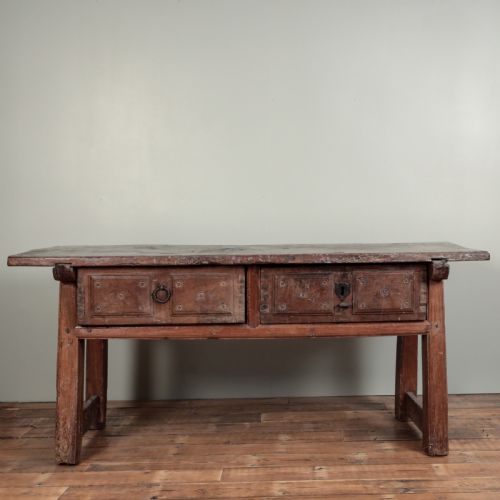
A carved walnut trestle table relies on supportive end uprights connected by a central stretcher, a form found across several centuries of European furniture making. The selection on this page ranges from early seventeenth-century Spanish examples to nineteenth-century Victorian interpretations and twentieth-century revivals.
While the inventory includes various forms such as refectory, console, and dining tables, the core tradition centres on walnut timber decorated with carved detail. These surfaces served historically for dining, writing, and formal assembly in domestic and institutional settings.
How they were made
Cabinet makers utilised solid walnut, burr walnut, and figured walnut veneers over secondary woods, selecting timber for its rich grain and natural depth of colour. Wrought iron, brass, and occasionally leather appear as supportive or surface elements alongside the primary timber.
Joinery techniques combined traditional pegging and mortise joints with hand-carved ornamentation. Surfaces frequently received a polished finish to highlight the varied figuring of the walnut grain.
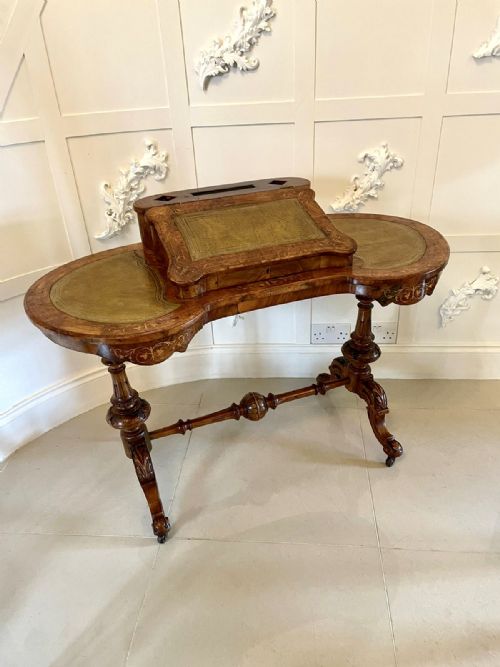
Object types on this page span dining tables, refectory tables, writing desks, and occasional coffee and lamp tables.
What varies in quality
Quality rests in the depth and crispness of the carving, the selection of figured or burr veneers, and the preservation of original patination on the timber. Tables featuring solid early walnut timbers display a different character of wear compared to veneered Victorian pieces.
Proportion and structural integrity distinguish finer examples, where the stretchers and trestle joints remain tight and balanced. The presence of secondary timbers like fruitwood or the integration of brass fittings also indicates the maker's attention to detail.
Holland + Son·Gillows
The Carved Walnut Trestle Table Glossary
- Trestle table
- A table consisting of two or more upright supports connected by a longitudinal beam or stretcher. This architectural form allows for maximum legroom along the length of the top.
- Burr walnut
- A specialised timber cut from walnut tree growths, producing intricate, swirling grain patterns. It was frequently utilised for decorative veneering on Victorian tables.
- Refectory table
- A long, narrow dining table traditionally used in monastic or large domestic dining halls. Examples in this tradition often utilise heavy timber planks and sturdy trestle bases.
- Patina
- The surface sheen and colour acquired by wood through age, handling, and wax polishing. Original patination is a key indicator of an untouched historic finish.
- Serpentine
- A curved line that undulates gently, featuring a convex centre flanked by concave sides. This shape appears frequently on the edges and aprons of Victorian tables.
Carved Walnut Trestle Table: Frequently Asked Questions
How do I care for a walnut table?
Maintain the timber by applying a quality beeswax periodically and avoiding direct heat sources or excessive sunlight that might dry out the old finish.
Use coasters and felt pads beneath objects to protect the polished surface from moisture rings and scratches.
Are these tables suitable for daily dining?
Many of these pieces were built for functional use, whether as refectory, dining, or centre tables designed to withstand daily domestic activity.
Sturdy trestle construction provides reliable legroom and stable weight distribution for modern seating arrangements.
How can I tell a seventeenth-century table from a Victorian revival?
Seventeenth-century examples typically show heavy solid walnut construction with deep patination, tool marks, and simpler, utilitarian joinery shaped by hand.
Victorian and later revival pieces often incorporate veneering techniques like burr walnut, alongside more refined mechanical sawing and stylistic flourishes from Renaissance or Baroque revivals.
What is the difference between a refectory and a trestle table?
A trestle table specifically defines the support system of upright feet connected by a stretcher, whereas a refectory table describes a long dining format.
Many refectory tables utilise a trestle base, combining the two descriptive categories into a single sturdy form.