

Carved Walnut Ottoman
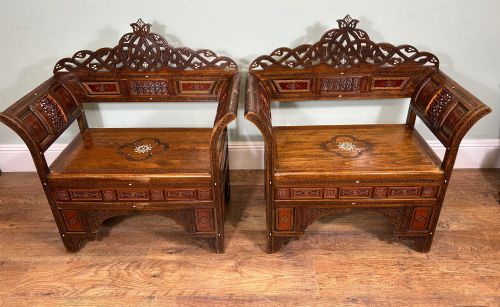
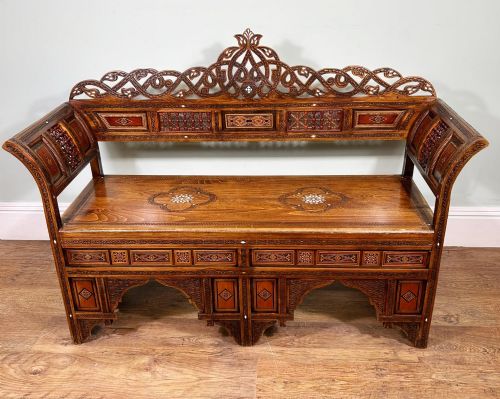
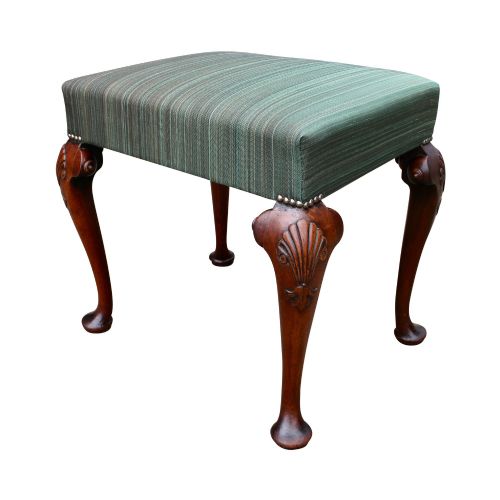
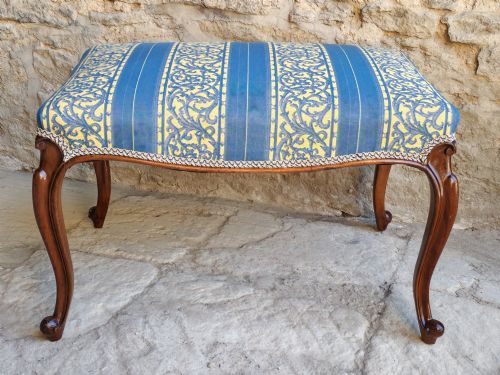
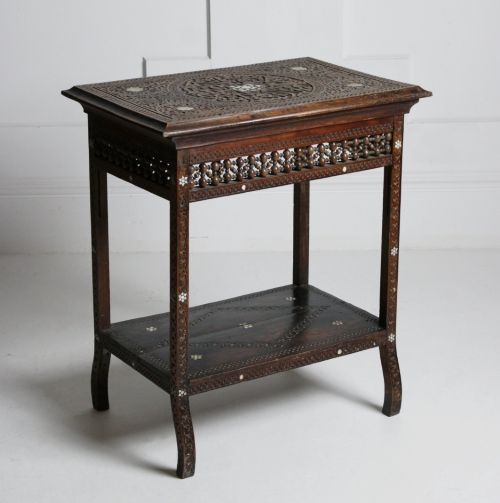
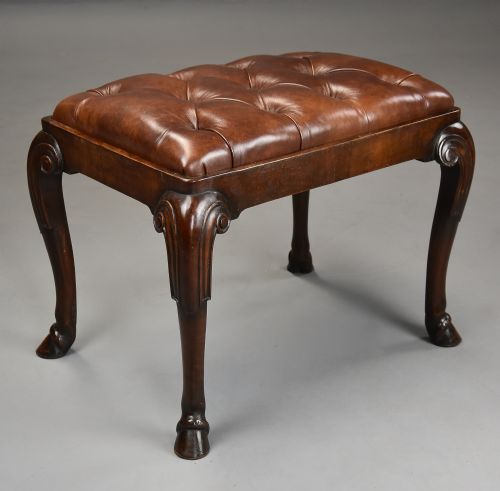
A carved walnut ottoman brings solid timber framing and textured upholstery together in seating that ranges from low Victorian footstools to Syrian inlaid window seats.
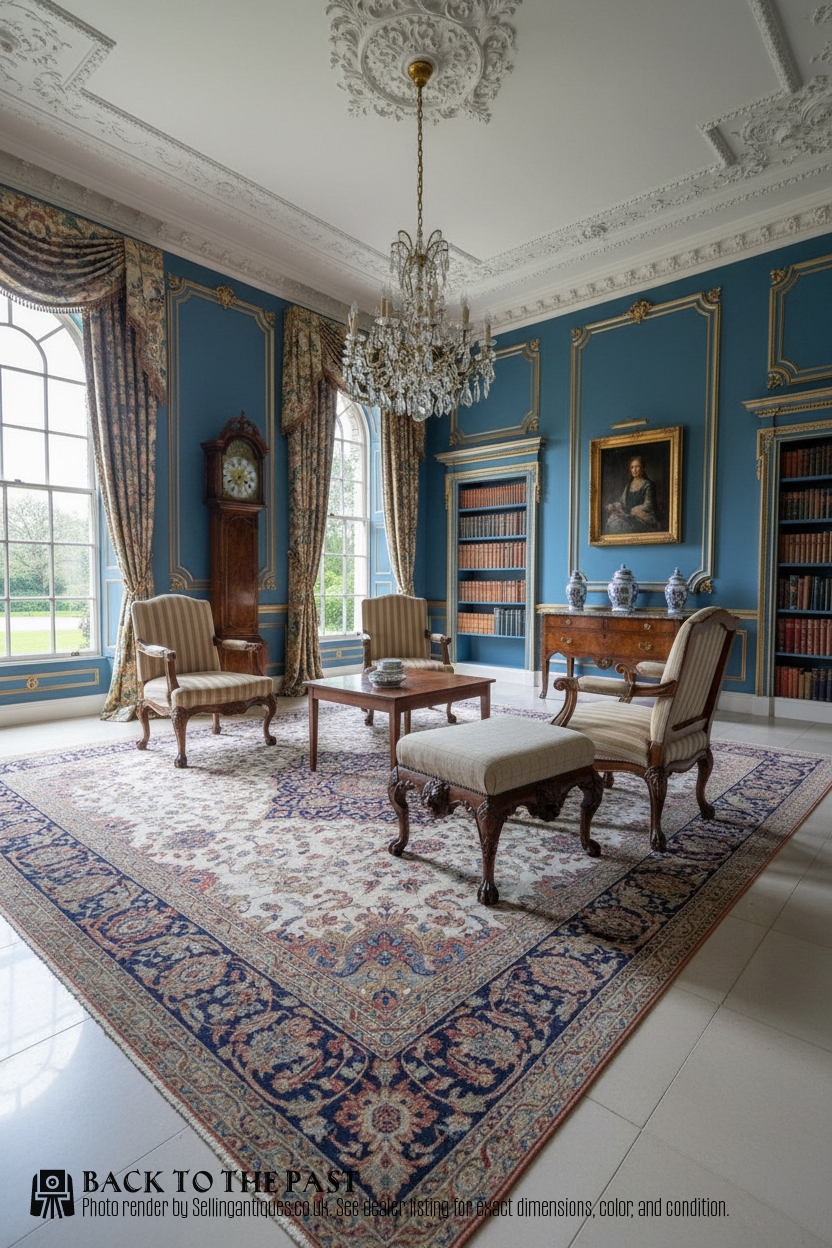
Carved Walnut Ottoman
When you search for a carved walnut ottoman, you find a selection of nineteenth-century footstools, window seats, and benches alongside side tables and trays. The pieces span the Victorian era, Regency period, and later revivals, reflecting diverse origins from English workshops to Syrian and Kashmiri makers.
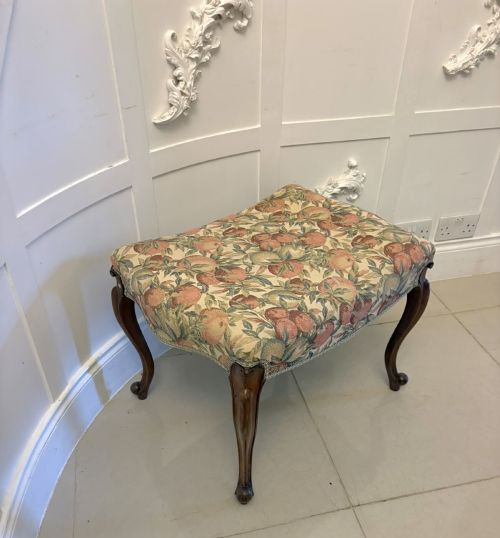
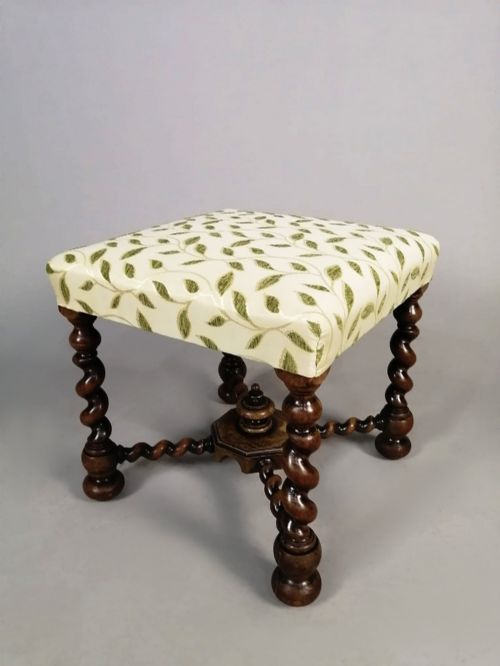
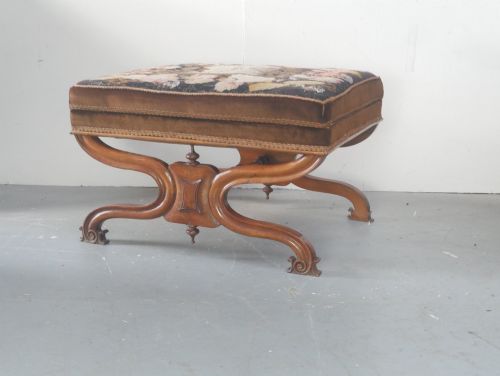
The most common forms on this page are compact footstools and larger salon stools featuring cabriole legs or barley-sugar turnings. These items serve multiple domestic roles today, functioning as low seats, fireside footstools, or improvised coffee tables in reception rooms.
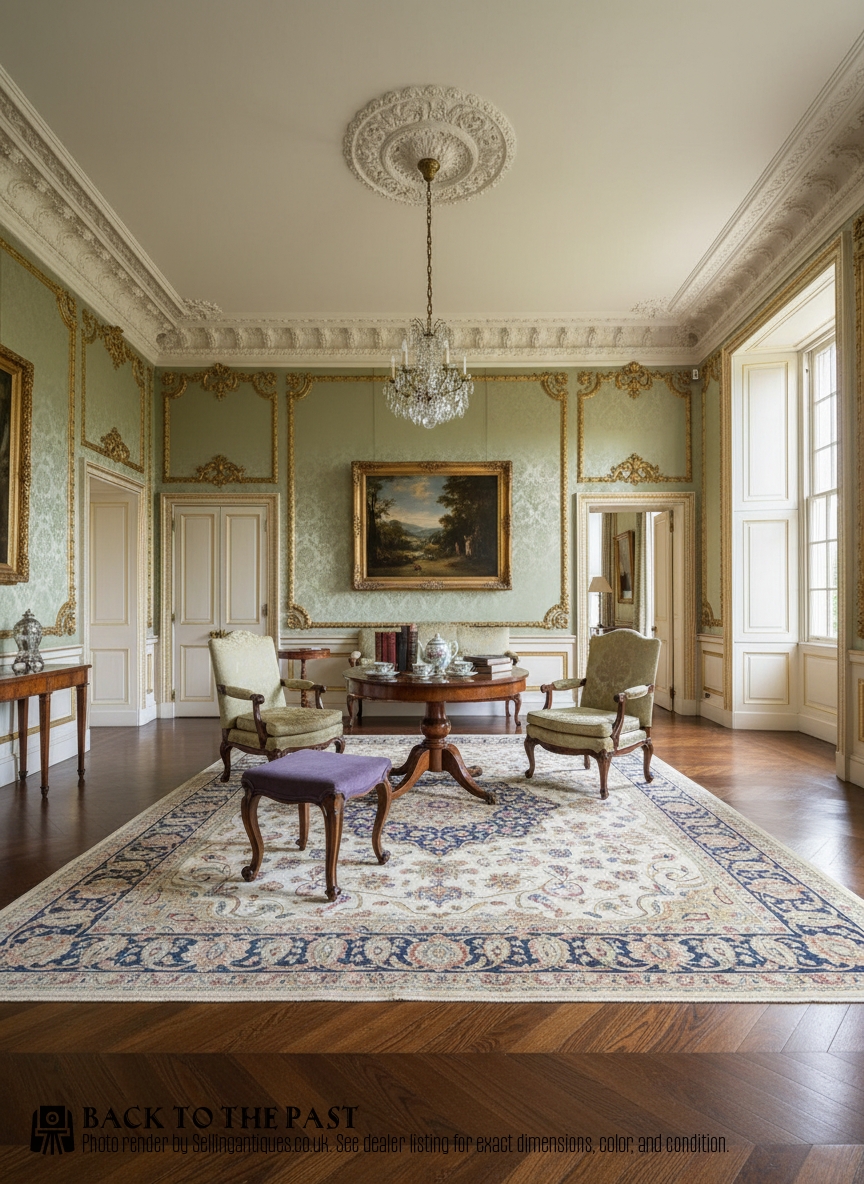
Materials and construction
Makers utilised solid walnut and walnut veneers for the structural frames, often enriching the dense timber with intricate hand-carving or spiral turnings. Structural joints typically rely on traditional mortise and tenon methods to support heavy daily use.
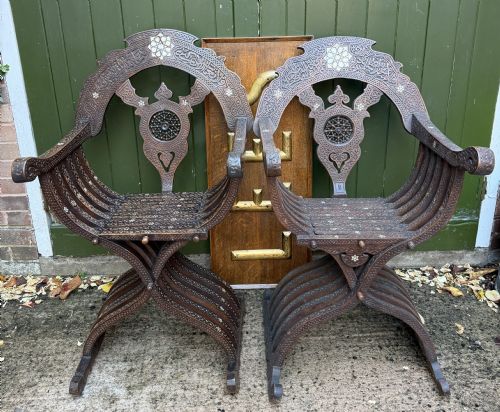
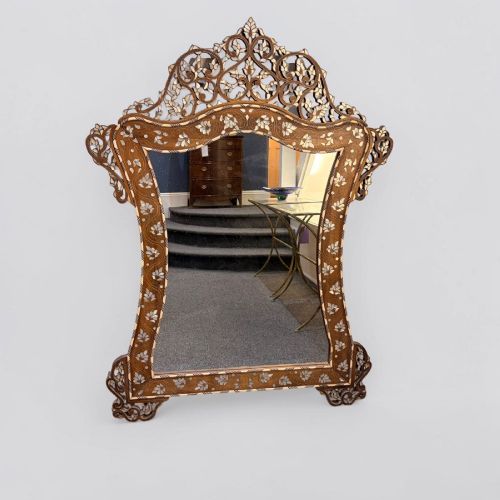
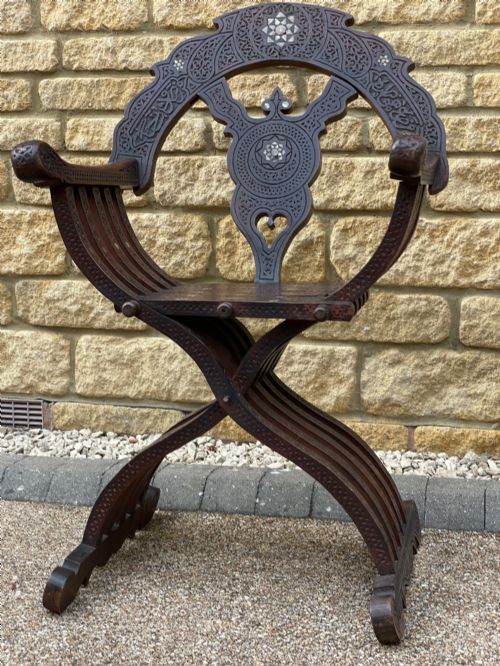
Surfaces frequently incorporate contrasting decorative elements, including mother-of-pearl inlay, bone details, and gilt highlights. Traditional upholstery finishes the pieces using textiles such as velvet, tapestry, needlepoint, and hand-dyed leather over supportive padding.
Carved Walnut Ottoman Retail Price Guide 2026
Typical asking prices for carved walnut ottoman among the pieces listed under this phrase on Sellingantiques today, from the lower quarter to the upper quarter. They describe what is for sale here now, not the wider market.
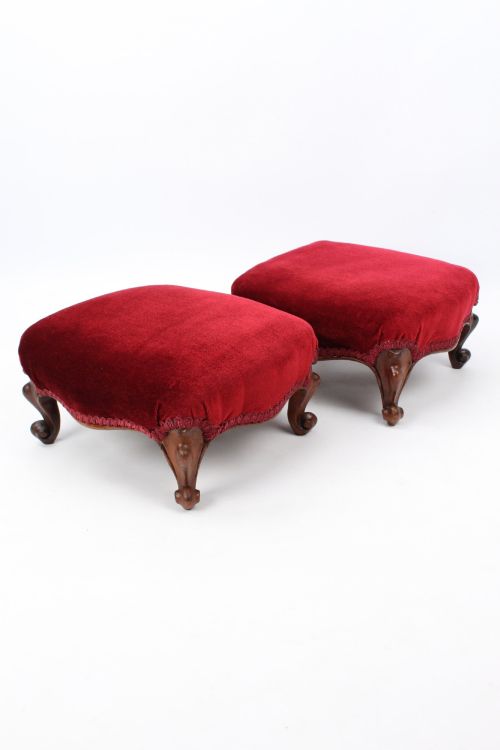
Several small footstools hide within pairs, quietly waiting to support tired feet after a long Victorian afternoon.
Judging the work
Quality rests in the crispness of the timber carving and the architectural proportion of the frame, where subtle cabriole curves or precise barley-sugar twists show the carver's hand. Secondary details like tight joinery and intact mother-of-pearl or bone inlays elevate an ordinary piece into a notable example.
The integrity of the upholstery materials also dictates the standard of the item. Pieces retaining needlework, original buttoned leather, or period textile covers demonstrate superior preservation compared to those stripped back to bare frames.
The Carved Walnut Ottoman Glossary
- Cabriole leg
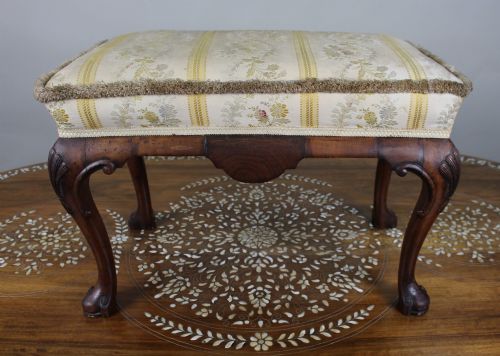
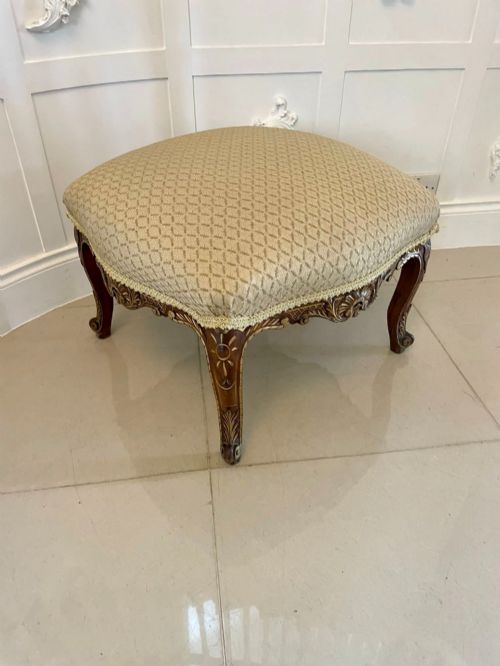
- A furniture leg that bends outward in a convex curve and tapers inward in a concave arc, ending in a pad or scroll foot. This shape is characteristic of Queen Anne and Victorian revival seating.
- Barley-sugar twist
- A spiral carving resembling a twisted rope, executed on furniture supports and legs during the seventeenth century and later revived in Victorian pieces.
- Needlepoint
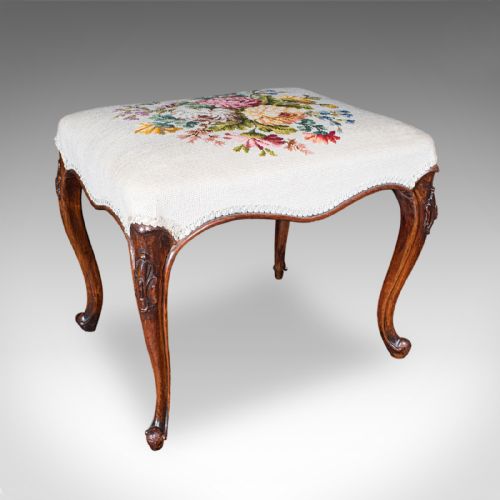
- Canvas work embroidery utilising wool or silk yarn in counted stitches, frequently seen covering the top of nineteenth-century footstools.
- Mother-of-pearl inlay
- An ornamental technique embedding thin iridescent shell fragments into the walnut surface to form geometric or floral motifs, prominent in Syrian pieces.
Carved Walnut Ottoman: Frequently Asked Questions
What is a carved walnut ottoman?
A carved walnut ottoman is a low seat or footrest framed in figured walnut timber with decorative carving. These pieces include Victorian footstools, window seats, and inlaid Syrian benches.
They provide compact auxiliary seating and foot support while introducing rich wood tones and textured textiles to a room.
How do I date a walnut stool?
Dating relies on examining the leg style, carving motifs, and construction methods. Victorian pieces often feature cabriole legs and buttoned leather, while earlier Regency or William and Mary revival styles show spiral turnings.
Secondary woods and upholstery tacks also offer clues to the decade of manufacture.
Were these pieces used as tables?
Many sturdy nineteenth-century stools function successfully as coffee tables today. Larger rectangular forms with flat padded tops accommodate trays and books easily.
Their solid walnut frames provide the necessary stability for daily living spaces.
How do I care for antique walnut?
Antique walnut timber benefits from application of appropriate wax polish to nourish the grain and protect the surface. Avoid placing furniture in direct sunlight or near heat sources to prevent timber splitting.
Gentle dusting with a soft cloth preserves both the carved details and the polished finish.