






Carved Walnut Music Cabinet
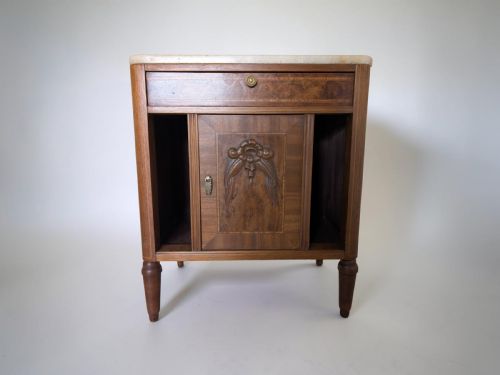
A carved walnut music cabinet is a dedicated piece of period furniture designed to house sheet music, combining practical storage with fine timberwork.
Carved Walnut Music Cabinet
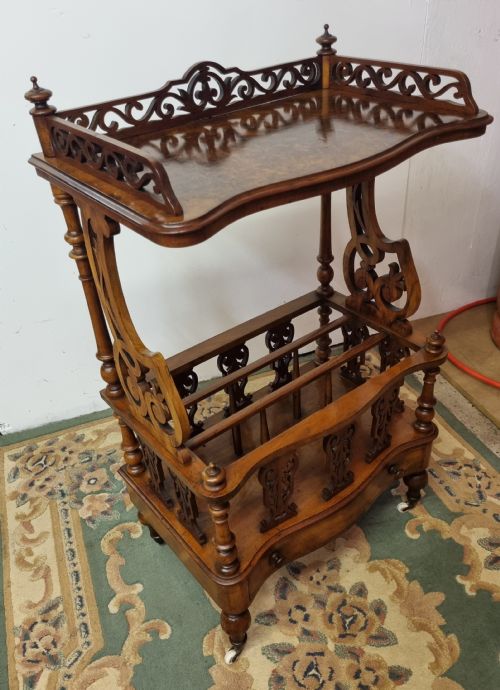
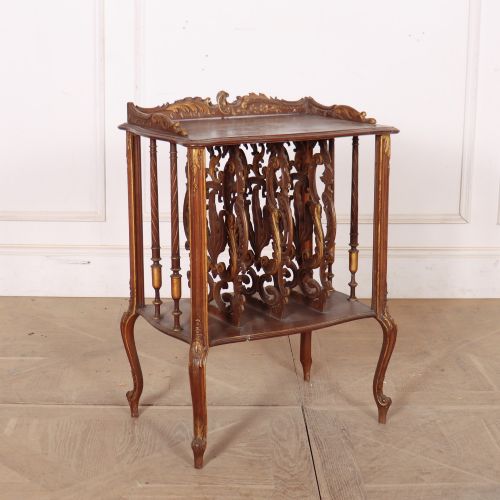
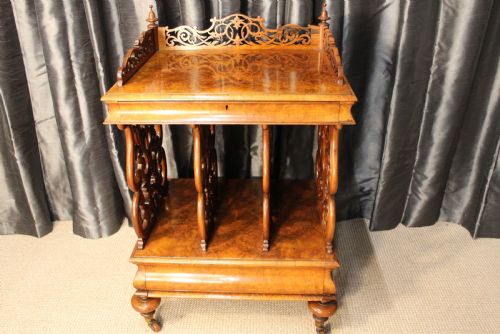
When searching for a carved walnut music cabinet, a buyer encounters pieces primarily spanning the Victorian and Edwardian eras, alongside related forms such as music canterburys, stands, and duet cabinets. These items reflect the domestic music-making of the nineteenth and early twentieth centuries, appearing in figured or burr walnut with distinct period characteristics.
The versions most commonly met on this page include Victorian burr walnut canterburys and slim Edwardian cabinets, often incorporating interior divisions for scores, drawers, or mirrored doors. Surviving examples demonstrate stylistic influences ranging from French Rococo and Louis XVI revivals to Japonisme and French Art Nouveau.
Object types stretch from freestanding serpentine canterburys and bedside-scale cabinets to taller etageres and side servers. Walnut remains the defining medium across these variations, paired with brass, ceramic, glass, and leather details.
Materials and construction
Makers utilised solid walnut and decorative veneers, particularly burr and figured walnut, to achieve rich grain patterns across the main bodies and panelled doors of these cabinets. Cabinetmakers selected these timbers for their warmth and responsiveness to carved detail.
Construction involved traditional joinery methods suited to housing upright partitions, shelves, and drop-down or hinged compartments for scores. Secondary materials such as brass hinges, mirrored glass, and ceramic accents completed the functional assemblies.
Carved Walnut Music Cabinet Retail Price Guide 2026
Typical asking prices for carved walnut music cabinet among the pieces listed under this phrase on Sellingantiques today, from the lower quarter to the upper quarter. They describe what is for sale here now, not the wider market.
Materials recorded across the inventory include brass hardware, ceramic elements, mirrored glass, and leather surfaces alongside standard solid and veneered walnut.
Distinctions in craftsmanship
The standard of carving and the selection of veneer define the distinction between standard production items and exceptional pieces. Finer cabinets display crisp, hand-carved ornamentation and carefully matched burr walnut figures across prominent surfaces.
Structural integrity and the retention of original brass hardware, internal partitions, and mirrored elements influence the overall execution. Pieces that preserve their original fitted interiors and intended function represent the higher tier of surviving examples.
Gabriel Viardot
The Carved Walnut Music Cabinet Glossary
- Canterbury
- A low, freestanding stand with vertical divisions, originally designed to hold sheet music or folios. It frequently incorporates a small drawer or lower shelf.
- Burr walnut
- A veneer taken from the knotted growth of a walnut tree, prized for its swirling, highly figured grain pattern. It appears on the principal surfaces of high-status Victorian and Edwardian furniture.
- Etagere
- An open piece of furniture consisting of a series of tiers or shelves for displaying small objects. It is sometimes combined with enclosed cabinet space for music storage.
- Serpentine
- A curved shape resembling a snake's movement, featuring a convex centre flanked by concave ends. This contour appears on the fronts of select Victorian tables and canterburys.
Carved Walnut Music Cabinet: Frequently Asked Questions
What is a music cabinet?
A music cabinet is a specialised piece of furniture built to store sheet music, folios, and small musical accessories. They typically feature internal vertical partitions, drawers, or drop-down compartments.
During the nineteenth and early twentieth centuries, these cabinets sat in domestic parlours and drawing rooms to keep scores organised near a piano or music stand.
How do I tell Victorian from Edwardian pieces?
Victorian examples generally feature heavier proportions, richer burr walnut veneers, and deeper carved decoration, often drawing on Rococo or Louis XVI revival styles. These pieces date from the mid to late nineteenth century.
Edwardian cabinets tend to be slimmer and more restrained in design, reflecting lighter aesthetic movements including early Art Nouveau and Japonisme influences from the opening decades of the twentieth century.
What is a music canterbury?
A music canterbury is an open-framed stand featuring vertical slats or partitions designed to hold sheet music upright. Many incorporate a lower drawer and small carrying handles.
Originating in the late eighteenth century, the form remained popular through the Victorian era as both a practical holder and a decorative table.
How do I care for walnut furniture?
Walnut furniture requires placement away from direct sunlight and extreme temperature fluctuations to prevent the wood and veneers from drying out. Regular dusting with a soft, dry cloth preserves the finish.
Application of appropriate beeswax formulas helps maintain the lustre of the timber without building up heavy residues over time.