







Antique Music Paper Storage
These antique music paper storage pieces are sturdy timber cabinets and canterburys designed to keep folios tidy, offering both practicality and period charm.
Antique Music Paper Storage
When you search for antique music paper storage, you encounter a range of dedicated timber furniture designed to hold folios, sheets, and periodicals. The selections span from Georgian and Regency canterburys to Edwardian music cabinets and later filing units.
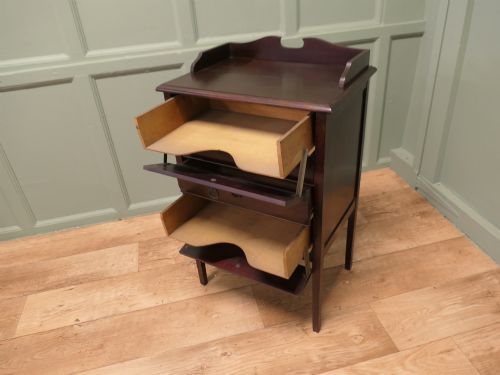
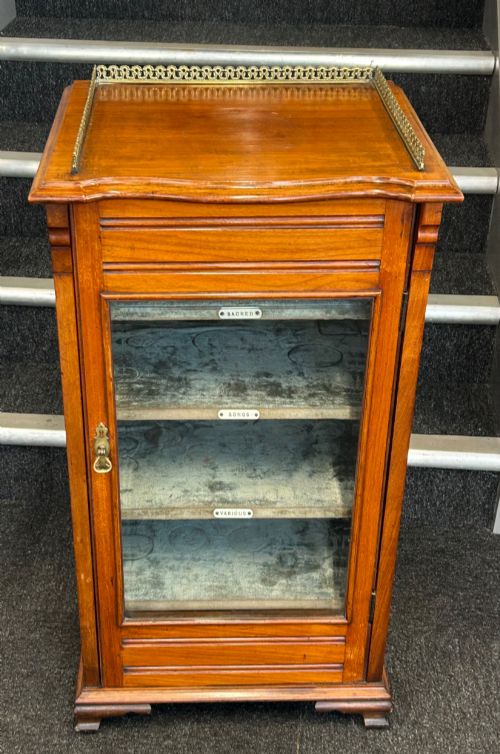
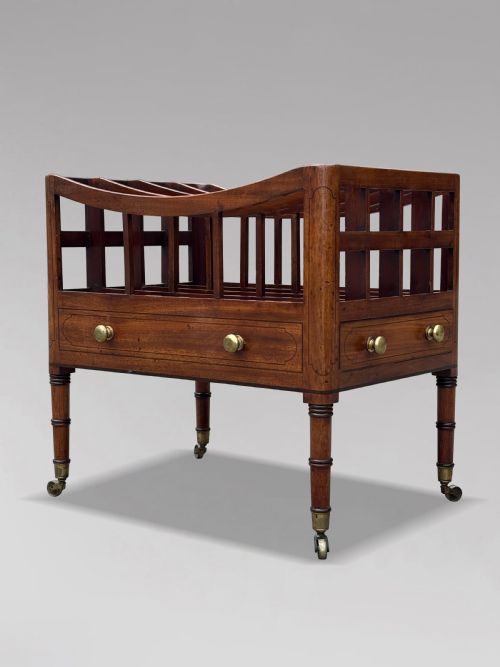
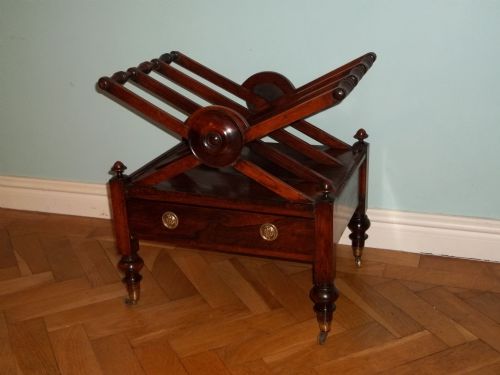
Canterburys form a major portion of these pieces, featuring slatted divisions for holding paper upright alongside lower drawer compartments. You will also meet upright cabinets with multiple internal shelves or tambour fronts suited to sorting sheets.
The materials reflect the prevailing cabinet timbers of their respective eras, with mahogany, rosewood, and walnut appearing frequently. These items originated as functional household furniture for parlours and drawing rooms, adapted over decades to hold assorted printed paper.
How they were made
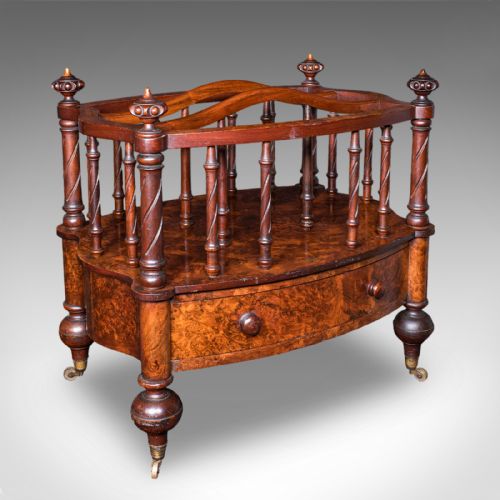
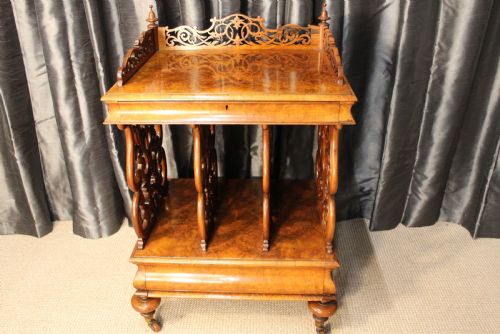
Cabinet makers utilised dense hardwoods like mahogany, walnut, and rosewood, often applying burr walnut veneers for decorative grain patterns on door fronts and panels. Brass castors, handles, and hinges provide functional hardware across many of the items.
Joinery techniques varied from the elegant open slats and turned supports of early canterburys to the enclosed panelled doors and tambour shutters of later filing cabinets. Inlaid banding in lighter timbers such as ebony adds linear contrast to several pieces.
Antique Music Paper Storage Retail Price Guide 2026
Typical asking prices for music paper storage among the pieces listed under this phrase on Sellingantiques today, from the lower quarter to the upper quarter. They describe what is for sale here now, not the wider market.
Some nineteenth-century canterburys roll around on brass castors, ready to follow you from the piano stool to the reading armchair.
What varies in quality
The standard of timber selection and veneer matching dictates much of the visual appeal, particularly on burr walnut and rosewood surfaces where grain direction matters. Superior examples display refined turning on legs, precise inlay work, and robust structural joinery.
Design complexity also separates standard utility items from finer workshop output, evident in carved detailing, brass fittings, and integrated drawer mechanisms. The proportion of the divisions and the stability of the frame indicate the care taken during manufacture.
The Antique Music Paper Storage Glossary
- Canterbury
- A low, open-framed stand with vertical divisions, originally designed for holding sheet music and folios. These pieces often feature a small drawer beneath the slatted section.
- Tambour
- A flexible shutter made of narrow strips of wood glued to canvas, allowing a sliding door to curve around the corner of a cabinet.
- Folio Cabinet
- An enclosed piece of furniture fitted with wide, shallow shelves intended for storing large sheets of paper or unbound music without bending.
- Inlay
- A decorative technique where contrasting timbers or materials are inserted into recessed portions of the primary wood surface to form patterns.
Antique Music Paper Storage: Frequently Asked Questions
What is an antique canterbury used for?
A canterbury serves as a compartmentalised stand for holding sheet music, folios, newspapers, and magazines upright within easy reach.
The vertical partitions prevent large paper items from slouching or creaming, while the base drawer often stores smaller accessories.
How do I date an antique music cabinet?
Dating relies on observing the primary timber, hardware, and stylistic details such as Edwardian inlay or Regency turning.
Comparing the construction methods to known periods from the eighteenth and nineteenth centuries helps narrow the decade of production.
Are music cabinets suitable for modern storage?
These cabinets adapt well to holding modern periodicals, sheet music, art folios, and documents in a home office or living space.
The internal shelving and slim footprint allow them to fit neatly alongside contemporary furnishings while keeping paperwork contained.