

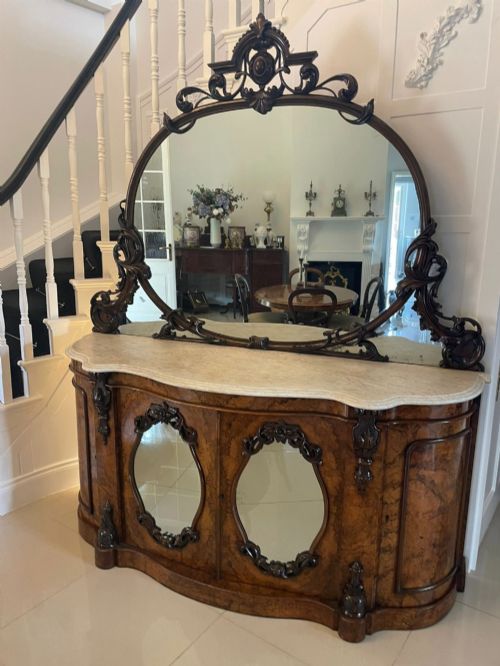


Carved Walnut Marble Sideboard
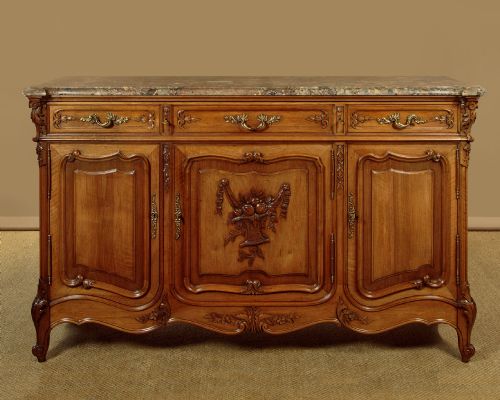
A carved walnut marble sideboard combines the heavy presence of figured timber with the cool, smooth utility of a stone surface.
Carved Walnut Marble Sideboard
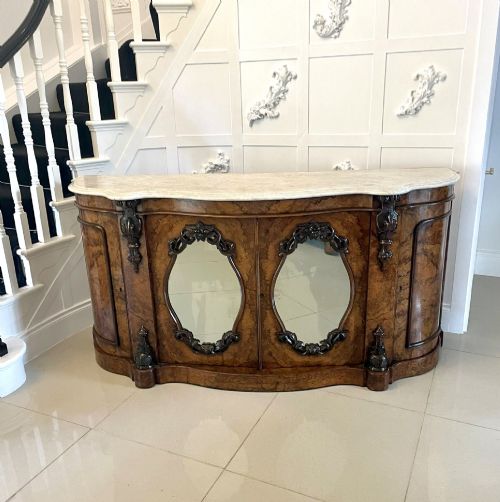
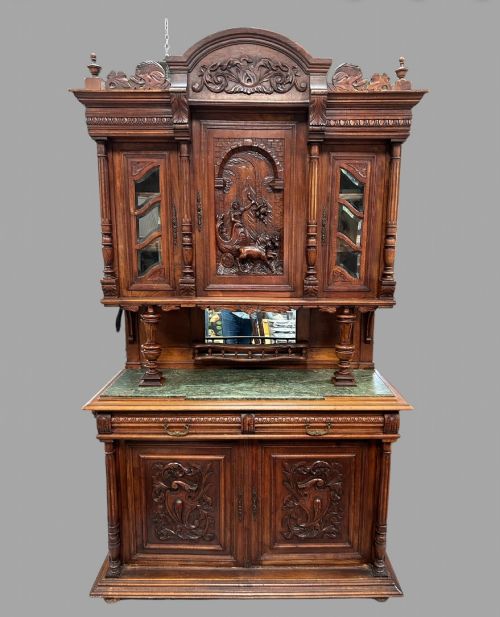
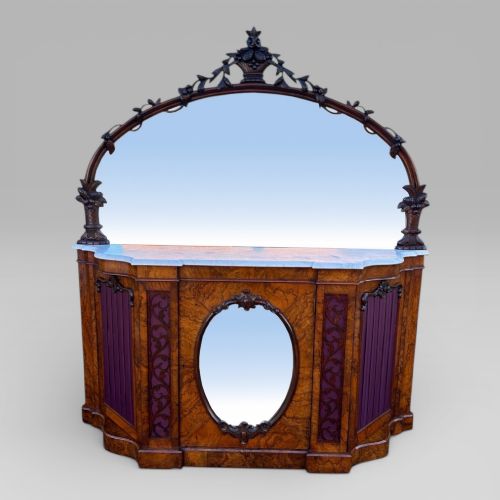
A carved walnut marble sideboard brings together dense, dark wood and heavy stone in grand forms like credenzas, buffets, and mirror-backed cabinets. These pieces serve as substantial storage furniture for dining rooms and grand hallways, offering a solid surface above enclosed shelving.
Most examples found here date from the Victorian era and the nineteenth century, alongside later French provincial and Art Deco variations. Buyers encounter pieces ranging from elaborate mirrored credenzas to simpler side cabinets and commodes.
The combination of carved walnut and polished marble creates a striking textural contrast that defines the interior architecture of formal rooms. The timber often displays rich burr figuring or marquetry inlay beneath the cold stone top.
Standards of execution
The depth and crispness of the carved ornamentation separate standard production from exceptional examples. Skilled hands produced undercut foliage and scrolling motifs that retain sharp edges, whereas lesser pieces feature shallow, mechanical moulding.
The selection of the walnut timber itself dictates value, with highly figured burr veneers and matched grain patterns marking superior work. Furthermore, the thickness, polish, and natural figuring of the marble top indicate the original ambition of the piece.
Carved Walnut Marble Sideboard Retail Price Guide 2026
Typical asking prices for carved walnut marble sideboard among the pieces listed under this phrase on Sellingantiques today, from the lower quarter to the upper quarter. They describe what is for sale here now, not the wider market.
Some nineteenth-century French buffets include metamorphic internal mechanisms that alter their profile with a single, balanced lift.
The Carved Walnut Marble Sideboard Glossary
- Burr walnut
- A type of wood veneer taken from the warted growths of walnut trees, prized for its swirling, highly decorative grain patterns. It is frequently applied to the main doors and drawer fronts of Victorian case furniture.
- Credenza
- A low cabinet or sideboard, often featuring mirrored backs or glass-fronted side cupboards, designed for display and storage. Nineteenth-century examples in this style regularly incorporate marble tops.
- Marquetry
- The art of applying small pieces of veneer to a structure to form decorative patterns and pictures. This technique often embellishes the panels of French and Victorian case pieces.
- Serpentine
- A curved shape consisting of a convex centre flanked by concave ends, creating a flowing wave-like front. This contour requires precise woodworking to fit marble slabs accurately.
- Chiffonier
- A low sideboard or small chest of drawers, typically fitted with shelves or a small mirror at the back. It developed during the nineteenth century as a compact alternative to the larger buffet.
Carved Walnut Marble Sideboard: Frequently Asked Questions
How do I clean the marble top?
Wipe the surface gently with a soft cloth dampened in warm water and mild, neutral soap. Avoid acidic cleaners, vinegar, or harsh detergents that can etch or dull the polished stone.
Dry the marble thoroughly afterwards with a clean towel to prevent water spots. Routine dusting keeps abrasive particles from scratching the smooth finish over time.
Where should I place this furniture?
Position these heavy items against a sturdy wall in a dining room, hallway, or living space where the floor can support their substantial weight. Ensure they sit away from direct heat sources and strong sunlight to protect the walnut timber and polish.
Allow sufficient clearance around doors and drawers for smooth daily operation. The height and depth of these pieces make them ideal for displaying lamps, ceramics, or serving dishes.
How do I identify a Victorian piece?
Look for characteristic construction methods such as hand-cut dovetails in the drawer linings and heavier, darker walnut timbers. Victorian examples often feature deep relief carvings, mirror backs, and ornate architectural detailing.
Examine the secondary woods inside the cabinet, which typically include pine or mahogany. The presence of original brass hardware and backplates also points toward nineteenth-century manufacture.