

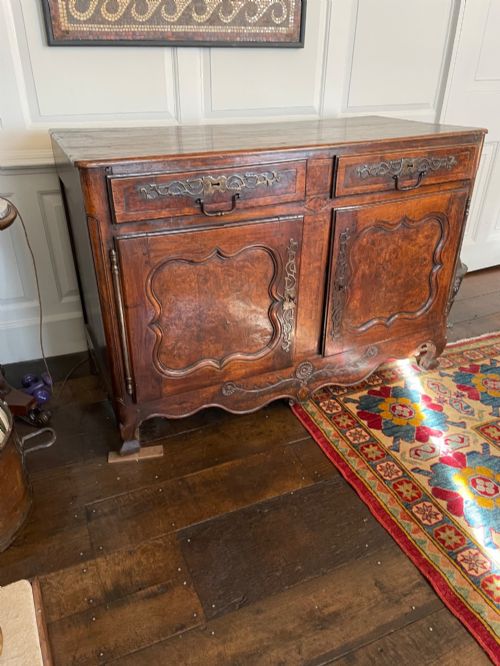
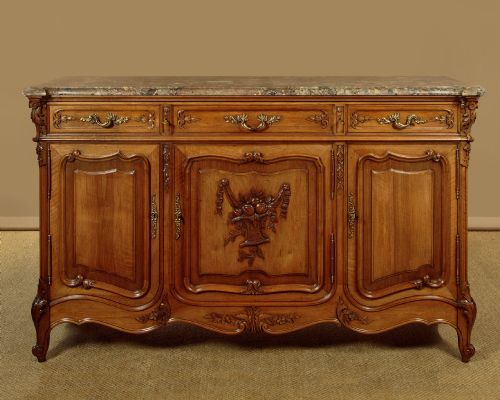
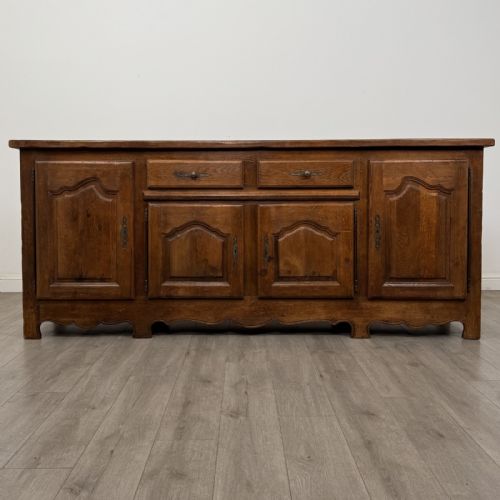
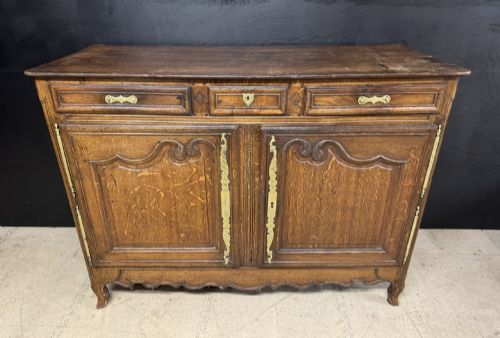


Carved French Enfilade
A carved french enfilade brings exceptional length and storage to a room, offering deep surface space alongside classic provincial and revival craftsmanship.
Carved French Enfilade
A carved french enfilade serves as a long sideboard or buffet, originating in France to hold dining linen and silver along a formal wall. These low timber cabinets provide extended horizontal surface space above banks of panelled doors and drawers.
The versions met on this page span several centuries, with robust 18th-century oak and cherry examples alongside nineteenth-century interpretations. Regional workshops shaped these forms into distinct regional expressions, ranging from plain provincial utility to decorative Louis XV curves.
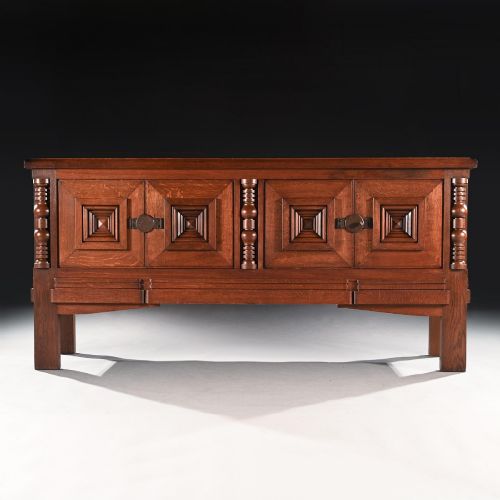
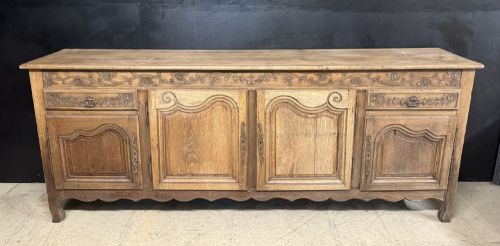
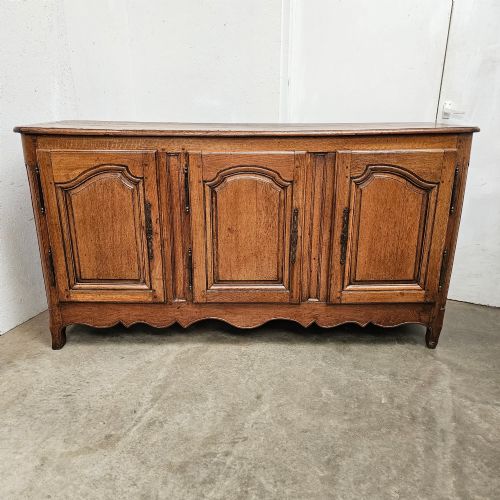
Buyers encounter structural variations that include three-door and four-door carcases, sometimes topped with contrasting marble. The scale remains uniformly long, designed specifically to anchor a dining room or wide hallway.
Materials and construction
Solid timber forms the primary structure, with oak, walnut, cherry, chestnut and burr elm selected for their strength and grain. Cabinetmakers joined these regional hardwoods using traditional pegged mortise and tenon joints.
Carving is executed directly into the solid wood rather than applied in composition, revealing deep relief motifs along stiles, rails and door panels. Supplementary materials such as wrought iron hinges, brass escutcheons and marble tops complete the assembly.
Carved French Enfilade Retail Price Guide 2026
Typical asking prices for carved french enfilade among the pieces listed under this phrase on Sellingantiques today, from the lower quarter to the upper quarter. They describe what is for sale here now, not the wider market.
Some provincial pieces retain subtle carpenter's marks hidden behind the doors, left behind when the workshop fitted the hinges.
Quality variations
The distinction between standard utility pieces and finer examples rests in the depth and sharpness of the hand carving. Crisp relief work on structural mouldings and door panels indicates a more skilled hand at the bench.
Timber selection and panel construction further separate grades of production, with well-figured grain and stable book-matched boards commanding greater attention. The retention of original ironwork, brass fittings and fitted interior shelves preserves the integrity of the piece.
Charles Dudouyt
The Carved French Enfilade Glossary
- Enfilade
- A long sideboard or buffet featuring a continuous line of multiple doors across the front. This form developed to provide extensive storage in large dining rooms.
- Parquetry
- A geometric mosaic of wood pieces used for decorative surface work, frequently seen on tabletops. This technique creates subtle textural patterns using contrasting grain directions.
- Escutcheon
- A protective plate surrounding a keyhole, usually fashioned from brass or iron. It secures the wood around the lock while adding a decorative focal point to the door.
- Stile
- A vertical framing member of a panelled door or cabinet side. It provides the main structural support into which horizontal rails are joined.
Carved French Enfilade: Frequently Asked Questions
What is a carved french enfilade used for today?
These long cabinets function effectively in modern dining rooms or hallways for storing tableware, linens and everyday items. The broad top surface also accommodates lamps, ceramics and decorative displays.
Their substantial length allows them to fill large wall spaces where standard sideboards appear too small, adding both utility and architectural presence to an interior.
How do I tell an 18th-century enfilade from later copies?
Examination of the internal construction, timber shrinkage and tool marks reveals the age of the woodwork. Hand-cut joinery, pegged joints and irregular board widths typically point to earlier periods of production.
Later revival pieces often display more uniform machining and machine-sawn components hidden behind the traditional carved exterior.
Where were these pieces originally placed in a home?
Enfilades stood against the long walls of French dining rooms, salons and occasionally large country kitchens. Their design allowed servants to prepare dishes and store serving platters close to the dining table.
The long top served as a staging area during large meals when extra surface space was required.
How do I care for the timber on an old enfilade?
Regular dusting with a dry, soft cloth maintains the finish without building up greasy residues. Applying a conservative amount of traditional beeswax periodically nourishes the dry hardwood.
Keeping the cabinet away from direct heat sources and severe humidity fluctuations prevents timber movement and splitting in the panels.