
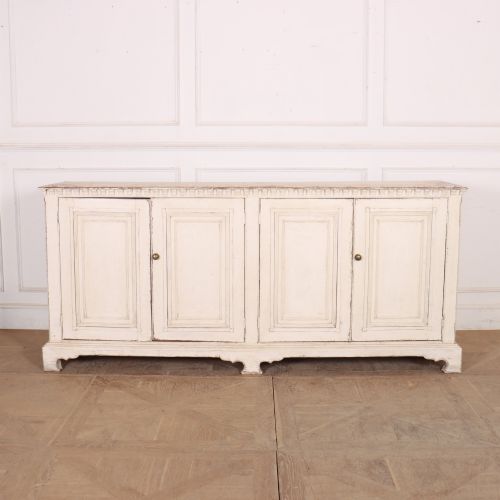

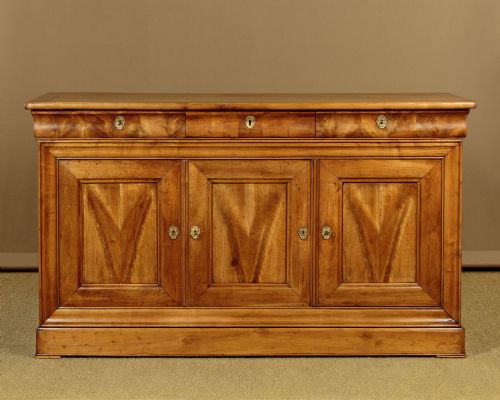


Vintage French Enfilade
A vintage french enfilade brings exceptional length and practical storage to a room, offering grand proportions rooted in continental tradition.
Vintage French Enfilade
When you search for a vintage french enfilade, you are looking at long, low storage units traditionally designed for dining rooms to hold silver and linen. These pieces span centuries of design, reaching from the mid-eighteenth century through to the middle of the twentieth century.
Makers utilised distinct regional idioms, resulting in diverse expressions from the ornate curves of provincial oak to the clean geometric lines of later twentieth-century Art Deco interpretations. Each item maintains the characteristic extended horizontal format that defines the form.
Materials and construction
Cabinetmakers constructed these long storage pieces primarily using timbers such as oak, walnut, mahogany, cherrywood, and solid oak. These hardwoods provided the structural integrity necessary for substantial doors, long tops, and internal shelving.
Surface decoration frequently involved marquetry inlay, parquetry tops, and applied ormolu or brass mounts to accentuate the timber grain. Many examples feature fitted marble tops, adding considerable weight and a durable, cool surface above the wooden cabinetry.
The current selection includes pieces spanning from the 1750s through to the mid-twentieth century, featuring materials such as marble, brass, ormolu, and various solid hardwoods.
Evaluating quality and execution
The distinction between standard examples and finer pieces lies in the selection of timber and the precision of the joinery. Superior items display harmonious grain matching across multiple doors and seamless integration of decorative inlays.
The refinement of carved details, the weight and finish of brass or ormolu mounts, and the integration of fitted marble tops distinguish master workshop output from simpler provincial carpentry.
Charles Dudouyt
The Vintage French Enfilade Glossary
- Enfilade
- A long sideboard or cabinet featuring a continuous sequence of doors, traditionally used for serving food and storing dining ware in large houses. This form provides exceptional surface area and internal capacity.
- Marquetry
- The art and craft of applying small pieces of veneer to a structure to form decorative patterns and pictures. Makers used contrasting woods to achieve intricate geometric or floral designs on the cabinet front.
- Parquetry
- A geometric mosaic of wood pieces used for decorative floors and furniture tops. The technique creates a repeating pattern, often seen arranged in complex geometric formations across the surface.
- Ormolu
- Gilded bronze applications used for mounts, handles, and decorative accents on fine furniture. This material adds metallic contrast and ornamental detail to the timber framework.
- Serpentine
- A curved line of furniture frontals that undulates outward then inward, creating a gentle wave effect. This contour demands advanced woodworking skill to execute cleanly across multiple doors.
Vintage French Enfilade: Frequently Asked Questions
What is a vintage french enfilade?
A vintage french enfilade is a long, low sideboard or cabinet designed primarily for dining room storage. These pieces typically feature multiple doors and span considerable horizontal length.
Originating in France, they reflect various historical periods from the eighteenth century to the mid-twentieth century, incorporating regional styles and diverse timber selections.
How were these sideboards used?
These cabinets served primarily in dining rooms for storing silver, porcelain, linens, and serving dishes. The expansive top surface also functioned as a station for presenting food during large meals.
In modern interiors, their generous proportions and long surface make them suitable as media consoles or statement storage units in living spaces and hallways.
How do I live with a marble top?
Marble top sideboards require sensible placement away from direct and constant exposure to acidic liquids, which can etch the polished stone surface over time. Regular wiping with a soft, damp cloth keeps the stone clean.
The cool, heavy stone adds textural contrast to the timber base and provides an exceptionally durable surface for displaying lamps or decorative objects.
How can I tell periods apart?
Earlier pieces from the mid-eighteenth century often display carved oak panels and traditional provincial joinery reflecting regional French craftsmanship. Nineteenth-century examples frequently lean toward revival styles with pronounced curves and decorative mouldings.
Twentieth-century pieces, particularly those from the Art Deco era, shift toward streamlined geometry, contrasting veneers like mahogany and maple, and reduced ornamentation.