
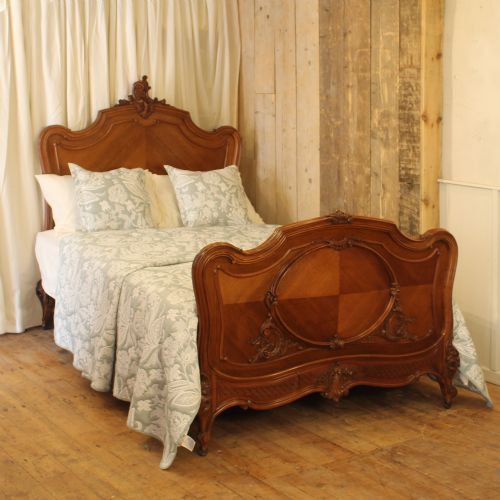
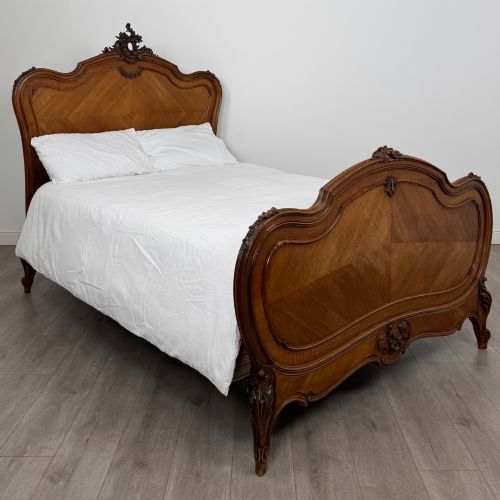
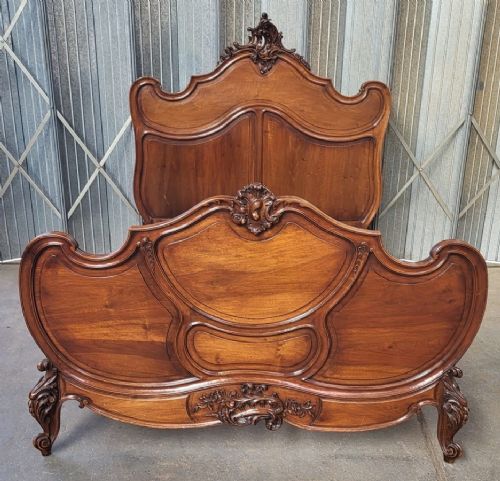
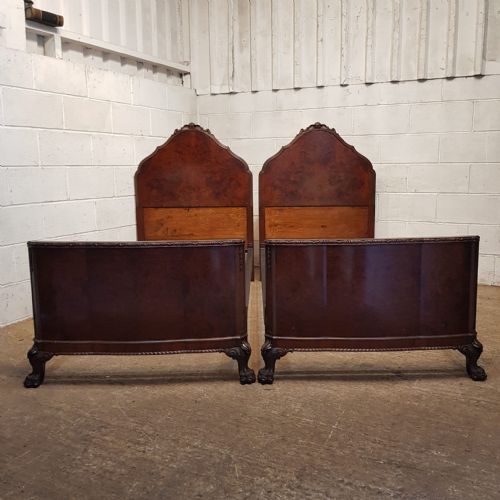
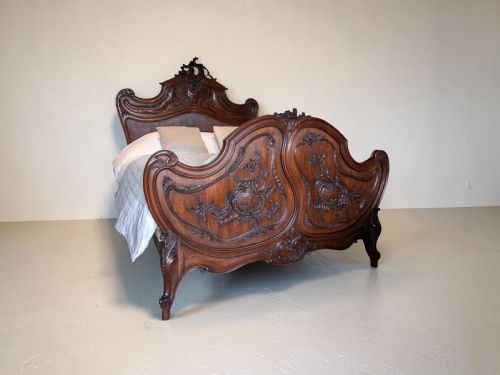


Carved Walnut Headboard Footboard
These carved walnut headboard footboard sets bring substantial timber and continental proportion into a bedroom.
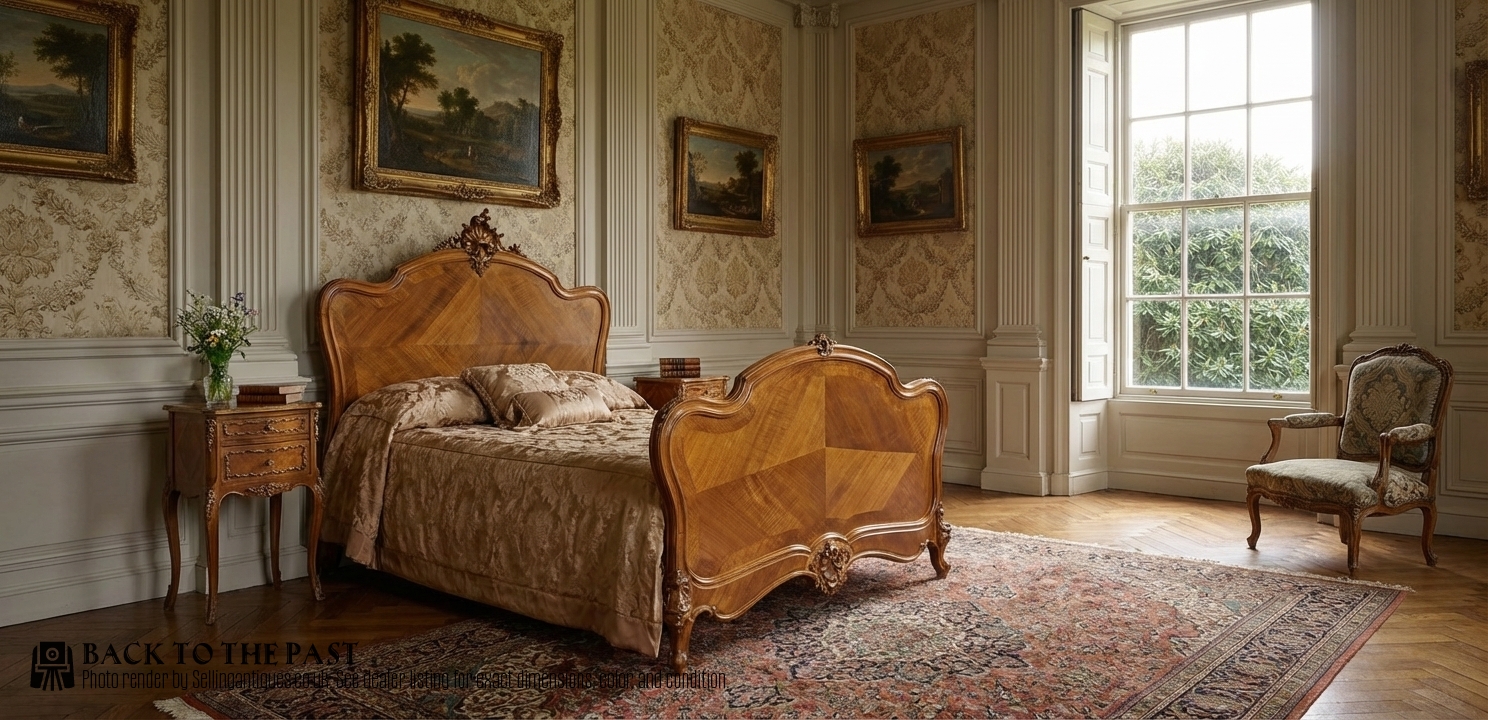
Carved Walnut Headboard Footboard
When you search for carved walnut headboard footboard assemblies, you are looking at substantial timber bed frames originating primarily from the nineteenth and early twentieth centuries. These pieces encompass complete double, king size, and single bedsteads rather than standalone panels, though their defining visual weight rests in the carved head and foot sections.
The versions you are most likely to meet on this page span from Victorian and Edwardian English pieces to continental European examples, particularly French Louis XV, Rococo, and Italian designs. They appear in double and king sizes, occasionally accompanied by matching bedside cabinets or executed as pairs of single beds.
Makers utilised rich walnut timbers to anchor ornate carving and scrollwork, framing sleeping quarters with architectural presence. The forms range from serpentine bombe shapes to crisply moulded panel work, all driven by the decorative idioms of the late nineteenth and early twentieth centuries.
Materials and construction methods
Cabinet makers relied heavily on solid walnut, burr walnut, and walnut veneer laid over secondary timbers, exploiting the rich grain patterns and deep warm tones of the wood. Selected pieces incorporate timber inlay, parcel gilding, or contrasting upholstery panels in linen blends to soften the imposing wooden structures.
The carving work is executed directly into the dense walnut timber, showing deep relief moulding on crest rails, stiles, and footboards. Joinery traditions of the period ensure structural rigidity across large headboards and footboards, accommodating standard mattress sizes through adapted modern side rails where required.
Certain footboards curve outward so generously they double as miniature architectural landscapes.
Quality factors in walnut bedframes
The distinction between standard examples and the finest pieces lies in the crispness and depth of the hand carving on the wooden frames. Superior specimens display fluid, deeply undercut foliage and scrolls that demonstrate exceptional sculptural control over the stubborn walnut grain.
Selection of the veneer and timber figure dictates visual appeal, with burr walnut and figured grain panels commanding greater presence than plain stock. Intricate detailing such as parcel gilding, matched wood grain alignment, and harmonious proportions across both headboard and footboard elevate the standing of a bedstead.
The Carved Walnut Headboard Footboard Glossary
- Burr walnut
- A prized timber harvested from tree growths that produces highly figured, swirling grain patterns. It is frequently utilised for decorative veneer panels on prominent areas of the headboard and footboard.
- Bedstead
- A complete framework of a bed, including the headboard, footboard, and side rails. This term distinguishes complete structures from loose headboards.
- French Rococo
- An ornate design style characterised by asymmetry, C-scrolls, and naturalistic plant motifs. It heavily influences the carving and silhouette of continental walnut beds from this era.
- Parcel gilt
- A decorative technique where specific carved details or mouldings are partially gilded with gold leaf. This method highlights the craftsmanship against the dark walnut background.
- Bombe
- A swelling, outward-curved contour found on select Italian bedframes and furniture. This voluptuous shape requires advanced woodworking skill to execute in solid walnut.
Carved Walnut Headboard Footboard: Frequently Asked Questions
How do I fit a modern mattress?
Most antique bedsteads use custom side rails or adapted wooden slats to accommodate standard modern mattress dimensions safely.
It is advisable to check the internal width and length specifications of each listing before purchasing your mattress.
Are these beds easy to dismantle?
Continental and Victorian bedsteads generally employ iron bed bolts or metal locking brackets that allow the headboard, footboard, and side rails to separate completely.
This modular construction makes transportation and room placement manageable despite the heavy walnut timber.
How do I clean walnut wood?
Maintain the timber by dusting regularly with a soft, dry cloth and occasionally applying a quality beeswax to nourish the antique surface.
Avoid silicone-based polishes and keep the bedstead away from direct heat sources to prevent the walnut veneer from drying out.
Can I reupholster the headboard?
Upholstered panels on these beds can be recovered using traditional methods to suit your interior colour scheme.
Many listings feature freshly upholstered linen blend fabrics ready for immediate use in domestic bedrooms.