

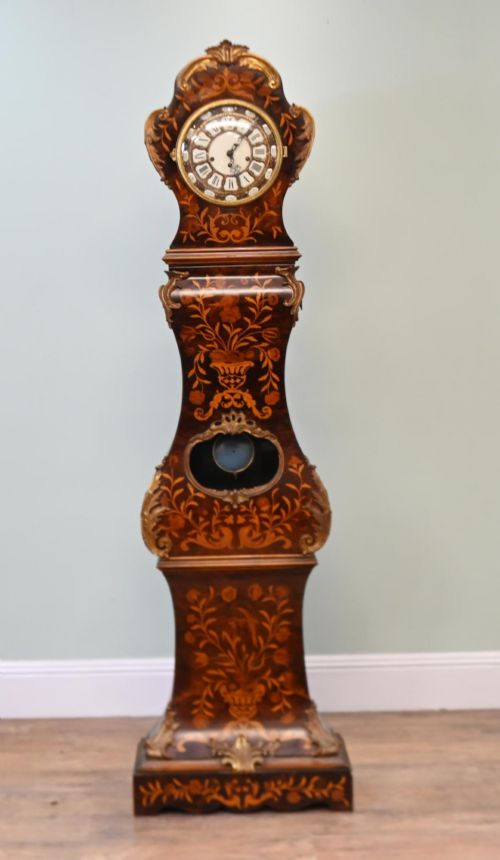
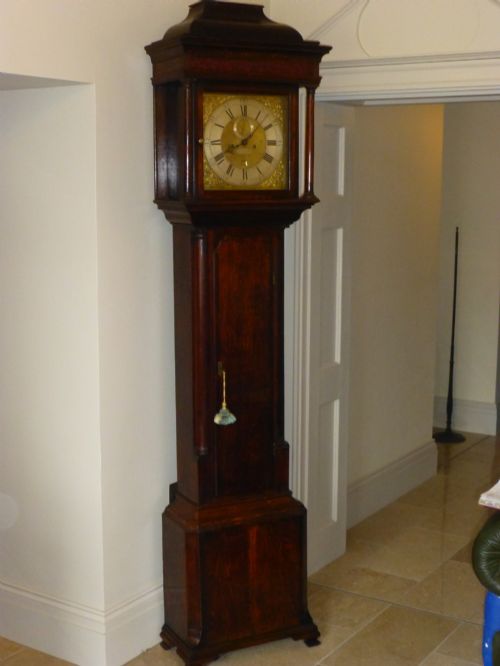


Carved Walnut Floor Clock
These carved walnut floor clock examples combine substantial timber cases with precise timekeeping, offering a commanding focal point for any hallway or reception room.
Carved Walnut Floor Clock
A carved walnut floor clock stands as a tall timekeeper housed in a fitted timber case, designed to display the hours in domestic interiors. When exploring carved walnut floor clock examples, buyers typically encounter tallcase formats ranging from seventeenth-century origins through Georgian periods and nineteenth-century revivals.
The selections span grander architectural forms and more compact miniatures, incorporating regional English craftsmanship from London as well as provincial centres like Stockport, Nantwich and Norwich. These timepieces unite dial work in brass with varied wooden cabinetry.
The most frequent variations on this page include eighteenth-century pieces alongside seventeenth-century specimens and later nineteenth-century interpretations built in historical styles.
How they were made
Makers constructed the primary housings using walnut and burr walnut, frequently supported by secondary timbers such as oak, while dial faces utilised brass and steel components. Glazed doors protected the moving parts while allowing visibility of the dial and pendulum swing.
Cabinet makers shaped the timber through precise joinery and applied carving, while clockmakers engineered internal movements driven by weights or springs. The integration of figured veneers and solid sections demanded high levels of joinery skill.
Carved Walnut Floor Clock Retail Price Guide 2026
Typical asking prices for carved walnut floor clock among the pieces listed under this phrase on Sellingantiques today, from the lower quarter to the upper quarter. They describe what is for sale here now, not the wider market.
Listings feature walnut, burr walnut, oak, brass, steel and glass across seventeenth-century, eighteenth-century and nineteenth-century periods.
What varies in quality
The distinction between standard examples and superior specimens rests on the depth of the cabinet carving and the complexity of the dial engraving. Finer instances display intricate figuring in the burr walnut veneer alongside sophisticated movement mechanics.
Origin and provenance also influence standing, with signed dials by established makers carrying distinct weight compared to provincial work. The crispness of the timber detailing and the proportional balance of the hood, trunk and base define the overall standard.
Richard Corless of Stockport·Edin Burgis of London·Edward East·Samuel Young Nantwich·Edward Stanton·John Harrington·Joseph Windmills·Joseph Oxley
The Carved Walnut Floor Clock Glossary
- Burr walnut
- A prized timber harvested from walnut tree growths, displaying intricate swirling grain patterns used on high-grade cabinet fronts.
- Longcase clock
- An alternative term for a tall pendulum clock enclosed in a wooden case resting directly on the floor.
- Hood
- The removable upper section of a floor clock case that encloses and protects the dial and movement.
- Dial
- The face of the clock, typically formed of brass and marked with numerals, minute tracks and maker details.
Carved Walnut Floor Clock: Frequently Asked Questions
How do I wind a floor clock?
Most eight-day movements require the weights to be drawn up using a key every week. Care must be taken not to over-wind the mechanism.
Ensuring the weights descend evenly prevents the gear train from binding during operation.
What is the difference between a longcase and a grandfather clock?
The terms describe the exact same tall floor-standing timekeeping object. Longcase is the traditional horological term, while grandfather became popular later.
Both describe tall wooden cases housing a dial, movement, and suspended pendulum.
Where should I place a walnut floor clock?
Floor clocks require stable, dry interior locations away from direct sunlight and temperature fluctuations. Placing them against a solid wall ensures the pendulum swings without interference.
Level flooring is essential to keep the beat of the escapement even and regular.
How can I tell an eighteenth-century clock from a nineteenth-century copy?
Examination of the timber construction, secondary woods, and movement fixings reveals the period of manufacture. Seventeenth and eighteenth-century pieces show hand-cut joinery methods and period-appropriate engraving styles.
Later nineteenth-century revival pieces often incorporate machine-cut components and styling cues from earlier eras.