
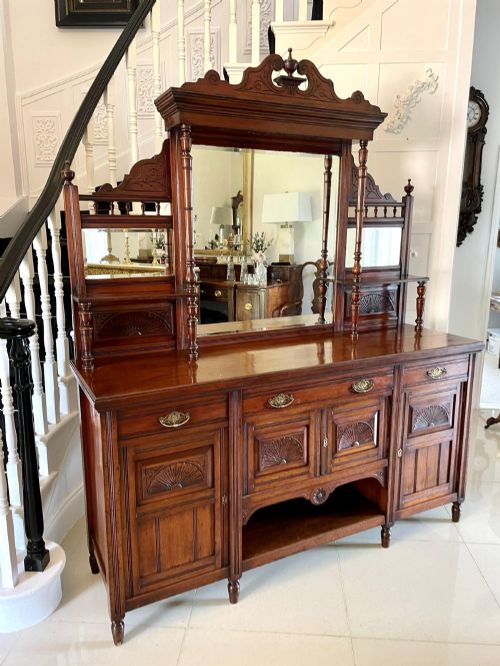
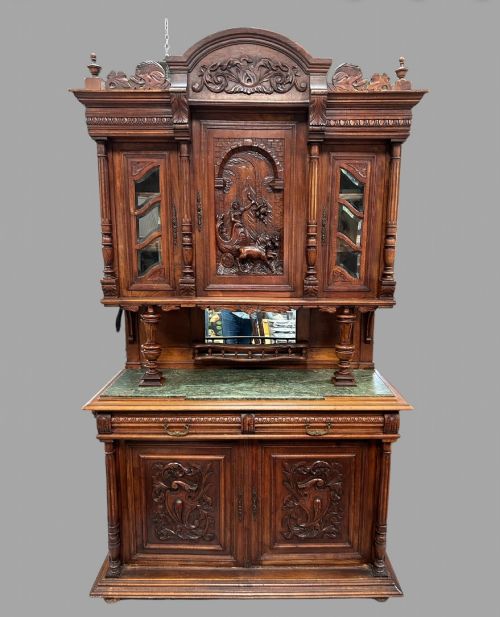
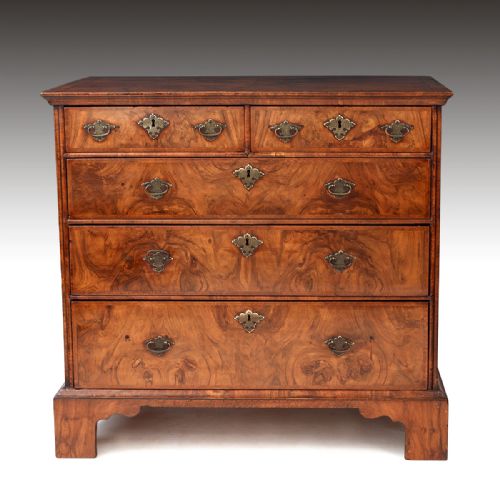
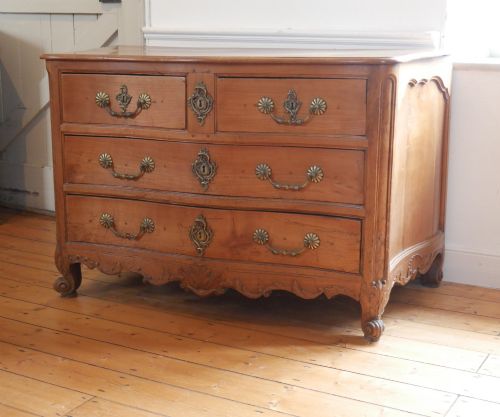
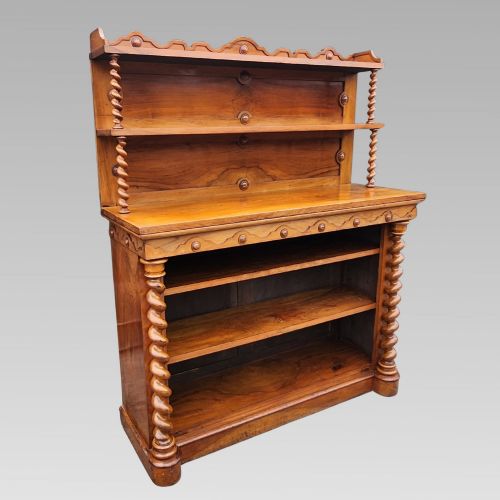


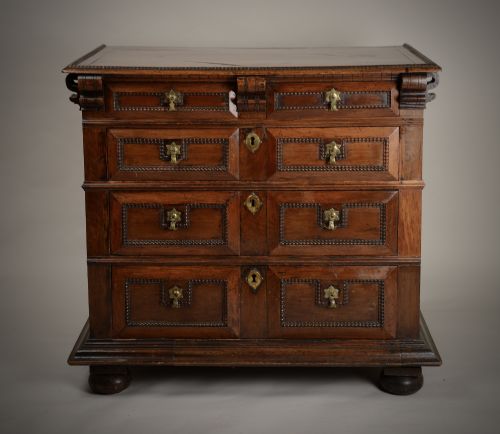
Carved Walnut Dresser
A carved walnut dresser brings rich timber grain and sculptural depth to a room, offering both generous storage and a commanding presence.
Carved Walnut Dresser
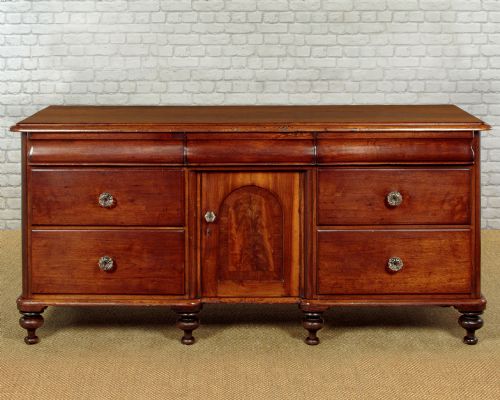
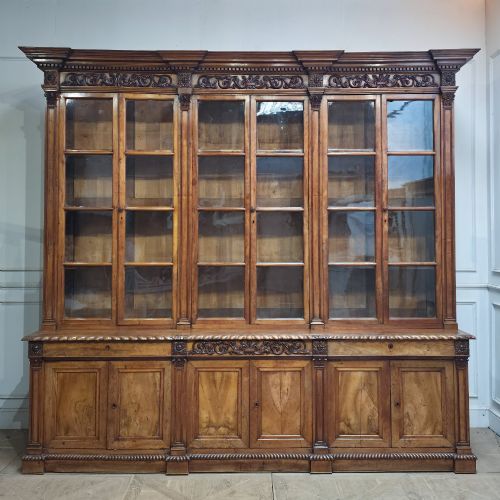
When buyers search for a carved walnut dresser, they encounter a range of forms spanning centuries of craftsmanship. The listings reveal pieces that cross boundaries between kitchen dressers, sideboards, buffet units, and chests of drawers, often enriched by regional European traditions.
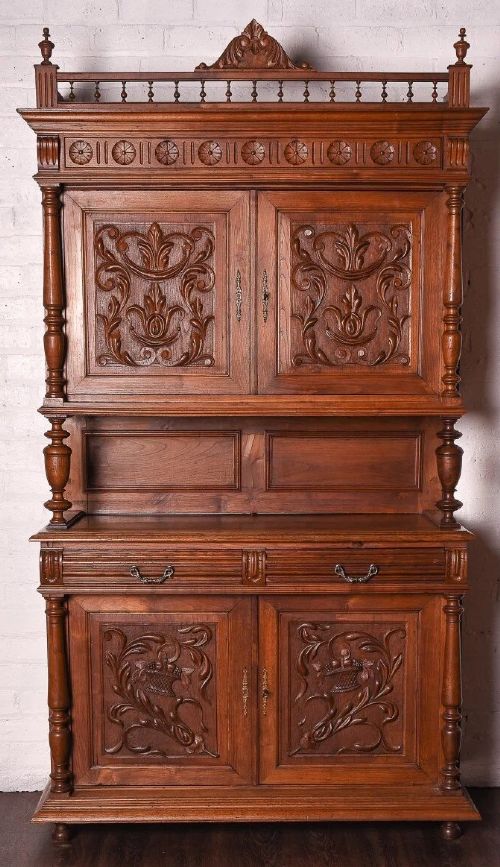
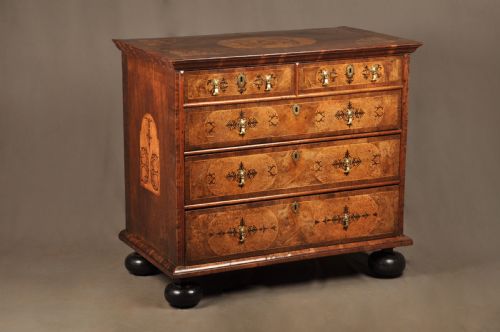
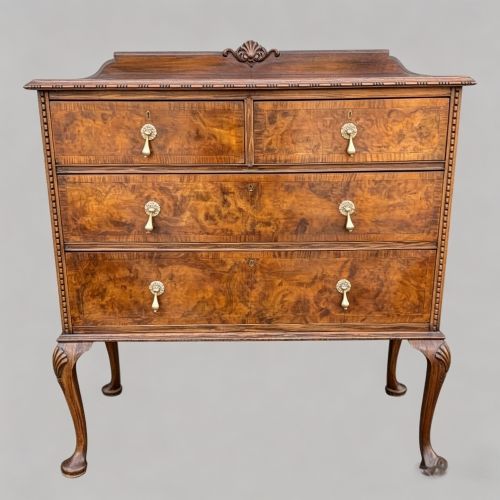
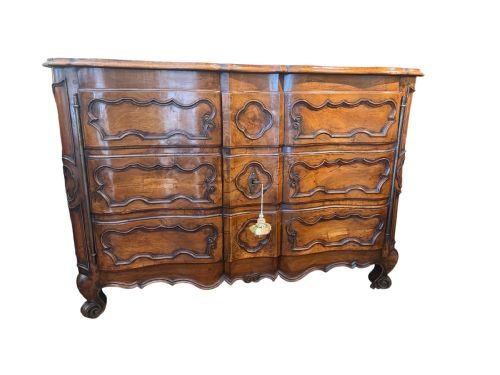
French Provincial and Victorian examples frequently appear alongside 17th-century William and Mary period designs and Queen Anne styles. These pieces function as heavy display furniture or deep storage units, pairing utility with ornamental carvings.
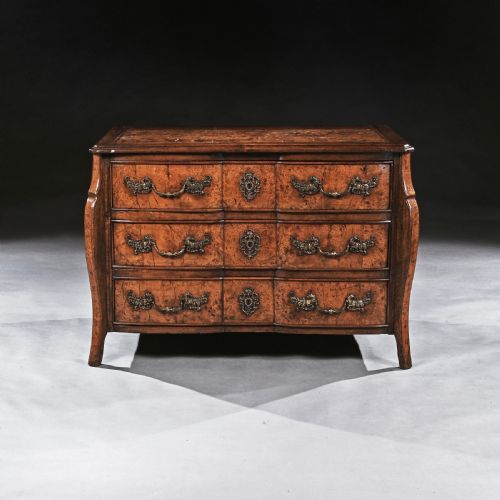
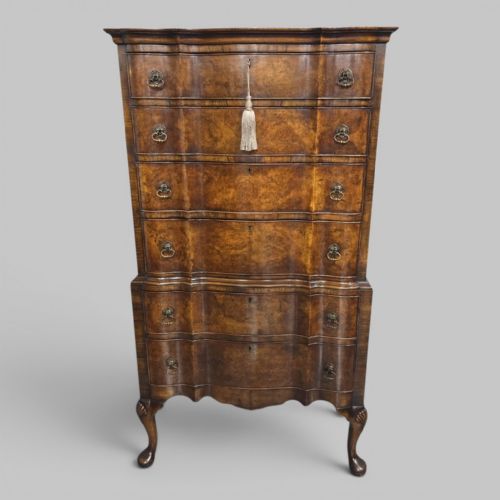
The timber itself defines the aesthetic, shifting from plain walnut boards to intricate burr walnut veneers and marquetry patterns. Buyers find kitchen dressers with upper shelving alongside enclosed sideboards and marble-topped commodes.
Materials and construction methods
Makers utilised solid walnut and decorative burr walnut veneers over secondary timbers such as oak, applying brass handles, iron hardware, and occasionally glass or marble inserts to complete the structure. Surface decoration relied on deep hand carving, arabesque marquetry, and mother-of-pearl inlay to highlight the natural grain.
Construction techniques evolved from early joined frameworks to sophisticated veneering methods on carcases with multiple drawers. Carvers shaped solid panels into bold reliefs, echoing Neo-Rococo, Louis XV, or provincial vernacular styles.
Some provincial game cabinets tucked away the day's harvest while sporting hand-carved woodland creatures peering out from the drawers.
Distinctions in quality
The distinction between ordinary and exceptional pieces rests on the choice of timber and the crispness of the hand-carved detail. Selected burr veneers and tight marquetry patterns require high skill, separating standard cabinet work from superior commissions.
Proportion and the integrity of the original surface finish dictate the standing of a piece. Retaining an unblemished patina and balanced proportions elevates a dresser from a simple utility item to a work of fine furniture.
Hille of London
The Carved Walnut Dresser Glossary
- Walnut
- A hard, dense timber prized for its rich brown colour and varied grain patterns. It served as the primary material for high-status furniture across several centuries.
- Burr Walnut
- A figured wood taken from the growths on walnut trees, sliced into thin veneers to create swirling patterns. It is frequently seen on cabinet fronts from the Queen Anne period onwards.
- Marquetry
- The art of applying small pieces of veneer to a structure to form decorative patterns or pictures. Craftsmen used various woods to achieve tonal contrast.
- Commode
- A low chest of drawers or cabinet originating in France. Many examples feature marble tops and sophisticated curved fronts.
- Serpentine
- A furniture front or top shaped with a convex centre flanked by concave curves. This contour requires precise woodworking skills.
Carved Walnut Dresser: Frequently Asked Questions
What is a carved walnut dresser?
A carved walnut dresser is a storage and display piece built from walnut timber, featuring hand-carved ornamentation. These items range from kitchen dressers with shelving to enclosed sideboards and commodes.
Such furniture serves as a focal point in dining rooms, kitchens, or living spaces, combining practical drawer and cupboard space with decorative presence.
How do I date a walnut dresser?
Dating involves examining construction methods, hardware, and stylistic details such as cabriole legs or marquetry. Earlier pieces from the seventeenth and eighteenth centuries often display hand-cut dovetails and pegged joints.
Later Victorian and Edwardian revivals incorporate machine elements while imitating earlier styles. Comparing the secondary timbers and the style of the carving helps narrow the decade of origin.
How do I care for walnut furniture?
Walnut requires stable indoor humidity levels away from direct heat sources to prevent the timber from splitting or warping. Regular dusting with a soft, dry cloth preserves the finish without the need for heavy silicones.
Applying a traditional beeswax polish occasionally feeds the wood and maintains its natural sheen. Avoid placing hot or wet items directly on the polished or marble surfaces.
What is the difference between a dresser and a sideboard?
Traditionally, a dresser includes upper plate racks or shelving for displaying ceramics, whereas a sideboard is a lower unit designed solely for serving and storage. The terms often overlap in regional and historical terminology.
Examining the upper structure clarifies whether the piece was built for display or purely for surface utility.