




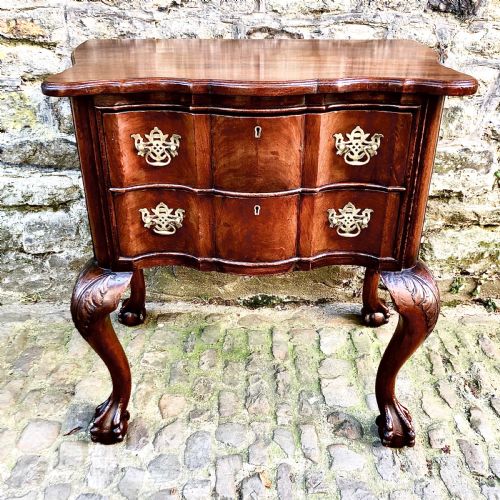

Carved Leg Wooden Commode
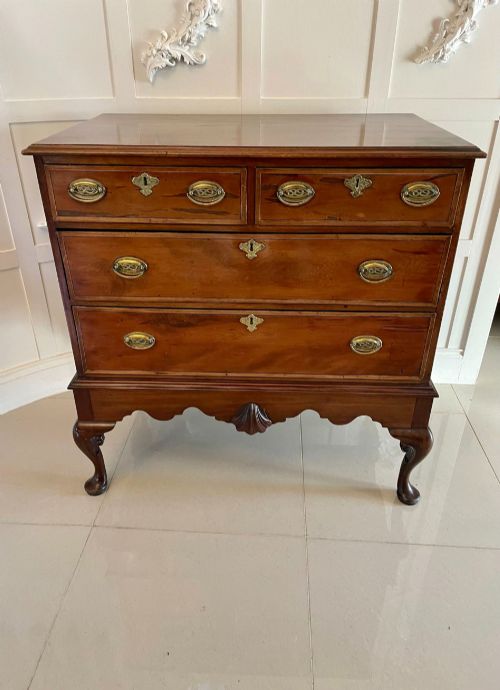
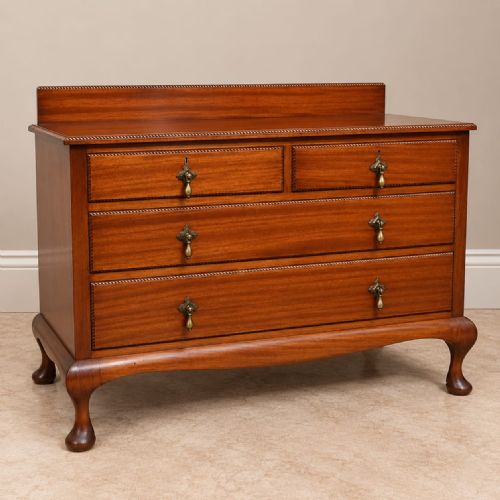
These carved leg wooden commode pieces range from eighteenth-century walnut provincial chests to Edwardian mahogany designs, offering practical storage with distinct period character.
Carved Leg Wooden Commode
A carved leg wooden commode provides storage through chests of drawers and commode forms, spanning periods from the eighteenth century to the twentieth century. These pieces serve as functional furniture while displaying regional styles such as French Provincial, Portuguese Rococo, and George III.
Buyers will encounter varied forms on this page, including serpentine fronts, block fronts, and chests on stands. Woods such as mahogany, walnut, burr walnut, fruitwood, and oak dominate the selection, often accompanied by brass hardware or marble tops.
How they were made
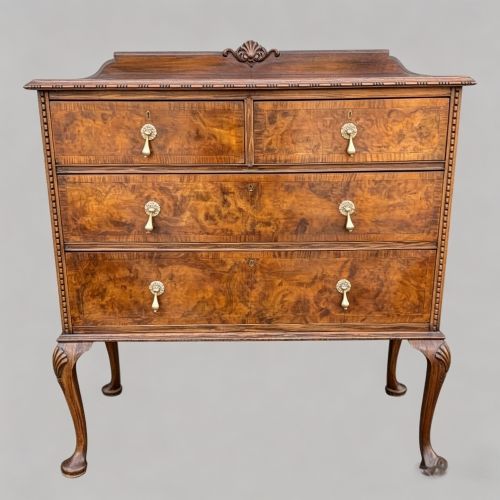
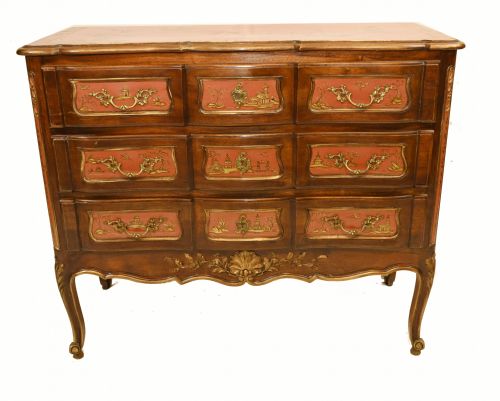
Cabinetmakers constructed these pieces using solid timbers and veneers, working primarily with walnut, mahogany, fruitwood, and oak. Surfaces frequently feature figured walnut grains, burr walnut patterns, or painted lacquer finishes in Chinoiserie styles.
Legs and drawer fronts display detailed carving characteristic of periods like the eighteenth century, Queen Anne style, and Louis XV Rococo. Hardware typically incorporates cast brass handles and escutcheons, while certain continental examples integrate fitted marble tops.
Listings feature walnut, mahogany, burr walnut, oak, fruitwood, and painted wood across periods from the eighteenth century to the 1930s.
What varies in quality
Quality in a carved leg wooden commode rests on the selection of timber, such as highly figured walnut or premium mahogany, and the precision of the cabinetwork. Finer examples exhibit seamless veneer matching, particularly on serpentine and shaped fronts.
The sophistication of the carving on the legs and the execution of regional styles, from Portuguese Rococo to French Provincial, distinguish superior pieces. Original brass hardware and well-proportioned drawer structures further elevate the standard of manufacture.
Maple and Co·Morison and Co
The Carved Leg Wooden Commode Glossary
- Commode
- A low chest of drawers or cabinet designed for storage. These pieces often feature decorative carved legs and shaped fronts.
- Serpentine
- A furniture front curving outward in the centre and inward at the sides. This contour requires advanced woodworking skill to execute properly.
- Burr walnut
- A veneer taken from the burl growth of a walnut tree. It produces intricate, swirling patterns highly prized in cabinetmaking.
- Block front
- A desk or chest front divided vertically into three sections, with the outer sections projecting and the central section recessed. This form appears in Georgian style furniture.
- Chinoiserie
- European decorative art imitating Chinese artistic styles. Pieces often feature painted lacquer finishes depicting traditional motifs.
Carved Leg Wooden Commode: Frequently Asked Questions
What is a carved leg wooden commode?
A carved leg wooden commode is a chest of drawers or storage cabinet featuring shaped wooden supports and decorative joinery. These pieces span multiple centuries and regional styles.
Examples range from eighteenth-century provincial walnut chests to Edwardian mahogany designs and later Georgian revival interpretations.
Where should I place a commode?
These chests function effectively in bedrooms, hallways, or living spaces as both storage units and display surfaces. Their varied widths and depths suit different spatial requirements.
Care should be taken to place them away from direct heat sources to protect the wood veneers and polished finishes.
Are marble tops original?
Marble tops appear frequently on continental European pieces, such as French fruitwood commodes. They provide a durable and decorative surface for the furniture.
Checking the fit against the wooden frame helps confirm the relationship between the marble top and the base structure.