
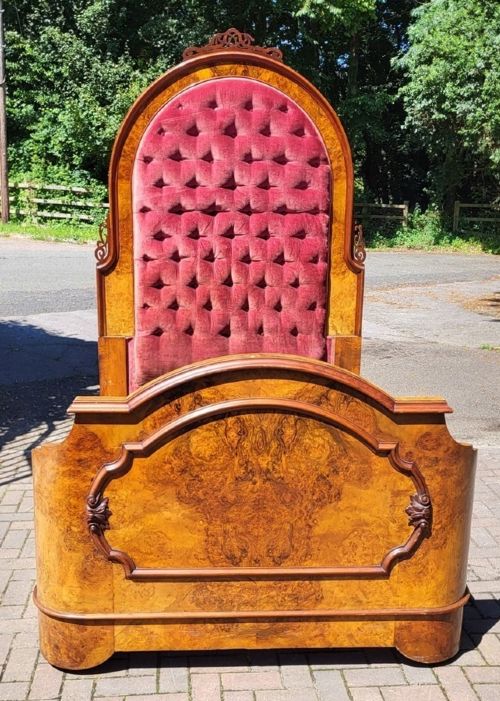
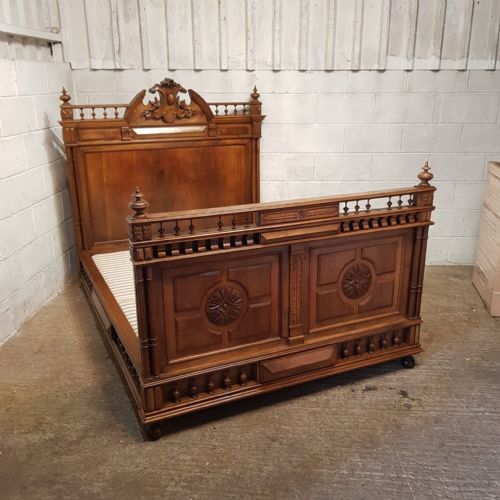
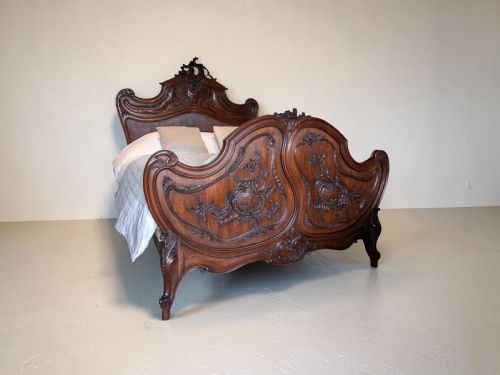


Carved Walnut Double Bedstead
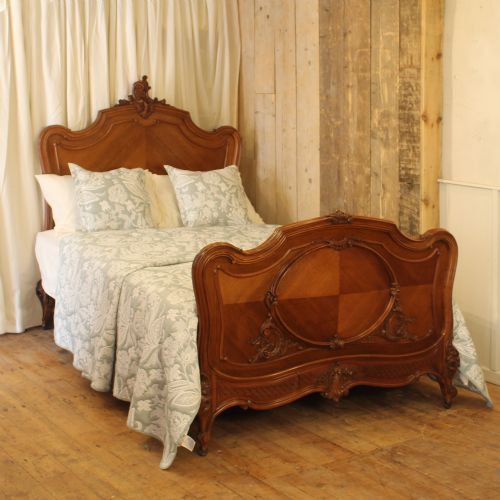
A carved walnut double bedstead brings warmth and architectural presence to a bedroom, combining rich timber figure with sculptural detail.
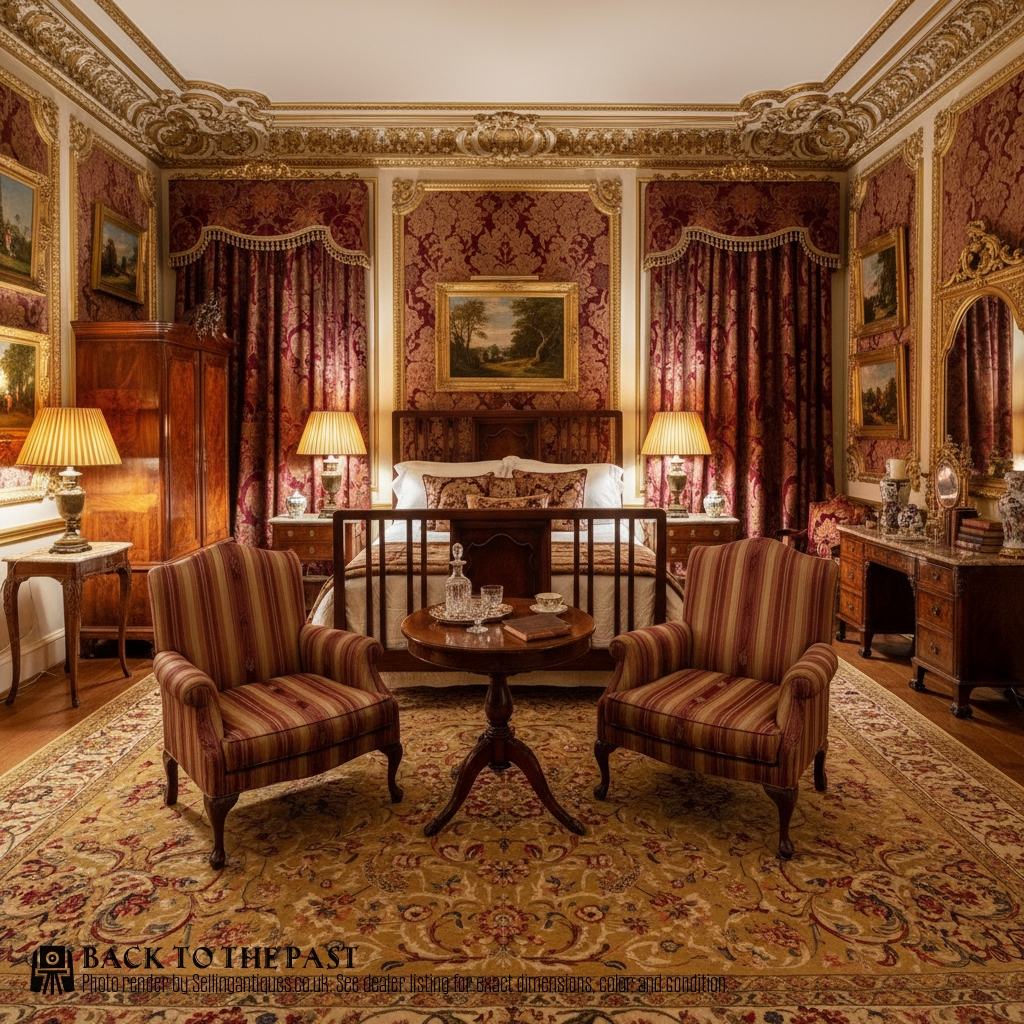
Carved Walnut Double Bedstead
When you search for a carved walnut double bedstead, you encounter substantial sleeping furniture spanning the Victorian period through to the 1920s. These pieces originate predominantly from British and continental workshops, with a strong representation of French regional designs.
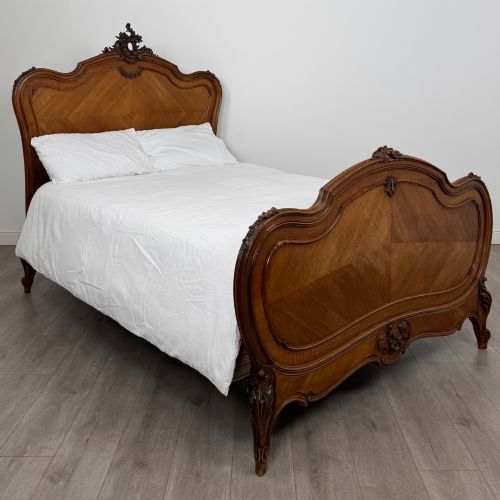
The construction typically involves generous proportions designed to accommodate standard mattresses with fitted wooden bases or iron and brass internal supports. Forms range from French Rococo Revival and Louis XV curves to rectilinear Art Deco and imposing Henri II style frameworks.
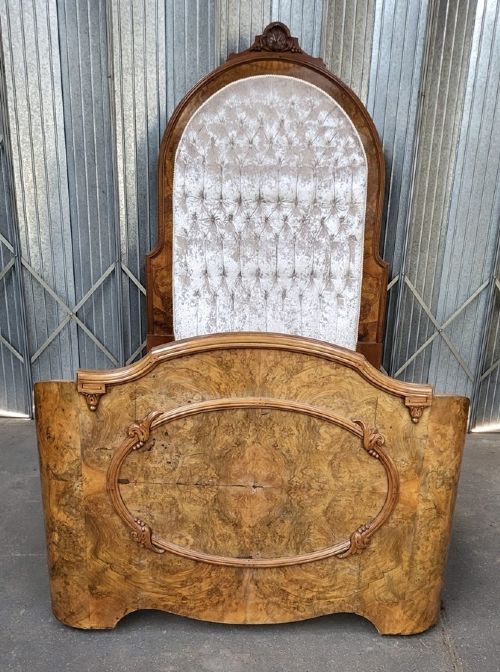
Burr walnut and walnut veneer appear frequently alongside solid timber, often paired with upholstered high backs in velvet or fabric. You meet everything from low French beds to towering half tester structures with panelled headboards and footboards.
How they were made
Cabinet makers utilised solid walnut and figured walnut veneers applied to stable secondary timbers, exploiting the grain patterns of burr and figured wood for decorative impact. Surfaces were hand carved with motifs ranging from asymmetrical scrolls to formal classical ornament.
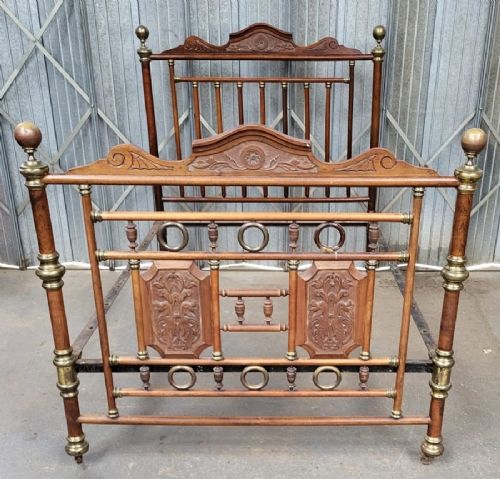
Structural integrity relied on sturdy timber framing augmented by iron and brass hardware to secure the heavy headboards, footboards and side rails together. Upholstered sections incorporated deep buttoning and fabric or velvet panels set directly into the wooden framework.
Listings span the Victorian era, Edwardian period, and the 1920s, featuring solid walnut, burr walnut veneer, fabric, velvet, iron, and brass.
What varies in quality
Quality reveals itself in the depth and sharpness of the hand carving, where crisp relief work distinguishes bespoke artisan pieces from simpler commercial output. The choice of walnut timber also sets examples apart, particularly the selection of highly figured burr walnut veneers across the prominent panels.
The sophistication of the stylistic execution defines the upper tier, whether through balanced French Rococo proportions or geometric Art Deco veneering. Integration of original hardware and the preservation of sound structural joints determine how successfully the bed withstands modern daily use.
The Carved Walnut Double Bedstead Glossary
- Burr walnut
- Timber taken from a tree growth where the grain has swirled into intricate knot formations. This creates highly decorative patterns prized for veneering prominent headboard panels.
- Half tester
- A bedstead featuring a partial canopy extending only partway over the head of the bed from the main uprights. It historically supported drapery to keep out draughts.
- Louis XV style
- A revival design movement characterised by asymmetrical scrollwork, cabriole framing elements, and flowing naturalistic plant motifs. It heavily influenced continental bedstead production.
- Henri II style
- A robust architectural revival style featuring heavy turned columns, strapwork carving, and prominent cornices. Beds in this manner offer a commanding presence.
- Parcel gilt
- The technique of applying thin gold leaf selectively to specific carved details or mouldings. It highlights ornamentation against the dark walnut ground.
Carved Walnut Double Bedstead: Frequently Asked Questions
Will modern mattresses fit antique walnut bedsteads?
Many continental and older British frames vary slightly from contemporary standard mattress dimensions. Careful measurement of the internal side rails ensures your chosen mattress drops securely into place.
Modern slatted bases or custom wooden supports can often be integrated discreetly within the antique frame to accommodate contemporary mattress depths.
How do I care for walnut veneer and solid timber?
Walnut benefits from minimal intervention, requiring only dusting with a soft, dry cloth to prevent grit accumulation. Direct sunlight and sudden humidity changes should be avoided to protect veneers from lifting.
Applying a traditional beeswax polish occasionally maintains the lustre of the timber without building up heavy chemical residues that dull the grain.
How do I distinguish French Rococo Revival from Art Deco walnut beds?
French Rococo Revival frames display flowing asymmetrical curves, cabriole lines, and exuberant naturalistic carvings. They draw inspiration from eighteenth-century court aesthetics.
Art Deco beds instead favour streamlined geometric forms, symmetrical figured walnut veneers, and restrained linear decoration characteristic of the interwar period.
How are these large bedsteads assembled in a bedroom?
These pieces generally dismantle into four main components consisting of the headboard, footboard, and two side rails. Metal bolts or wedge-tenon fixings secure the framework together at the corners.
Assembly is best undertaken in the intended room using correct spanners or drivers to avoid straining historical joints during tightening.