



Carved Walnut Compactum
A carved walnut compactum brings deep timber grain and fitted bedroom storage together, offering a stately focal point for period interiors.
Carved Walnut Compactum
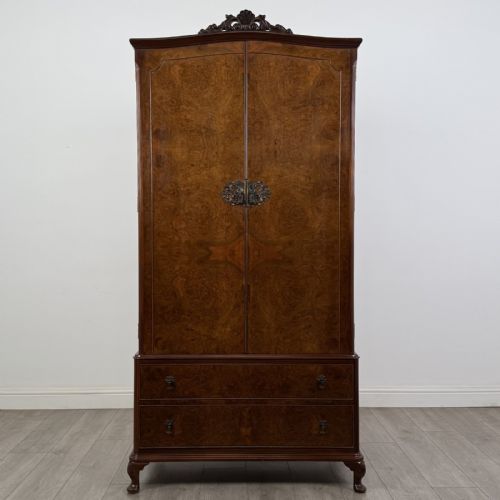
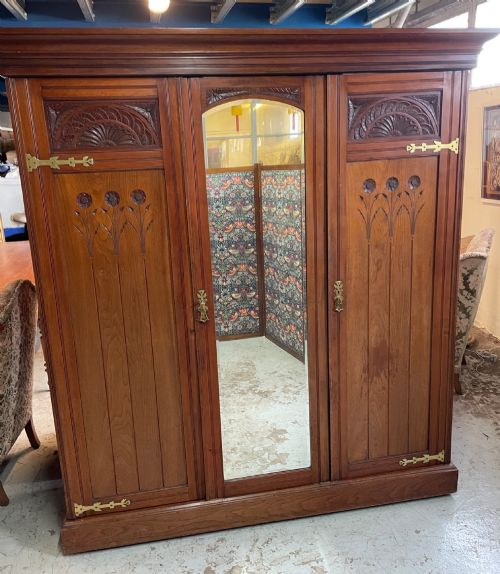
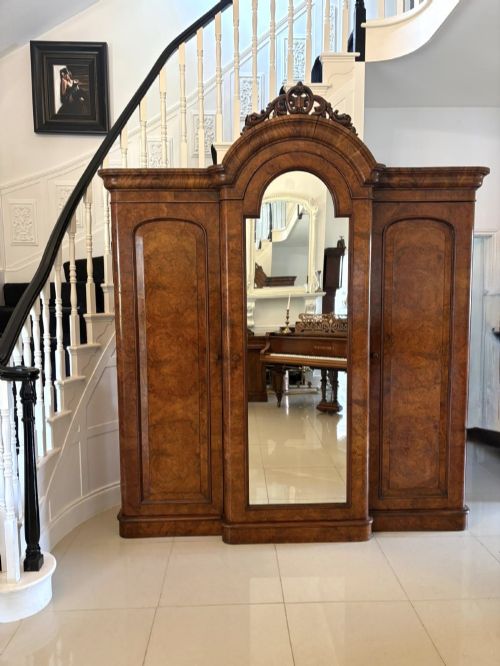
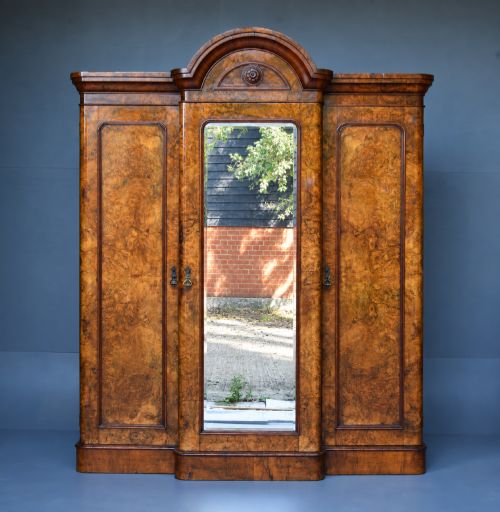
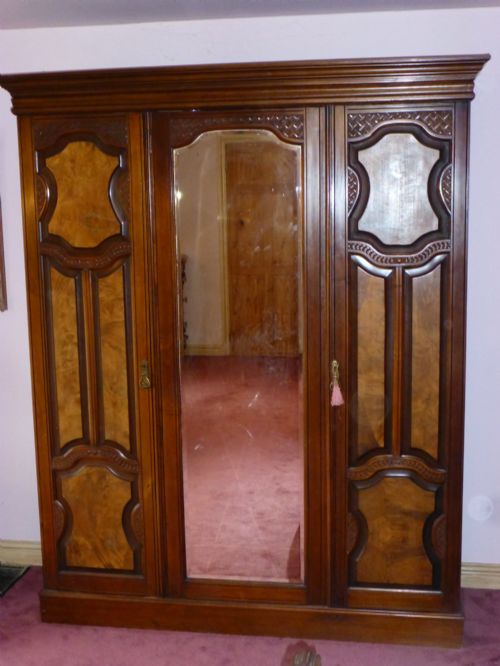
A carved walnut compactum is a substantial bedroom piece, combining hanging space, drawers, and shelving within a single multi-door wardrobe. The examples on this page span the Victorian and Edwardian eras, with dates reaching from the mid-nineteenth century to around nineteen hundred.
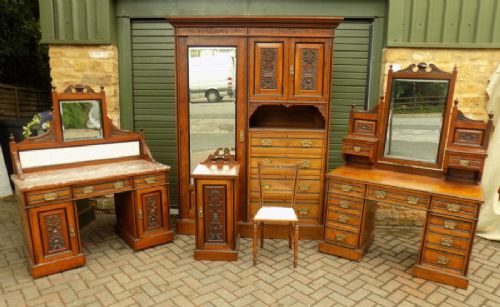
Most pieces seen here adopt a triple wardrobe format or a combination layout, frequently pairing walnut with burr walnut veneers. Alongside these full-scale wardrobes, related bedroom suite pieces occasionally appear to complete a room.
The origins of these items trace back through nineteenth-century workshops, where cabinet makers utilised rich native and exotic timbers. Buyers searching for a carved walnut compactum encounter robust proportions and architectural cornices designed for grand Victorian and Edwardian homes.
How they were made
Cabinet makers built these wardrobes using solid walnut and ash frames overlaid with figured burr walnut veneers to create striking grain patterns on the doors. Interior compartments often incorporated secondary timbers, whilst brass hardware secured the heavy panelled doors.
Carved ornamentation was applied by hand around the cornices, panels, and drawer fronts, displaying the sculptural capabilities of Victorian and Edwardian artisans. Glass and mirror glass were frequently set into central doors, reflecting light and adding depth to bedroom spaces.
Carved Walnut Compactum Retail Price Guide 2026
Typical asking prices for carved walnut compactum among the pieces listed under this phrase on Sellingantiques today, from the lower quarter to the upper quarter. They describe what is for sale here now, not the wider market.
Some nineteenth-century wardrobes were humorously dubbed sentry boxes because their narrow, single-door profiles guarded bedroom corners with military precision.
What varies in quality
The distinction between standard production and superior craftsmanship lies in the selection of the burr walnut veneer and the crispness of the hand-carved details. Finer pieces demonstrate meticulous book-matching on the door panels and incorporate secondary woods like ash within the internal drawers.
Maker attribution also elevates a piece, as demonstrated by branded or stamped workshops from the nineteenth century. Structural integrity, original brass fittings, and unblemished mirror glass further separate exceptional examples from simpler utilitarian wardrobes.
Holland and Sons
The Carved Walnut Compactum Glossary
- Compactum
- A multi-functional wardrobe designed to house hanging clothes, drawers, and sliding trays in one carcass. It provides comprehensive clothing storage without needing separate chests of drawers.
- Burr walnut
- A veneer sliced from walnut tree growths, prized for its swirling, mottled grain patterns. Cabinet makers applied it to the most prominent surfaces of high-end Victorian furniture.
- Triple wardrobe
- A large three-bay wardrobe, usually featuring a central mirrored door flanked by two hanging sections. This format dominates the larger nineteenth-century bedroom storage market.
- Combination wardrobe
- A storage piece that integrates different internal configurations, such as drawers, shelves, and hanging space, behind its exterior doors. It represents a versatile evolution of the traditional wardrobe.
- Satin walnut
- A timber derived from the heartwood of the American sweetgum tree, often finished to resemble true walnut. It appears in late nineteenth-century secondary framing and interior components.
Carved Walnut Compactum: Frequently Asked Questions
What is a compactum wardrobe?
A compactum is a multi-compartment wardrobe designed to consolidate hanging space, drawers, and linen shelves into a single large piece of furniture. It offered Victorian households a complete storage system within one footprint.
These pieces typically feature a central tower of drawers flanked by full-length hanging wardrobes. The design maximised bedroom storage efficiency during the nineteenth century.
How do I date a walnut wardrobe?
Dating relies on stylistic clues, construction methods, and timber choices spanning the Victorian and Edwardian periods. Mid-nineteenth-century pieces often display heavy architectural cornices and rich burr walnut veneers.
Later Edwardian iterations tend to exhibit lighter carving styles and alternative secondary timbers like ash. Comparing the hardware, backboards, and internal construction helps narrow down the decade of manufacture.
Will a triple wardrobe fit my bedroom?
Triple wardrobes are exceptionally large and heavy items that require substantial wall space and high ceilings. Measuring both the room dimensions and access stairwells is essential before introducing one to a modern home.
Many of these historical wardrobes were constructed to be modular, dismantling into cornices, side panels, and base sections for transport. Checking whether a piece breaks down into manageable components simplifies installation.
How should I care for antique walnut?
Walnut furniture benefits from stable indoor humidity levels and protection from direct sunlight to prevent the timber and veneers from drying out. Applying a traditional beeswax polish occasionally helps maintain the lustre of the wood.
Avoiding abrasive cleaners and harsh chemical sprays preserves the historic patina on both the solid timber and the delicate burr veneers. Gentle dusting with a soft cloth keeps the carved details clear of debris.