




Carved Walnut Clock Case
These carved walnut clock cases house movements from the seventeenth to the nineteenth centuries, offering rich timber and deep historical character for any room.
Carved Walnut Clock Case
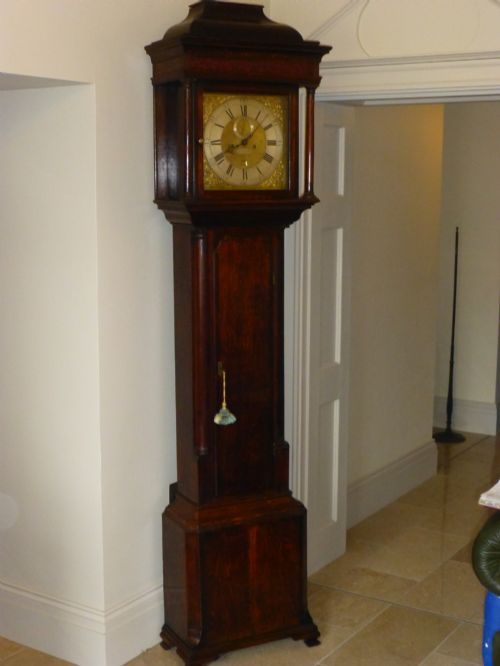
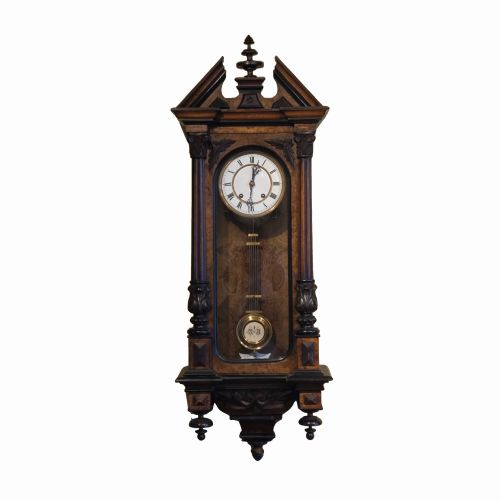
When searching for a carved walnut clock case, collectors encounter tall floor-standing longcase examples alongside substantial wall-mounted regulators and domestic clocks. The selection spans distinct periods from the seventeenth century through the Victorian era, showing regional English craftsmanship and occasional continental influences.
The longcase variations range from early George II models to grander provincial pieces, while the wall-mounted options generally date from the mid to late nineteenth century. Walnut and burr walnut dominate the timber choices, frequently paired with brass dials and glass viewing apertures.
How they were made
Cabinet makers utilised solid walnut and figured burr walnut veneers applied to primary structural timbers like oak. Surfaces received meticulous hand-carving alongside polished finishes to highlight the natural grain patterns of the wood.
Internal frameworks accommodated brass movements, enamel or brass chapter rings, and protective glass doors. Structural integrity relied on traditional joinery methods suited to supporting heavy weight-driven or spring-driven mechanisms.
What varies in quality
The depth and crispness of the hand-carving distinguish finer examples from simpler production, particularly around hoods and bezels. Superior pieces display carefully selected burr walnut veneers matched symmetrically across the door and trunk panels.
Makers of note and provenance elevate a piece significantly, as do original brass dials featuring intricate engraving. The integration of the case with its movement and the preservation of the original surface patina determine the standing of each clock.
Richard Corless of Stockport·Edin Burgis of London·Edward East·Samuel Young Nantwich and Bunbury·Edward Stanton·John Harrington London·Gustav Becker·Joseph Windmills London·Joseph Oxley Norwich
The Carved Walnut Clock Case Glossary
- Longcase clock
- A tall pendulum clock enclosed in a wooden case standing directly on the floor. These tall structures protect the weights and pendulum while displaying decorative woodwork.
- Burr walnut
- A prized timber harvested from walnut tree growths that produces swirling, highly decorative grain patterns. Cabinet makers utilised these veneers on primary display surfaces.
- Vienna regulator
- A precision wall clock developed in Austria during the nineteenth century featuring a weight-driven movement and long glass access door. These pieces prioritise accurate timekeeping alongside visible mechanical components.
- Chapter ring
- The metal ring on a clock face that displays the hours and minutes. They are frequently constructed of engraved brass with silvered or enamelled finishes.
- Grandfather clock
- A colloquial term for a longcase clock, typically used for larger floor-standing models produced during the eighteenth century and earlier periods.
Carved Walnut Clock Case: Frequently Asked Questions
What is a carved walnut clock case?
A carved walnut clock case is an antique housing made primarily from walnut timber featuring decorative hand-carving designed to enclose a clock movement.
These enclosures range from tall floor-standing grandfather clocks to wall-mounted Vienna regulators.
How do I date a walnut clock case?
Dating relies on stylistic clues such as the form of the hood, the presence of burr walnut veneers, and the method of construction.
Cabinet-making techniques evolved from seventeenth-century joined frameworks to more refined eighteenth-century veneers and Victorian decorative revival styles.
Where should I place a longcase clock?
Longcase clocks require a stable, dry interior wall with adequate vertical clearance to accommodate their height.
Placing them away from direct heat sources ensures the timber case and internal movement remain stable over time.
Are wall clocks heavy to hang?
Wall-mounted walnut clocks, particularly double-weight Vienna regulators, possess substantial weight due to their dense timber cases and metal movements.
Secure installation into structural wall studs or proper masonry fixings is essential for safe hanging.