
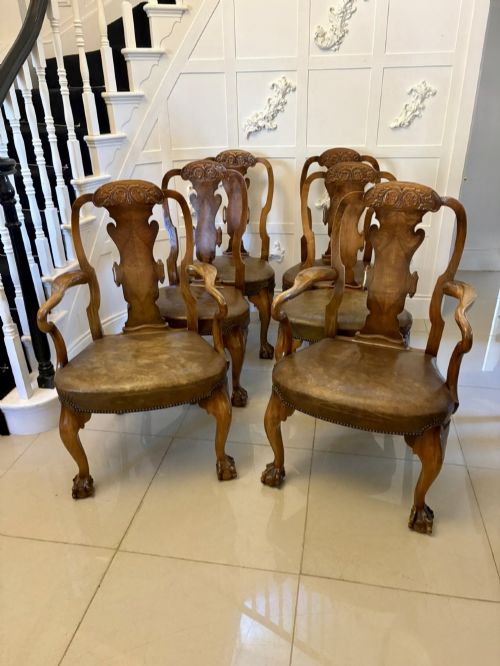
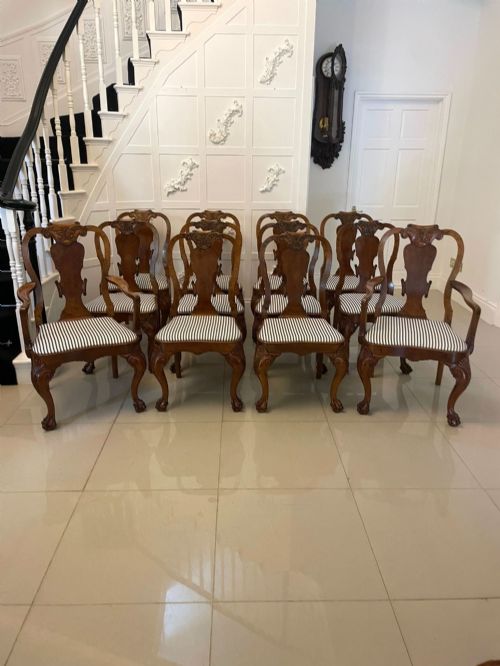
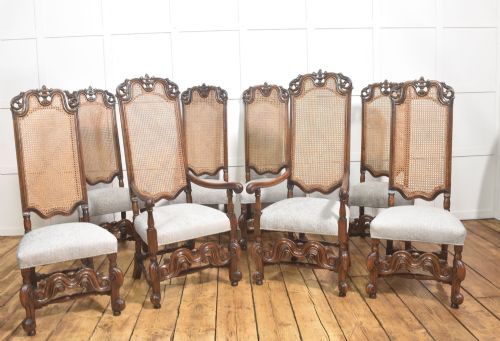
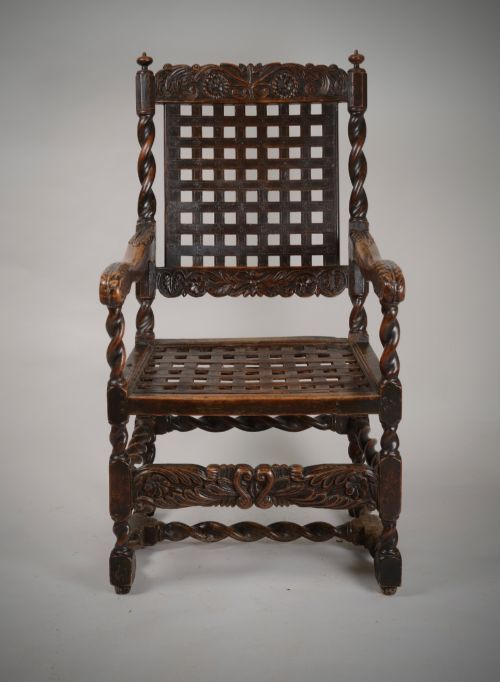
Carved Walnut Carver
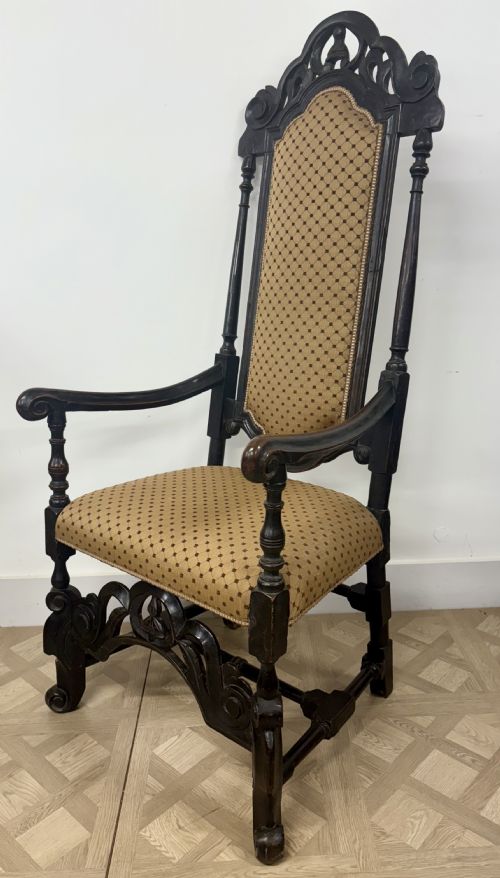
A carved walnut carver offers substantial seating with articulated woodwork, combining period presence with domestic utility.
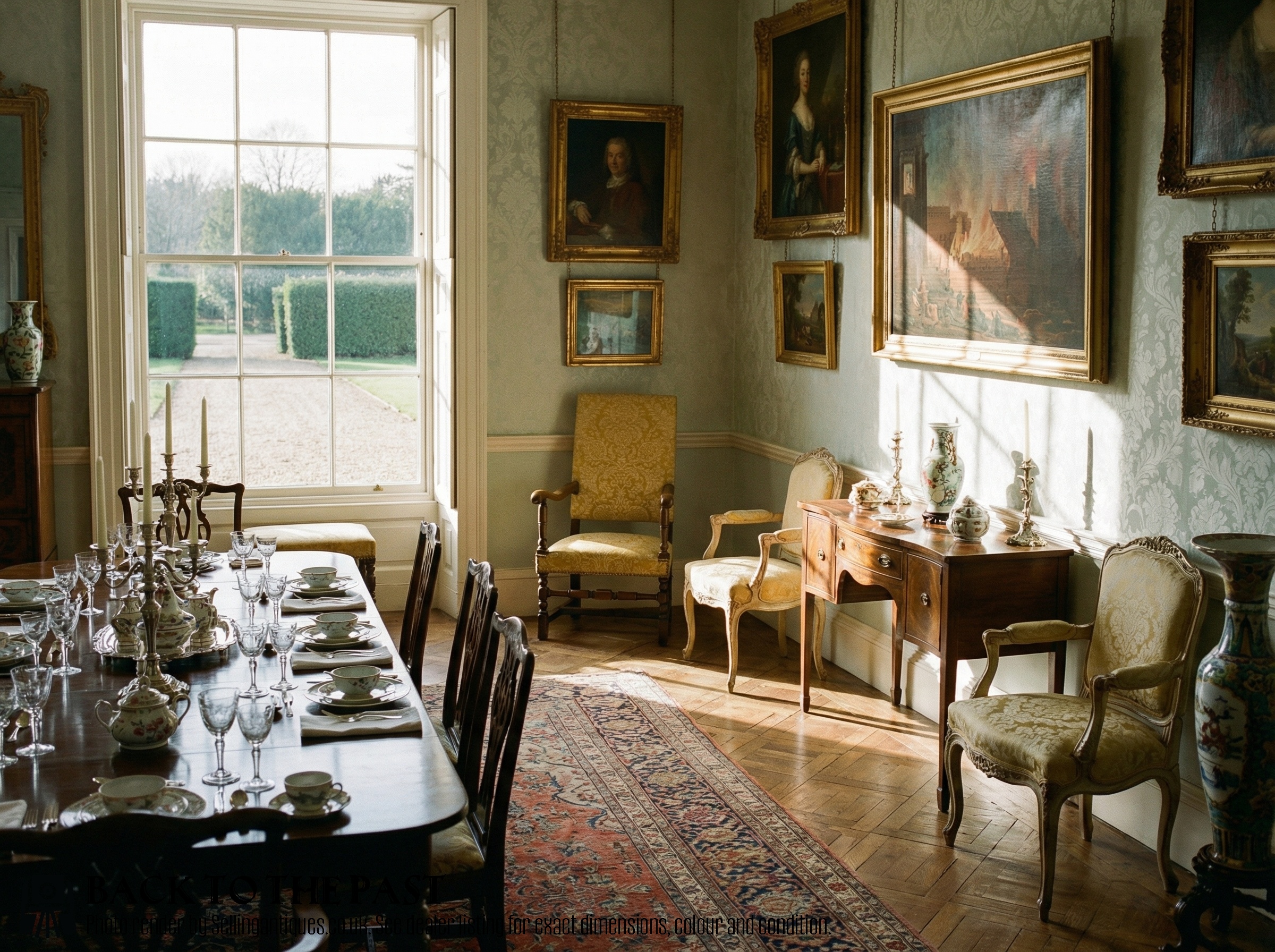
Carved Walnut Carver
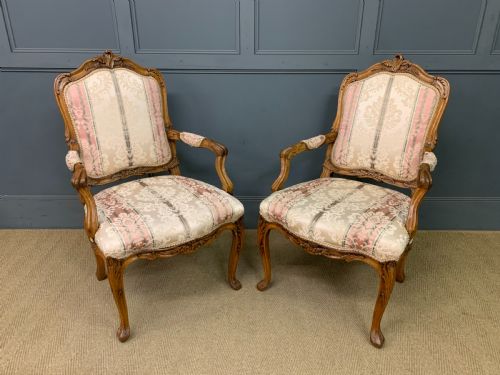
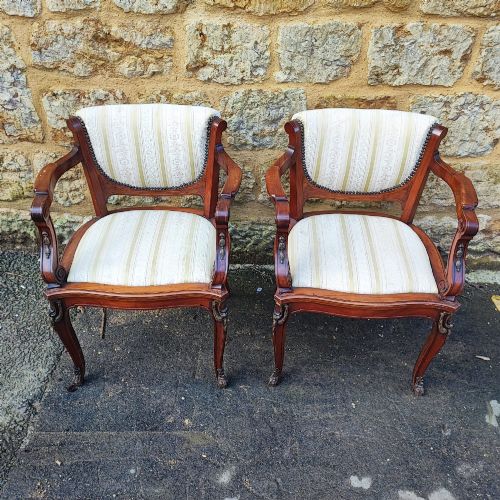
A carved walnut carver is an armchair designed with open arms, most frequently encountered in Victorian, eighteenth-century, and revival styles across these listings.
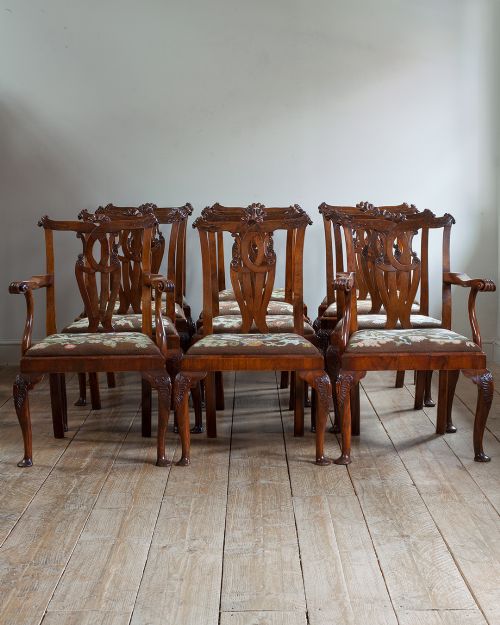
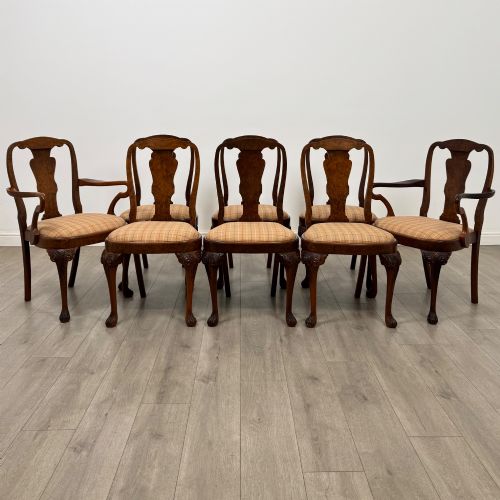
These seats appear singly or in pairs, while matching dining sets occasionally incorporate carvers as end chairs for a table.
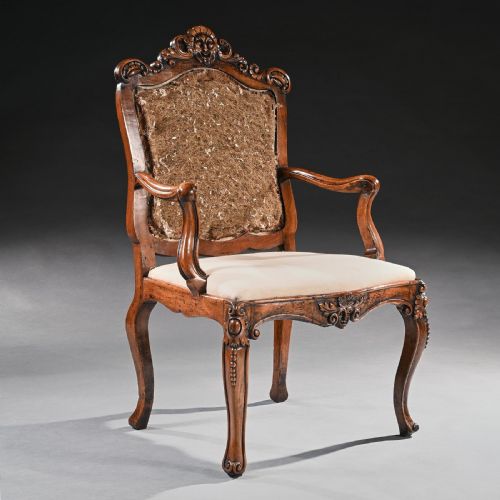
Origins stretch from English workshops to French and Italian ateliers, utilising dense walnut timber shaped with arms and supportive backs.
Materials and construction methods
Makers utilised solid walnut and burr walnut timbers, valued for their rich grain and suitability for intricate chisel work.
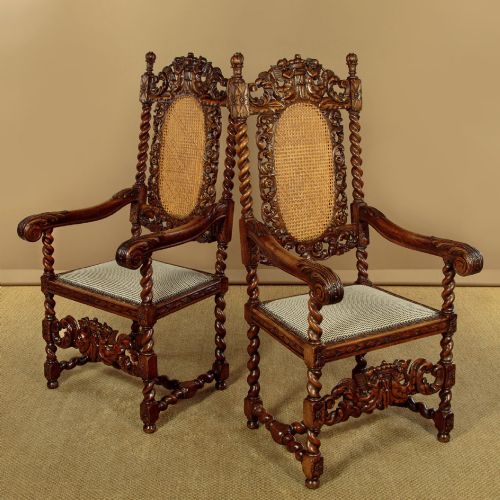
Upholstery materials such as leather, velvet, fabric, and cane provide the seat and back support, secured alongside brass details.
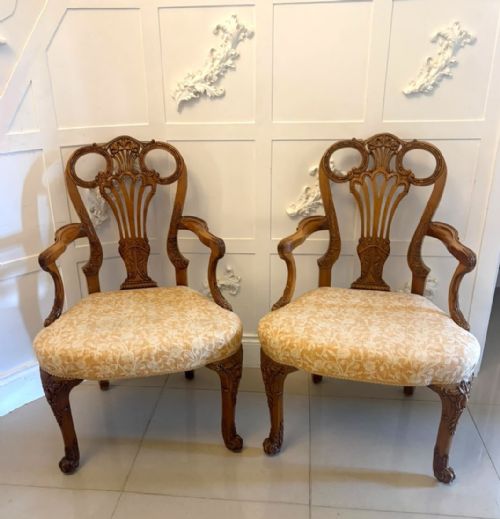
Woodcarving techniques define the styles, ranging from high-relief ornamentation on seventeenth-century types to smoother revival contours.
Listings span periods from the 17th century through the Victorian era to the 20th century, utilising walnut, cane, velvet, and leather.
Distinctions in construction and design
The depth and crispness of the carving separate standard workshop output from master pieces, particularly where figures or foliage embellish the frame.
Proportion and structural integrity dictate the grade of a chair, distinguishing robust period joinery from later adaptation.
The choice between fine cane work, hand-stitched upholstery fabrics, and premium burr walnut veneers marks the upper tier of execution.
Lamb of Manchester·Luigi Frullini
The Carved Walnut Carver Glossary
- Carver
- An armchair, traditionally placed at the head of a dining table or utilised as a desk chair. The term distinguishes an armed seat from the side chairs in a matching set.
- Caning
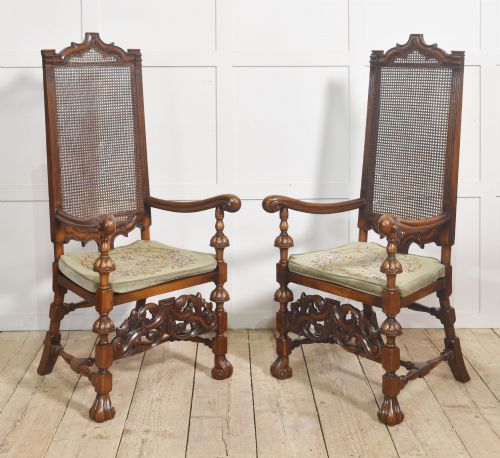
- Woven cane panels utilised for chair backs and seats. This technique provides flexible support while lightening the visual weight of heavy timber frames.
- Burr walnut
- Wood harvested from walnut tree growths, displaying complex swirling grain patterns. Cabinet makers prized this material for decorative veneering on prominent surfaces.
- Splat
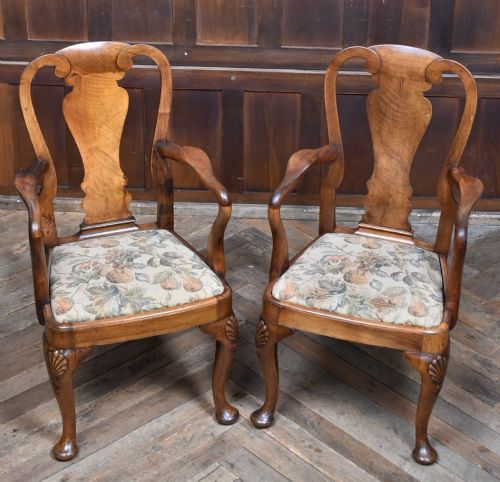
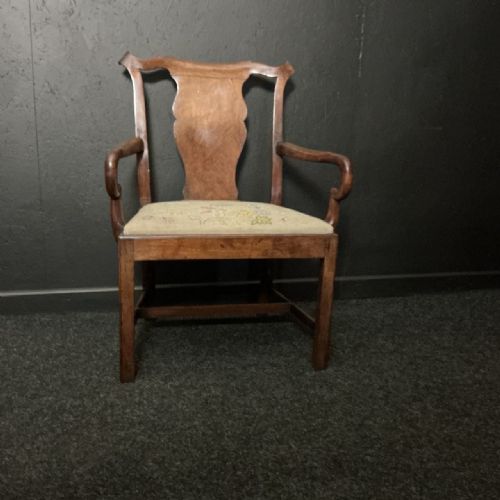
- The vertical wooden strip down the centre of a chair back. It often takes a shaped or carved form, particularly in Queen Anne and George II designs.
- Stretcher
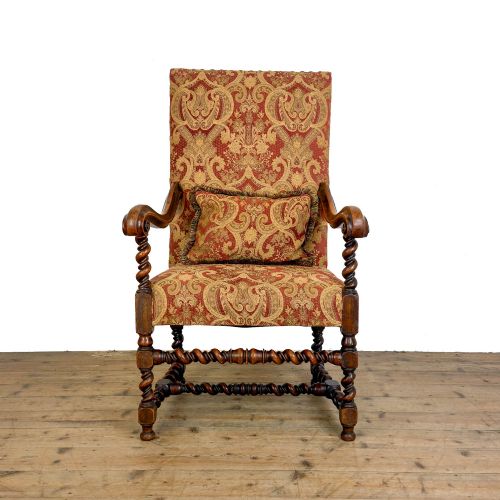
- The horizontal wooden member connecting chair legs near the floor. These elements add structural stability and frequently carry decorative turnings.
Carved Walnut Carver: Frequently Asked Questions
What is a carver chair?
A carver chair is an armchair built with open sides, traditionally positioned at the ends of a dining table.
These pieces match surrounding side chairs in timber and style while offering larger proportions and armrests for the seated person.
How do I date a walnut armchair?
Dating relies on stylistic markers, construction methods, and the character of the walnut timber.
Seventeenth-century chairs display high backs and turned stretchers, whereas eighteenth-century examples favour cabriole legs and shaped splats.
Where should I place an antique carver?
Antique carvers function well as desk chairs, bedroom seating, or occasional chairs in a living space.
Pairing them with a table or placing them individually allows the carved woodwork and upholstery to remain visible.
What is the difference between walnut and burr walnut?
Standard walnut timber offers a straight, uniform grain suitable for solid carved frames and structural elements.
Burr walnut comes from tree burls, producing intricate, swirling grain patterns utilised primarily for decorative veneers on prominent surfaces.