
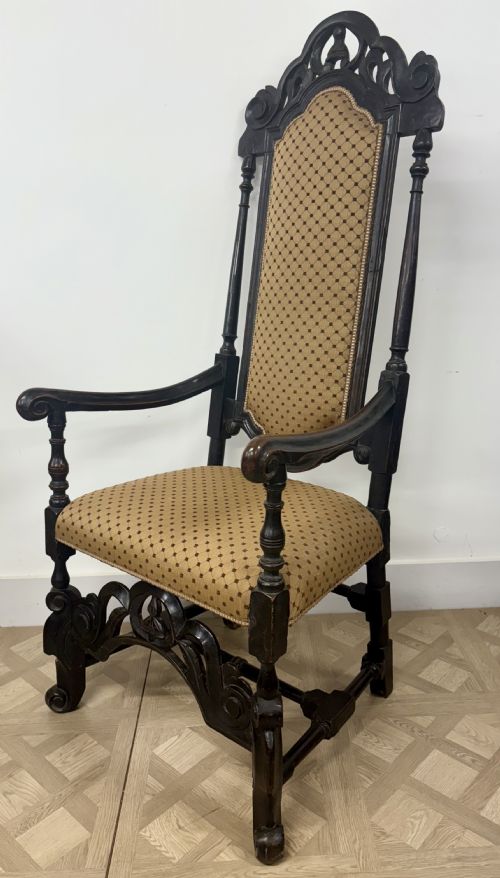
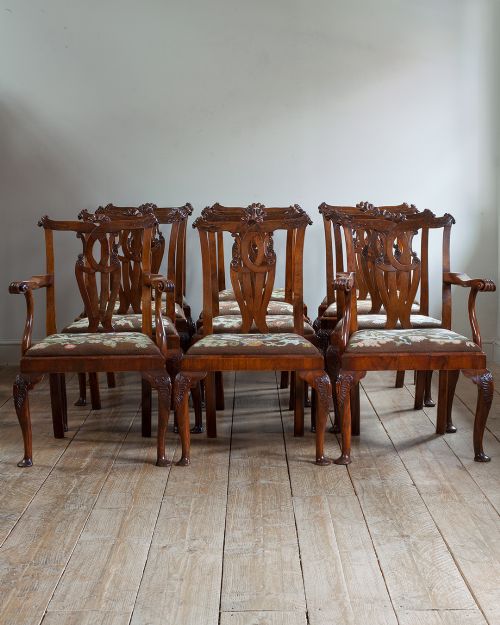
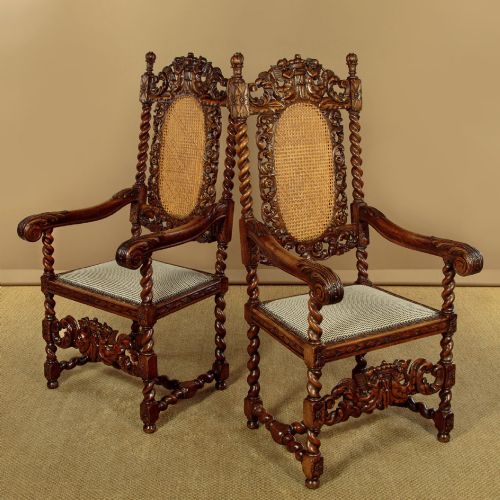
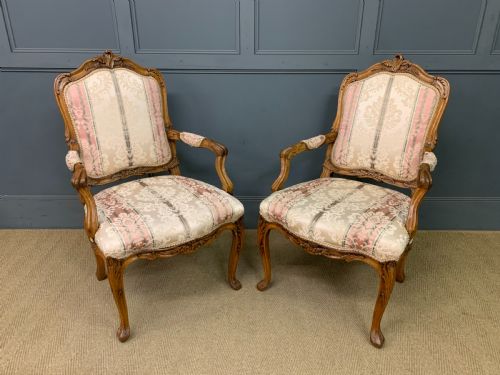
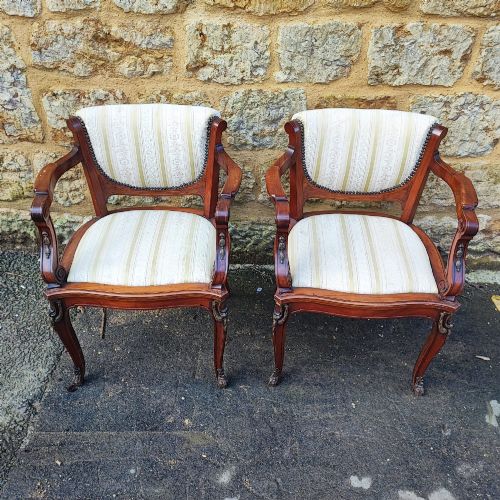
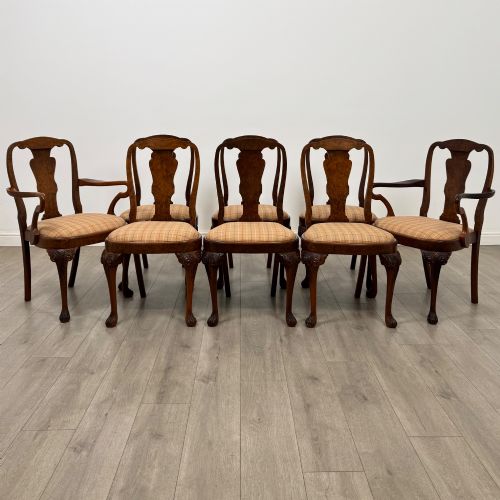
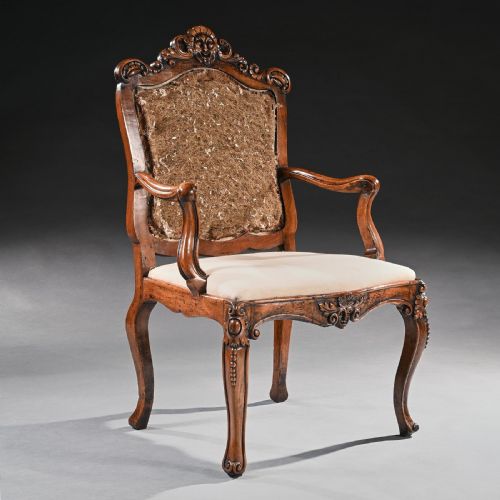
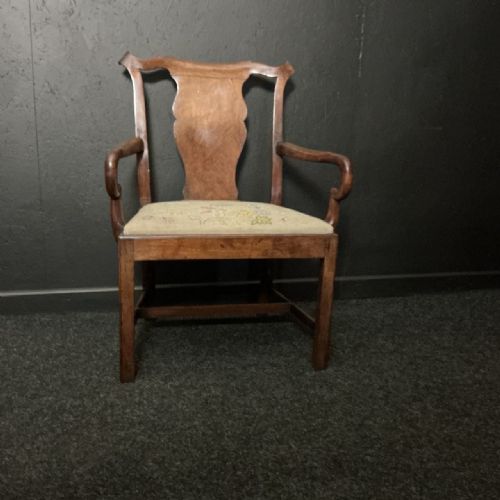
Carved Walnut Carver Chairs
These carved walnut carver chairs bring rich timber tones and formal seating from the seventeenth century onwards into contemporary rooms.
Carved Walnut Carver Chairs
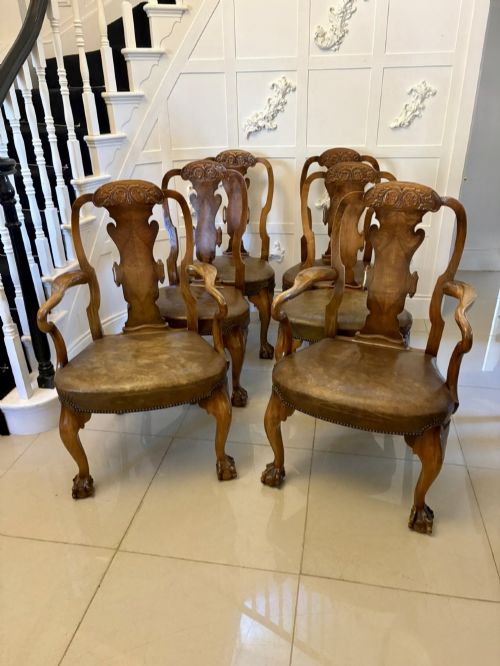
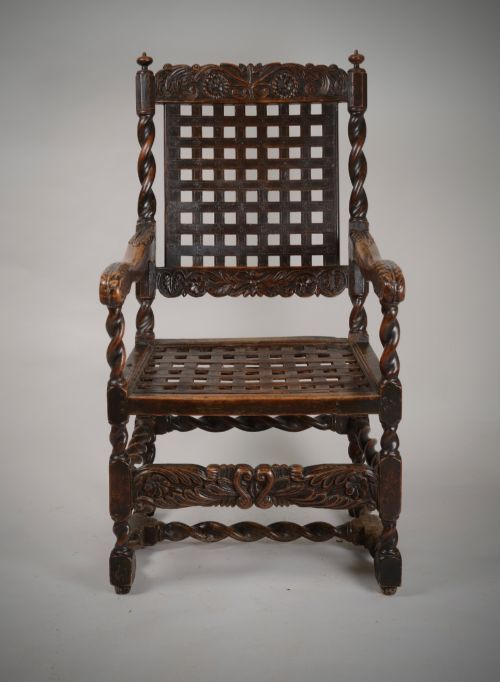
When you search for carved walnut carver chairs, you encounter robust timber armchairs designed for dining rooms, studies, and salons across several centuries. The selections span seventeenth-century elbow chairs, eighteenth-century Queen Anne and George II styles, and nineteenth-century Victorian interpretations.
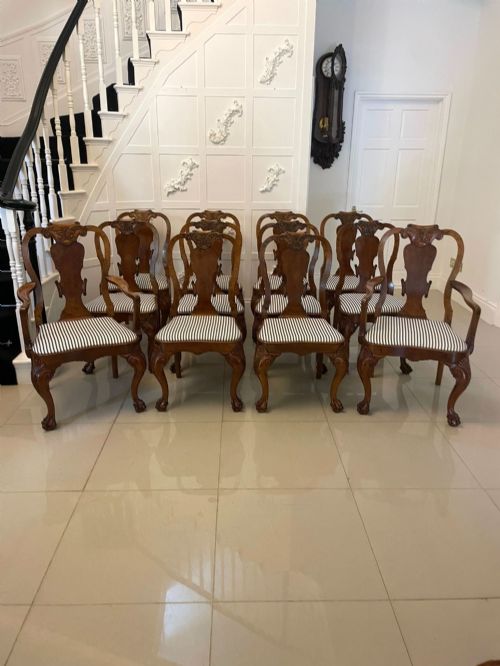
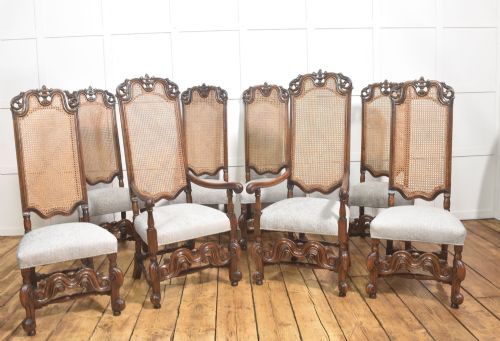
You frequently meet sets of dining chairs containing matched carvers alongside larger groups of single chairs. The forms range from high-back cane seats to deeply upholstered Victorian and Edwardian armchairs.
Materials and Construction
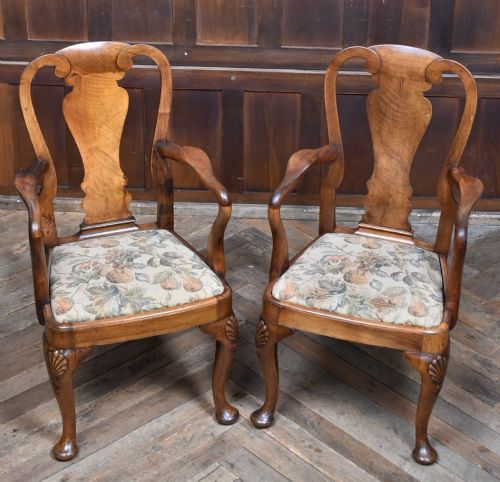
The primary timber is solid walnut or burr walnut, valued for its rich grain and suitability for intricate chisel work. Makers utilised this dense wood to carve elaborate scrollwork, crest rails, and cabriole legs.
Upholstered versions incorporate traditional coverings such as velvet, leather, fabric, and textiles secured over webbing or cane panels. Brass tacks and secondary woods often support the internal frame construction.
Carved Walnut Carver Chairs Retail Price Guide 2026
Typical asking prices for carved walnut carver chairs among the pieces listed under this phrase on Sellingantiques today, from the lower quarter to the upper quarter. They describe what is for sale here now, not the wider market.
Listings feature walnut seating spanning from the seventeenth-century Carolean era through Victorian revivals and twentieth-century French provincial styles.
Markers of Distinction
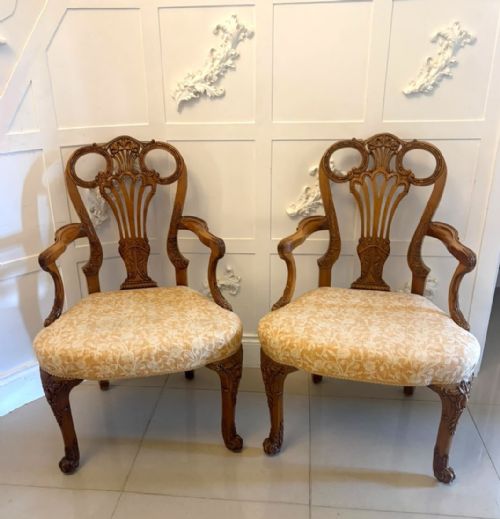
The distinction between ordinary and exceptional examples rests in the crispness and depth of the timber carving. Superior pieces display hand-chiseled details on the crest rails, arms, and knees that retain sharp edges and anatomical accuracy.
Proportion and structural integrity also divide the range, as pieces with balanced framing and undisturbed original timber surfaces command greater attention than heavily restored equivalents.
Lamb of Manchester·Spillman & Co
The Carved Walnut Carver Chairs Glossary
- Carver chair
- An armchair, traditionally placed at the head of a dining table, sharing stylistic traits with the smaller single chairs in a set.
- Burr walnut
- Timber taken from the growth excrescence of a walnut tree, yielding a swirling, highly decorative grain pattern used for veneering.
- Cane
- Woven rattan material used for seats and high backs, particularly popular in seventeenth-century and revival-period seating.
- Cabriole leg
- A furniture leg that curves out at the knee and tapers inward to an ankle, mimicking an animal's limb.
- Crest rail
- The top horizontal member of a chair back, frequently shaped, carved, or moulded in period seating.
Carved Walnut Carver Chairs: Frequently Asked Questions
How do I identify seventeenth-century chairs?
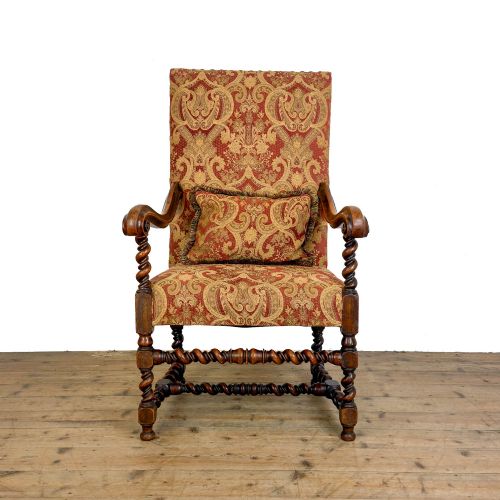
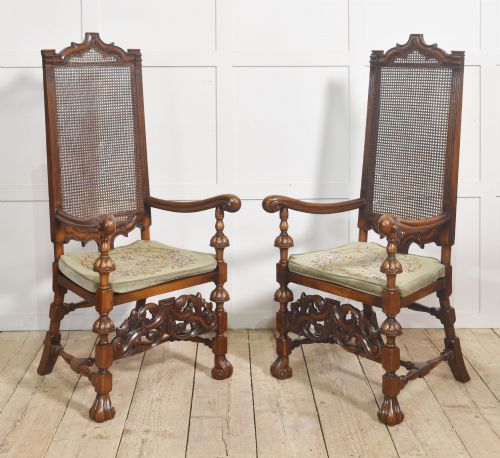
Seventeenth-century examples typically feature high backs, turned stretchers, and extensive carved ornamentation in the manner of the Restoration period. They rely heavily on solid walnut timbers and often incorporate cane panels.
Later revival pieces from the nineteenth and twentieth centuries emulate these early forms but often betray their modern origin through machine-cut joinery and uniform patination.
Can I use carver chairs around a modern table?
Carver chairs function effectively as head-of-table seating or as occasional armchairs in living spaces and studies. Their substantial arms require adequate clearance beneath standard modern table heights.
Mixed sets pairing antique carvers with contemporary dining tables introduce distinct historical contrast and varied timber textures to a room.
What is the difference between an elbow chair and a carver?
The terms are often used interchangeably in the trade to describe any dining or desk chair fitted with armrests. Historically, an elbow chair simply denotes a single chair provided with arms for comfort.
In larger dining sets, these armchairs were traditionally designated for the host and hostess at the table ends.
How should I care for walnut upholstery frames?
Walnut frames benefit from occasional application of quality furniture wax to nourish the timber grain and maintain a soft sheen. Avoid placing antique seating near direct heat sources or strong sunlight to prevent wood splitting and fabric fading.
Periodic checks of the underlying frame joints ensure stability during daily use.