





Antique Boardroom Chairs
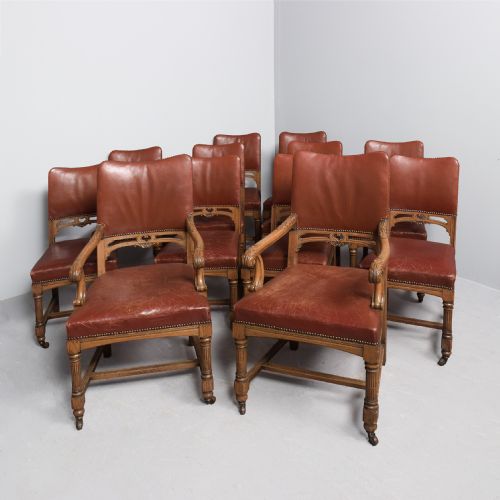
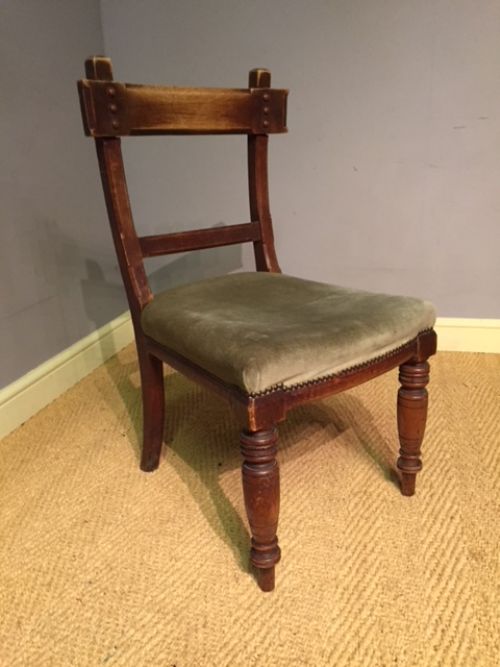
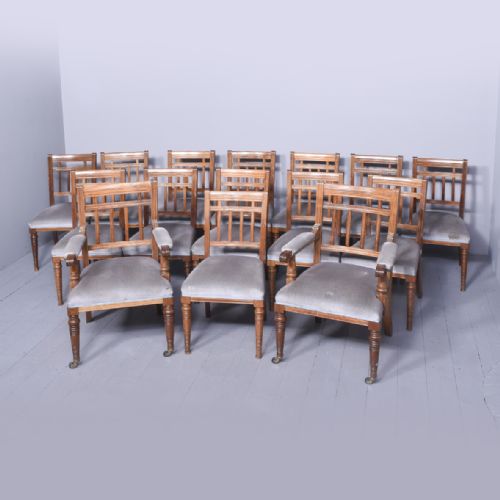
These antique boardroom chairs are substantial oak, mahogany, and walnut seats built for serious meetings and formal dining.
Antique Boardroom Chairs
When you search for antique boardroom chairs, you encounter large sets of heavy timber seats designed for formal assembly and grand dining spaces. The pieces listed on this page span the Victorian, Edwardian, and nineteenth-century periods, alongside specific years like 1880, 1900, and 1920. You will find forms ranging from dining chairs and large dining sets to armchairs and tub club armchairs.
The material evidence shows a distinct preference for robust hardwoods. Oak, mahogany, and walnut form the structural basis of these seats, frequently paired with leather, fabric, velvet, and upholstered fabric. Brass details also appear across the listings, adding functional and decorative accents to the timber frames.
How they were made
Cabinet makers utilised dense hardwoods such as oak, mahogany, and walnut to construct sturdy frames capable of withstanding heavy daily use. These timbers were often carved or turned into specific regional and historical styles, including Regency, William IV, and Elizabethan Revival.
Upholstery techniques involved securing leather, velvet, or fabric directly to the frames, sometimes utilising brass studs for fastening. Leather upholstery was occasionally hand dyed in brown or finished in burgundy red to complement the dark wood tones.
Antique Boardroom Chairs Retail Price Guide 2026
Typical asking prices for boardroom chairs among the pieces listed under this phrase on Sellingantiques today, from the lower quarter to the upper quarter. They describe what is for sale here now, not the wider market.
Listings feature oak, mahogany, and walnut timbers, alongside leather and velvet upholstery.
What varies in quality
The scale and completeness of the set fundamentally drive the distinction between standard examples and top-tier pieces. Sets ranging from ten up to twenty-two matching chairs, occasionally accompanied by matching tables, represent higher-order survivals from significant institutional or domestic interiors.
Material selection and decorative execution further differentiate the range. Superior examples combine Pollard oak, figured mahogany, or walnut with premium leather or velvet upholstery, featuring substantial carved woodwork rather than plain structural framing.
Holland & Son's·Thomas Chippendale
The Antique Boardroom Chairs Glossary
- Boardroom chair
- A large, sturdy seat designed for formal meeting rooms or large dining tables. These chairs are built from hardwoods like oak and mahogany to endure frequent use.
- Pollard oak
- Timber taken from trees that were pruned at a height above livestock reach, producing dense wood with a distinctive clustered grain pattern. It appears on nineteenth-century Revival furniture.
- William IV
- A British design period spanning the 1830s characterised by heavy, robust proportions and classical revival motifs. Furniture from this era often utilises solid oak or mahogany.
- Tub club armchair
- A low, rounded armchair with enclosing arms designed for comfort and extended sitting. These upholstered seats frequently feature leather or fabric coverings.
- Balloon back
- A chair back shaped in a continuous oval curve resembling a balloon. This style was common during the Victorian period on dining and parlour chairs.
Antique Boardroom Chairs: Frequently Asked Questions
What periods do these chairs come from?
The listings on this page originate primarily from the Victorian and Edwardian eras, as well as the broader nineteenth century. Specific recorded dates include 1880, 1900, and 1920.
These periods encompass styles such as Regency, William IV, and Elizabethan Revival, reflecting the prevailing architectural and decorative tastes of those times.
What materials were used to make them?
The primary structural materials visible in the evidence are hardwoods like oak, mahogany, and walnut. Pollard oak also appears on specific nineteenth-century revival pieces.
For seating surfaces and upholstery, makers utilised leather, velvet, fabric, and brass elements. Leather finishes include hand dyed brown and burgundy red.
How many chairs typically come in a set?
Sets found in these listings vary significantly in size, ranging from small groupings of eight up to large collections of twenty-two chairs. Many listings are paired with large extending or fixed dining tables.
These extensive sets were originally produced for large dining rooms, institutional settings, and formal boardroom environments.
How do I identify a Victorian chair?
Victorian chairs often feature characteristic back shapes, such as the balloon back, or heavier proportions associated with nineteenth-century revival styles. The evidence shows prominent use of oak and mahogany during this era.
Look for period construction methods and materials like brass accents and traditional leather or velvet upholstery to help determine the age.