





Buttoned Leather Dining Chairs
Buttoned leather dining chairs bring architectural substance and tactile comfort to a room, combining solid timber frames with deep tufted upholstery.
Buttoned Leather Dining Chairs
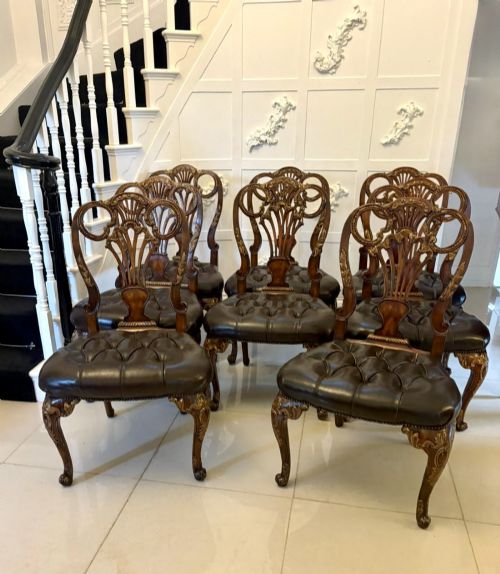
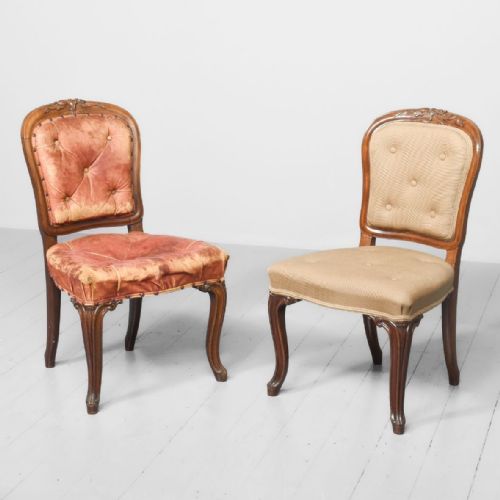
Buttoned leather dining chairs combine timber frames with upholstered seats and backs secured by deep tufting, creating a formal yet inviting seat for the dining table. These seating options emerge across the nineteenth and early twentieth centuries, spanning Victorian, Edwardian, Regency, and William IV periods.
The evidence shows forms ranging from individual side chairs and children's seating to large sets numbering up to twelve pieces. Materials paired with the leather include mahogany, walnut, rosewood, oak, and pollard oak, alongside decorative elements like brass, gold leaf, and cane.
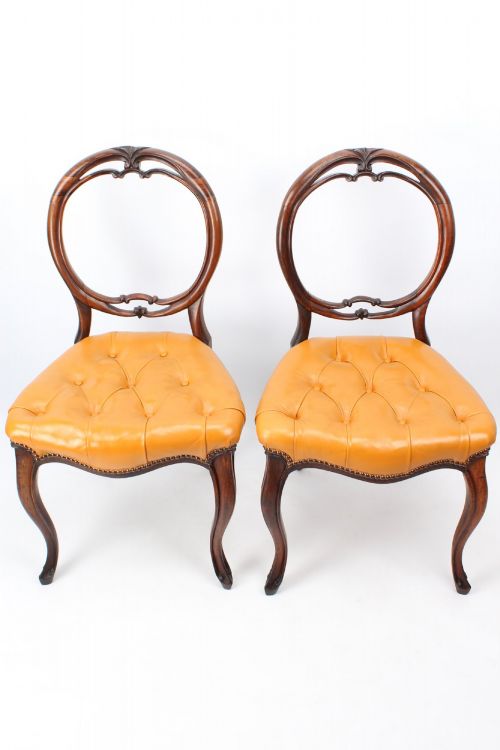
Buyers meet variations influenced by specific stylistic revivals, including Louis XV and French Chateau interpretations alongside traditional Georgian revival designs. Frames feature carved details, balloon backs, and lion carvings, supported by distinct elements such as claw and ball feet.
Materials and construction methods
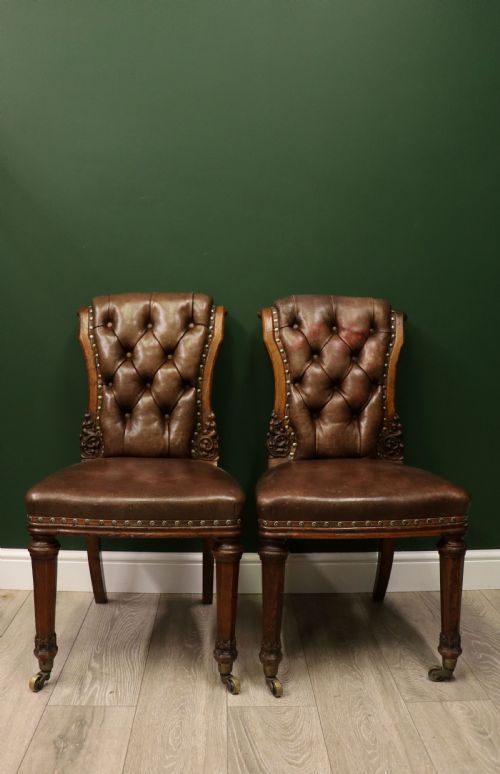
Makers constructed the structural frames of buttoned leather dining chairs using dense hardwoods like mahogany, walnut, rosewood, oak, and pollard oak. These timbers were shaped through turning and carving, yielding robust supports for everyday dining use.
Upholstery required stretching leather tightly over padding before securing the surface with deep tufting buttons to create the characteristic grid pattern. Additional decorative accents incorporated brass details, gold leaf gilding, and cane inserts.
Buttoned Leather Dining Chairs Retail Price Guide 2026
Typical asking prices for buttoned leather dining chairs among the pieces listed under this phrase on Sellingantiques today, from the lower quarter to the upper quarter. They describe what is for sale here now, not the wider market.
A diminutive child's chair from the nineteenth century proves that even the smallest diners required proper buttoned leather seating.
Assessing quality in the range
Quality separates ordinary utility seating from finer examples through the crispness of timber carving on frames and the depth of the wood grain in species like pollard oak, rosewood, and mahogany. Superior sets demonstrate cohesive matching across larger groupings of six, eight, or twelve pieces.
The execution of the leather upholstery and button tufting dictates the refinement of the piece, where even tension and precise alignment elevate the visual weight of the chair. Maker attribution, such as work originating from established firms, further distinguishes exceptional pieces from standard workshop output.
C Hindley & Sons·H Samuel London
The Buttoned Leather Dining Chairs Glossary
- Balloon back
- A rounded, oval-shaped chair back resembling a balloon, popular during the Victorian period. This profile offers ergonomic support while displaying the grain of rosewood or mahogany.
- Chesterfield
- A traditional style of deep-buttoned upholstery applied to seating. It creates a tightly patterned, tufted surface across the leather back or seat.
- Pollard oak
- Oak timber taken from trees that have been pollarded, producing a distinctive, highly figured burr grain. It was utilised for high-status furniture during the nineteenth century.
- Claw and ball
- A furniture foot carved to represent a bird's talon gripping a ball. This classical motif appears on the legs of substantial dining chairs.
Buttoned Leather Dining Chairs: Frequently Asked Questions
How do I care for antique leather?
Antique leather benefits from regular dusting with a dry cloth and occasional application of appropriate conservation leather dressings to prevent drying. Avoid placing these chairs in direct sunlight or near direct heat sources.
Keeping the environment stable protects both the hide and the internal stuffing from degradation. Gentle maintenance preserves the original texture of the surface over decades of use.
Are these chairs comfortable for long dinners?
The deep buttoning and padded construction provide substantial lumbar and back support during extended sitting. The proportions are designed specifically for dining tables.
Heavier timber frames and solid construction ensure stability throughout daily use. The combination of supportive leather and supportive frames makes them practical for regular meals.
Do matching sets of twelve exist?
Large sets numbering up to twelve pieces do survive from the nineteenth century, though they are less common than smaller groupings of four or six. These extensive suites were commissioned for substantial dining rooms.
Matching sets require careful inspection of timber uniformity and construction details to confirm original association. Surviving large dining sets represent significant architectural and social history.