
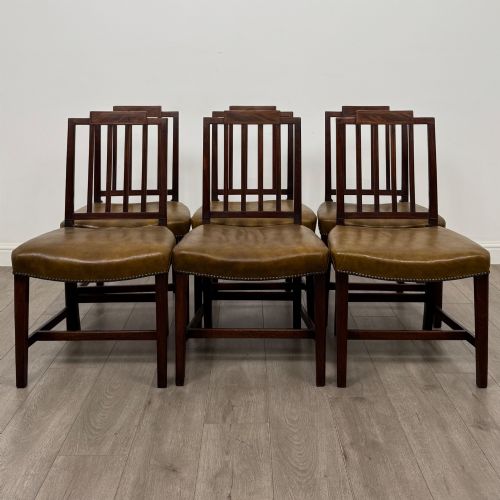
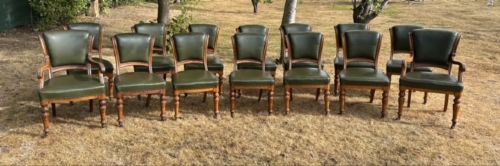
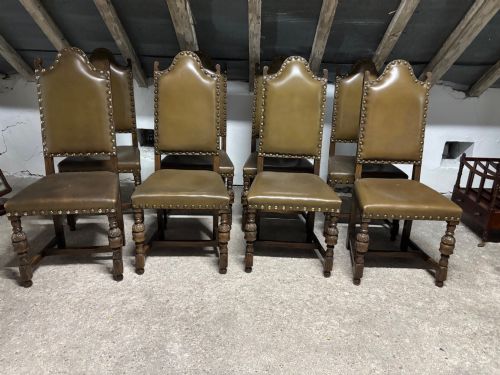
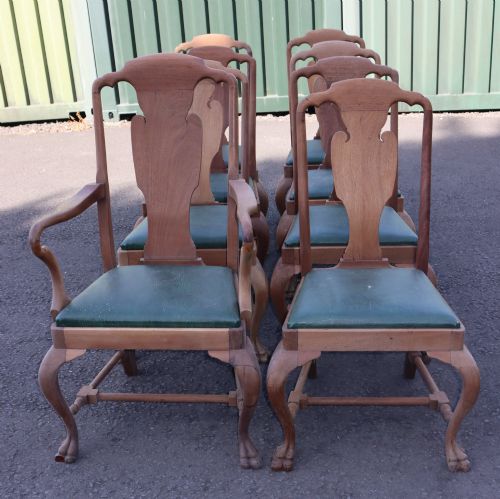





Green Leather Side Chair
A green leather side chair provides a sturdy, practical seat rooted in centuries of traditional British cabinet making.
Green Leather Side Chair
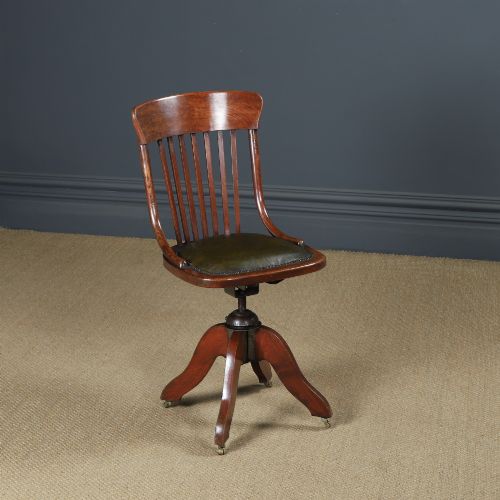
A green leather side chair typically appears as a dining seat or a revolving office desk chair spanning the Georgian, Victorian, and Edwardian periods.
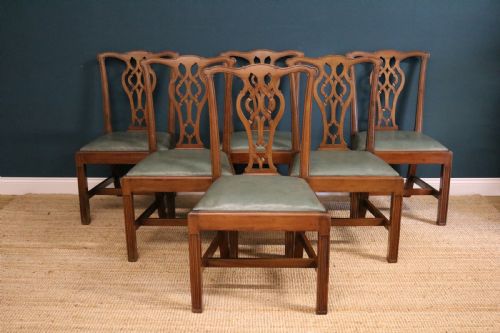
Buyers encounter single chairs as well as matched sets in mahogany, oak, and beech, often styled after earlier 17th and 18th-century designs.
Materials and construction
Frames are constructed from dense hardwoods like mahogany, oak, walnut, and beech, sometimes accented with brass fittings or cane panels.
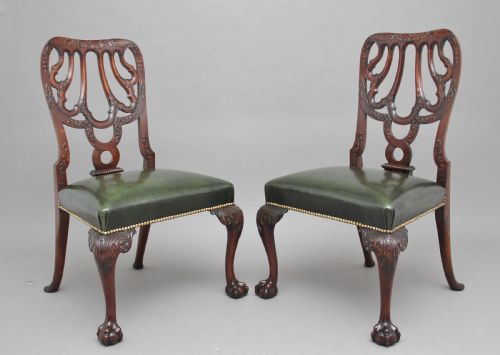
Upholstery relies on leather hides secured to the wooden structure, occasionally with traditional studding along the borders.
Some office chairs spin round so you can reach your inkwell without spilling tea.
Craftsmanship and design
Quality rests in the depth of hand-carving on the wooden frame and the precision of the joinery rather than surface finish alone.
The integrity of the timber and the proportion of the style dictate whether a piece represents standard cabinet work or higher workshop production.
Gillows·Bell Barn Furniture·Angus
The Green Leather Side Chair Glossary
- Side chair
- A chair without arms designed primarily for use at a dining table or desk.
- Bergère
- An enclosed upholstered armchair with wooden framing, occasionally incorporating cane work.
- Revolving
- Fitted with a swivel mechanism allowing the seat to turn, commonly found on office desk chairs.
- Chippendale design
- A classic style characterised by carved cabriole legs or ladder backs originating from 18th-century patterns.
Green Leather Side Chair: Frequently Asked Questions
What periods do these chairs come from?
The pieces span multiple eras, ranging from Georgian and Regency designs through to Victorian, Edwardian, and George V examples.
Craftsmen across these centuries utilised traditional hardwoods like mahogany and oak to build them.
Are these chairs suitable for a desk?
Certain variations are specifically built for office use, featuring revolving mechanisms and armless frames designed to fit beneath a workspace.
These functional seating options appear frequently in beech and oak construction.
How can I tell a set apart from single chairs?
Listings distinguish between individual side chairs, matched pairs, and larger dining sets comprising upwards of a dozen matching seats.
Larger groupings often share uniform carved details or timber selections.
What woods are commonly used?
Makers relied heavily on mahogany, oak, walnut, and beech for the primary structural frames of the seating.
Secondary materials such as brass, iron, and cane occasionally appear in specific stylistic details.