




Carved Walnut Canterbury
A carved walnut canterbury brings nineteenth-century order to sheet music and periodicals with rich timber and deft turning.
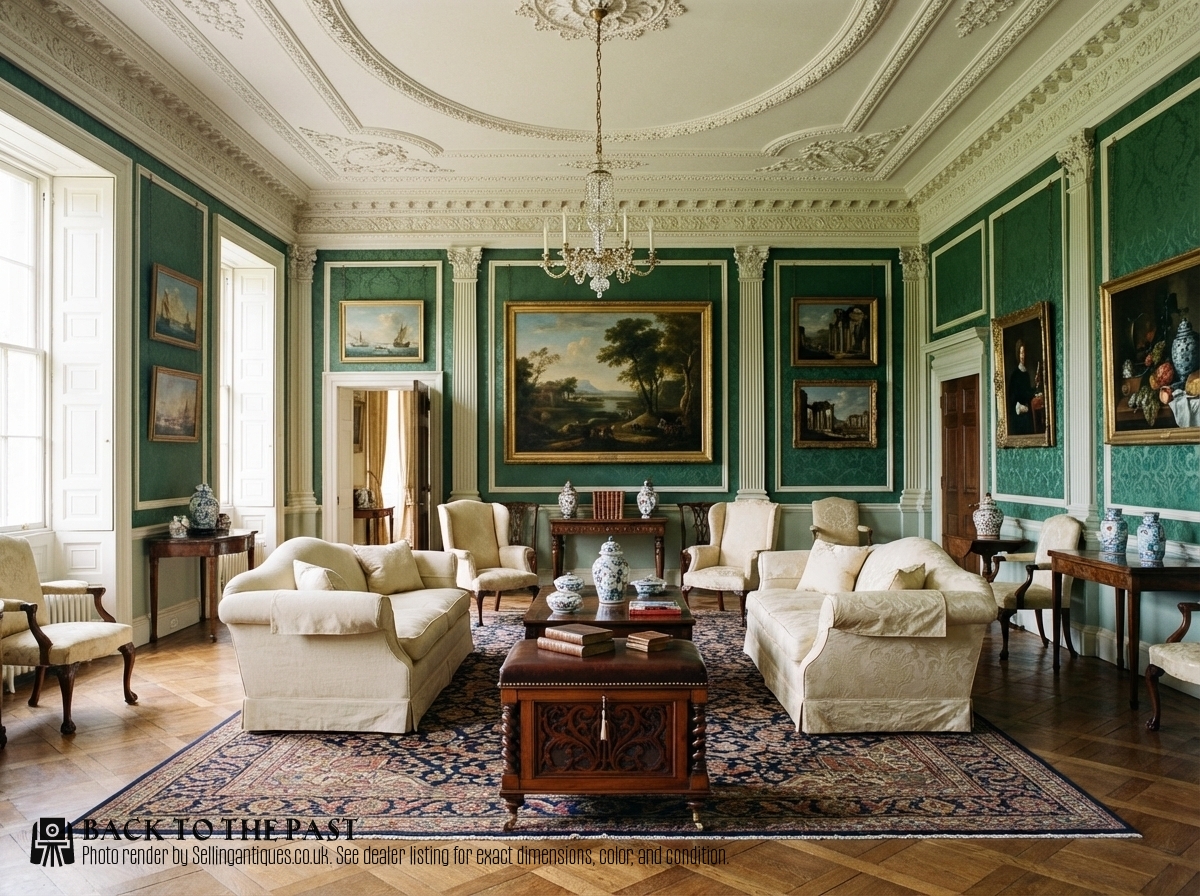
Carved Walnut Canterbury
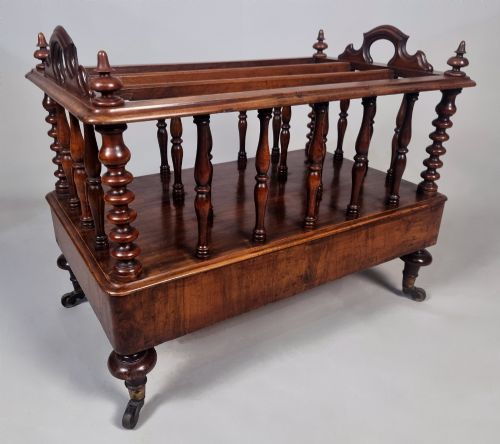
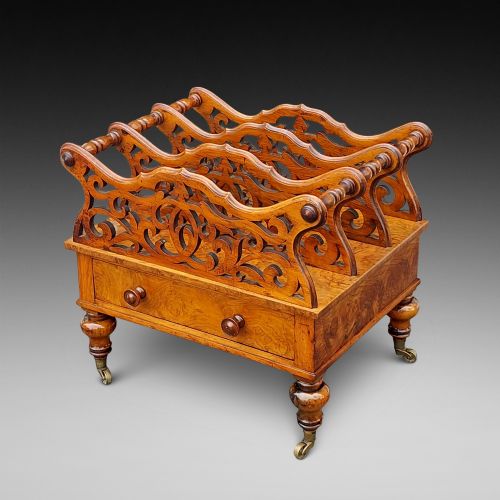
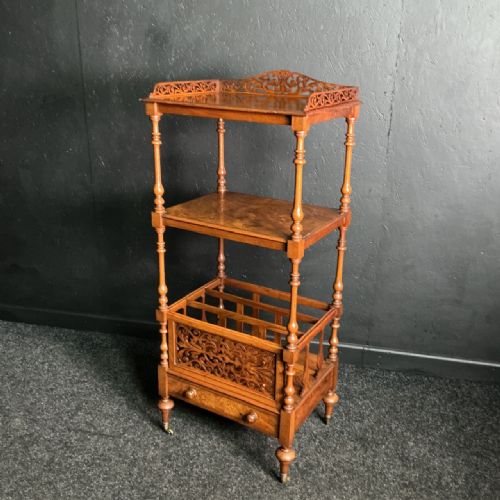
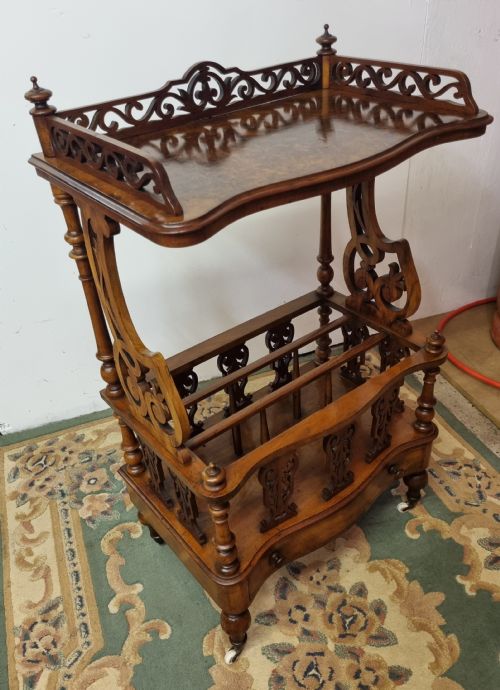
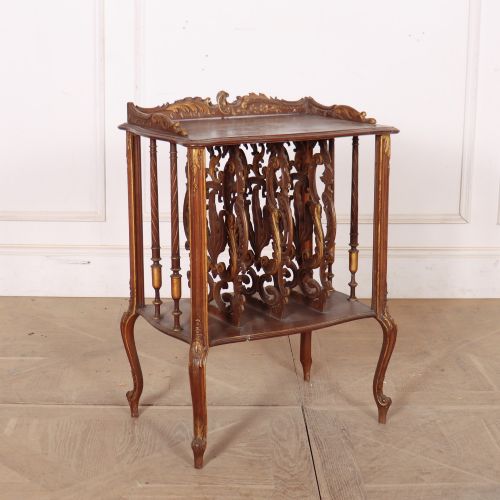
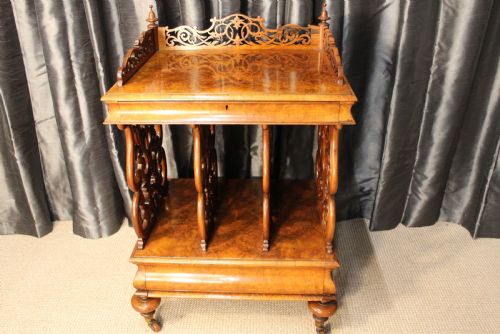
A carved walnut canterbury is a distinct nineteenth-century furnishing designed to hold folios, magazines, and music sheets upright in compartmentalised slots. These pieces belong predominantly to the Victorian period, appearing in forms that range from simple framework racks to elaborate whatnot tables with drawers.
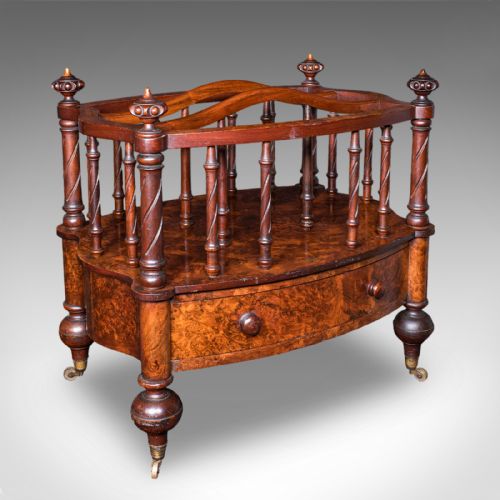
Makers of the era produced them in figured and burr walnut, frequently incorporating lower drawers and turned supports. The search phrase covers both dedicated magazine racks and multifaceted occasional tables that double as music stands or footstools.
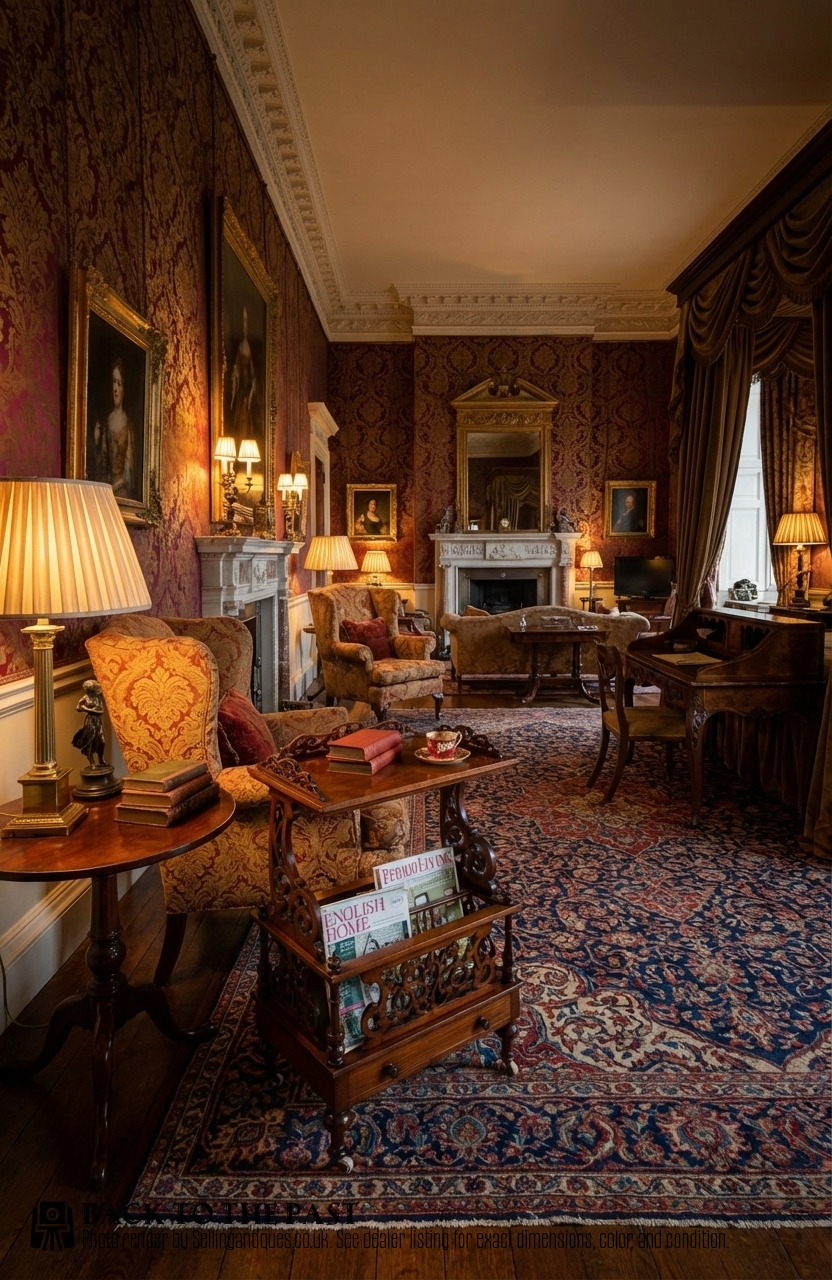
Materials and construction
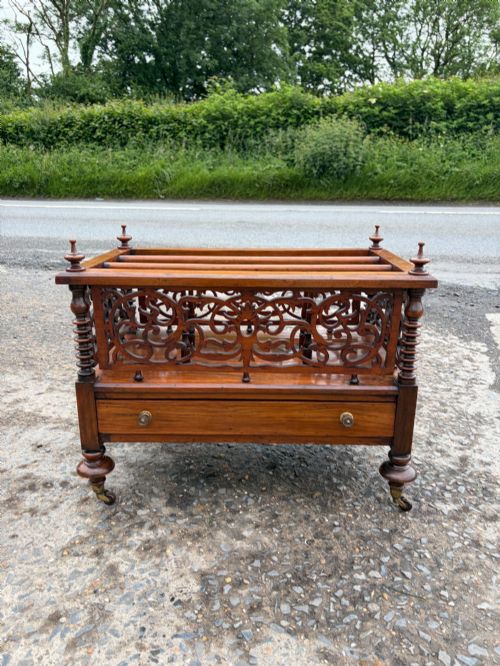
Craftsmen built these pieces using solid walnut and burr walnut veneers, often enriching the surfaces with wood inlay and fretwork details. Structural integrity relied on turned wooden supports, sometimes augmented by brass castors and metal fittings.
Interior components like drawers utilised secondary timbers, while associated elements integrated ceramic and leather where appropriate to the specific form, such as a canterbury stool.
Carved Walnut Canterbury Retail Price Guide 2026
Typical asking prices for carved walnut canterbury among the pieces listed under this phrase on Sellingantiques today, from the lower quarter to the upper quarter. They describe what is for sale here now, not the wider market.
Early nineteenth-century musicians clearly possessed heavy sheet music, given the robust brass castors fitted to keep these racks rolling.
Distinctions in quality
The standard of a carved walnut canterbury rests upon the selection of the timber, where finely figured burr veneers and crisp carving elevate the piece far above plain stock. Subtle details like fretwork panels, serpentine outlines, and the integration of a functional drawer separate utilitarian examples from those made for a formal drawing room.
Proportion and the harmony of secondary materials, such as neat brass castors or precise wood inlay, dictate the overall refinement of the construction.
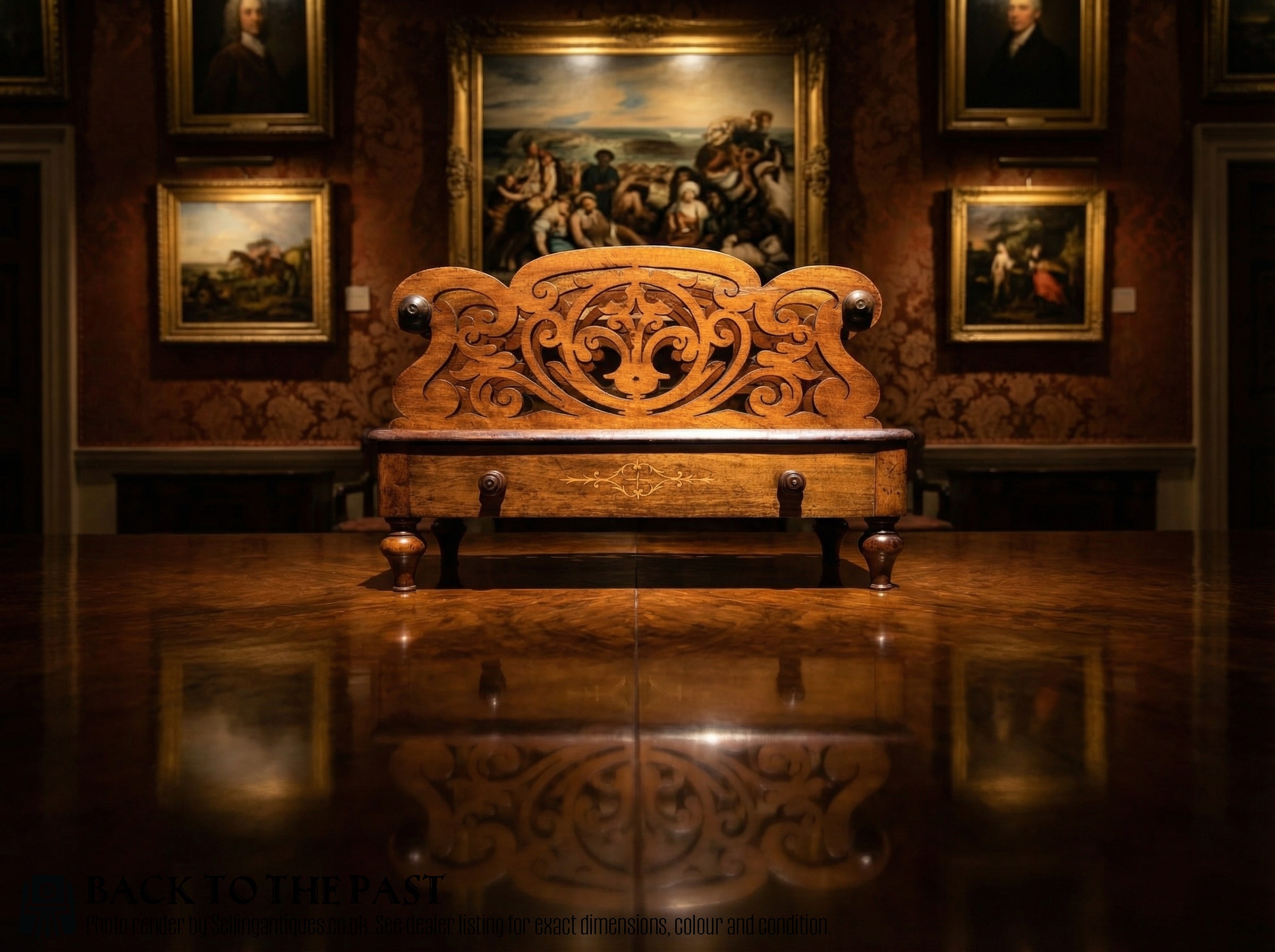
The Carved Walnut Canterbury Glossary
- Canterbury
- A low stand with vertical divisions for holding music sheets or books. Originating in the late eighteenth century, the form expanded during the Victorian era to include drawers and shelves.
- Burr walnut
- A prized timber harvested from walnut tree growths, yielding intricate swirling grain patterns. Cabinet makers prized it for decorative veneering on prominent surfaces.
- Serpentine
- A curved line that undulates gently, featuring a convex centre flanked by concave sides. This shape added movement and grace to nineteenth-century furniture edges.
- Whatnot
- An open set of shelving tiered for the display of ornaments or books. When combined with a canterbury, it formed a versatile multi-tier piece for the parlour.
Carved Walnut Canterbury: Frequently Asked Questions
What is a canterbury used for?
A canterbury was originally designed to hold sheet music and folios upright in the separate partitions beneath the main tier. Over time, Victorians adapted them for periodicals, newspapers, and general reading materials in the parlour.
The inclusion of lower drawers in certain models also provided convenient storage for smaller items like writing accessories or tuning keys.
How do I date a walnut canterbury?
Dating relies heavily on period characteristics, with the majority belonging to the Victorian era around the mid-nineteenth century. Examining the construction methods, such as the dovetailing on drawers and the style of turning on the legs, helps confirm the era.
Walnut grain and veneer thickness also offer clues, as earlier nineteenth-century pieces often display deeper colour and more robust timber selection than later iterations.
Where should I place a canterbury at home?
These pieces fit naturally beside a sofa, armchair, or piano where reading material or music books are frequently accessed. Their compact footprint makes them practical for corners or empty wall spaces without dominating the room.
A burr walnut or inlaid version works particularly well as an occasional table holding a lamp or small decorative objects on top.
Are all canterburys made of walnut?
While walnut and burr walnut are prominent in this selection, nineteenth-century makers also utilised other hardwoods depending on regional preferences and the desired finish. Walnut was favoured for its rich dark tones and suitability for fine carving and veneering.
Some variations incorporate contrasting inlay work and secondary timbers within the internal drawer construction.