
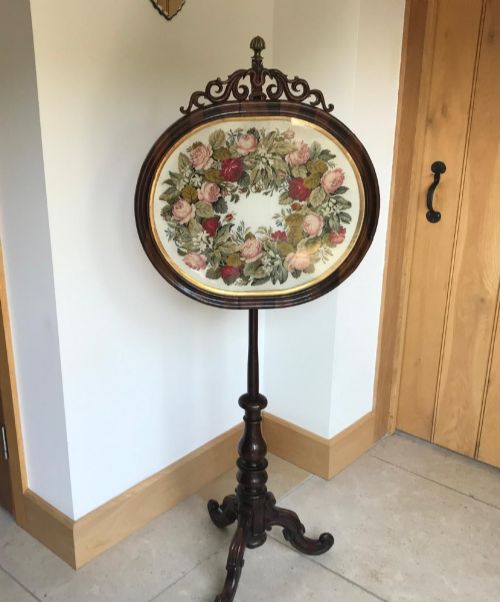


Carved Tripod Pole Screen
These carved tripod pole screen examples offer adjustable radiant heat control with distinct needlework panels carried on slender uprights and tripod bases.
Carved Tripod Pole Screen
A carved tripod pole screen acts as a movable shield designed to protect a sitter's face from the intense heat of an open hearth. These furnishings typically comprise a vertical wooden shaft supported by three legs and an adjustable sliding panel.
The pieces appearing here span the eighteenth and nineteenth centuries, taking forms from the Regency period through the height of the Victorian era. Buyers frequently encounter rosewood and mahogany constructions featuring embroidered textile inserts or glass reflectors.
Makers fashioned these stands to stand beside drawing room fireplaces where occupants could raise or lower the central panel. The surviving examples demonstrate how households managed thermal comfort before central heating changed domestic interiors.
Construction and Materials
Cabinetmakers utilised dense timbers such as mahogany and rosewood to turn slender poles and carve sturdy three-legged pedestal bases. These woods provided the necessary structural integrity to support heavy sliding frames without tipping.
Panels often incorporate wool tapestry and embroidered textile needlework held within timber or giltwood surrounds. Skilled artisans also integrated glass reflector elements into specific Regency designs to bounce candlelight or hearth warmth across the room.
Recorded periods span from eighteenth-century Chippendale styles through Regency and Victorian eras.
Markers of Distinction
The refinement of the tripod base carving separates standard production stands from superior examples. Crisp detailing on the legs and collar indicates greater skill from the original cabinetmaker.
The intricacy of the needlework panel and the smoothness of the sliding mechanism influence the overall standing of the piece. Fine tapestry work and robust brass tightening screws demonstrate higher original cost.
The Carved Tripod Pole Screen Glossary
- Pole screen
- A freestanding domestic screen with an adjustable panel mounted on a vertical wooden shaft. This item allowed sitters to shield their faces from fireplace heat.
- Tripod base
- A three-legged support structure resting on the floor. These bases provide stability for tall, slender furniture pieces.
- Needlework panel
- A decorative textile insert created using yarn or thread stitched onto a canvas ground. These panels form the visual centrepiece of the screen.
- Fireside reflector
- A glass or polished screen surface designed to redirect warmth or light from the hearth. Such elements appear in specific Regency iterations.
- Giltwood
- Timber treated with a thin layer of gold leaf. This finish enhances decorative mouldings on nineteenth-century frames.
Carved Tripod Pole Screen: Frequently Asked Questions
What is a pole screen used for?
These screens served to block the intense radiant heat of an open fireplace from the sitter's face. Wealthy homes placed them near seating areas to protect delicate complexions from heat damage.
The adjustable panel allowed occupants to alter the height as needed throughout the day. They functioned as both practical heat shields and decorative room dividers.
How do I date a pole screen?
Dating relies on timber choices, carving styles, and the method used for the sliding mechanism. Regency and Victorian examples show distinct shifts in decorative motifs and base turns.
Needlework inserts can sometimes predate the timber stand itself or reflect the exact period of manufacture. Examining the joinery beneath the tripod base offers further clues to age.
Where should I place a pole screen at home?
These pieces suit drawing rooms, studies, or quiet corners where their vertical profile adds architectural interest. They work well standing beside armchairs or flanking fireplaces.
Avoid positioning them in direct sunlight to protect antique textiles and wooden finishes from fading. The sliding panel can be set at eye level to display the needlework.
Can I adjust the panel height?
Most antique examples feature a brass collar or friction mechanism designed to hold the panel at various heights along the pole. Care is needed when adjusting older mechanisms to avoid straining the timber.
Some surviving pieces require gentle handling if the internal wooden spring or screw has worn over time. Collectors generally set the panel once and leave it in place.