
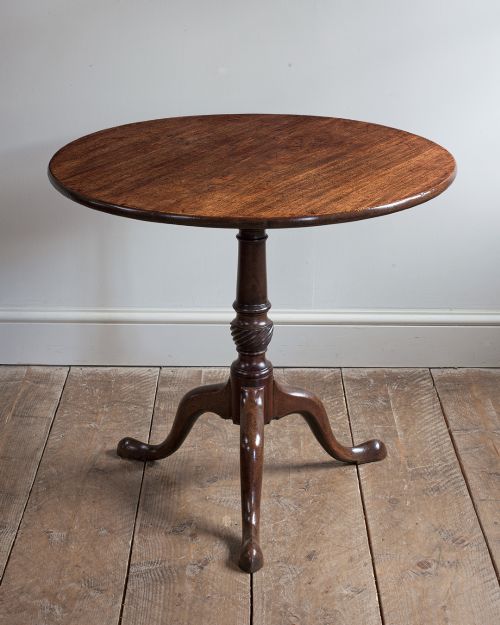
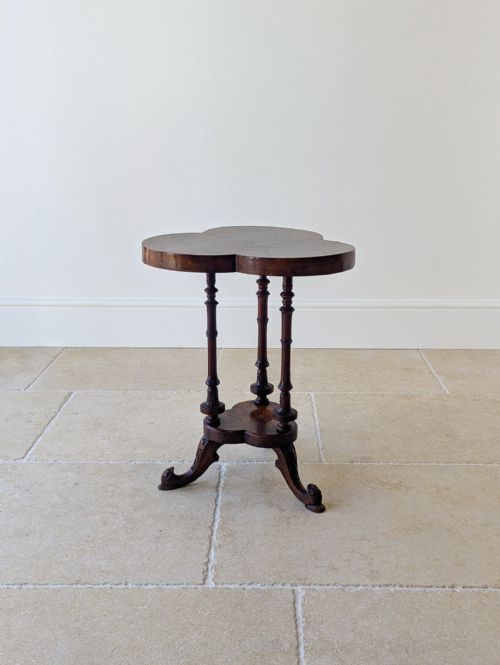
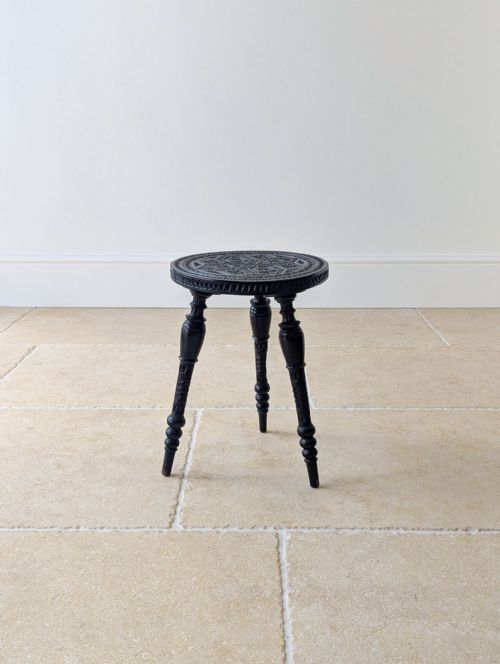
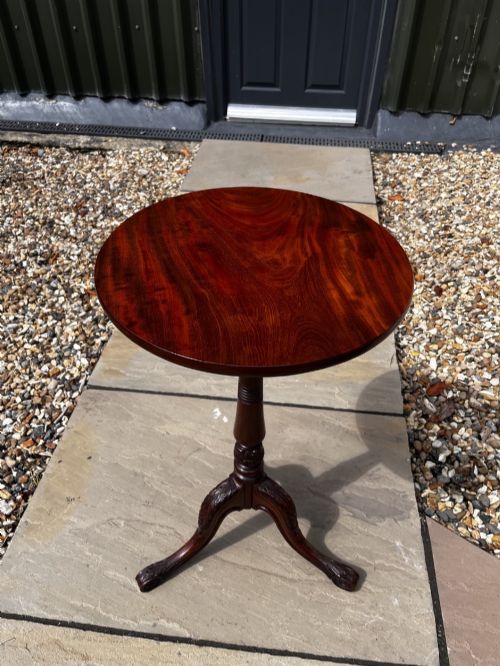
Carved Tripod Legs
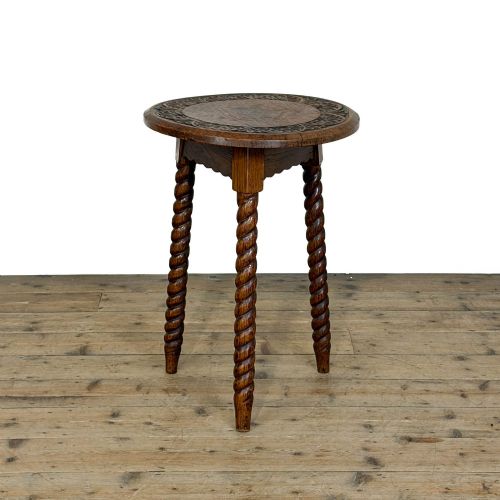
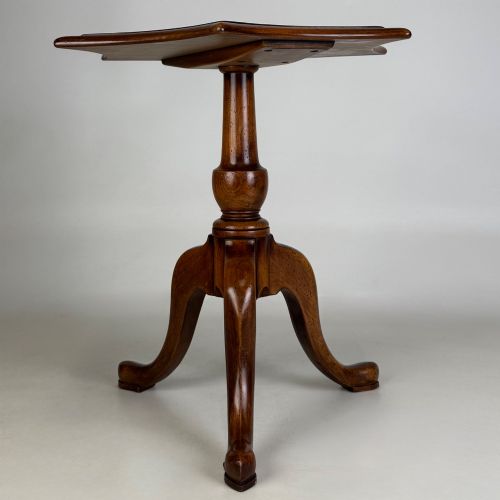
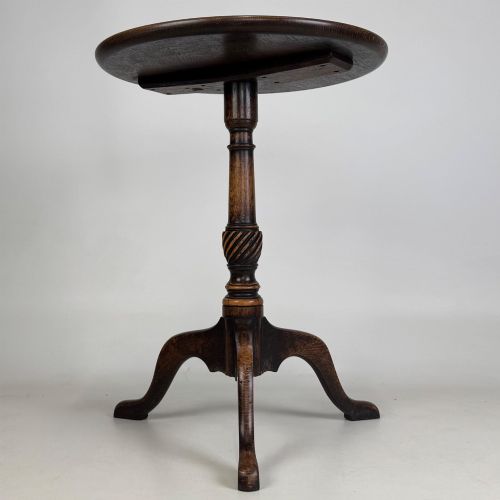
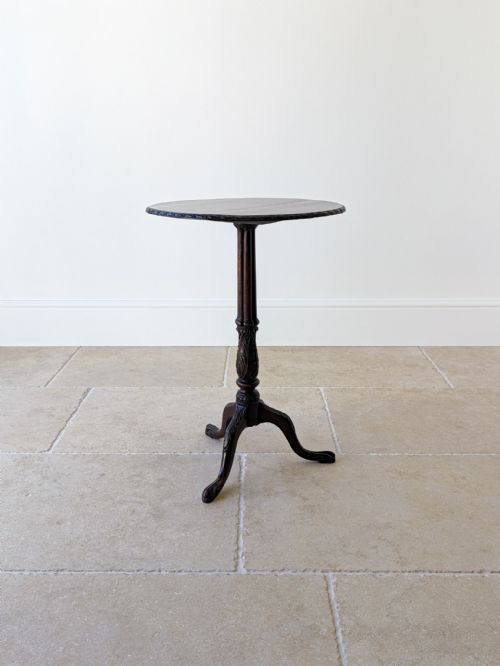
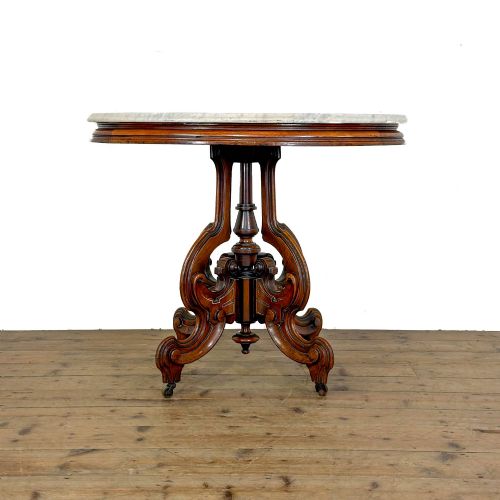
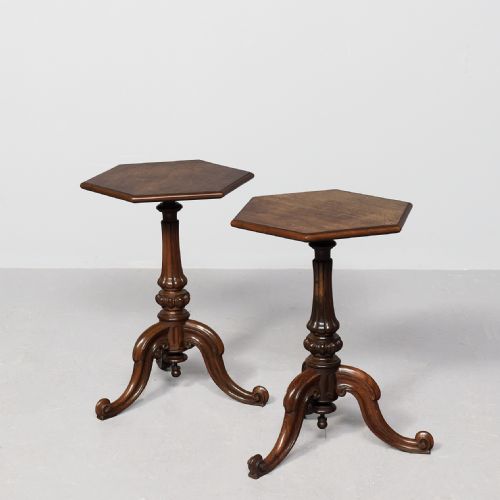
Carved tripod legs support small tables and stools from the Georgian, Victorian, and Edwardian periods.
Carved Tripod Legs
Carved tripod legs typically support occasional tables, wine tables, side tables, and small stools designed for versatile use in a room. When searching for carved tripod legs, a buyer encounters pieces ranging from simple country furniture to formal revival styles.
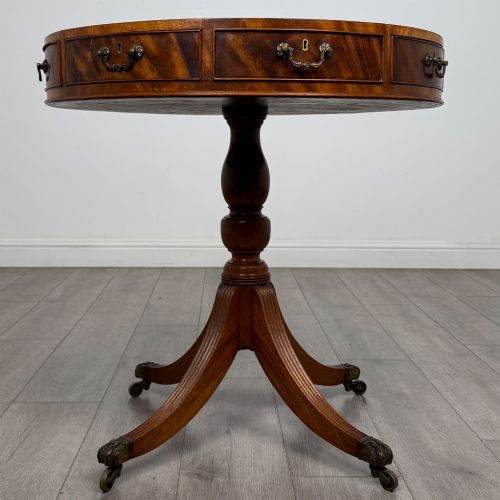
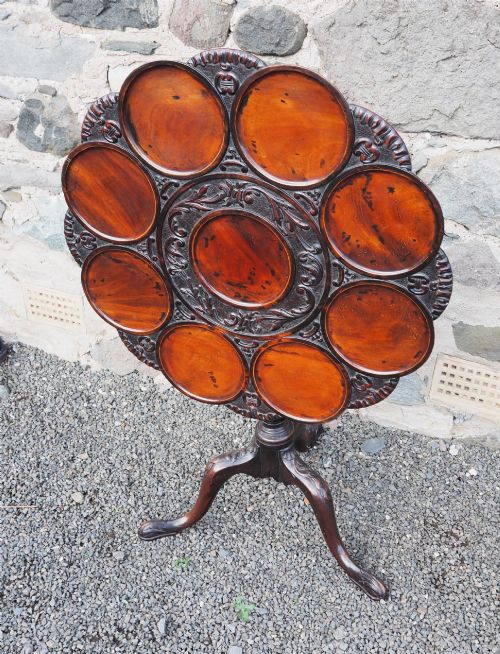
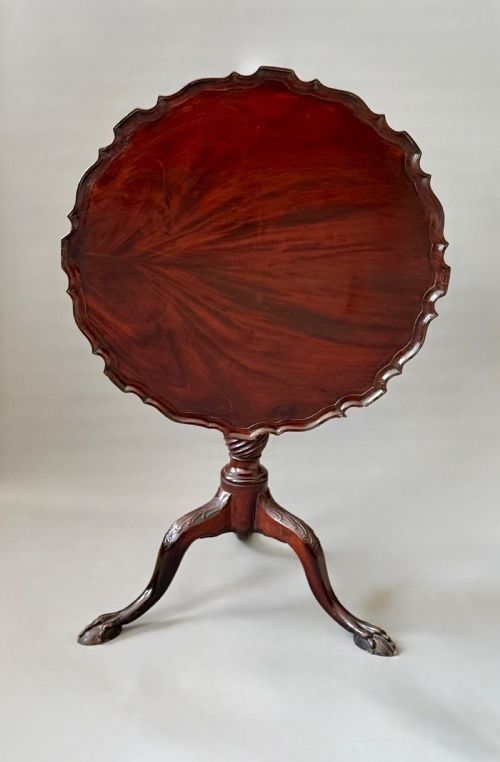
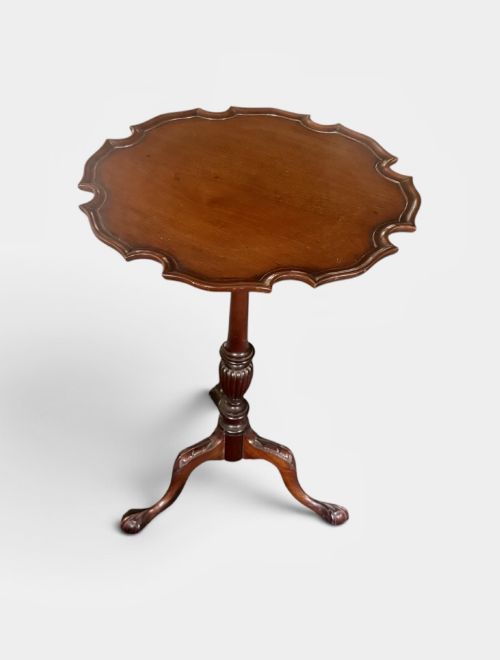
The most common examples on this page are mahogany and oak wine tables or occasional tables dating from the eighteenth century through to the Edwardian era. These pieces frequently feature tilt-top mechanisms, pie crust rims, or structural supports shaped with carved detail.
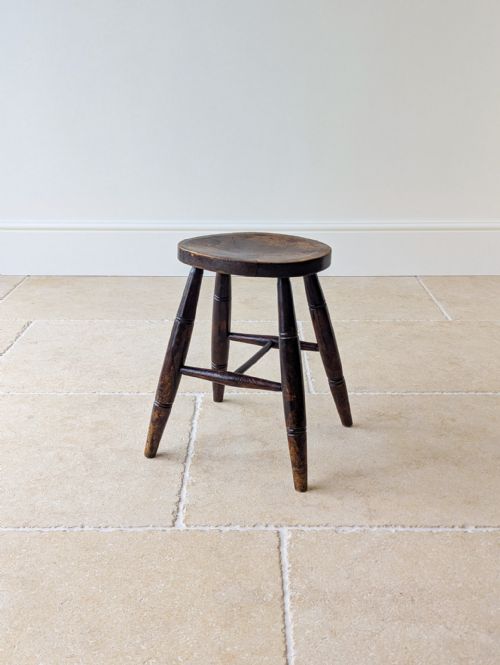
Originating across English, French, and Anglo-Indian traditions, these items reflect diverse stylistic revivals including Chippendale and Jacobean influences. The forms include small cricket tables, plant stands, and piano stools resting on three distinct feet.
How they were made
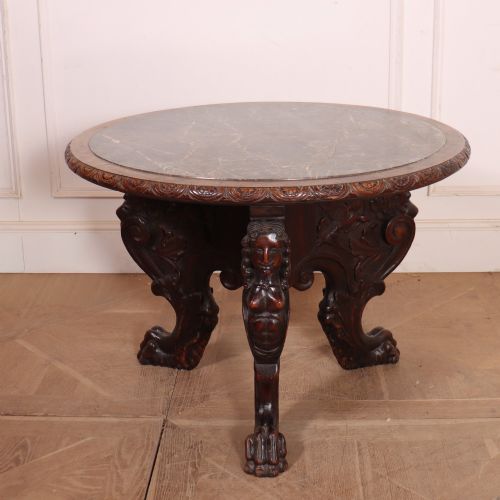
Cabinet makers utilised dense timbers such as mahogany, walnut, oak, and rosewood, shaping the primary structures by hand. Hardwoods provided the structural integrity required to carve detailed foliage, scrollwork, and animal motifs into the three supporting legs.
Joinery methods combined turned central pedestals with tenoned leg brackets, often incorporating tilt-top iron catches or brass fittings. Surfaces received hand-applied polish or wax finishes that enhanced the natural grain of the timber.
What varies in quality
Quality rests primarily in the crispness and depth of the hand carving on the legs and the selection of the timber grain. Finer examples display balanced proportions between the top, the turned column, and the splayed feet.
Construction details such as original tilt mechanisms, uncompromised joints, and matching timber sections distinguish superior workshops from standard vernacular production.
The Carved Tripod Legs Glossary
- Tripod table
- A small freestanding table supported by a central pillar resting on three legs. These versatile tables were easily moved around a room for tea, writing, or reading.
- Pie crust edge
- A raised, decoratively carved rim shaped in small waves resembling the edge of a pie crust. This decorative detail appeared frequently on eighteenth-century and revival occasional tables.
- Torchere
- A tall, slender stand designed to hold a light or a decorative object such as an urn or plant. They are typically raised on slender carved tripod legs.
- Padouk
- A heavy, durable tropical hardwood with a reddish hue used in regional nineteenth-century furniture. It accepted intricate hand carving exceptionally well.
Carved Tripod Legs: Frequently Asked Questions
What rooms suit carved tripod tables?
These compact tables fit beside armchairs, in small corners, or as central accents in a drawing room. Their modest footprint makes them practical for holding lamps, drinks, or small decorative objects without crowding a space.
Because many feature tilt tops, they can also be stored flat against a wall when floor space is needed.
How do I care for antique timber?
Keep wooden furniture away from direct heat sources and strong sunlight to prevent the timber from drying out and splitting. Regular dusting with a soft, dry cloth maintains the surface.
Applying a traditional beeswax polish occasionally helps nourish the wood and preserves the depth of the polish without building up residue.
How can I tell the period?
Examining the timber species, joinery methods, and the style of the carving helps identify the era of manufacture. Georgian pieces often display finer hand-carved mahogany details, while Edwardian examples frequently show revival influences with machine-assisted touches.
Wear patterns on the feet and beneath the top also offer clues to the age of the piece.
Were tripod stools used for seating?
Stools with three legs served various practical purposes in domestic and rural settings, including milking stools and piano stools. The three-leg design ensured stability on uneven stone or earthen floors.
Adjustable height versions allowed musicians to find a comfortable seating position while playing keyboard instruments.