




Carved Tripod Coffee Table
These carved tripod coffee table pieces bring rich timber character and intricate handwork to a room, offering both practical surface space and distinct historic presence.
Carved Tripod Coffee Table
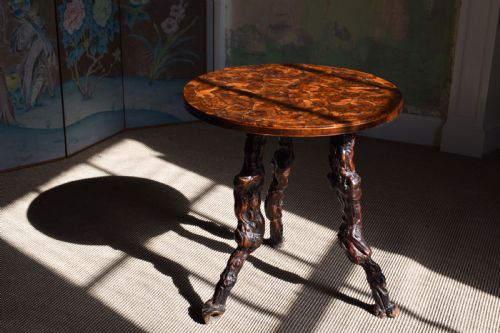
When you search for a carved tripod coffee table, you encounter a diverse mix of forms that span multiple centuries and regional workshops. These pieces function as low occasional tables, adapted wine tables, and sculptural centre tables resting on three-legged supports.
The most common examples you meet on this page date from the Victorian era and the nineteenth century, executed in rich timbers like walnut and mahogany. Makers adapted various traditional forms, ranging from rustic Black Forest designs to elaborate Anglo-Indian colonial creations.
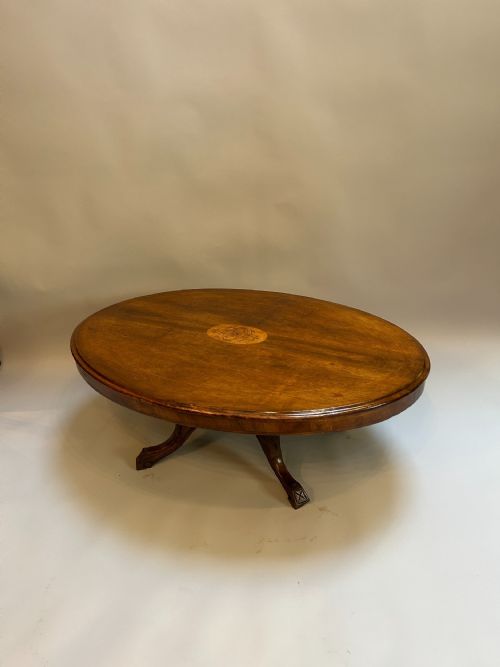
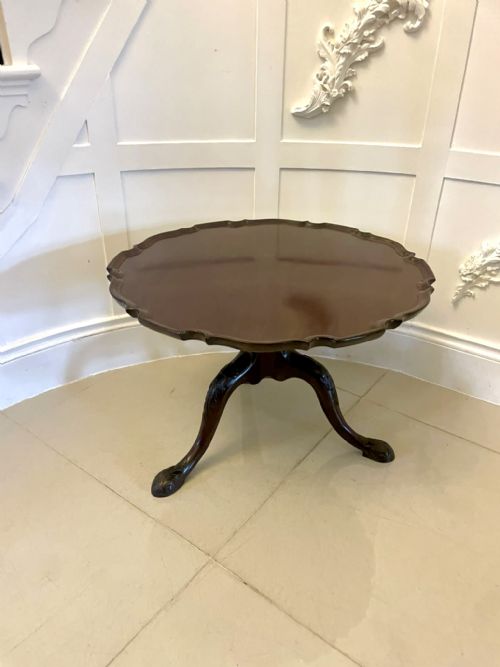
You also discover occasional pieces drawing on earlier Georgian proportions alongside mid-nineteenth-century marquetry work. Each variation displays a distinct regional approach to the classic three-legged support structure.
How they were made
Cabinetmakers utilised solid hardwoods such as walnut and mahogany, often pairing them with intricate marquetry inlay or specialised exotic timbers like grapevine wood and teak. These materials provided the dense grain necessary for deep relief carving and stable furniture construction.
Makers applied hand-carved detailing directly to the timber, shaping animal forms, botanical motifs, and shield shapes with specialised chisels. The central pillar and three-legged pedestal bases required careful joinery to ensure balance under daily use.
Among the carved figures supporting these tables, an elephant head makes an unexpected appearance alongside traditional botanical and grapevine motifs.
What varies in quality
The distinction between standard items and superior examples lies in the depth and precision of the hand carving, particularly around the tripod base and table rim. Crisp botanical details and well-defined sculptural elements indicate skilled workshop production rather than hurried output.
Quality also shows in the selection of timber veneers and the precision of marquetry inlay, where contrasting woods fit seamlessly together. The stability of the three-legged pedestal and the integration of secondary materials like bone reveal the maker's underlying expertise.
The Carved Tripod Coffee Table Glossary
- Tripod base
- A furniture support consisting of three legs branching out from a central pillar. This configuration provides steady balance on uneven floors and remains characteristic of traditional occasional tables.
- Marquetry inlay
- The art of applying small pieces of veneer to a structure to form decorative patterns. Craftsmen use contrasting timbers to create pictorial designs across the tabletop.
- Black Forest
- A nineteenth-century Swiss style of wood carving known for realistic animal and botanical motifs. These pieces often incorporate deep relief work depicting local fauna and foliage.
- Anglo-Indian
- A nineteenth-century style combining British furniture forms with traditional Indian wood carving techniques. These items frequently feature dense floral patterns or figural elements carved from dense hardwoods.
Carved Tripod Coffee Table: Frequently Asked Questions
What is a carved tripod coffee table used for?
These pieces serve as low surface tables in a living space, holding everyday items while adding decorative character.
Historically, many started life as taller wine tables or occasional stands before being lowered to suit modern seating heights.
How do I date a Victorian table?
Dating relies on examining the timber species, construction joints, and stylistic markers recorded in the evidence. Victorian examples frequently utilise walnut or mahogany alongside characteristic nineteenth-century carving styles.
Comparing the pedestal turnings and inlay techniques against known period pieces helps narrow down the decade of production.
Are these tables sturdy enough for daily use?
The three-legged pedestal design provides a stable footprint for everyday placement in a reception room. Proper balance depends on the original construction of the central pillar and leg joints.
Placing the table on level flooring ensures the tripod base supports items safely without rocking.
What styles can I expect to find?
The selection includes nineteenth-century Victorian designs, ornate Anglo-Indian colonial pieces, and rustic Black Forest items. Each style brings different regional carving traditions to the basic three-legged format.
Georgian and Regency influences also appear, showing simpler classical lines or contrasting marquetry patterns.