
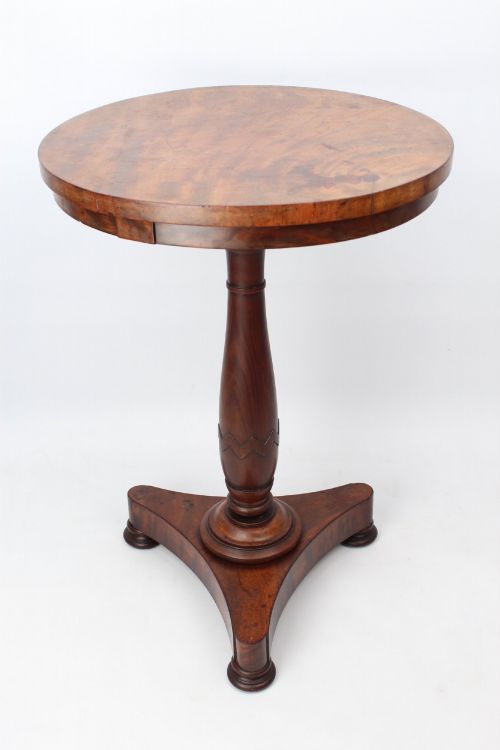


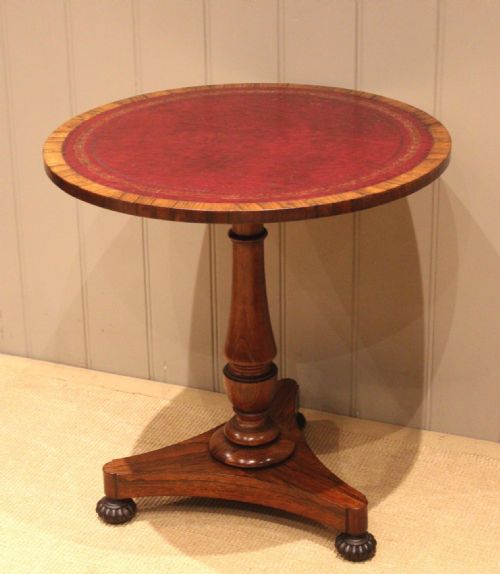

Carved Triform Side Table
A carved triform side table brings three-way balance and sculptural presence to a room, offering a compact surface rooted in classic forms.
Carved Triform Side Table
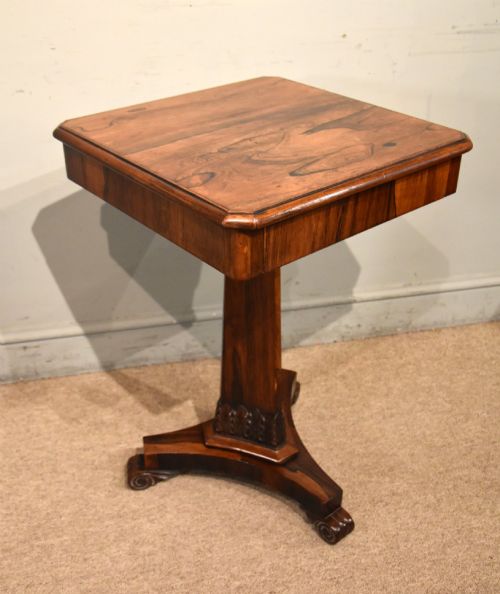
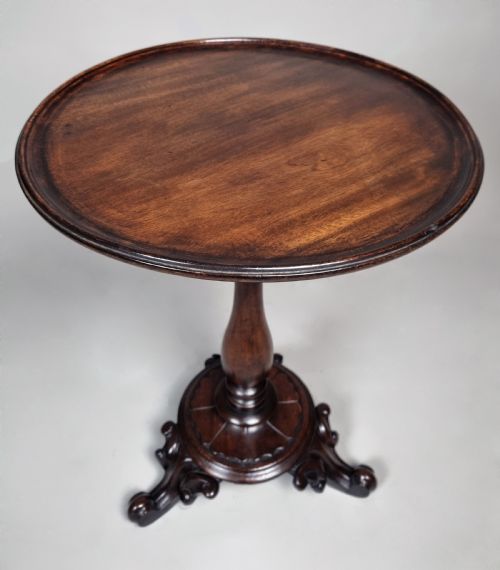
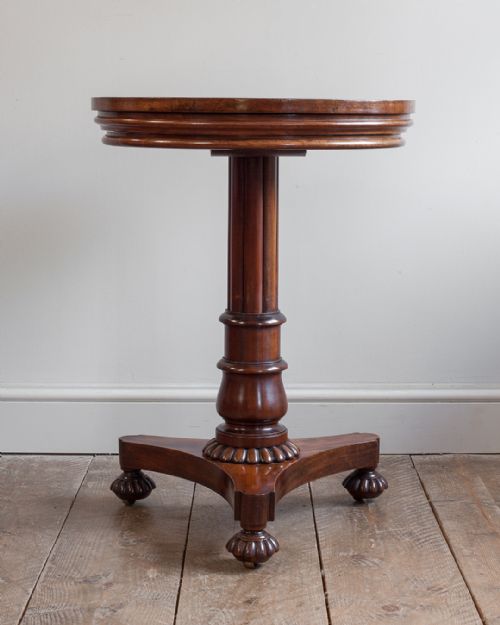
A carved triform side table is a compact surface supported by a three-sided or three-legged base, appearing frequently in circular, square, and octagonal forms. These tables serve primarily as occasional, wine, or lamp tables, designed to fit beside seating or within smaller spaces while maintaining a distinct architectural silhouette.
The pieces on this page span the Georgian, Regency, and Victorian periods, alongside later revivals into the early twentieth century. Buyers will encounter French gueridons, English wine tables, and occasional tables featuring distinct three-way supports.
Origins range across English workshops and continental makers, particularly French and Italian centres of cabinetmaking. Mahogany, rosewood, and walnut dominate the selection, often complemented by marble tops or brass details.
What varies in quality
The refinement of the carving on the triform base distinguishes finer examples from simpler production, showing depth and precision in the execution of classical motifs. The choice of timber also dictates quality, with choice cuts of flame mahogany or figured rosewood indicating higher ambition in the workshop.
The integration of secondary materials such as specimen marble tops or fine brass work elevates a piece. Structural integrity in the joints of the three-way pedestal remains essential for sustaining the weight of stone tops without wobble.
One miniature centre table offers grand architectural presence in miniature scale, proving great design requires very little floor space.
The Carved Triform Side Table Glossary
- Triform
- Having three sides or three supporting legs arranged in a triangular configuration. This base design provides stability and a distinct geometric profile.
- Gueridon
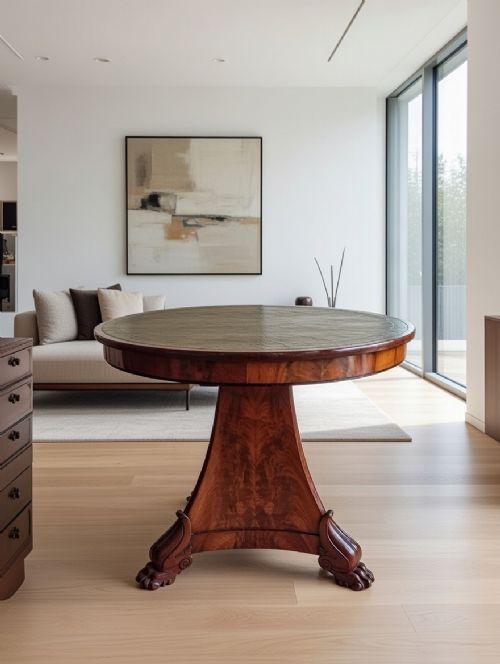
- A small French table, often round and supported by a single central pillar or three legs. These tables frequently feature marble inserts and decorative wood veneers.
- Flame mahogany
- A veneer cut from the fork of the mahogany tree where the branch joins the trunk. It creates a rippled, flame-like pattern across the table top.
- Wine table
- A small occasional table designed to hold glasses or decanters near seating. They usually possess a circular top and a turned pedestal base.
- Metamorphic table
- A piece of furniture engineered to transform into different shapes or functions. These tables adapt their configuration through mechanical pivots or hinges.
Carved Triform Side Table: Frequently Asked Questions
Where should I place a triform table?
These tables fit well beside armchairs or sofas where a compact surface is needed without blocking circulation.
Their three-sided bases allow them to tuck neatly into corners or stand freely as central display pieces.
How do I identify a Regency triform table?
Regency pieces often display classical architectural influences, drawing heavily on Greek, Roman, and French Empire designs.
Look for dark timbers like rosewood, bold pedestal bases, and restrained use of brass inlay or gilt mounts.
Are marble tops original to these tables?
Many French gueridons and Victorian centre tables were manufactured specifically to hold inset marble slabs. These stone surfaces provided durability and a cool, decorative contrast to the warm timber frames.
Inspection of the rebate beneath the top typically reveals how the marble was fitted by the original cabinetmaker.
What is the difference between a side table and an occasional table?
Side tables historically stood against walls or beside larger furniture to hold lighting and decorative objects. Occasional tables were designed to be moved easily around a room as needed for tea, reading, or writing.
In modern usage, the terms often overlap, but triform versions generally emphasise the sculptural pedestal base over rigid placement.