

Carved Trestle Dining Table
A carved trestle dining table brings heavy timber and centuries of craft to the centre of the room, offering an enduring surface for family meals.
Carved Trestle Dining Table
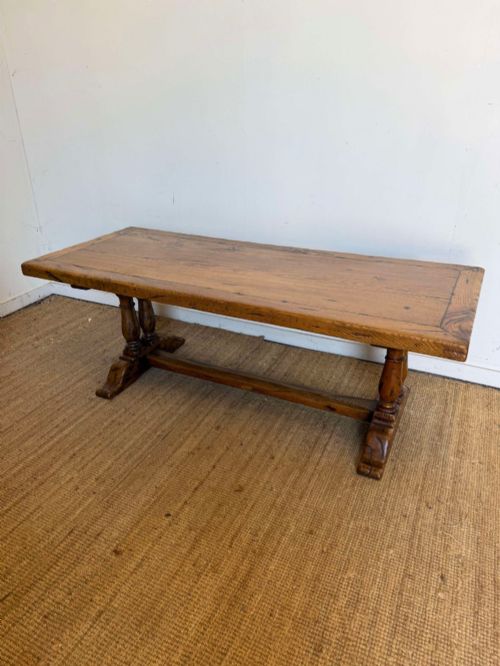
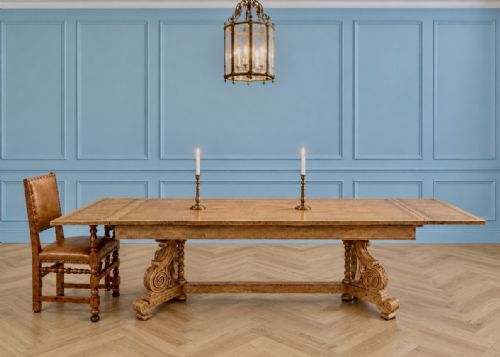
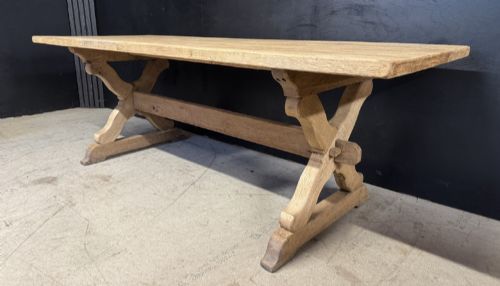
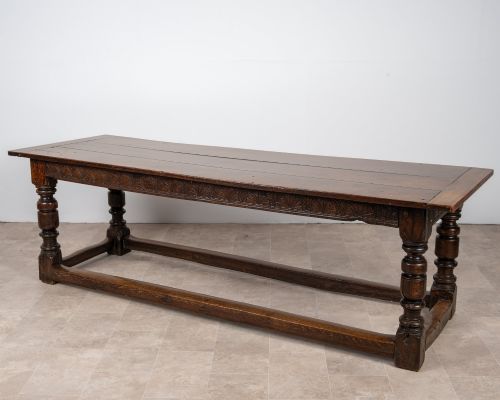
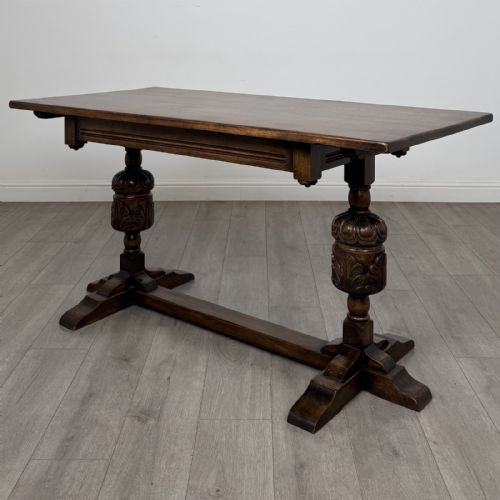
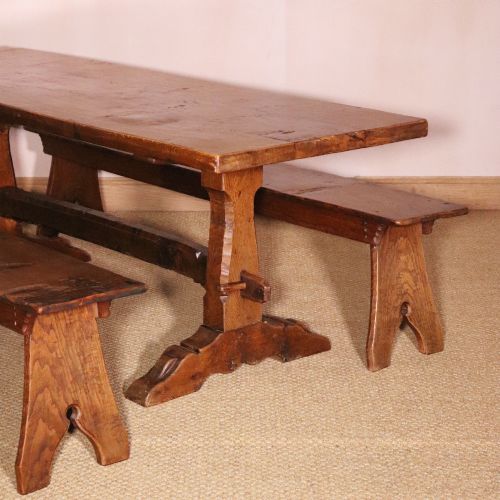
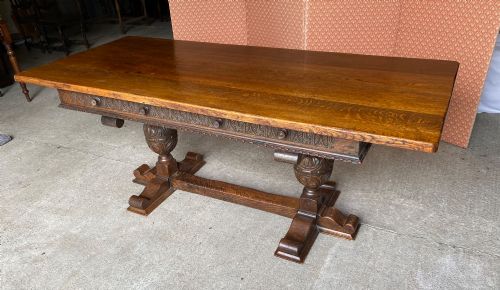
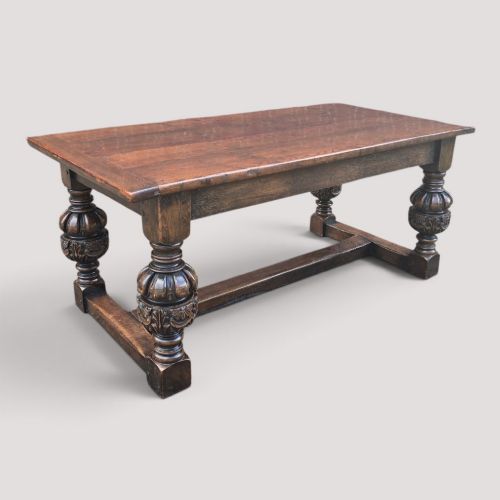
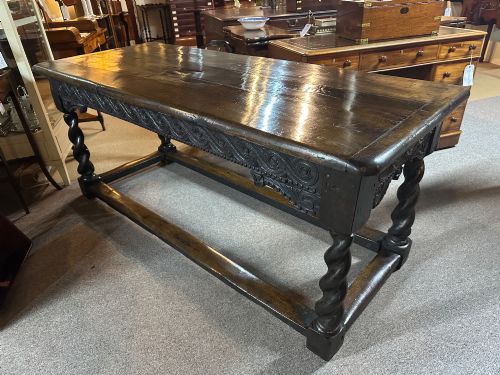
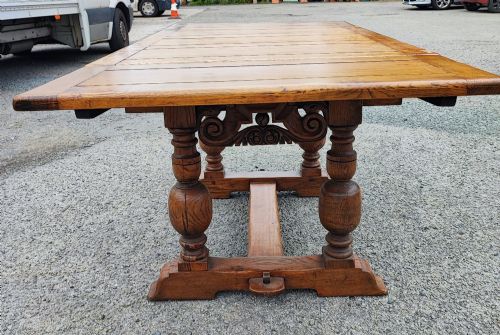
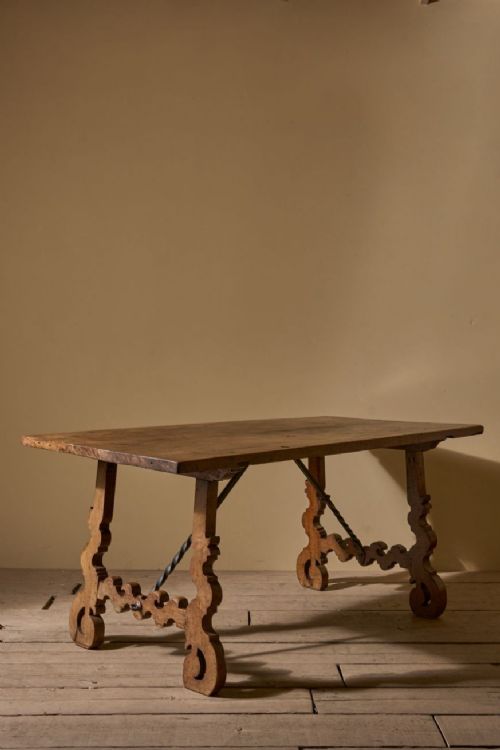
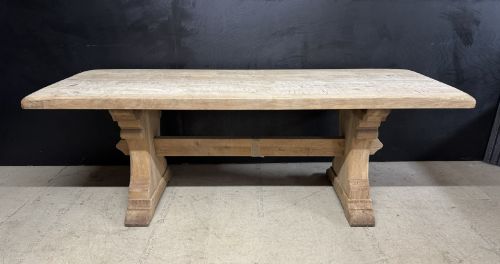
When you search for a carved trestle dining table, you find heavy wooden boards supported by vertical ends joined by a central stretcher. These pieces originate from periods spanning the seventeenth century through to the early twentieth century, drawing on styles such as Jacobean Revival and Spanish Baroque.
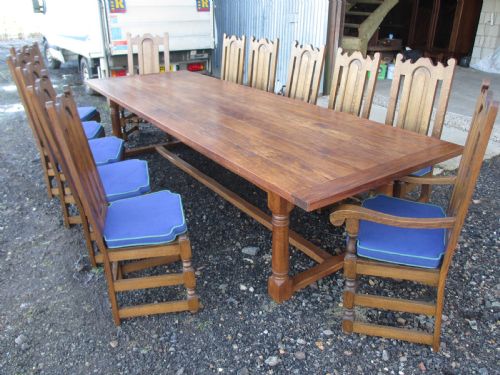
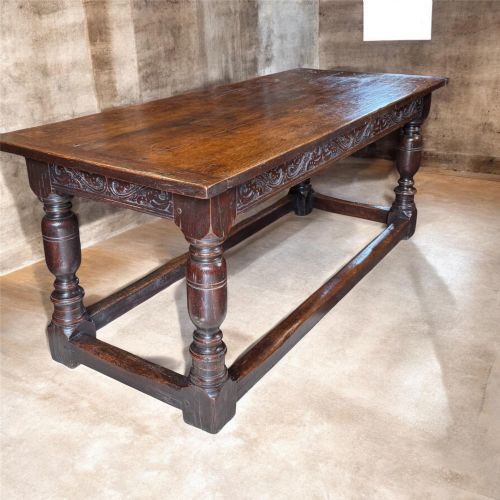
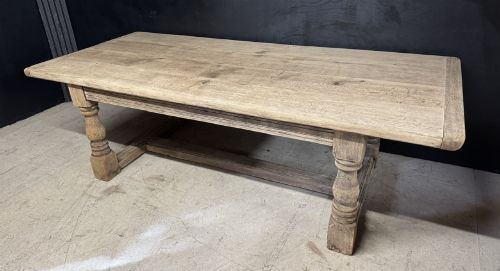
The versions you meet most often on this page are oak refectory and farmhouse tables from the nineteenth and twentieth centuries. Walnut and pine also appear, alongside forms with single plank tops or draw leaves.
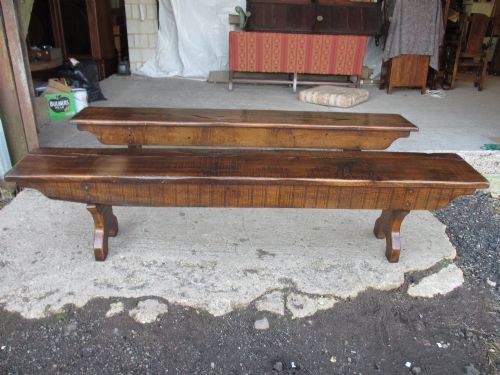
Makers and retailers like Heals of London contributed to the variety alongside provincial workshops. The forms include benches and centre tables that match the dining pieces.
Materials and construction
Solid oak and walnut provide the primary timber, sometimes paired with elm for tops or wrought iron for structural braces. Carpenters selected mature woods, frequently utilising single planks for the surface and heavy beams for the trestle ends.
Joinery relies on pegged mortise and tenon joints to secure the legs and stretchers under heavy loads. Carving appears on the friezes and trestle supports, executed by hand with gouges and chisels.
Carved Trestle Dining Table Retail Price Guide 2026
Typical asking prices for carved trestle dining table among the pieces listed under this phrase on Sellingantiques today, from the lower quarter to the upper quarter. They describe what is for sale here now, not the wider market.
Listings feature oak, walnut, pine, and elm, spanning eras from the seventeenth century through to the Edwardian period and the nineteen-thirties.
Variations in quality
Quality rests in the selection of the timber and the integrity of the original construction. Tables built from single plank tops display superior grain continuity compared to multi-board tops.
The depth of hand carving on the trestle ends distinguishes finer examples from simpler provincial work. Surface patination achieved through decades of use also separates well-preserved antiques from later reproductions.
Heals of London
The Carved Trestle Dining Table Glossary
- Refectory table
- A long narrow dining table traditionally used in monastic dining halls. These examples feature substantial wooden tops and sturdy trestle bases.
- Trestle
- A structural support consisting of a horizontal beam connected to two vertical feet. This design allows maximum legroom along the length of the table.
- Draw leaf
- An extension mechanism where auxiliary leaves slide out from beneath the main top. This permits the table length to increase when needed.
- Plank top
- A table surface constructed from parallel boards joined edge to edge. Single plank versions use one wide board per width section.
- Stretcher
- A horizontal bar running between the legs of a table to provide rigidity. It often sits low down near the floor for added stability.
Carved Trestle Dining Table: Frequently Asked Questions
How do I care for an old oak table?
Clean the surface with a damp cloth and dry it immediately to protect the wood. Apply beeswax periodically to nourish the timber and maintain the natural sheen.
Avoid placing these tables near direct heat sources or strong sunlight, which can cause the old timber to split or warp over time.
Will a refectory table fit a modern room?
These tables work well in contemporary spaces by providing a strong textural contrast to plain walls and modern seating. Measure your dining area carefully to ensure adequate clearance around the benches and chairs.
Keep in mind that trestle designs offer flexible seating because the legs sit inward from the ends of the table.
How can I tell an older table from a revival piece?
Examine the underside and joints for hand-cut tool marks, pegged tenons, and natural timber movement. Older tables display authentic wear patterns and patination accumulated over generations of use.
Revival pieces made during the nineteenth or twentieth centuries often show more uniform machine finishing and standardised construction methods.